Full lesson previewResale Flip Math: Profit After Fees, Shipping and Your Time
Math50 minutesGrades: 10th
Overview
Write the equation that tells you what to charge for a flip.
Description
Your teen picks a secondhand item to resell, such as a $8 thrifted jacket, looks up recently sold prices for similar items and writes a profit equation that subtracts a sample 13 percent plus $0.30 platform fee, $9 shipping, $1.50 in supplies and the item's cost. They solve for the lowest listing price that pays them $12 an hour for 1.5 hours of work (about $42.30) and test the equation on their own item.
Objective
Your teen will create linear equations and inequalities in one variable from real resale costs and use them to find the minimum price that meets a profit and hourly-pay goal.
Standards
A-CED.1Math · Grade HS · High School: Algebra — Creating Equations Create equations and inequalities in one variable and use them to solve problems. Include equations arising from linear and quadratic functions, and simple rational and exponential functions.
Materials
| Item | Quantity |
|---|
| Secondhand item to resell, such as a jacket, video game or pair of sneakers | 1 |
| Kitchen scale for weighing the packed item | 1 |
| Shipping box or mailer | 1 |
| Roll of packing tape | 1 |
| Notepad | 1 |
| Pencil | 1 |
| Calculator | 1 |
| Phone or computer for checking sold listings and shipping costs | 1 |
Vocabulary
Gross sale price
The full amount the buyer pays for the item before fees and costs.
Platform fee
The cut a resale app or site takes, often a percent of the sale plus a small fixed amount.
Net profit
What you keep after subtracting every cost, including the item's cost, fees, shipping and supplies.
Break-even price
The sale price where profit equals zero, so you don't lose money.
Preparation
- Choose one secondhand item your teen owns or bought cheaply to resell.
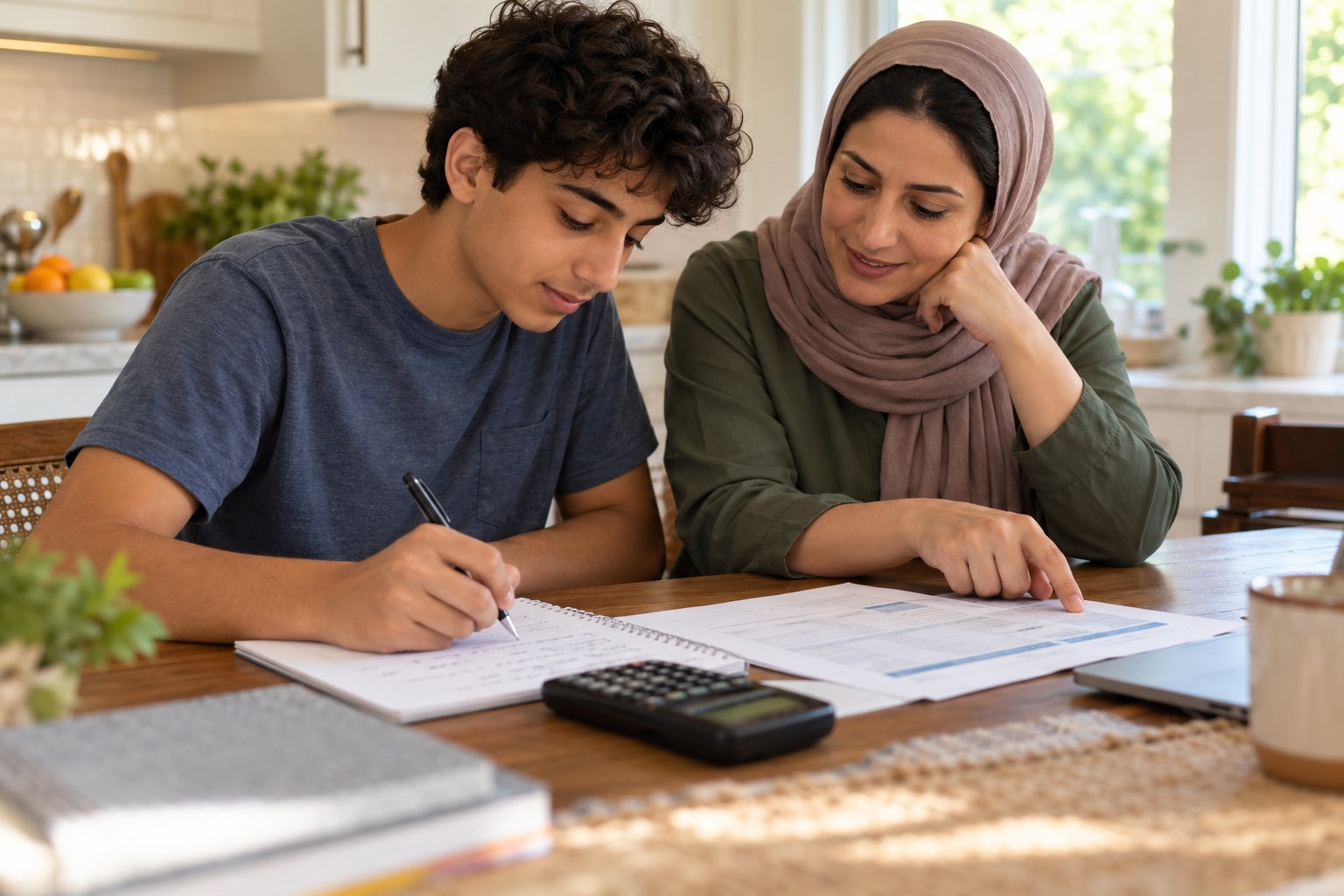
- Find one resale platform's current fee page so your teen can use its real fee, and use the sample numbers if you can't find one.
Introduction
Ask: you bought a jacket for $8 and someone online will pay $30. Did you make $22? Today your teen finds out how much actually ends up in their pocket, and what to charge so their time is worth it.
What costs are hiding between the price a buyer pays and the money you keep?
How much is an hour of your time worth to you?
Steps
1Step 1
Research sold prices
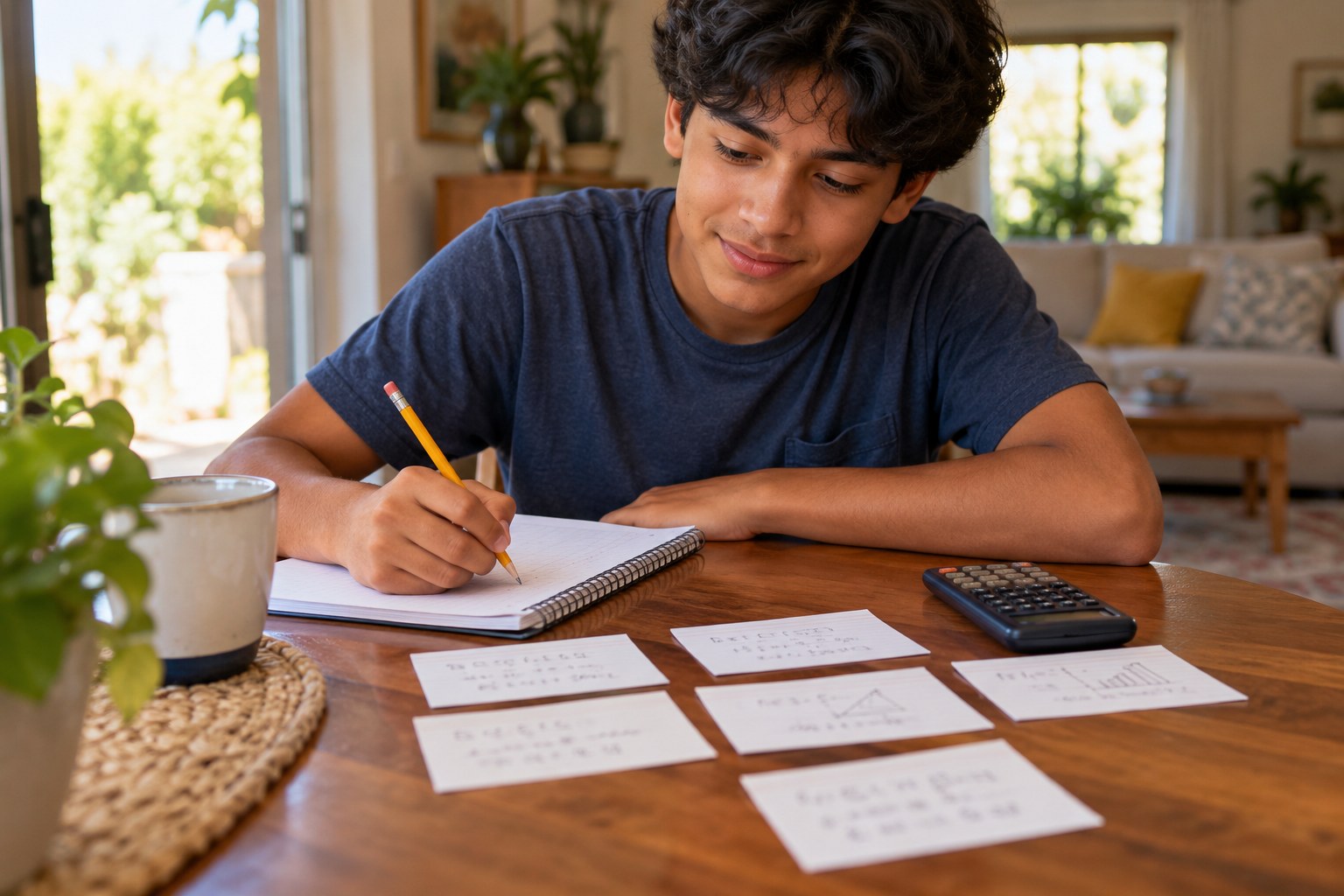
(10 min) Your teen searches sold (not just listed) prices for items like theirs on the phone or computer and writes five sold prices on the notepad, then finds the median. They note the item's condition compared with the ones that sold best.
2Step 2
Pack and weigh
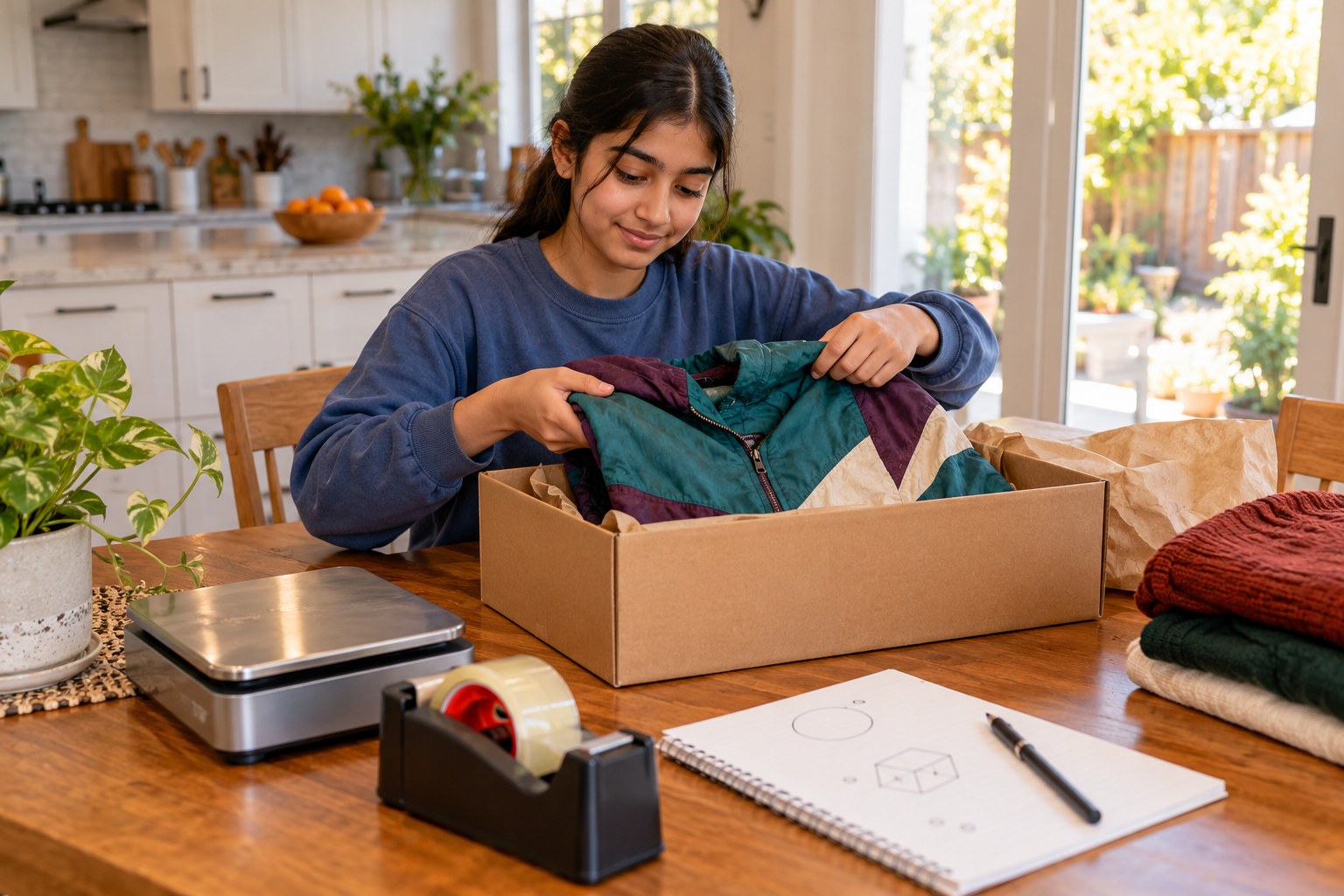
(8 min) Your teen folds or packs the secondhand item into the shipping box, seals it with the packing tape and weighs it on the kitchen scale. Using the weight, they look up a shipping estimate and write it on the notepad with the cost of the box and tape as 'supplies.'
3Step 3
Write the profit equation
(12 min) Your teen works the Sample Flip in Additional Sections on the notepad first, writing profit as a function of the sale price x: P = x - 0.13x - 0.30 - 9 - 8 - 1.50, which simplifies to P = 0.87x - 18.80. Then they write the same kind of equation for their own item using their real fee, shipping and supply costs.
4Step 4
Solve for the target price
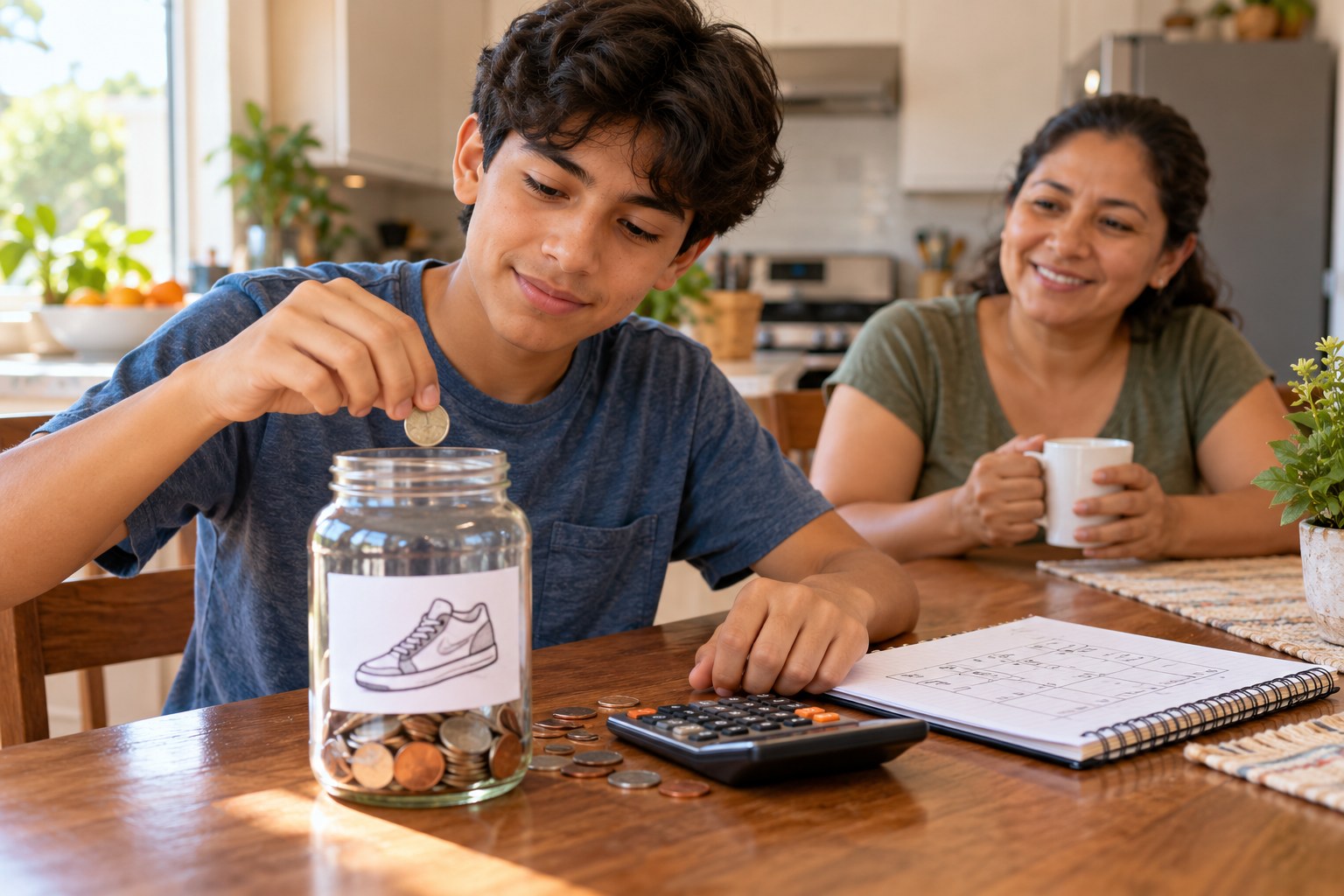
(12 min) Your teen sets profit equal to their hourly goal times their hours (for the sample, 12 x 1.5 = 18) and solves the equation with the calculator, then solves P = 0 for the break-even price. They write an inequality for 'profit at least $18' and check that their answer satisfies it.
5Step 5
Make the call
(8 min) Your teen compares their target price with the median sold price and decides whether the flip is worth it, needs a lower hourly goal or should be skipped. They finish the Practice Problems and check them against the Answer Key.
Conclusion
Ask: 'What did the equation tell you that your gut didn't?' Writing the math down turns a fun hobby into a business decision your teen can actually trust.
Make your own lesson plan in minutes
Describe a topic and Resource Portal AI writes the objectives, materials and steps for your group.
Try Resource Portal AI