Lesson planRhetoric of the Dream: Repetition, Metaphor and Allusion in Dr. King's 1963 Speech
Language Arts45 minutesGrades: 7th, 8th
Overview
Analyze the rhetoric of the I Have a Dream speech, then use it yourself.
Description
Your teen listens to Dr. King's 1963 'I Have a Dream' speech from an official source, color-codes repetition, metaphor and allusion in a transcript, analyzes how those choices build the argument and the mood, and then writes a short paragraph of their own using repetition for a cause they care about.
Objective
Your teen will identify repetition (anaphora), extended metaphor and allusion in the speech, explain how specific word choices affect meaning and tone, delineate the speech's central claims, and apply one technique in original writing.
Standards
RI.7.4ELA · Grade 7 · Reading: Informational Text Determine the meaning of words and phrases as they are used in a text, including figurative, connotative, and technical meanings; analyze the impact of a specific word choice on meaning and tone.
SL.7.3ELA · Grade 7 · Speaking & Listening Delineate a speaker's argument and specific claims, evaluating the soundness of the reasoning and the relevance and sufficiency of the evidence.
RI.8.4ELA · Grade 8 · Reading: Informational Text Determine the meaning of words and phrases as they are used in a text, including figurative, connotative, and technical meanings; analyze the impact of specific word choices on meaning and tone, including analogies or allusions to other texts.
SL.8.3ELA · Grade 8 · Speaking & Listening Delineate a speaker's argument and specific claims, evaluating the soundness of the reasoning and relevance and sufficiency of the evidence and identifying when irrelevant evidence is introduced.
Materials
| Item | Quantity |
|---|
| Recording and transcript of the 1963 speech from a library, the National Archives or another reputable source | 1 |
| Highlighters or colored pencils in 3 colors | 1 set |
| Notebook or paper | 1 |
| Headphones or speaker | 1 |
| Analysis chart from the 'Rhetoric tracker' section | 1 per teen |
Vocabulary
Anaphora
Repeating the same word or phrase at the start of several sentences or clauses.
Extended metaphor
A comparison that the writer develops over several sentences.
Allusion
A brief reference to a well-known text, person or event that the audience will recognize.
Connotation
The feelings and associations a word carries beyond its dictionary meaning.
Rhetoric
The art of using language to persuade or move an audience.
Preparation
- Find a full recording (about 17 minutes) and a transcript of the speech through your library, the National Archives or a university archive. The speech is protected by copyright held by Dr. King's estate, so use a source that has permission to share it.
- Copy the rhetoric tracker chart onto paper.
Introduction
Ask your teen to name a phrase from a famous speech they already know. Then ask: why do some speeches get remembered for 60 years while most are forgotten in a week? Today you will take apart one of the most famous speeches in U.S. history to find out.
What makes a speech memorable?
Why would Dr. King choose to speak in front of the Lincoln Memorial?
Steps
1Step 1
Set the context
(5 min) Read the 'About the March on Washington' section together. Ask your teen to predict what the audience on August 28, 1963, wanted to hear and what Dr. King wanted them to do.
2Step 2
Listen first
(17 min) Your teen listens to the full speech while following the transcript, putting a small star next to any line that gives them chills or sticks in their mind. Notice when Dr. King's pace and volume change.
3Step 3
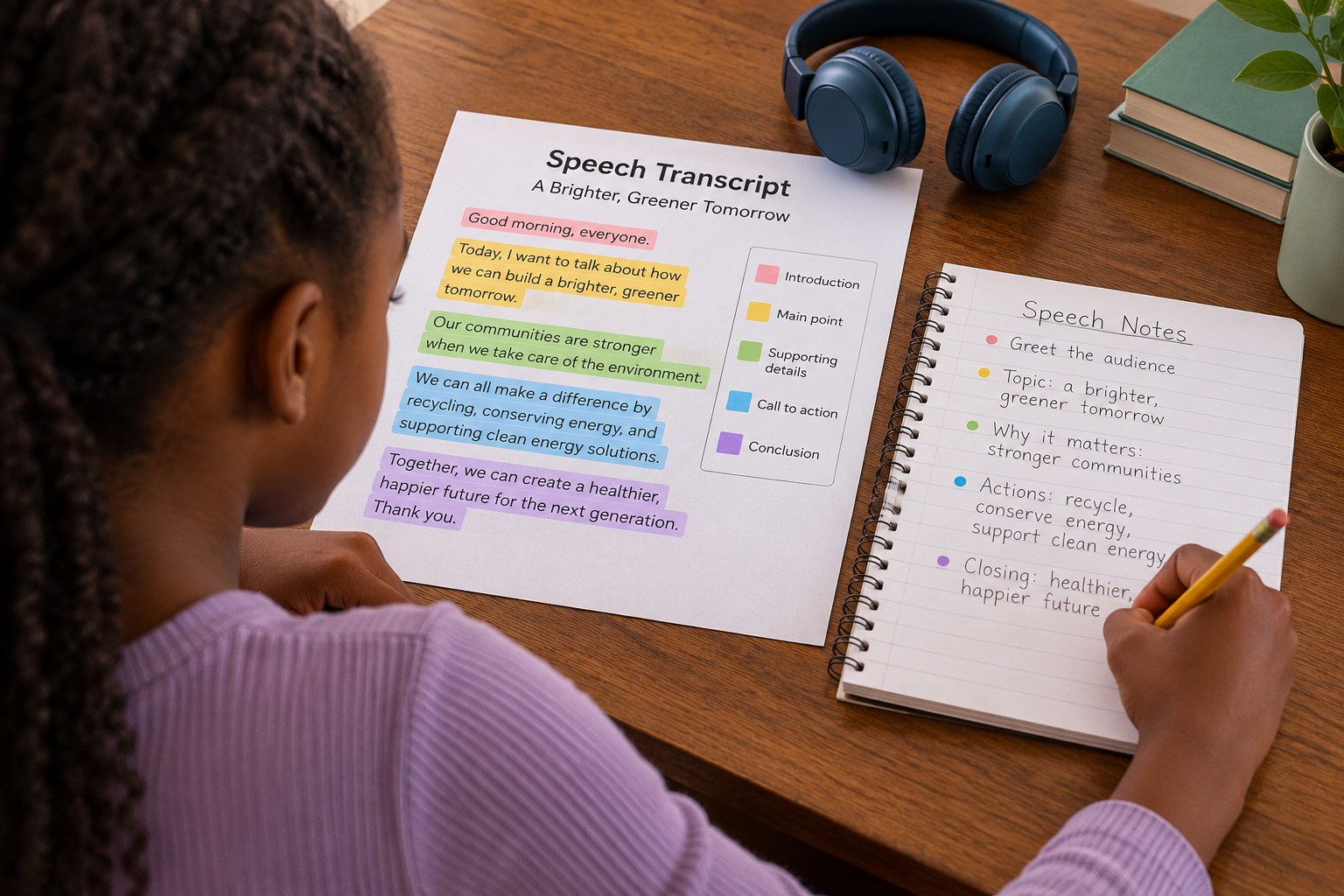
Color-code the techniques
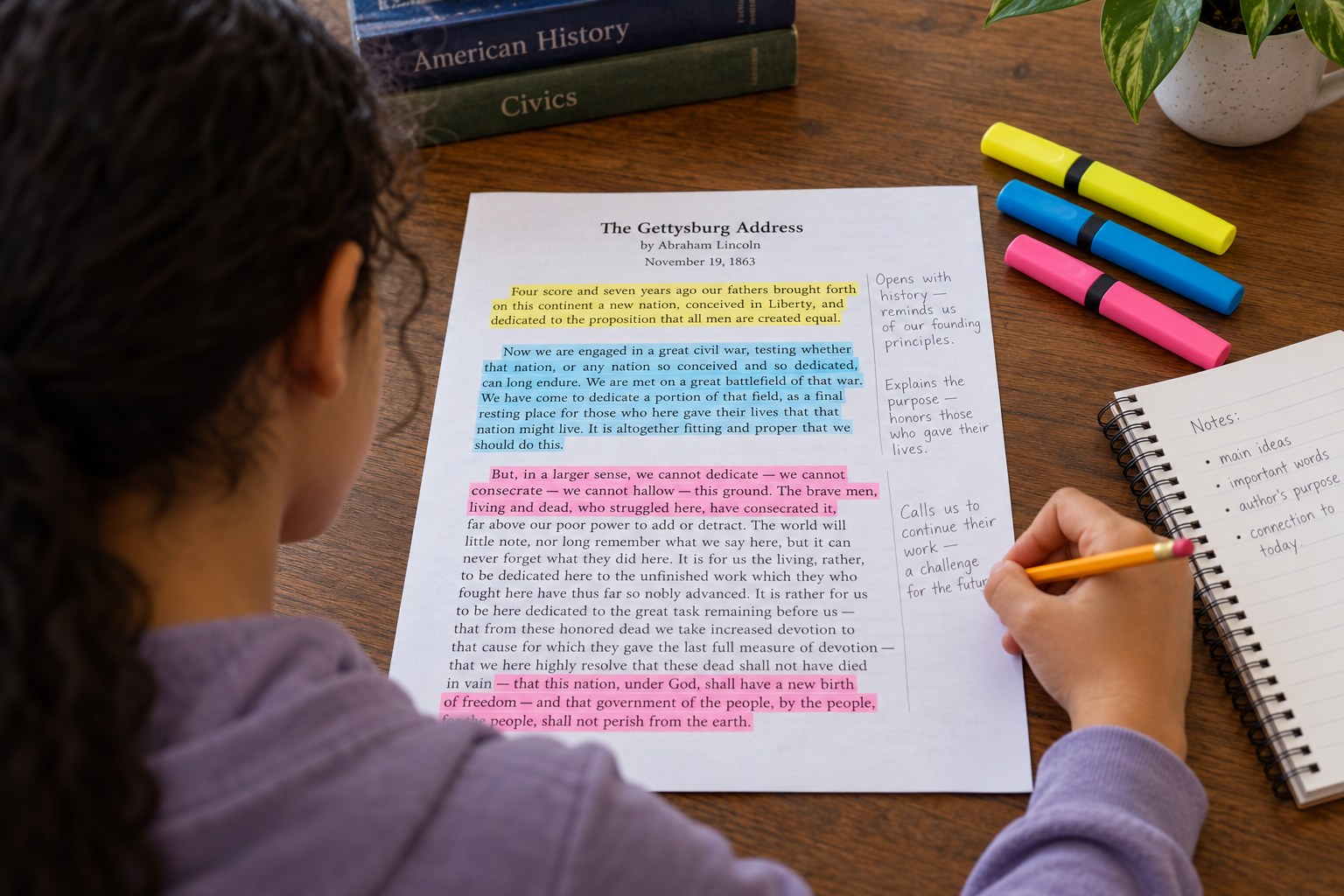
(9 min) Using three colors, your teen marks repetition (such as the repeated 'I have a dream' and 'Let freedom ring' passages), the extended metaphor of a bad check and a promissory note, and allusions (such as the opening that echoes Lincoln's Gettysburg Address and references to the Emancipation Proclamation and the Declaration of Independence). They fill in the rhetoric tracker with at least two examples of each.
4Step 4
Delineate the argument
(7 min) Your teen writes the speech's central claim in one sentence and lists the main reasons and appeals that support it. Discuss how the repetition and allusions make the claims feel urgent and rooted in American founding ideals.
5Step 5
Write with anaphora
(6 min) Your teen chooses a cause they care about and writes a 4- to 5-sentence paragraph that uses one repeated opening phrase of their own. They read it aloud and listen for how the repetition builds.
Conclusion
Ask: which technique did the most work in this speech, and why? Compare the speech with another speech your teen knows.
Make your own lesson plan in minutes
Describe a topic and Resource Portal AI writes the objectives, materials and steps for your group.
Try Resource Portal AI