Full lesson previewLip-Flap Timing: Recording Your Own Dub of a Short Scene
Performance Arts45 minutesGrades: 11th
Overview
Match the mouth flaps: script, time and record your own dub.
Description
Your teen writes a short original two-character script, then plays a muted 20-to-30-second animated clip and counts each character's mouth movements (lip flaps) and line lengths. They rewrite lines to fit the counts, build a blanket-lined closet 'booth,' record three takes per line on a phone, and pick the best take using a simple scoring sheet.
Objective
Your teen will write dialogue to fit timed mouth movements and record takes that match timing, breath and character.
Materials
| Item | Quantity |
|---|
| Phone with a voice recorder app | 1 |
| Device to play a muted 20-to-30-second animated clip | 1 |
| Thick blankets or comforters | 2 |
| Sheets of lined paper | 2 |
| Pencil | 1 |
| Glass of water | 1 |
Vocabulary
Lip flap
A single open-and-close movement of an animated character's mouth, which dubbed lines must roughly match.
Loop group
Voice actors who record background voices and crowd sounds for a scene.
Take
One complete recorded attempt at a line.
Plosive
A burst of air from sounds like 'p' and 'b' that can make a pop on a microphone.
Preparation
- Choose a short animated clip with two characters talking and turn the sound off; any clip works, since your teen writes new dialogue.
- Find a closet or corner where the 2 blankets can hang or drape to soften echoes.
Introduction
Play the clip with the sound off and ask your teen to say anything at all while the mouths move. It is harder than it looks, which is exactly the job of a dub actor.
What makes a dub feel natural or awkward to you?
How do actors make a line sound real when they are alone in a booth?
Steps
1Step 1
Write the script
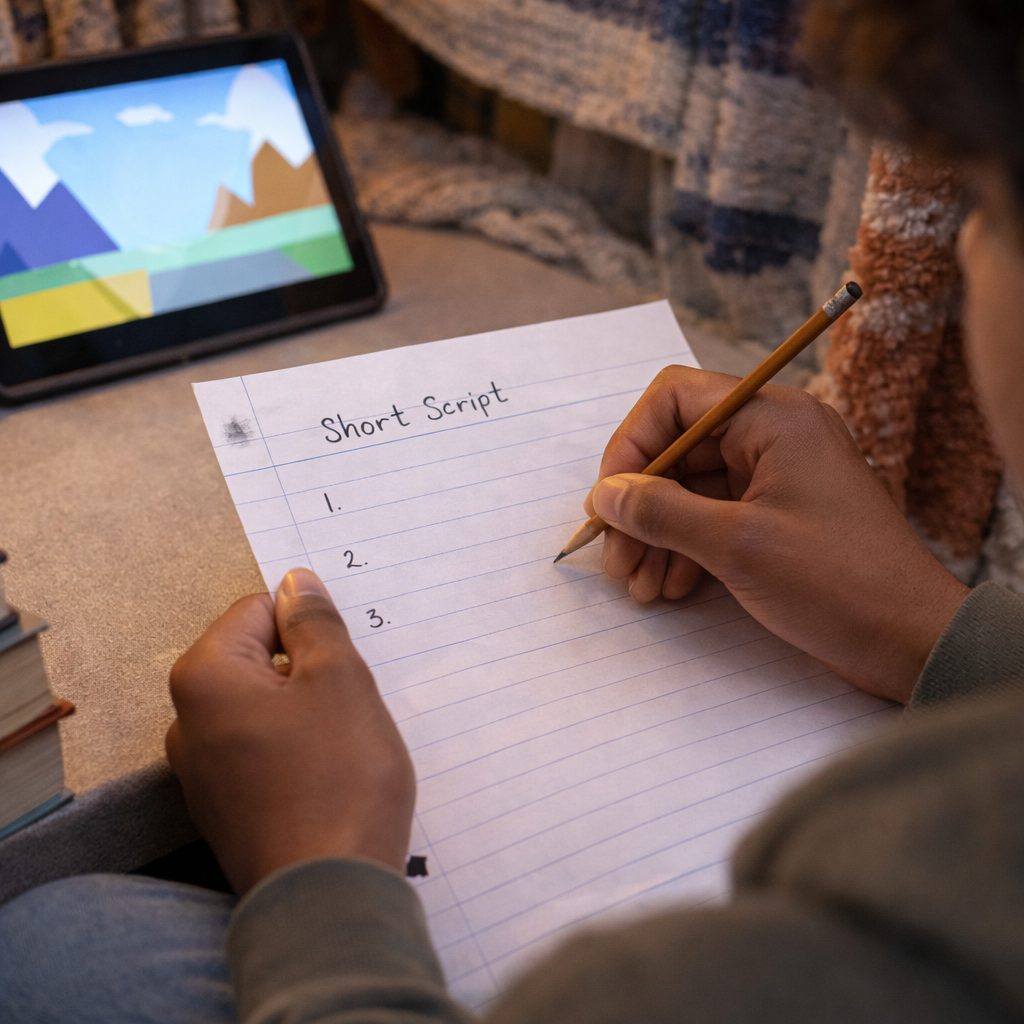
(8 min) On the first sheet of lined paper your teen writes an original eight-line scene for two characters that fits the action in the muted clip, such as an argument, a reunion or a surprise. They give each character one clear want.
2Step 2
Count the flaps
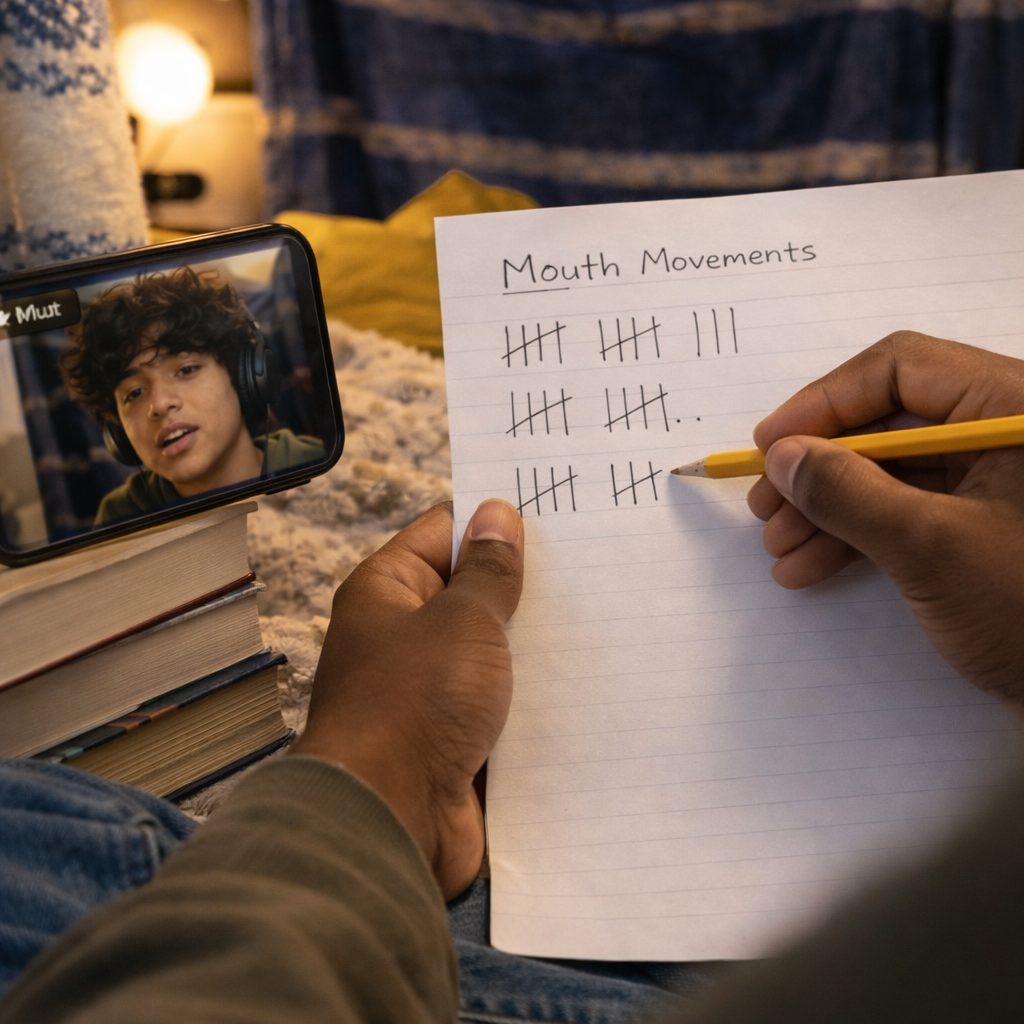
(8 min) Your teen plays the muted clip several times and, for each line, counts the lip flaps and times how many seconds each character's mouth moves. They write the counts next to the script and rewrite any line that is too long or short, aiming for about one syllable per flap.
3Step 3
Build the booth
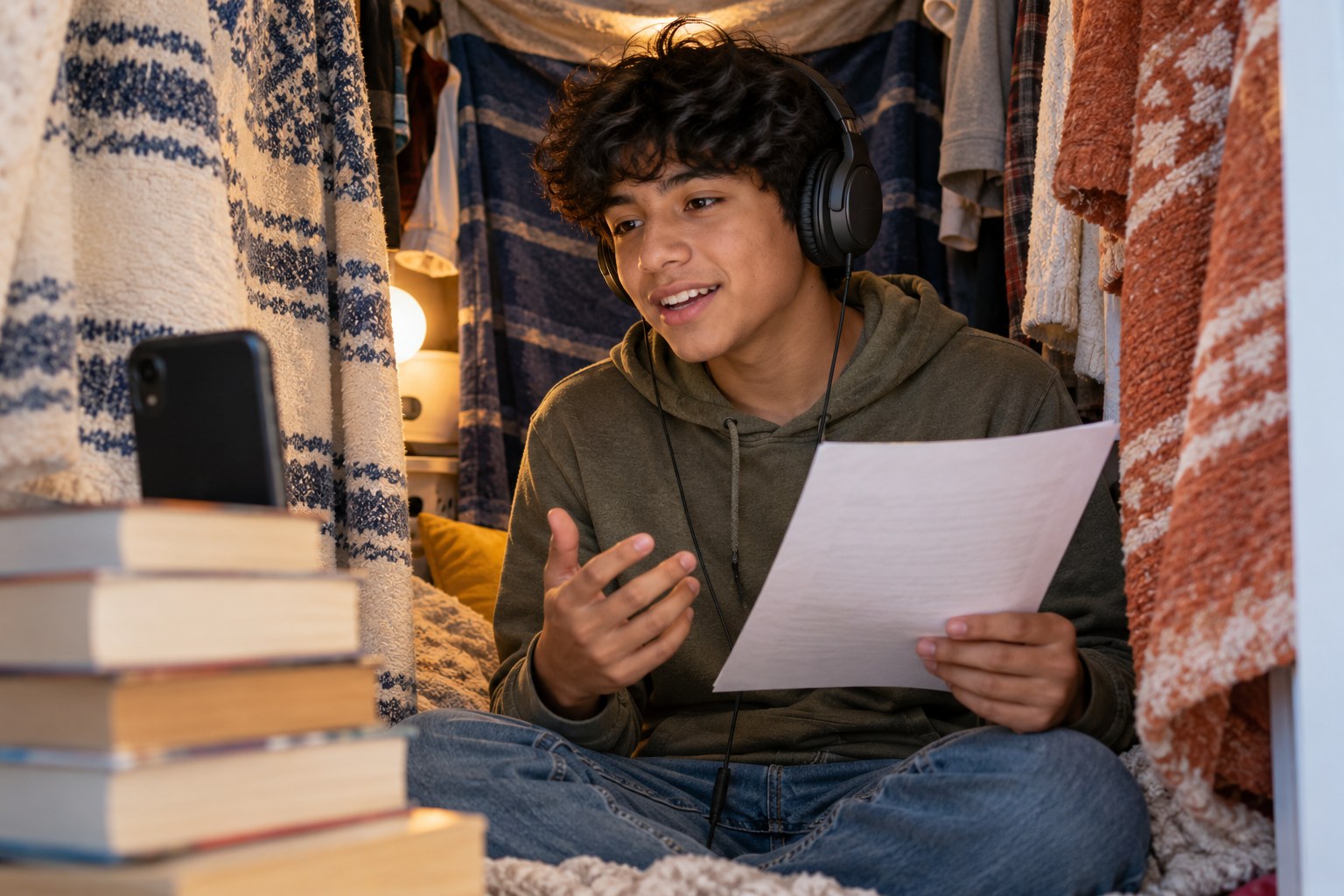
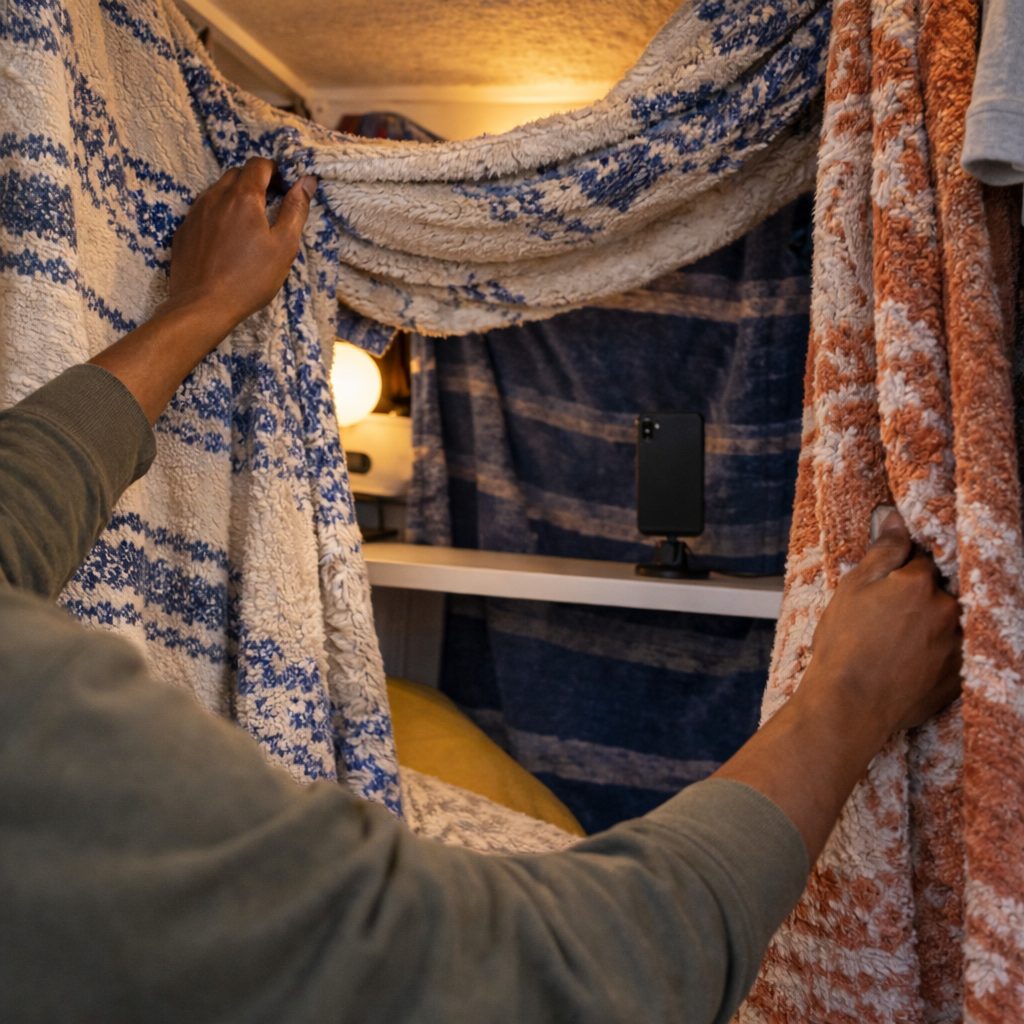
(7 min) Your teen drapes the 2 blankets in a closet or over a corner so they surround the space where they will stand. They test the phone's recorder about 6 to 8 inches from their mouth, slightly off to the side to avoid plosive pops.
4Step 4
Record three takes
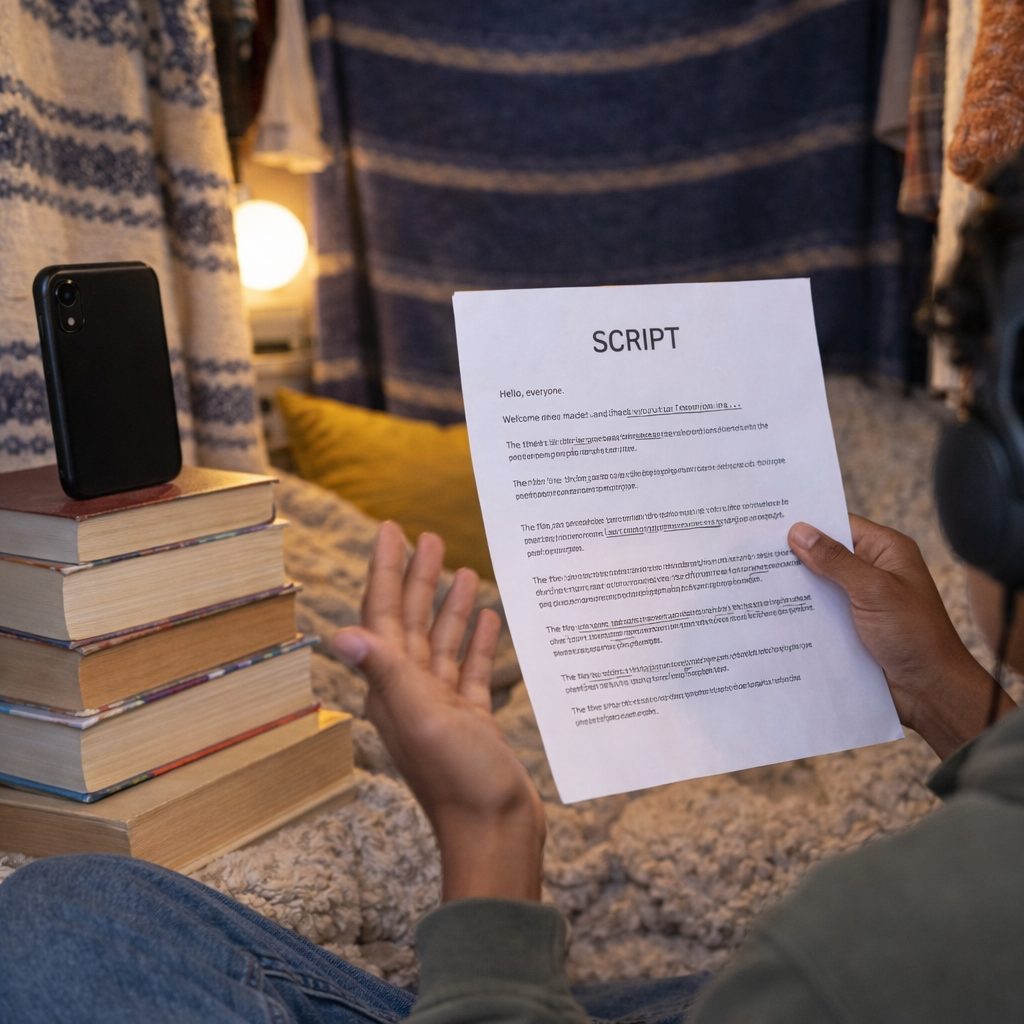
(12 min) In the booth, your teen records three takes of every line while watching the muted clip, marking breaths on the script with a slash and sipping from the glass of water between lines. They try one take faster, one slower and one with a different emotion.
5Step 5
Compare and pick
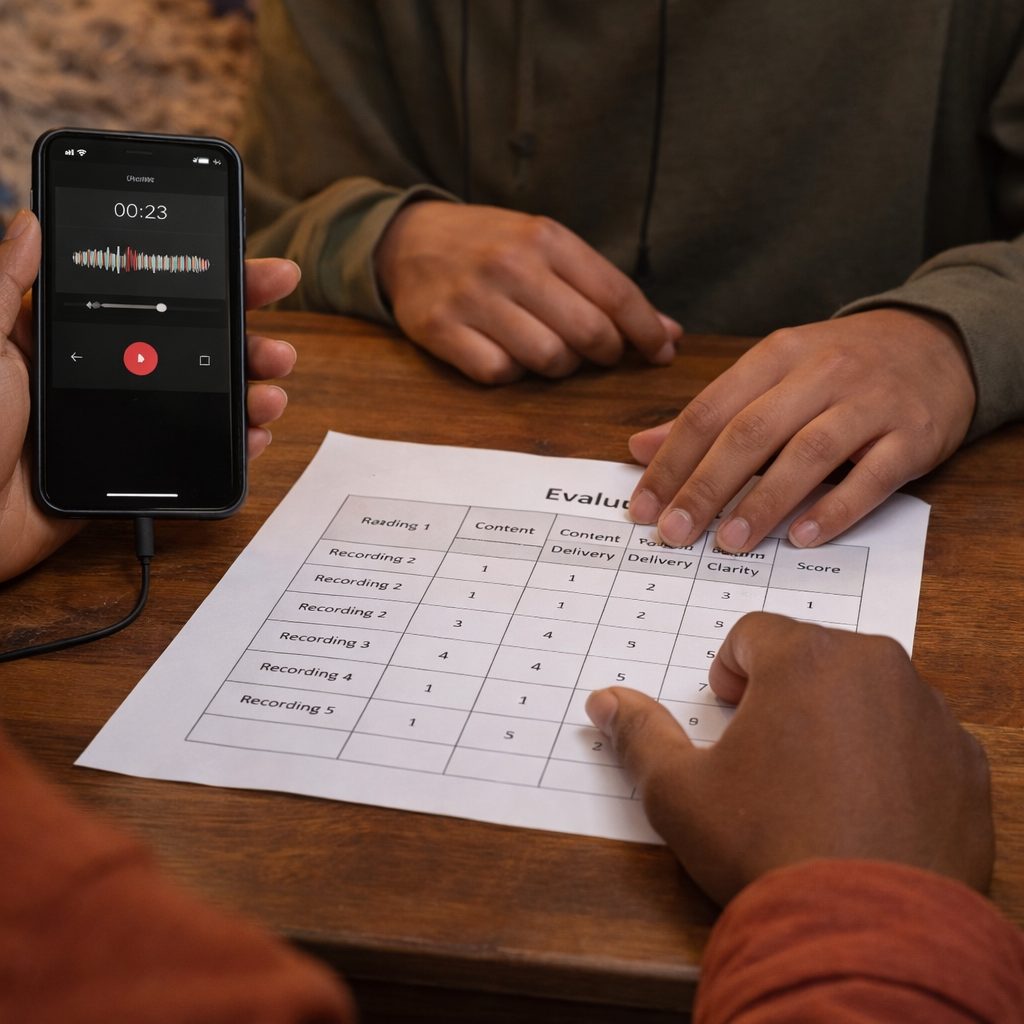
(10 min) Your teen plays the takes back alongside the clip and scores each on the second sheet of lined paper for timing, clarity and staying in character, from 1 to 3. They play their best full run for you and explain why it won.
Conclusion
Ask your teen which line was hardest to fit and how they solved it. Every dub is a puzzle of meaning, time and voice.
Make your own lesson plan in minutes
Describe a topic and Resource Portal AI writes the objectives, materials and steps for your group.
Try Resource Portal AI