Lesson planBathroom Shelf pH: Testing Cleansers With Cabbage Indicator
Science50 minutesGrades: 12th
Overview
Turn red cabbage into a pH detector for your bathroom shelf.
Description
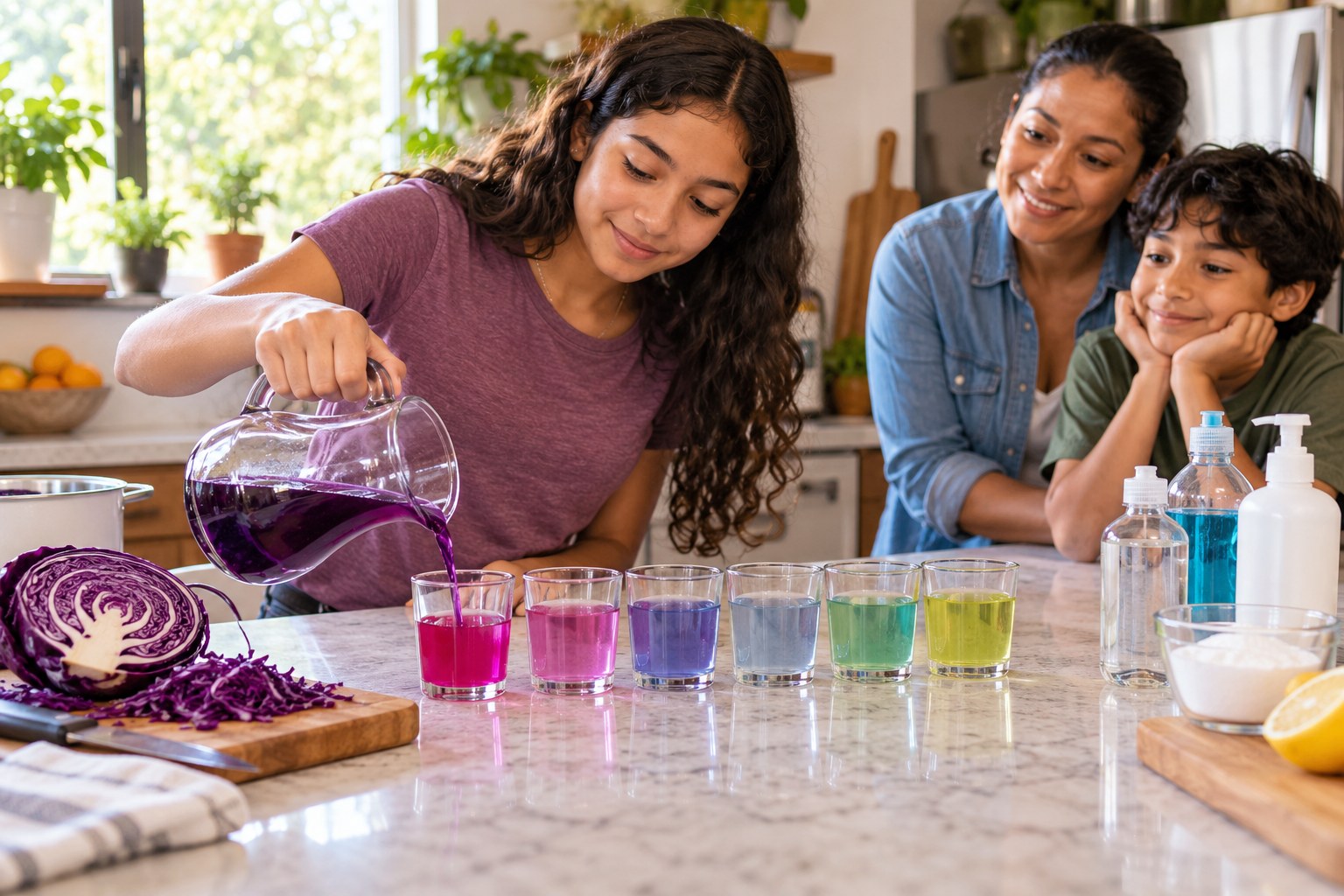
Your teen boils chopped red cabbage to make a purple pH indicator, then tests five household liquids in clear glasses: bar soap solution, shampoo, facial cleanser, white vinegar and baking soda solution. They rank the results against the skin's slightly acidic surface (about pH 4.5 to 5.5) and write an explanatory paragraph on why a harsh, alkaline cleanser can leave skin feeling tight and dry.
Objective
Your teen will make and use a natural acid-base indicator, estimate the pH of common cleansers, and develop a written explanation of skin pH using the most significant facts, definitions and examples from their tests.
Standards
WHST.11-12.2bELA · Grade 11-12 · Writing in History/Social Studies, Science & Technical Subjects Develop the topic thoroughly by selecting the most significant and relevant facts, extended definitions, concrete details, quotations, or other information and examples appropriate to the audience's knowledge of the topic.
Materials
| Item | Quantity |
|---|
| Red (purple) cabbage, chopped | 1/4 head (about 2 cups) |
| Water | 3 cups |
| Saucepan and strainer | 1 each |
| Small clear glasses or jars | 6 |
| White vinegar | 2 tablespoons |
| Baking soda | 1 teaspoon |
| Bar soap, shampoo and facial cleanser from home | a pea-sized amount of each |
| Spoons for stirring | 6 |
| Sticky notes and a marker | 6 notes |
| Sheet of white paper and a pen | 2 sheets |
Vocabulary
pH
A scale from 0 to 14 that measures how acidic or basic a water solution is; 7 is neutral, below 7 is acidic, above 7 is basic. Each step is a tenfold change.
Acid
A substance that increases hydrogen ions in water, such as vinegar (about pH 2.5).
Base (alkaline)
A substance that lowers hydrogen ions in water, such as baking soda solution (about pH 8 to 9) or many bar soaps (about pH 9 to 10).
Indicator
A substance that changes color depending on pH; the pigments in red cabbage (anthocyanins) turn pink-red in acid and blue-green in base.
Acid mantle
The thin, slightly acidic film on the skin's surface (about pH 4.5 to 5.5) that helps the skin barrier hold water and keeps some microbes in check.
Preparation
- An adult should handle the boiling water and hot strainer.
- Use only the listed household items. Do not test bleach, drain cleaner or oven cleaner, and never mix cleaners together.
- Label the 6 sticky notes: Plain indicator, Vinegar, Baking soda, Bar soap, Shampoo, Facial cleanser.
Introduction
Pour a little purple cabbage water into a glass and add a splash of vinegar while your teen watches. Ask: what just happened to the color, and what do you think it would do with your face wash?
Why might a product that cleans greasy pans well be rough on skin?
If skin sits around pH 5, would you guess most soaps are above or below that?
Steps
1Step 1
Brew the indicator
(10 min) With an adult at the stove, your teen simmers the 2 cups of chopped red cabbage in the 3 cups of water for about 8 minutes until the water turns deep purple. The adult strains it into a bowl and your teen lets it cool while setting out the 6 clear glasses on the white paper.
2Step 2
Set up the tests
(8 min) Your teen pours about 1/4 cup of cooled indicator into each of the 6 glasses and sticks a label in front of each. They leave the first glass plain, then add the 2 tablespoons of vinegar, the 1 teaspoon of baking soda, and a pea-sized amount of bar soap, shampoo and facial cleanser to the others, stirring each with its own spoon.
3Step 3
Read the colors
(10 min) Your teen compares each glass to the color guide in the extra sections and writes an estimated pH range for each on the second sheet of paper. They rank the six from most acidic to most basic and circle any product that came out more basic than the skin's surface.
4Step 4
Draft the explanation
(15 min) On the back of the second sheet of paper, your teen writes one explanatory paragraph of 6 to 8 sentences for a younger sibling or friend on the topic 'Why your cleanser's pH matters.' They must include an extended definition of pH, the skin's acid mantle, at least two concrete results from their glasses, and one example of how an alkaline cleanser can strip oils and leave skin feeling tight.
5Step 5
Read and revise
(7 min) Your teen reads the paragraph on the second sheet of paper aloud and you name the one fact that helped you most and one place that confused you. They revise that sentence so the paragraph fits a reader who has never heard of pH.
Conclusion
Ask your teen: 'If you were choosing a face wash tomorrow, what would you look for now?' A label that says 'pH balanced' or 'gentle' finally means something to them.
Make your own lesson plan in minutes
Describe a topic and Resource Portal AI writes the objectives, materials and steps for your group.
Try Resource Portal AI