Full lesson previewStreet Food Around the World: Unit Rates, Exchange Rates and a $10 Food Tour
Math50 minutesGrades: 6th, 7th
Overview
Use unit rates to price street food in five countries.
Description
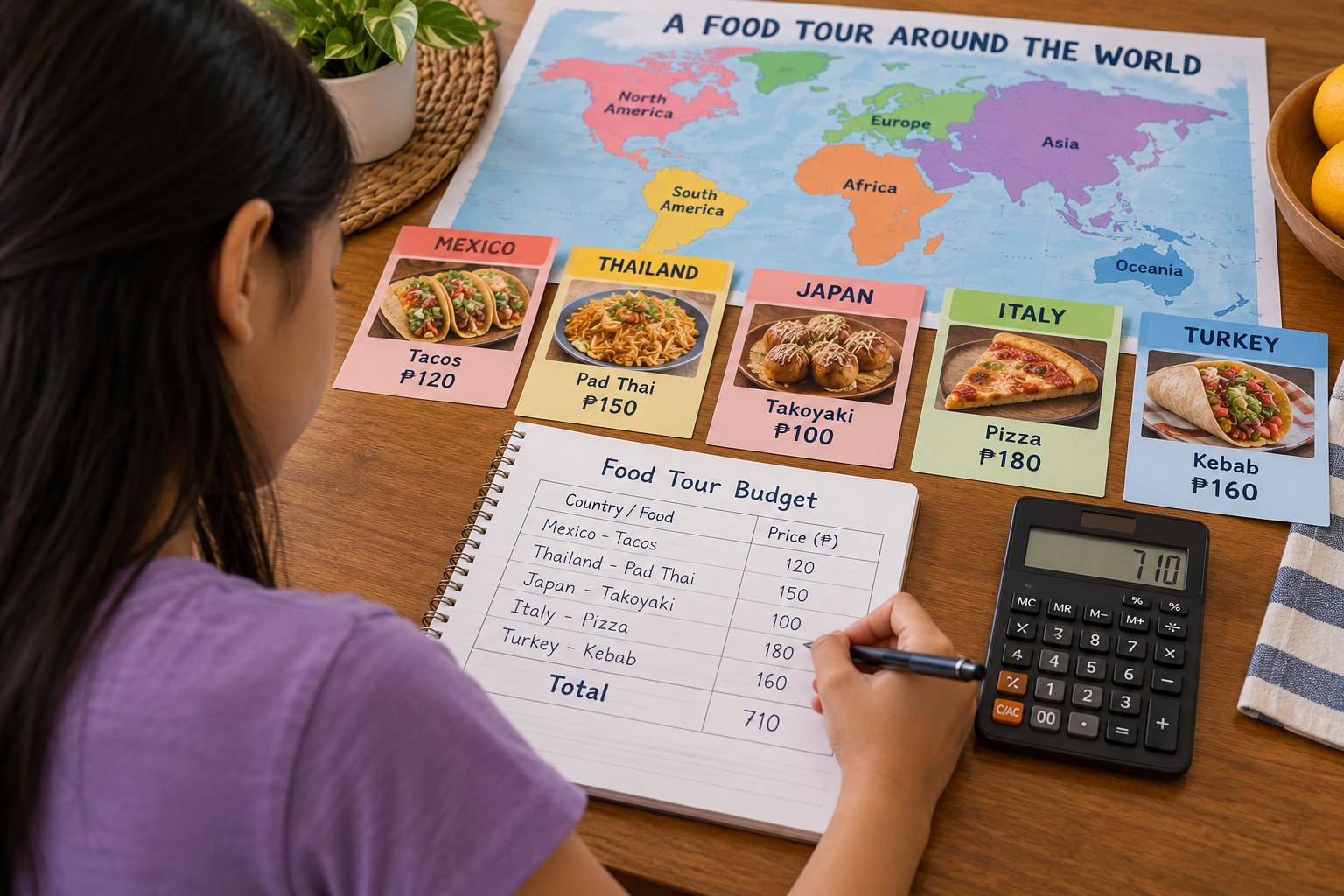
Your teen plans an imaginary street food tour through Mexico City, Hanoi, Lagos, Osaka and Bogotá, using unit rates to find the price per item and the U.S. dollar cost of tacos al pastor, bánh mì, jollof rice, takoyaki and arepas, then builds a $10 menu.
Objective
Your teen will find unit prices and convert between currencies using unit rates, compare costs, and plan a tour within a budget.
Standards
6.RP.2Math · Grade 6 · Ratios & Proportional Relationships Understand the concept of a unit rate a/b associated with a ratio a:b with b ≠ 0, and use rate language in the context of a ratio relationship.
6.RP.3bMath · Grade 6 · Ratios & Proportional Relationships Solve unit rate problems including those involving unit pricing and constant speed.
Materials
| Item | Quantity |
|---|
| Street food menu cards (in Additional Sections), printed or copied | 1 set |
| Calculator | 1 |
| Paper and pencil | 1 each |
| World map or globe | 1 |
| Phone or computer to look up today's exchange rates (optional) | 1 |
Vocabulary
Unit rate
A rate per one unit, such as pesos per taco or yen per dollar.
Exchange rate
How much of one country's money equals one unit of another's, such as 18 Mexican pesos per U.S. dollar.
Currency
The kind of money a country uses, like the peso, yen or naira.
Unit price
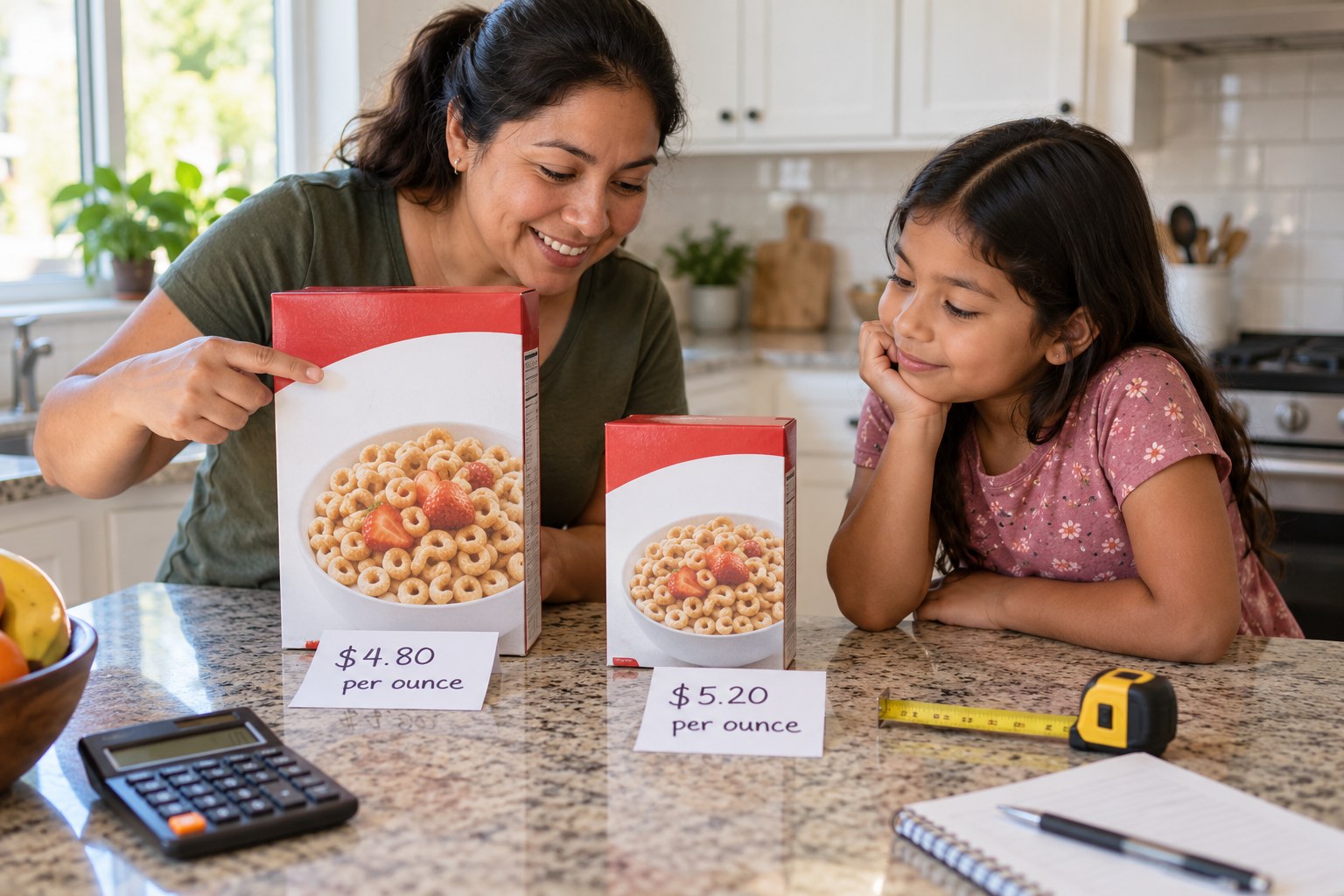
The cost for one item or one unit of measure.
Preparation
- Copy the menu cards and exchange rates from Additional Sections. The rates there are rounded sample rates for easy math; real rates change every day, so you can look up today's rates for a bonus round.
- Find Mexico, Vietnam, Nigeria, Japan and Colombia on the map.
Introduction
Ask your teen: 'If a taco costs 20 pesos, is that cheap or expensive?' Let them realize they can't tell without knowing how many pesos equal one dollar.
What information do you need to compare prices in two different currencies?
Why might the same snack cost a different amount in different cities?
Steps
1Step 1
Read the menus
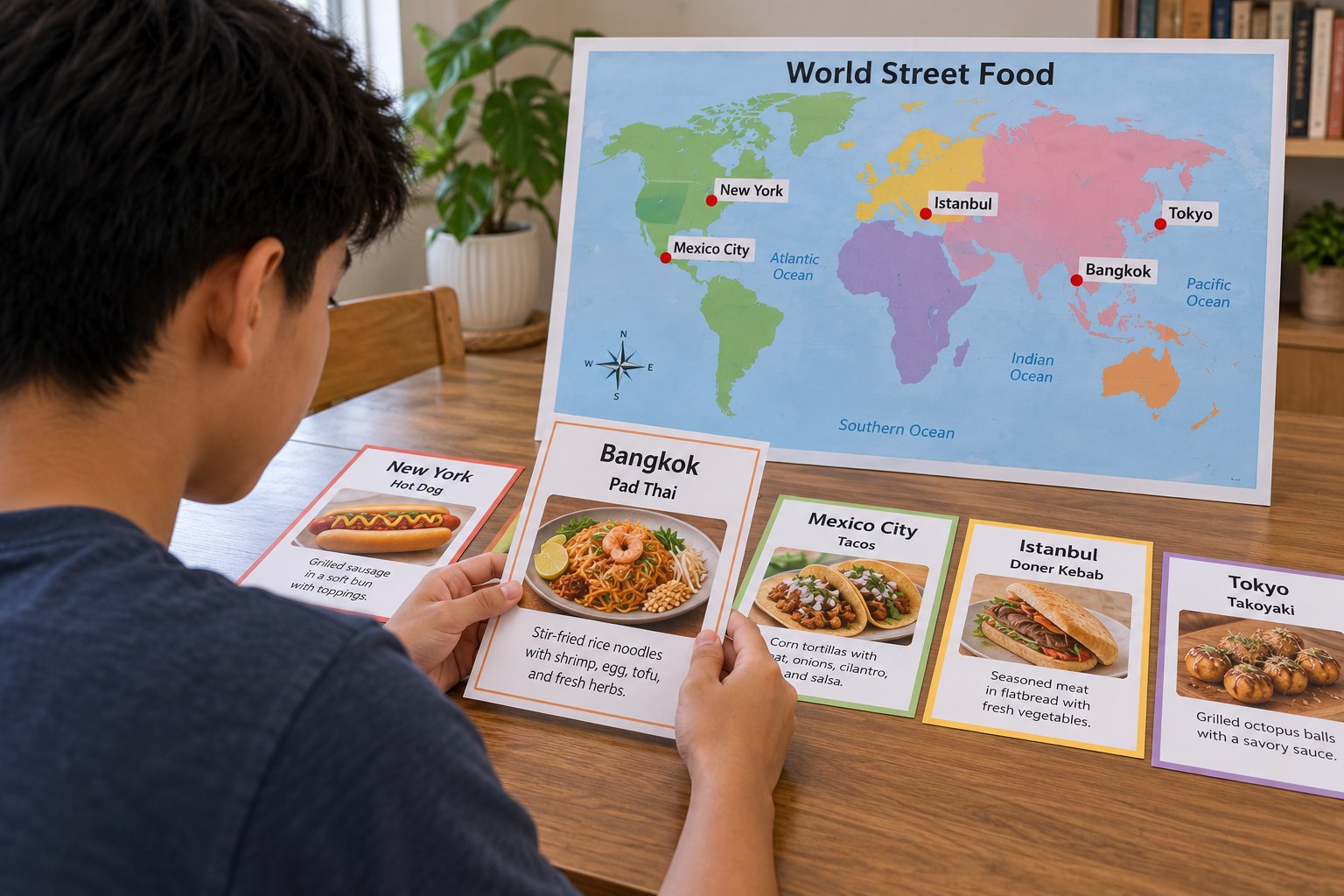
(6 min) Your teen reads each menu card and finds each city on the map. They write the deal in rate language, such as '60 pesos for 3 tacos'.
2Step 2
Find unit prices
(10 min) Your teen calculates the price for one item in the local currency for each menu, such as pesos per taco or yen per takoyaki ball. They show the division and label the units.
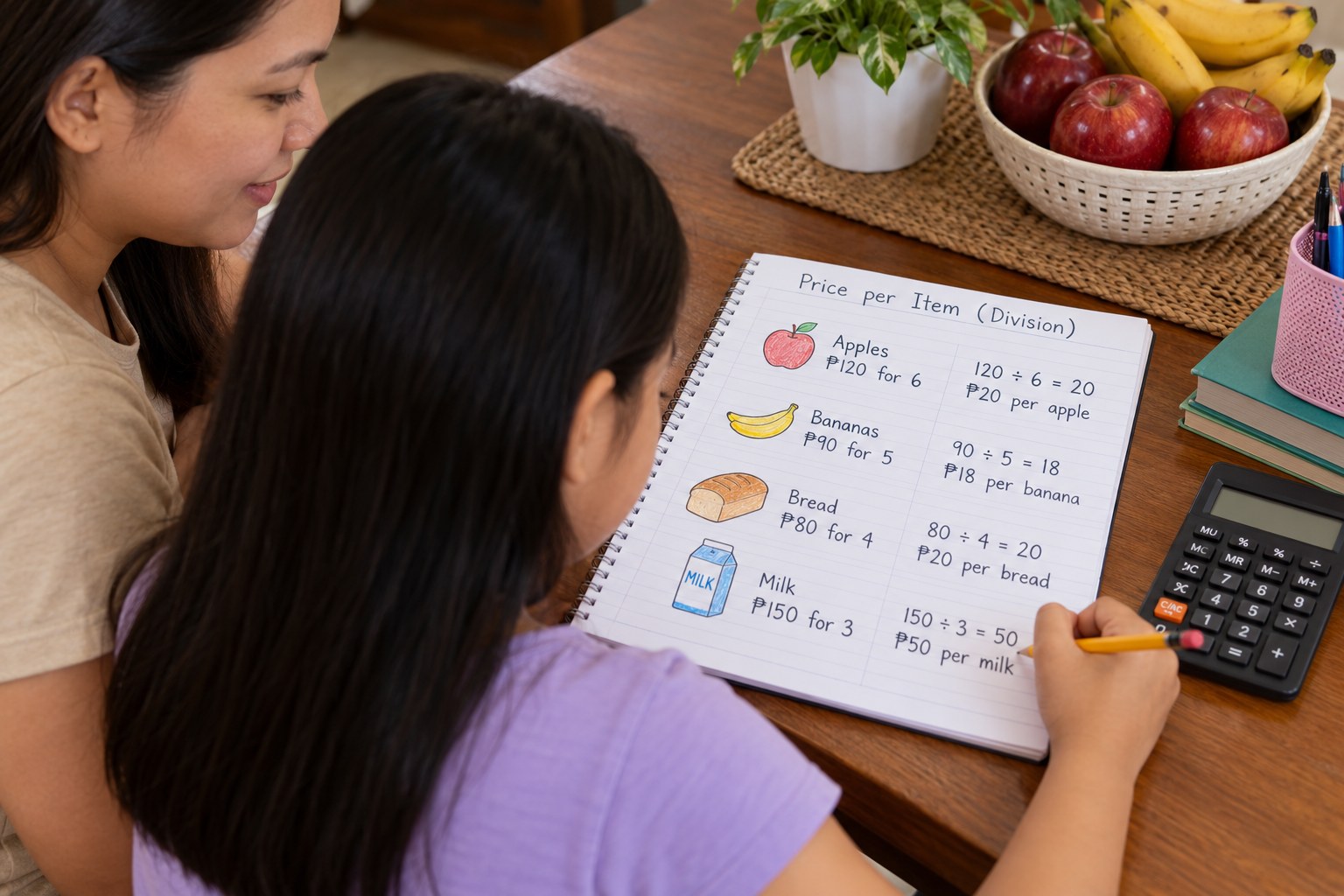
3Step 3
Convert to dollars
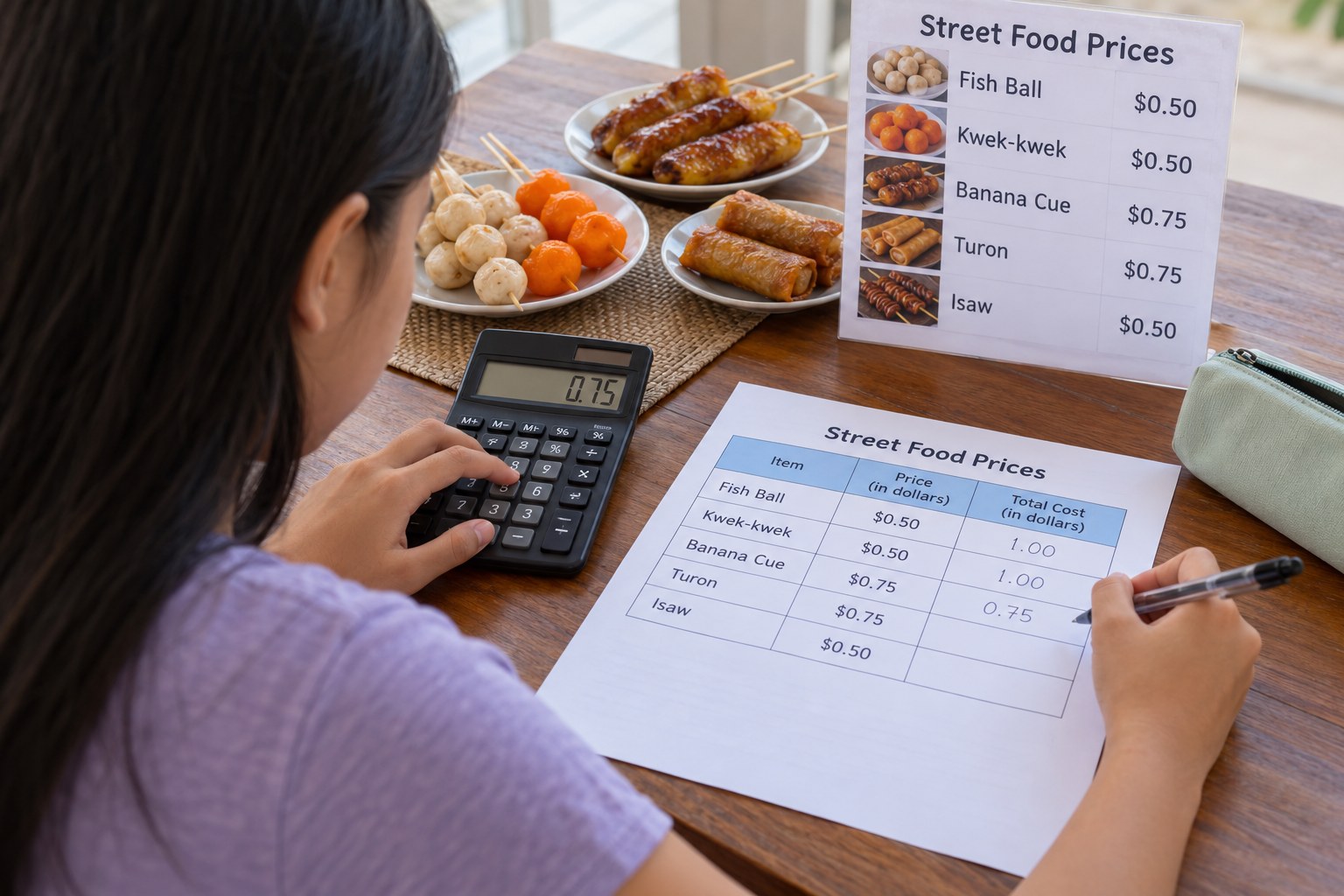
(12 min) Using the exchange rate unit rates, your teen converts each item's price to U.S. dollars, rounding to the nearest cent. They make a table ordering the foods from least to most expensive per item.
4Step 4
Plan a $10 tour
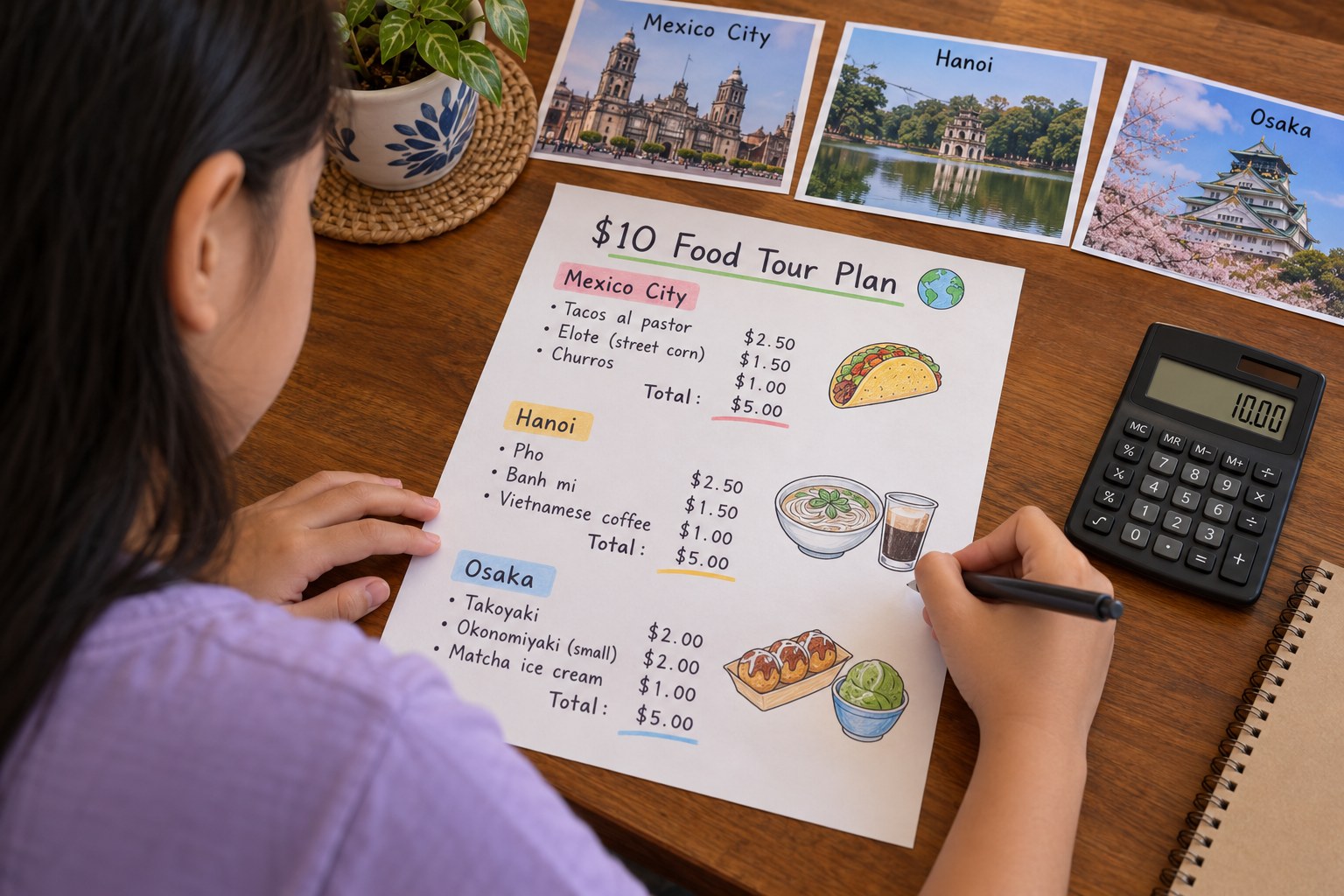
(12 min) Your teen chooses foods from at least 3 cities and plans a menu that costs no more than $10 total, showing their math. They add a challenge: the most variety for the least money.
5Step 5
Reflect
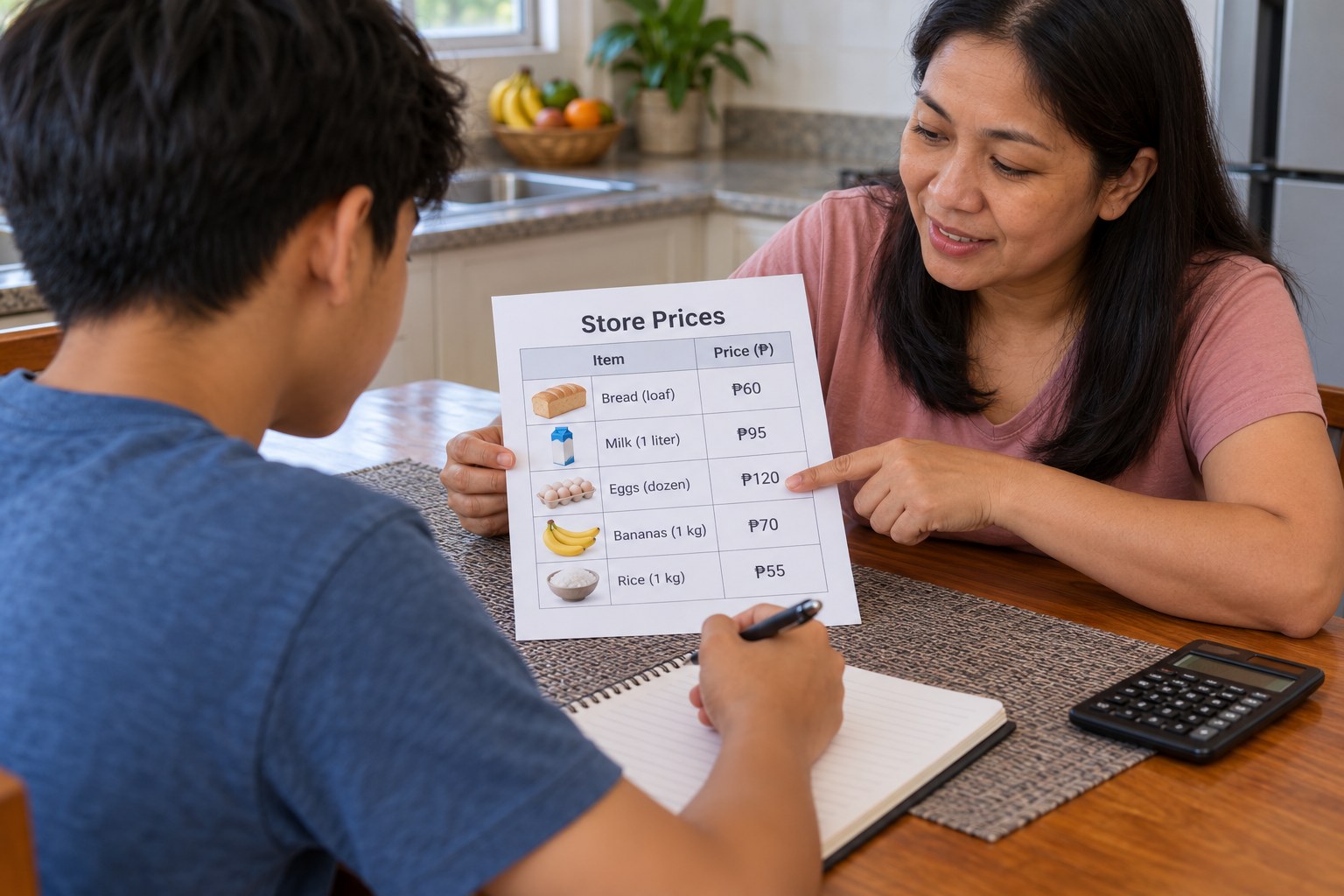
(6 min) Your teen explains in 3-4 sentences why comparing prices in dollars doesn't tell the whole story, such as differences in wages and costs of living in each country. Bonus: look up today's real exchange rates and redo one conversion.
Conclusion
Your teen used unit rates twice, once for price per item and once to convert currencies, which is the same math travelers, importers and businesses use every day.
Make your own lesson plan in minutes
Describe a topic and Resource Portal AI writes the objectives, materials and steps for your group.
Try Resource Portal AI