Ocean in a Glass: How Carbon Dioxide Makes Water More Acidic
Overview
Watch your own breath make water more acidic.
Description
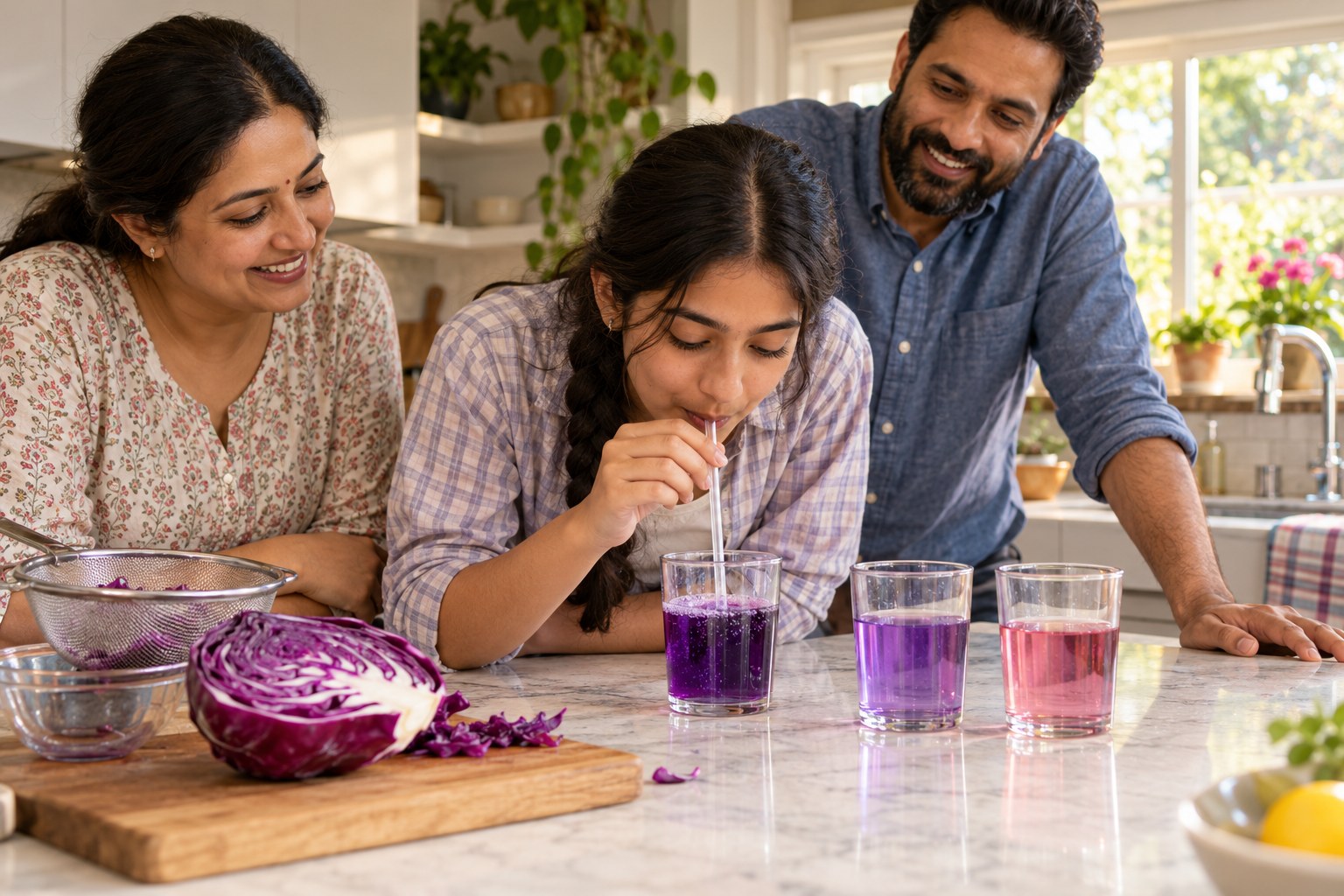
Your teen makes a red cabbage pH indicator, then compares three cups: plain tap water, tap water they gently blow into through a straw for two minutes, and plain sparkling water, recording each color against a homemade pH chart made with vinegar and baking soda. They learn how dissolved carbon dioxide forms carbonic acid, why the ocean surface has become about 30 percent more acidic since the industrial era, and what that means for shell-building animals, ending with a short lab write-up.
Objective
Your teen will use a natural pH indicator to show how dissolved carbon dioxide lowers pH and explain how the same chemistry affects the ocean.
Materials
| Item | Quantity |
|---|---|
| Red cabbage leaves, chopped | 2 cups |
| Hot water (from a kettle, handled by an adult) | 2 cups |
| Clear cups or glasses | 5 |
| Plain tap water | 1 cup |
| Plain unflavored sparkling water, freshly opened | 1/2 cup |
| Drinking straw | 1 |
| White vinegar | 1 tablespoon |
| Baking soda | 1 teaspoon |
| Strainer and a sheet of white paper | 1 each |
| Sheet of lined paper and a pen | 1 each |
Vocabulary
Preparation
- An adult pours the hot water over the 2 cups of chopped cabbage in a heat-safe bowl and lets it steep about 10 minutes until deep purple; strain and cool before the lesson.
- Set the 5 clear cups on the sheet of white paper so colors are easy to see.
- Safety: your teen only blows out through the straw, never sips; nothing in this lesson is for drinking.
Introduction
Hold up the purple cabbage juice and tell your teen it can detect acids. Then ask: if you breathe into water, do you think you could change it enough for the cabbage to notice?
What gas do we breathe out, and where else does that gas come from?
Why might a little more acid matter to an animal that builds a shell?
Steps
Conclusion
Ask: your breath changed a cup in two minutes; what happens when the whole atmosphere does that to the ocean for 200 years? Big problems often have simple chemistry underneath.
Make your own lesson plan in minutes
Describe a topic and Resource Portal AI writes the objectives, materials and steps for your group.
Try Resource Portal AI