Frozen Comet Treasure Melt
Overview
Melt an icy comet to rescue the treasures inside.
Description
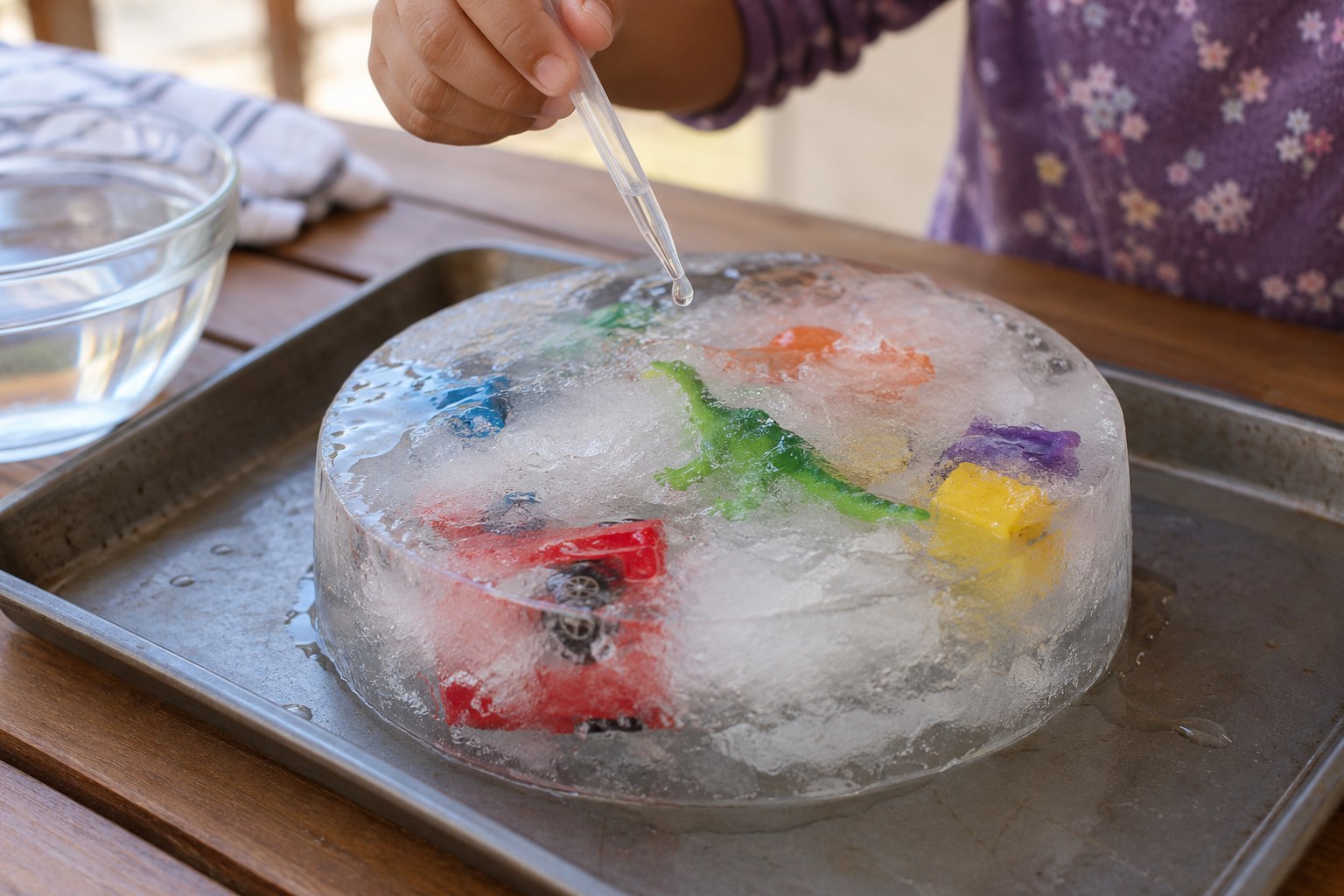
Your child learns that comets are giant balls of ice and dust in space, then uses warm water, droppers and spoons to melt a homemade 'comet' of ice and rescue the big toys frozen inside.
Objective
Your child will observe ice melting, compare warm and cold water, and say that comets are made of ice, dust and rock.
Materials
| Item | Quantity |
|---|---|
| Comet made the night before: a bowl of water with a spoonful of dirt or cocoa and 3-4 large toys frozen inside | 1 per 2 children |
| Large toys bigger than a toilet-paper tube (bath toys, big blocks) | 3-4 per comet |
| Cups of warm (not hot) tap water and cold water | 1 of each per child |
| Droppers, squeeze bottles or spoons | 1-2 per child |
| Baking sheet or large tray and a towel | 1 per comet |
Vocabulary
Preparation
- The night before, fill a bowl with water, stir in a spoonful of dirt or cocoa powder so it looks dusty, add 3-4 large toys, and freeze it. Use only toys too big to fit inside a toilet-paper tube.
- Pop the comet out onto a tray, and set out cups of warm tap water (test it with your wrist) and cold water.
Introduction
Show your child the frozen comet on the tray. Say: this is a comet, like the ones that fly through space. There are treasures stuck inside. How can we get them out?
What happens to ice when it gets warm?
Do you think warm water or cold water will melt it faster?
Steps
Conclusion
Ask: which water melted the comet faster, warm or cold? Real comets start melting and grow tails when they get close to the warm Sun.
Make your own lesson plan in minutes
Describe a topic and Resource Portal AI writes the objectives, materials and steps for your group.
Try Resource Portal AI