Tower Crane Counterweight: Balance a Ruler Lever and Write the Equation
Overview
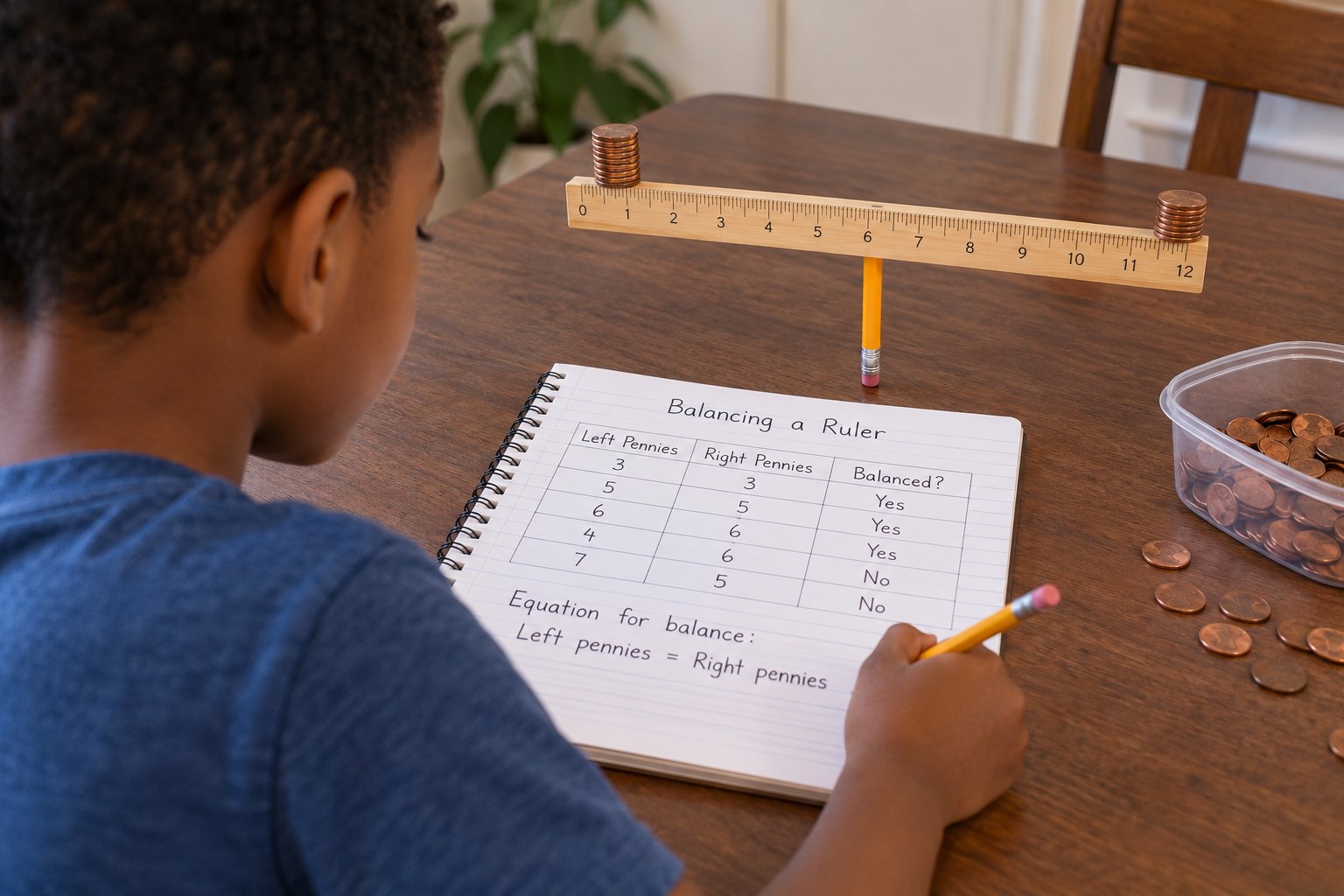
Balance a coin crane and find the lever equation.
Description
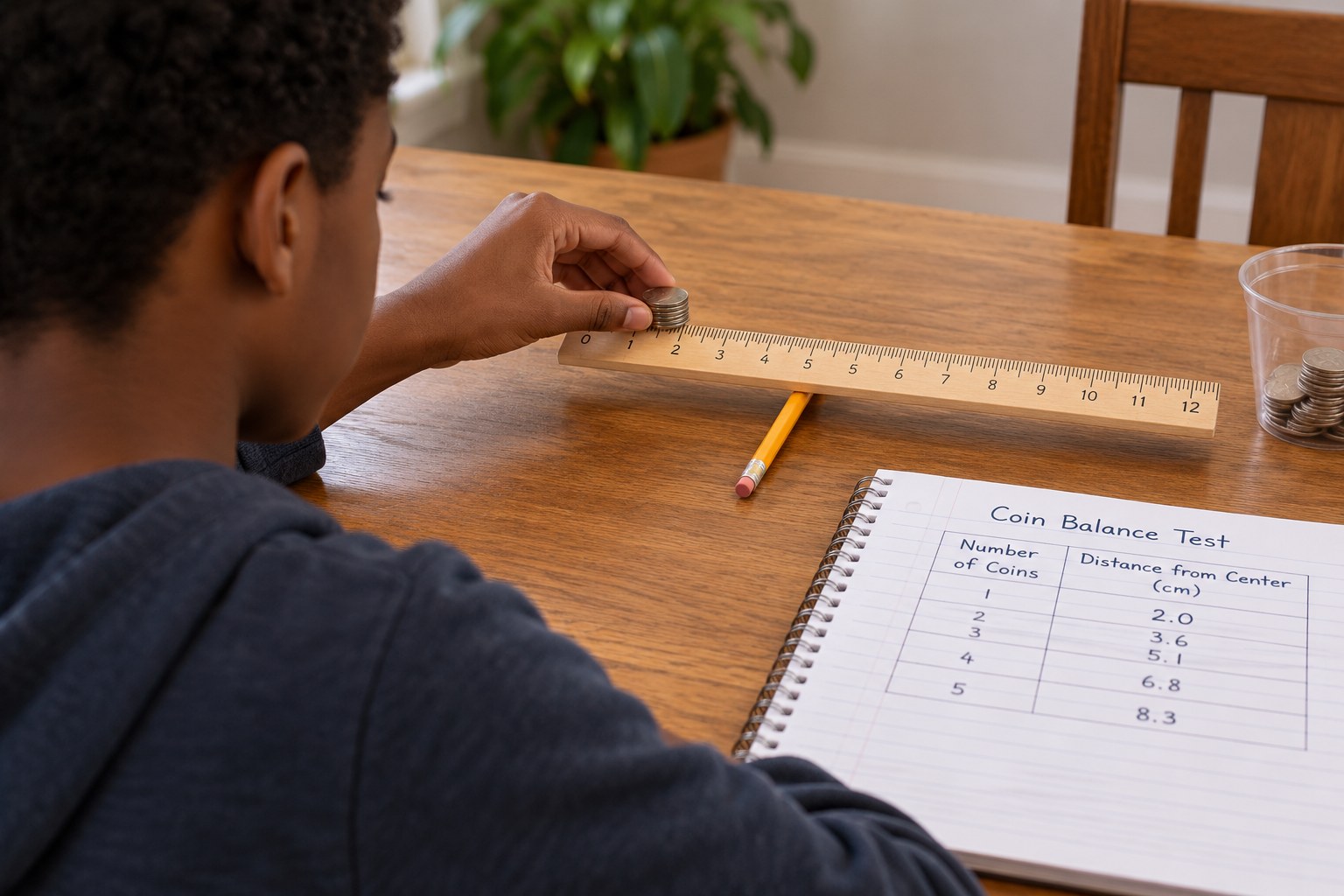
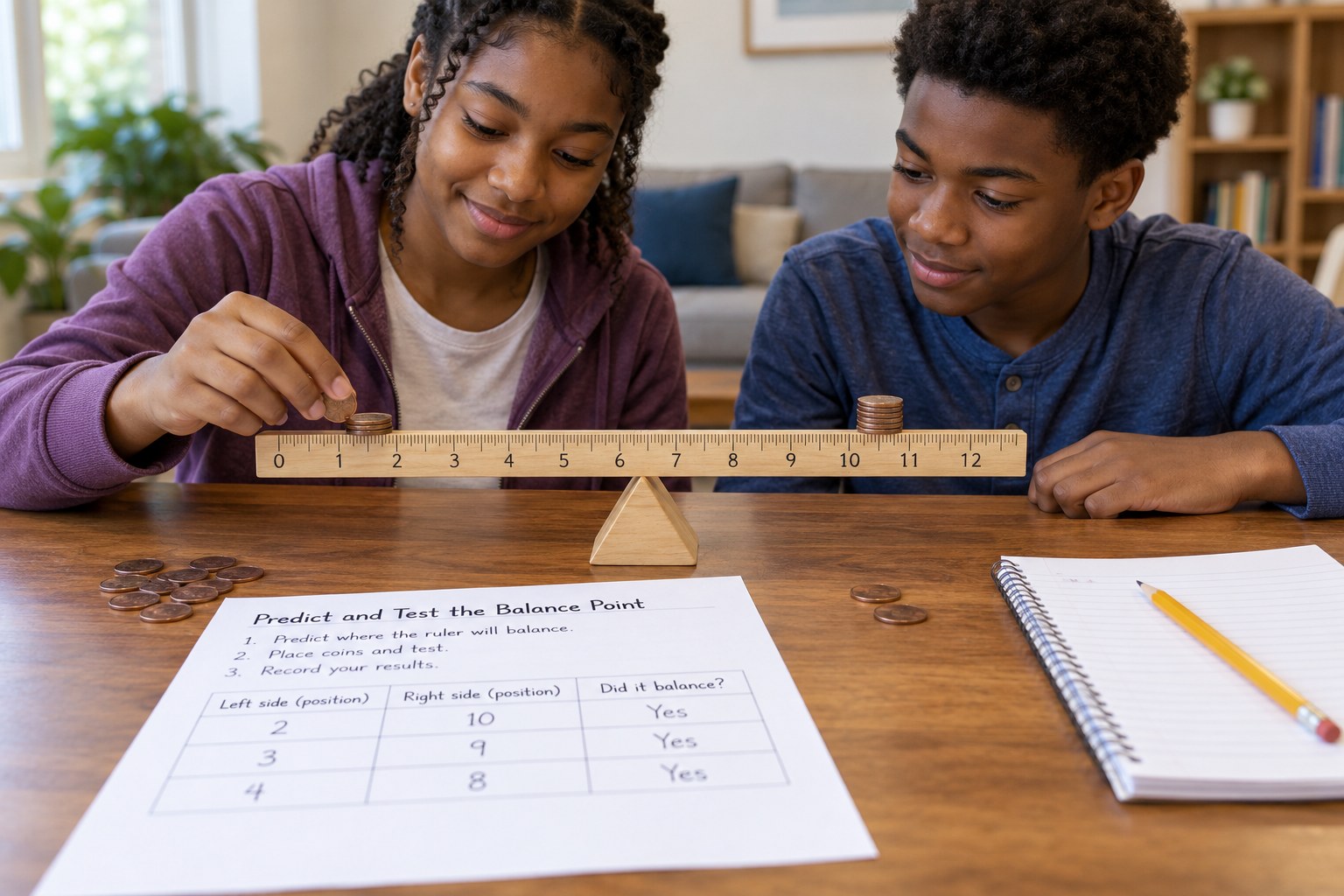
Your teen models a construction tower crane with a ruler balanced on a pencil, finds where different stacks of coins balance a load, and discovers and writes the equation that tells a crane operator how far out a load can go.
Objective
Your teen will collect balance data with a ruler lever, identify the relationship between weight and distance from the pivot, write it as an equation, and solve one-step equations to predict balance points.
Standards
Materials
| Item | Quantity |
|---|---|
| 30-centimeter (12-inch) ruler, flat and stiff | 1 |
| Round pencil or marker for the pivot | 1 |
| Identical coins, such as pennies | 20 |
| Small piece of tape | 1 |
| Graph paper, pencil and calculator | 1 each |
Vocabulary
Preparation
- Tape the pencil to the table so it doesn't roll, and balance the ruler on it at its center mark (15 cm or 6 in).
- Practice stacking coins so the center of each stack sits right on a ruler mark.
- Look up a photo of a tower crane so your teen can see the jib (load arm) and counter-jib (counterweight arm).
Introduction
Show your teen a picture of a tower crane. Ask: why don't these cranes tip over when they lift steel beams? And why do the giant concrete blocks sit on the short arm at the back? Today you'll build a coin crane and find the math the crane is built on.
What do you think happens if the load moves farther out on the arm?
Have you ever balanced a seesaw with someone heavier or lighter than you?
Steps



Conclusion
Ask: where else do you see levers? Seesaws, scissors, wheelbarrows and bottle openers all use the same rule. Find one at home and explain which side has the longer arm.
Make your own lesson plan in minutes
Describe a topic and Resource Portal AI writes the objectives, materials and steps for your group.
Try Resource Portal AI