Letters Across the Atlantic: An Irish Emigrant's Story
Overview
Write a historically grounded letter from an Irish famine emigrant.
Description
Your teen learns how the Great Famine of the 1840s drove more than a million people to leave Ireland, then writes a historically grounded letter from a fictional young emigrant to family back home, using dialogue, pacing and precise sensory details.
Objective
Your teen will research key facts about the Great Famine and Irish emigration, then write a narrative letter that uses dialogue, pacing and description, and precise words and sensory details to convey experiences and events.
Standards
Materials
| Item | Quantity |
|---|---|
| The 'About the Great Famine' fact sheet below, printed or on screen | 1 |
| Lined paper or a document on a computer | 1 |
| Pencil or pen and highlighter | 1 each |
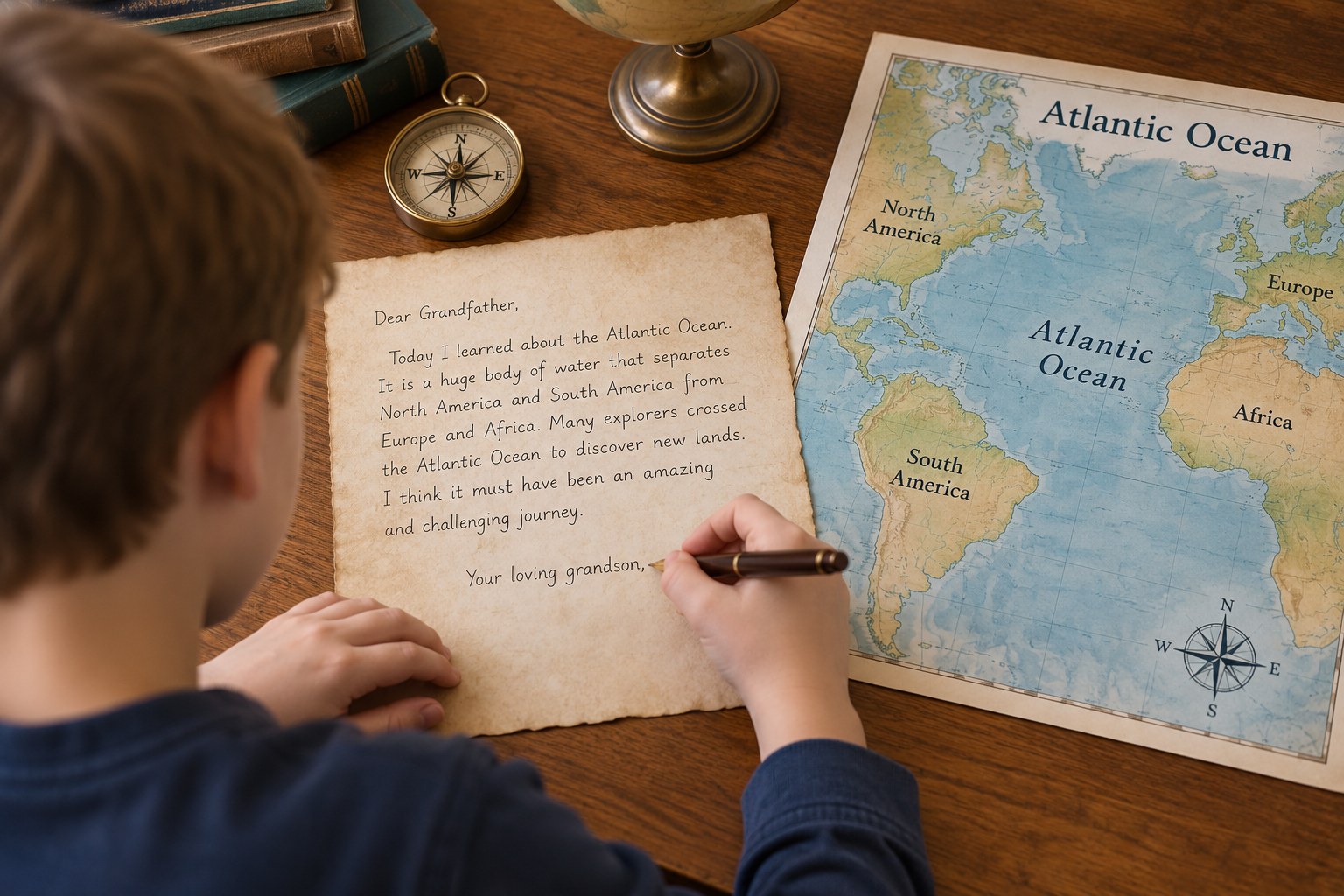
| Optional: a map of Ireland, the Atlantic and North America | 1 |
Vocabulary
Preparation
- Read the fact sheet yourself and, if you like, find a map showing Irish ports such as Cork and Liverpool (where many emigrants sailed from) and arrival ports such as New York, Boston and Quebec.
- Set up a quiet writing space.
Introduction
Ask why St. Patrick's Day is celebrated so widely in the United States, sometimes even more than in Ireland. Explain that one big reason is the millions of Irish people who emigrated, especially during and after the Great Famine, and whose descendants kept their traditions alive.
What would make a family decide to leave home forever?
What might someone write in a letter home after a long journey?
Steps
Conclusion
Ask: how does knowing this history change how you see St. Patrick's Day parades? If your family has an immigration story from any country, consider asking a relative to share it.
Make your own lesson plan in minutes
Describe a topic and Resource Portal AI writes the objectives, materials and steps for your group.
Try Resource Portal AI