Trailhead Sign Showdown: Argue a Leave No Trace Rule with Evidence
Overview
Write an evidence-based argument and turn it into a trailhead sign.
Description
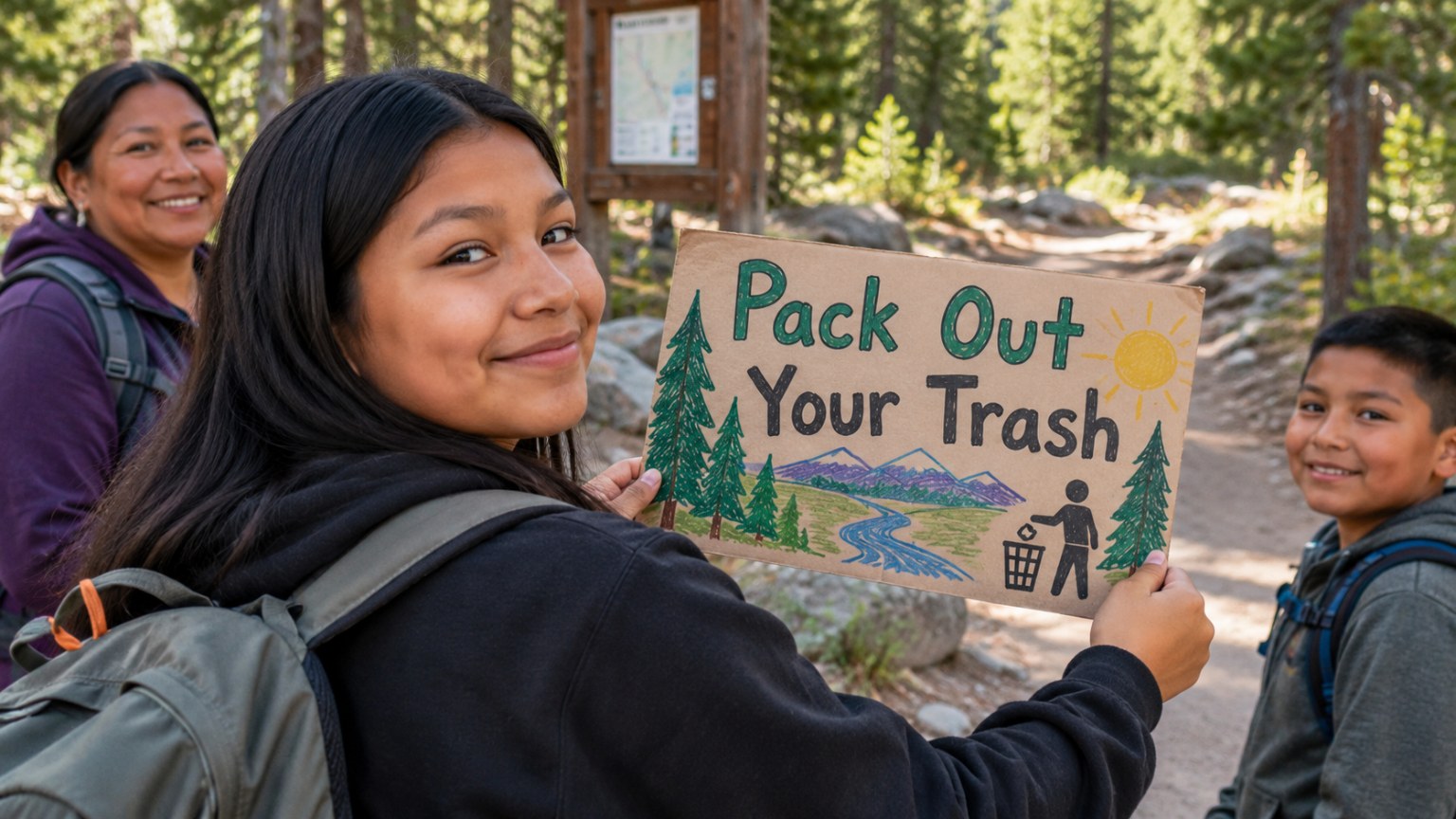
Your teen picks a debated camper habit (tossing orange peels, feeding the camp squirrels, stacking rock cairns, taking 'just one' wildflower), writes a short argument with a claim, counterclaim and evidence from fact cards, then condenses it into a persuasive trailhead sign.
Objective
Your teen will write an argument that introduces a claim, acknowledges and answers an opposing claim, and supports reasons with relevant evidence, then revise it into a concise public sign.
Standards
Materials
| Item | Quantity |
|---|---|
| Evidence cards (in the section below), copied and cut apart | 1 set |
| Notebook paper and pencil or a laptop | 1 per teen |
| Poster board, cardboard or a large sheet of paper for the sign | 1 per teen |
| Markers | 1 set to share |
Vocabulary
Preparation
- Copy and cut out the evidence cards.
- Optional: find a photo of a real trailhead sign from a park website to show your teen.
Introduction
Ask: 'Is an orange peel litter? It's natural and it'll rot, right?' Let your teen argue for a minute, then say most park rangers disagree, and today they'll decide for themselves using evidence.
Have you ever seen someone feed ducks or squirrels at a park? What happened?
What makes a sign convincing instead of annoying?
Steps
Conclusion
Ask: which counterclaim was hardest to answer? Post the sign at home or share it with a scout troop, club or class.
Make your own lesson plan in minutes
Describe a topic and Resource Portal AI writes the objectives, materials and steps for your group.
Try Resource Portal AI