Steady-Hand Circuit Game: Build a Light-Up Maze with AA Batteries
Overview
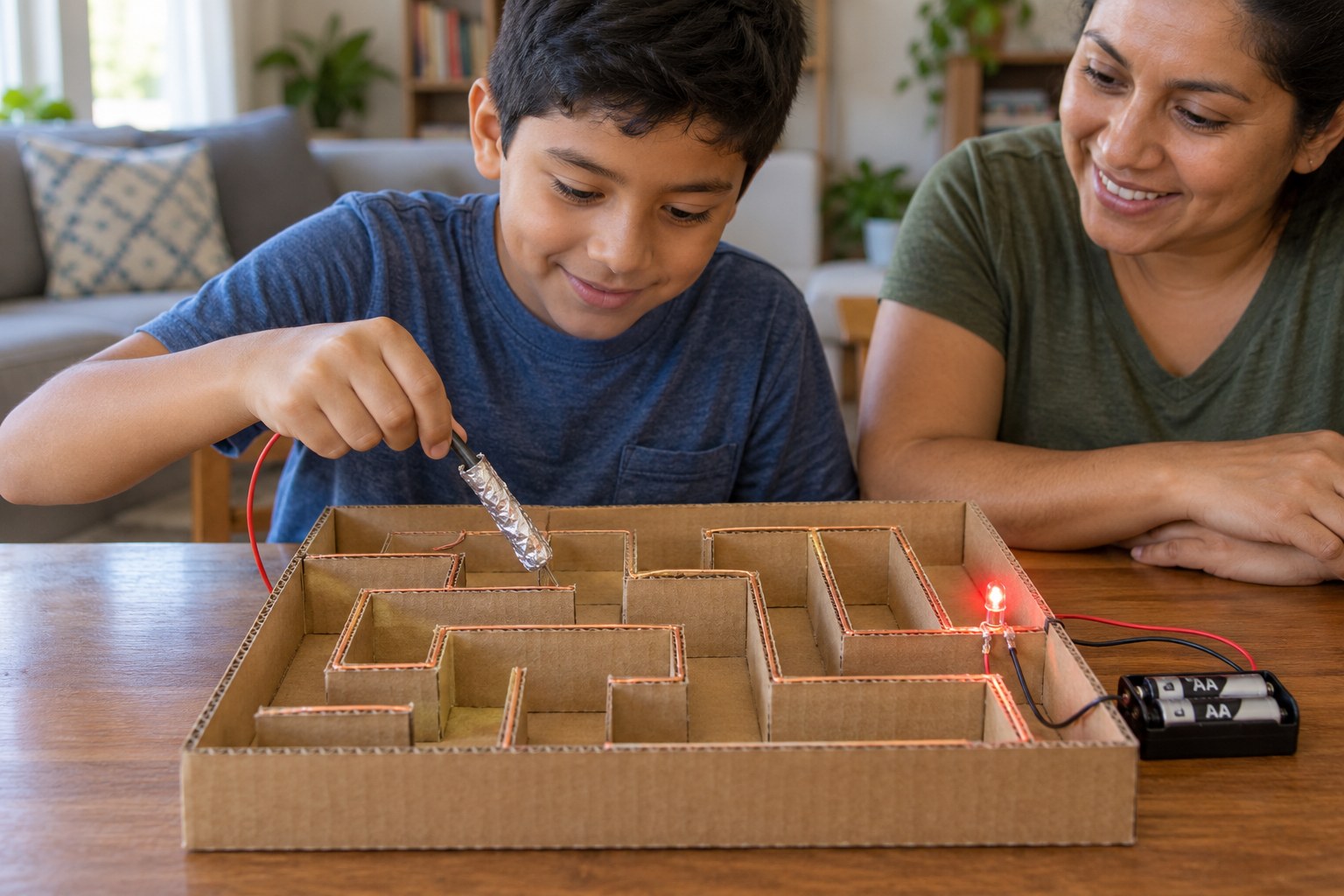
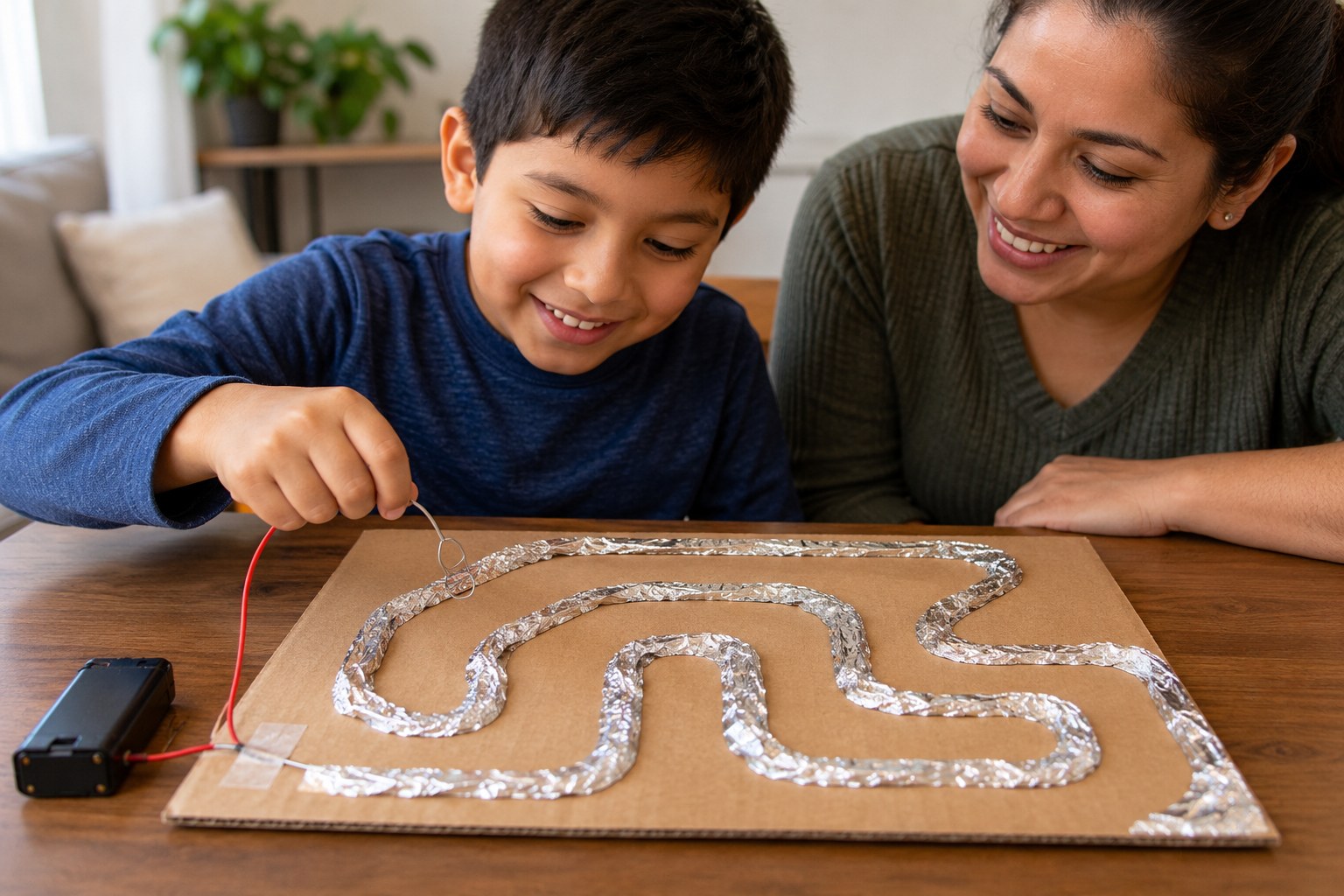
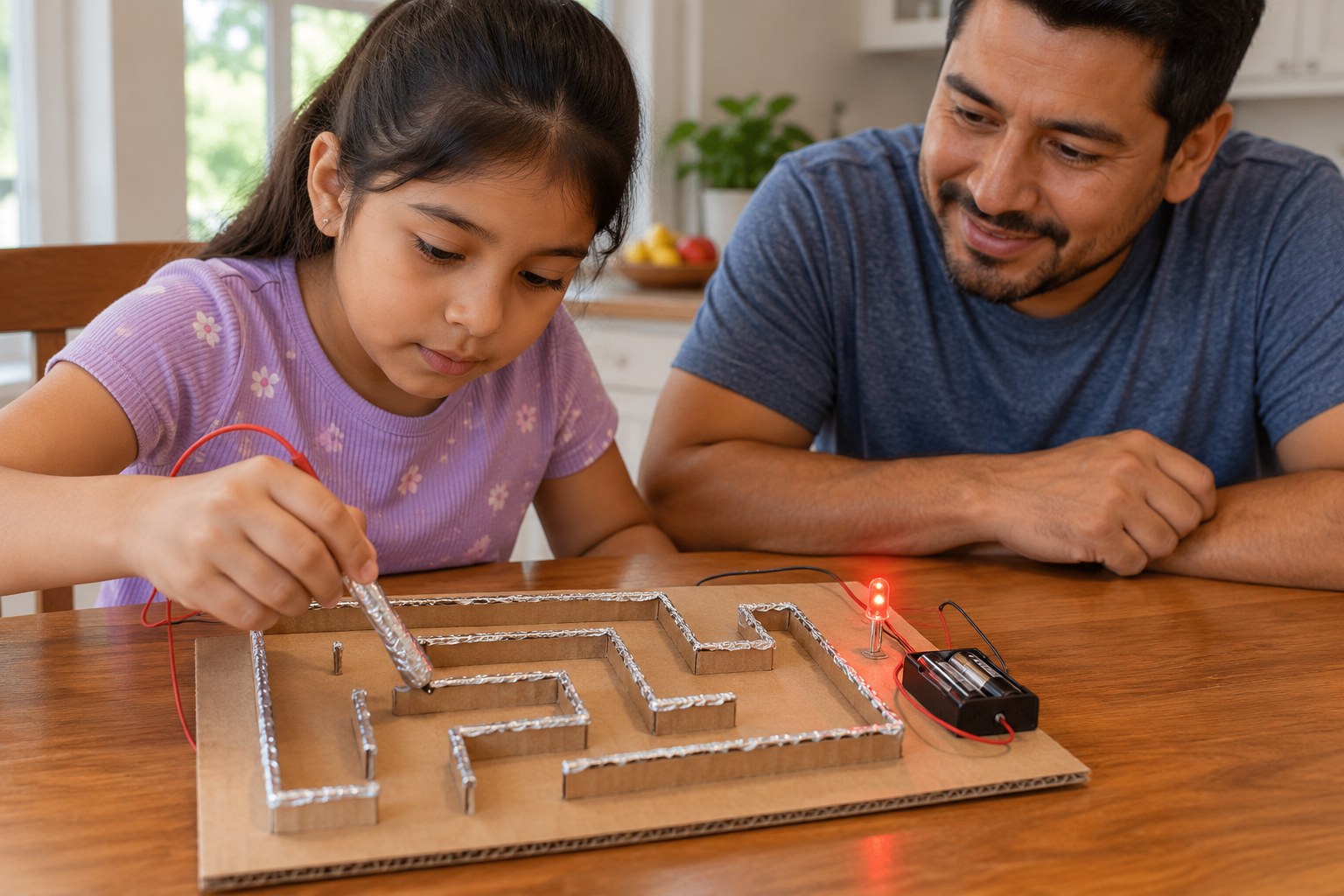
If the wand touches the foil, the light flashes.
Description
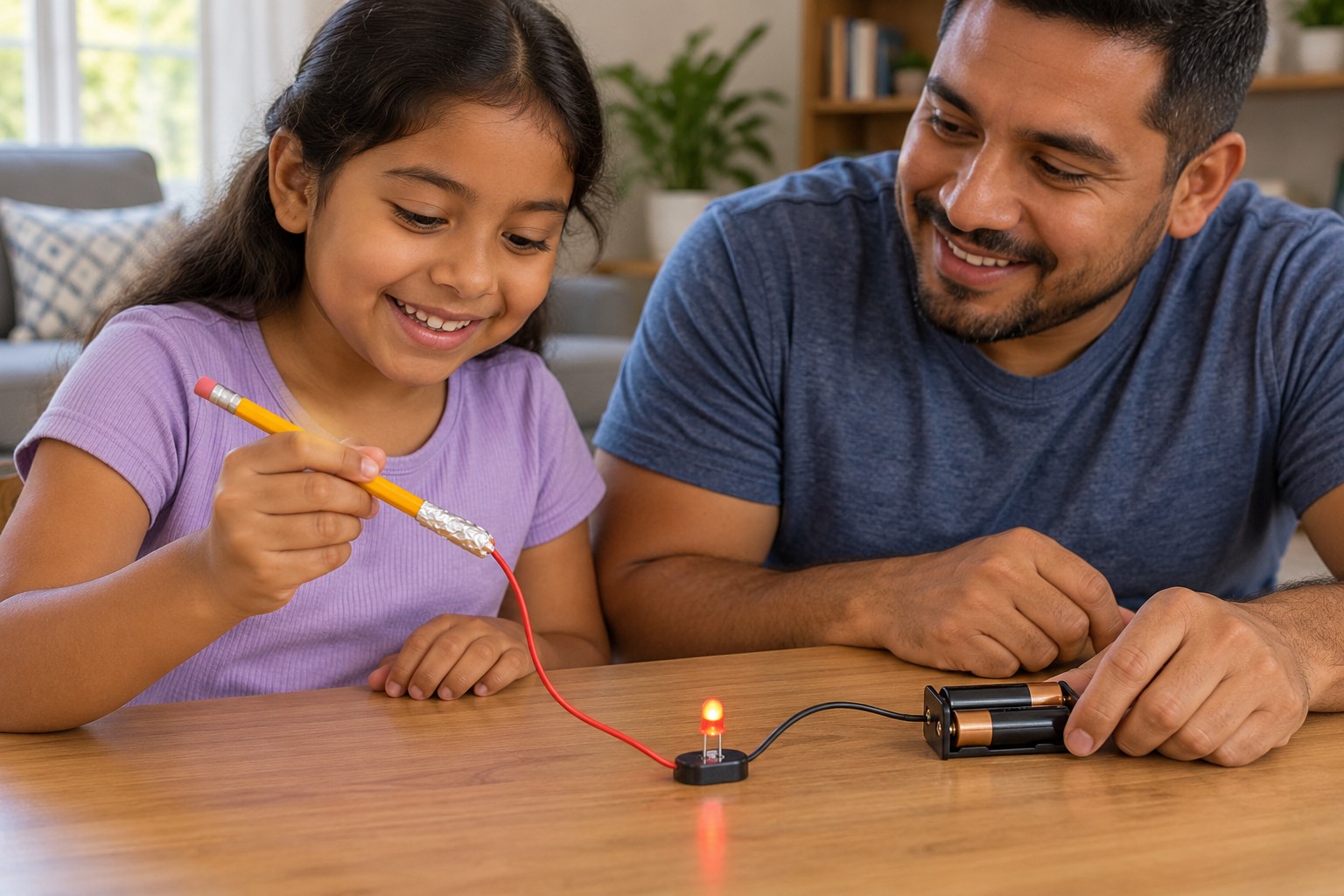
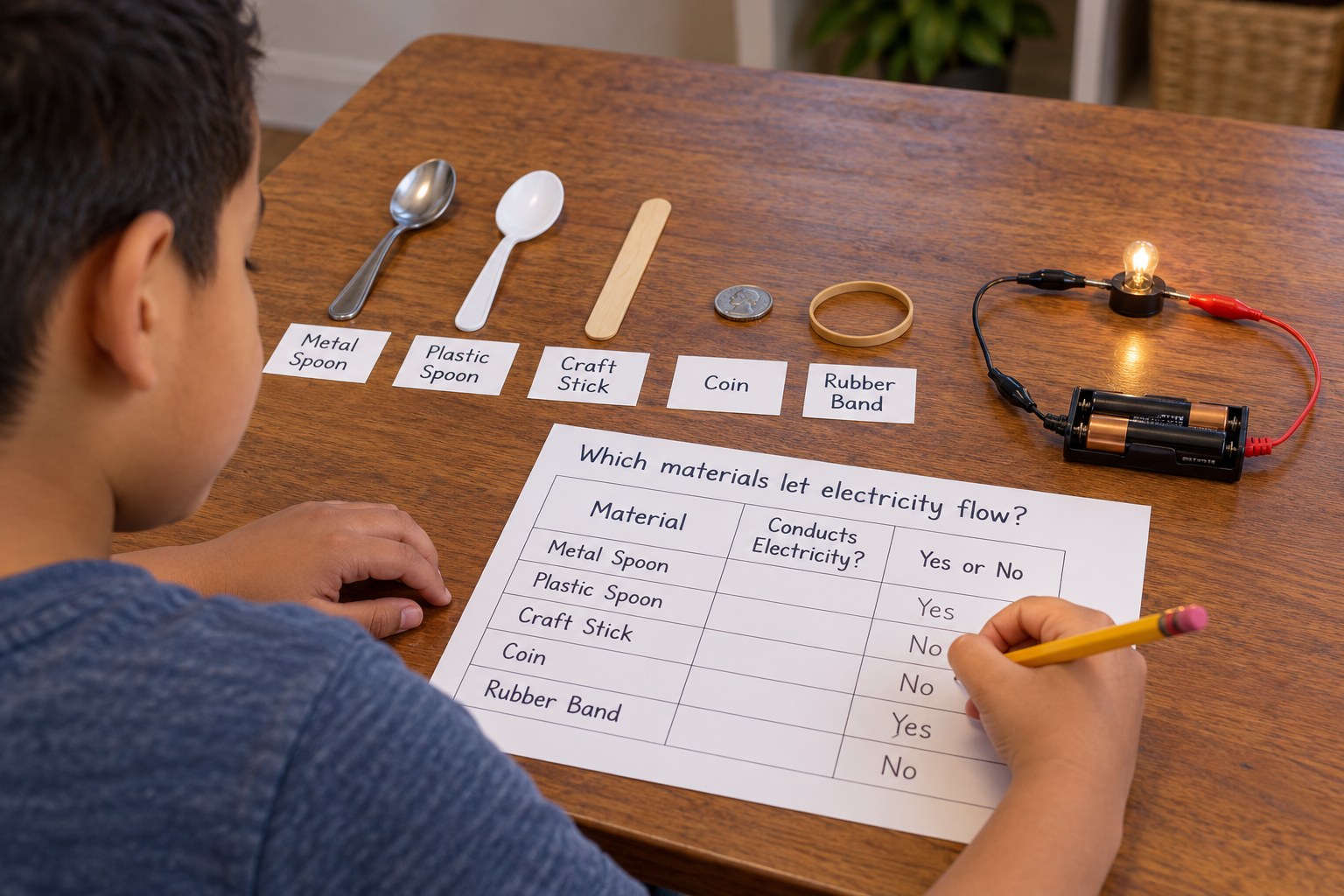
Your child builds a foil-edged maze board and a foil-tipped wand wired to two AA batteries and an LED, so the light flashes whenever the wand touches the edge, then tests which handle materials keep the circuit open.
Objective
Your child will build a working simple circuit with a switch-like gap, explain how touching the foil closes the circuit, and test conductors and insulators.
Materials
| Item | Quantity |
|---|---|
| AA batteries | 2 |
| 2-AA battery holder with wire leads (or tape the batteries end to end) | 1 |
| LED (any color, 5 mm) or a small 3-volt flashlight bulb | 1 |
| Aluminum foil | about 2 feet |
| Insulated wire or alligator-clip leads (or long foil strips folded into flat ribbons) | 3 pieces, about 12 inches each |
| Cardboard about 9 by 12 inches | 1 |
| Pencil or wooden chopstick for the wand | 1 |
| Tape and glue stick | 1 each |
| Test materials: plastic spoon, metal spoon, wooden craft stick, coin, rubber band, paper | 6 |
Vocabulary
Preparation
- Gather the parts and check that the batteries are fresh AA batteries. This lesson uses only AA batteries: never wall outlets, and never coin or button batteries.
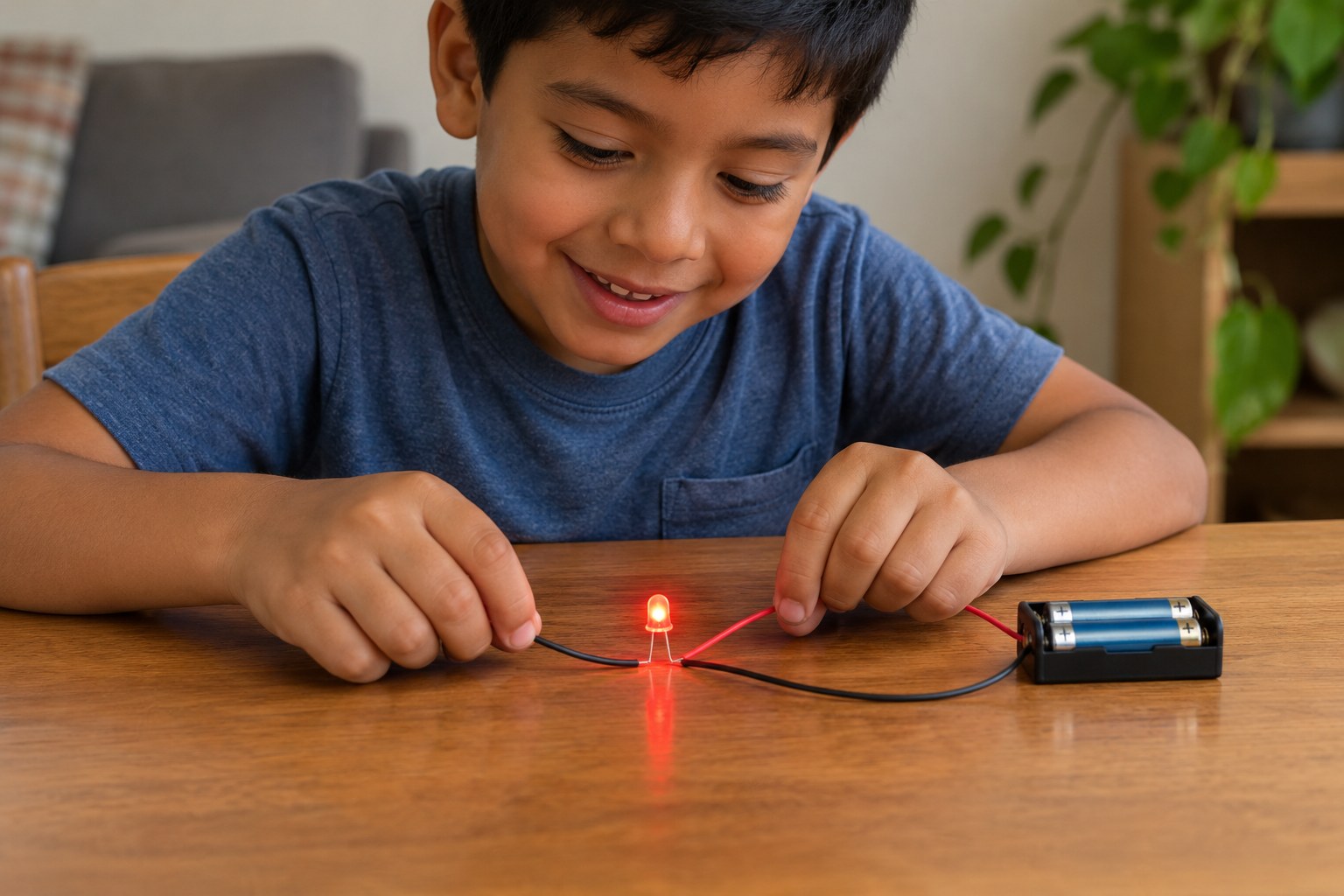
- Test the LED first: touch its long leg to the battery holder's + wire and its short leg to the - wire. If it doesn't light, flip it around.
Introduction
Show your child the LED and the batteries and challenge them: 'Can you make this light turn on using only these parts and some foil?' Let them try for one minute.
What path do you think electricity needs to travel?
Why do you think wires are covered in plastic?
Steps
Conclusion
Your child built a circuit that is open while their hand is steady and closes when the foil tip touches the edge. That is exactly how many alarms, buttons and switches work.
Make your own lesson plan in minutes
Describe a topic and Resource Portal AI writes the objectives, materials and steps for your group.
Try Resource Portal AI