Lesson plan

As Warm as Toast: A Simile Poem for Mother's, Father's or Caregiver's Day
Writing40 minutesGrades: 4th, 5th
As Warm as Toast: A Simile Poem for Mother's, Father's or Caregiver's Day

Overview

Write a simile poem that captures your special grown-up.

Description

Your child brainstorms what makes their caregiver special, turns plain descriptions into fresh similes and metaphors, revises out the tired ones, and writes a short poem to read aloud or tuck into a card.

Objective

Your child will explain the meaning of similes and metaphors, write at least 4 original similes or metaphors about a caregiver, and revise a poem by replacing clichés with fresher comparisons.

Standards

L.4.5aELA · Grade 4 · Language
Explain the meaning of simple similes and metaphors (e.g., as pretty as a picture) in context.
W.4.5ELA · Grade 4 · Writing
With guidance and support from peers and adults, develop and strengthen writing as needed by planning, revising, and editing.
L.5.5aELA · Grade 5 · Language
Interpret figurative language, including similes and metaphors, in context.

Materials

ItemQuantity
Paper or a notebook2 sheets
Pencil and colored pens or markers1 set
Cardstock for a final copy (optional)1 sheet
Sticky notesabout 10

Vocabulary

Simile
A comparison using like or as: her laugh is like popcorn popping.
Metaphor
A comparison that says one thing is another: Dad is the lighthouse of our house.
Cliché
A comparison used so often it feels tired, like as busy as a bee.
Sensory detail
A detail you can see, hear, smell, taste or touch.

Preparation

Introduction

Read the three lines aloud. Ask: which line lets you actually feel something? Why does the third one work better than 'as nice as pie'?
What does your grown-up's laugh sound like?
What is something they do that nobody else does quite the same way?

Steps

1Step 1
Decode the examples
(6 min) Read the Simile and metaphor examples below. For each one, your child explains in their own words what it means about the person, for example: 'Grandpa's voice is gravel in a can' means his voice is deep and rough.
2Step 2
Sensory brainstorm
(8 min) Your child writes 5 headings: sounds like, feels like, smells like, moves like, and is like (a place). Under each, they list real details about the caregiver, like the smell of coffee or the way they whistle while cooking.
3Step 3
Make comparisons
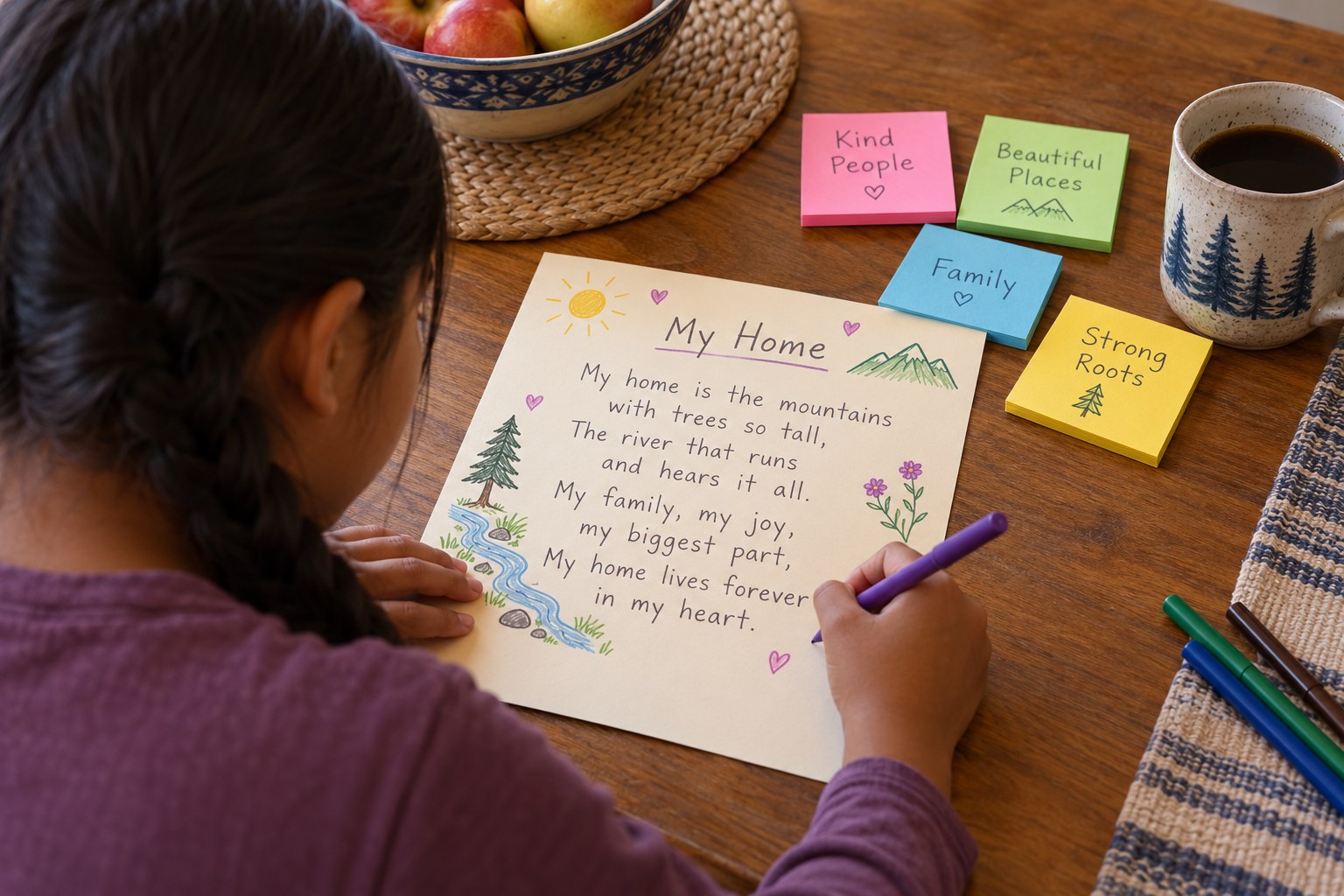
(8 min) Your child turns 4-6 details into similes and metaphors, one per sticky note. Each one should compare the person to something surprising but true, not just sweet as sugar. Aim for comparisons only your family would understand.
4Step 4
Revise the clichés
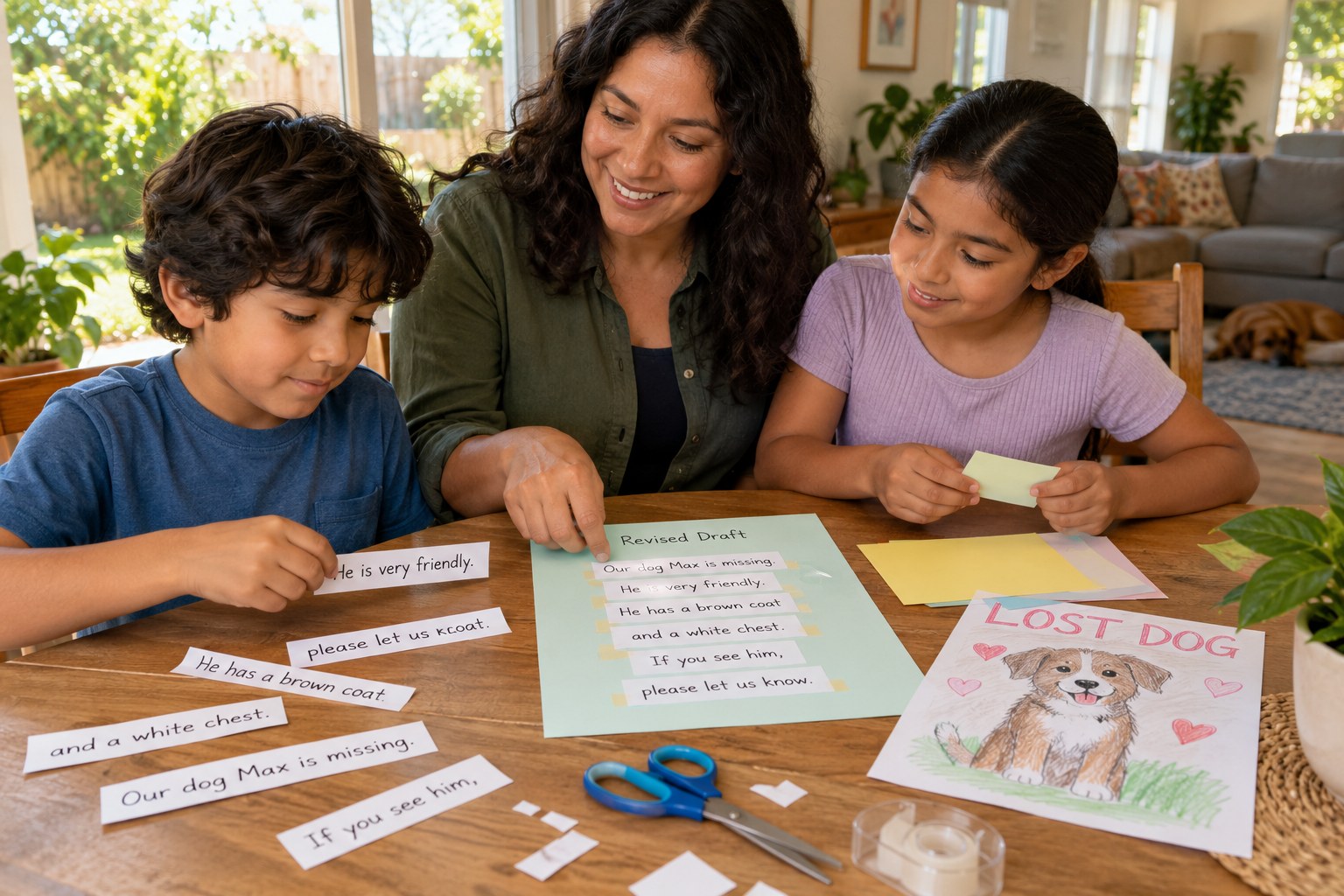
(8 min) Read each sticky note together. If it sounds like something you have heard many times, your child crosses it out and tries again by making it more specific to this person and this family.
5Step 5
Arrange and publish
(10 min) Your child arranges the best 4-6 comparisons into a poem, adds a first line naming the person and a last line saying thank you, and copies it neatly onto cardstock. They practice reading it aloud with expression.

Conclusion

Your child reads the poem to the caregiver on their special day. Ask: which comparison are you proudest of, and why does it fit this person?

Make your own lesson plan in minutes

Describe a topic and Resource Portal AI writes the objectives, materials and steps for your group.

Try Resource Portal AI