Lesson planDía de los Muertos Oral History: Interview an Elder and Give a Tribute
Language Arts45 minutesGrades: 6th, 7th, 8th
Overview
Interview an elder and present a one-minute tribute.
Description
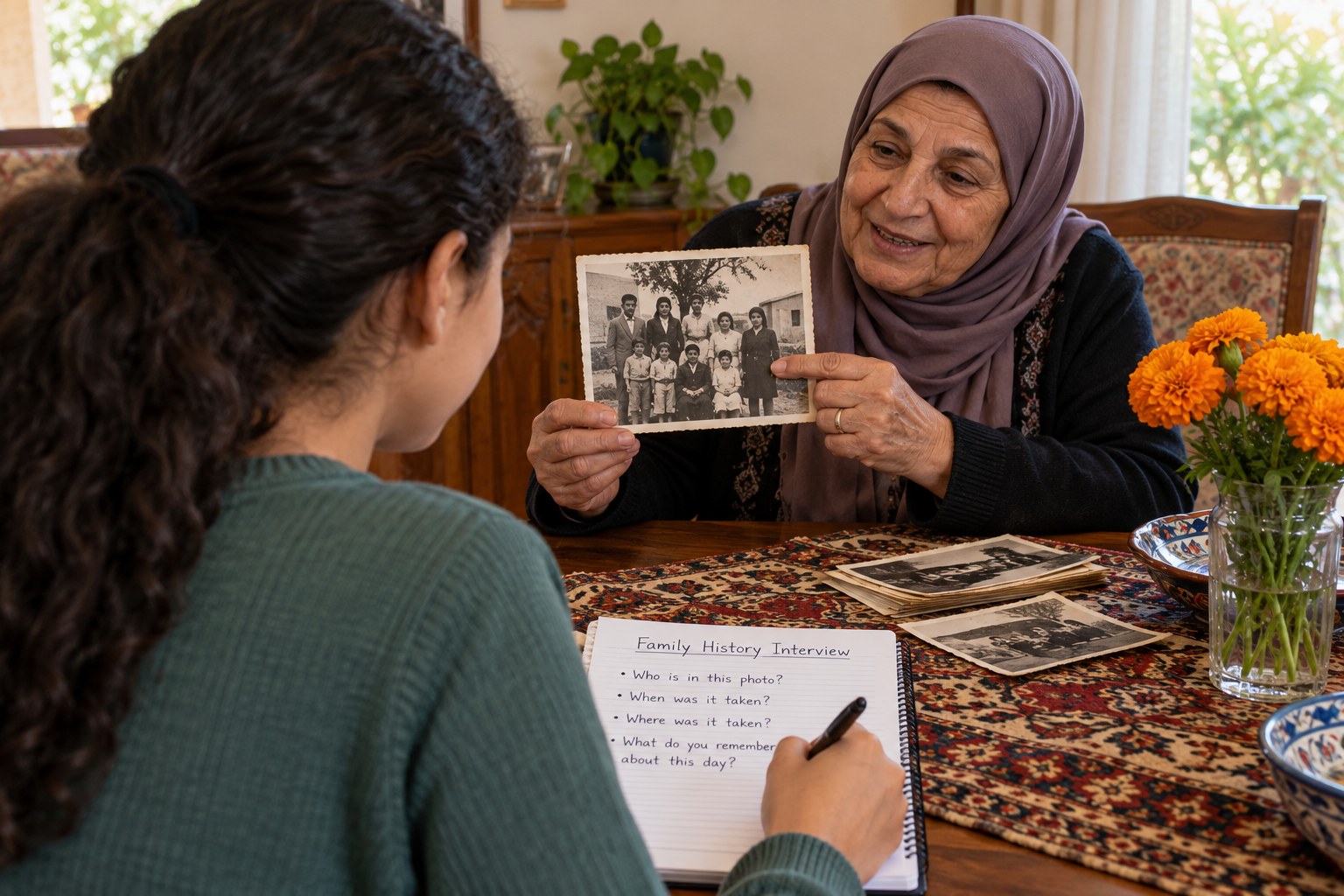
In the spirit of Día de los Muertos, when families share stories of loved ones who have died, your teen plans open-ended questions, interviews an elder about a relative or ancestor (or about family traditions of remembering), takes notes, and turns them into a one-minute spoken tribute delivered with eye contact and clear pacing.
Objective
Your teen will write open-ended and follow-up questions, conduct a respectful interview, select the most meaningful details, and present a focused tribute with clear organization, eye contact and volume.
Standards
SL.7.1cELA · Grade 7 · Speaking & Listening Pose questions that elicit elaboration and respond to others' questions and comments with relevant observations and ideas that bring the discussion back on topic as needed.
SL.7.4ELA · Grade 7 · Speaking & Listening Present claims and findings, emphasizing salient points in a focused, coherent manner with pertinent descriptions, facts, details, and examples; use appropriate eye contact, adequate volume, and clear pronunciation.
Materials
| Item | Quantity |
|---|
| An elder to interview in person, by phone or by video (grandparent, great-aunt, neighbor or family friend) | 1 |
| Notebook and pen | 1 each |
| Phone for audio recording, with permission | 1 (optional) |
| A photo of the person being remembered | 1 (optional) |
| Index cards for speaking notes | 3-5 |
Vocabulary
Oral history
History collected by recording people's spoken memories.
Open-ended question
A question that can't be answered with yes or no, such as 'What do you remember about...?'
Follow-up question
A question that asks someone to explain more about something they just said.
Tribute
A speech or work that shows respect and admiration for someone.
Preparation
- Arrange a 15-minute interview time with an elder and explain the project. Let them choose who to talk about; some people may prefer to talk about family traditions instead of a person who died.
- Ask permission before recording, and plan to share the finished tribute with the elder.
Introduction
Ask your teen: 'Who in our family do you know only from stories? On Día de los Muertos many families keep loved ones present by telling their stories. Today you'll collect a story before it gets lost.'
What makes a question get a long, interesting answer instead of a short one?
What details make a person come alive in a story?
Steps
1Step 1
Write the questions
(8 min) Your teen writes six open-ended questions, such as asking for a favorite memory of the person or what they taught the elder. Under each, they leave space to write a follow-up question during the interview.
2Step 2
Conduct the interview
(12 min) Your teen asks the questions, listens closely and asks at least two follow-up questions that build on what the elder said. They take notes on specific details: names, places, sayings, foods, sounds and smells.
3Step 3
Select and organize
(10 min) Your teen circles the three most vivid details and organizes the tribute: an opening that introduces the person, three details or stories in the middle, and a closing line about why they are remembered. They write key words on index cards.
4Step 4
Rehearse
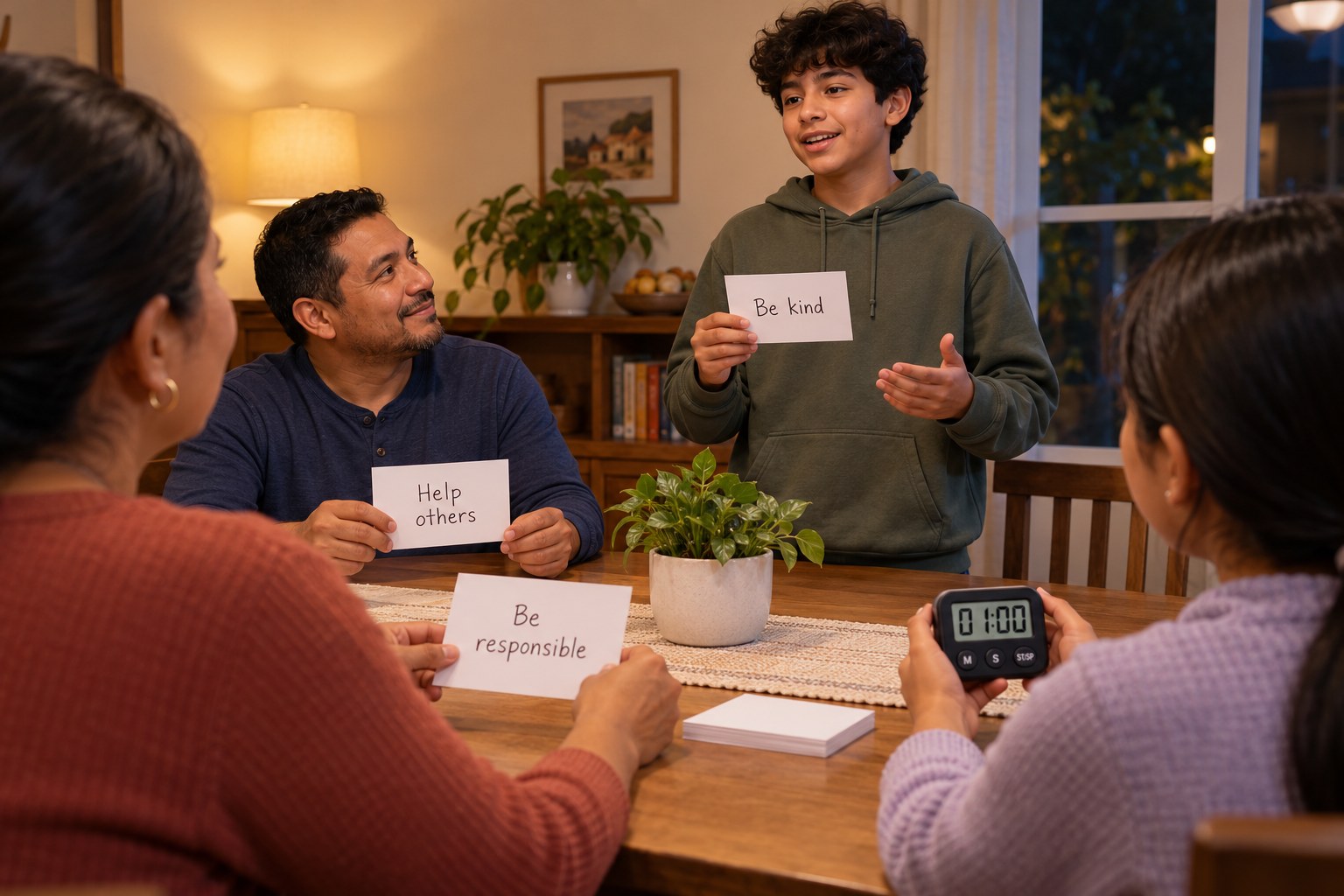
(7 min) Your teen practices the tribute out loud twice, aiming for about one minute. They practice looking up from the cards, slowing down at important moments and speaking loudly enough for the back of the room.
5Step 5
Present the tribute
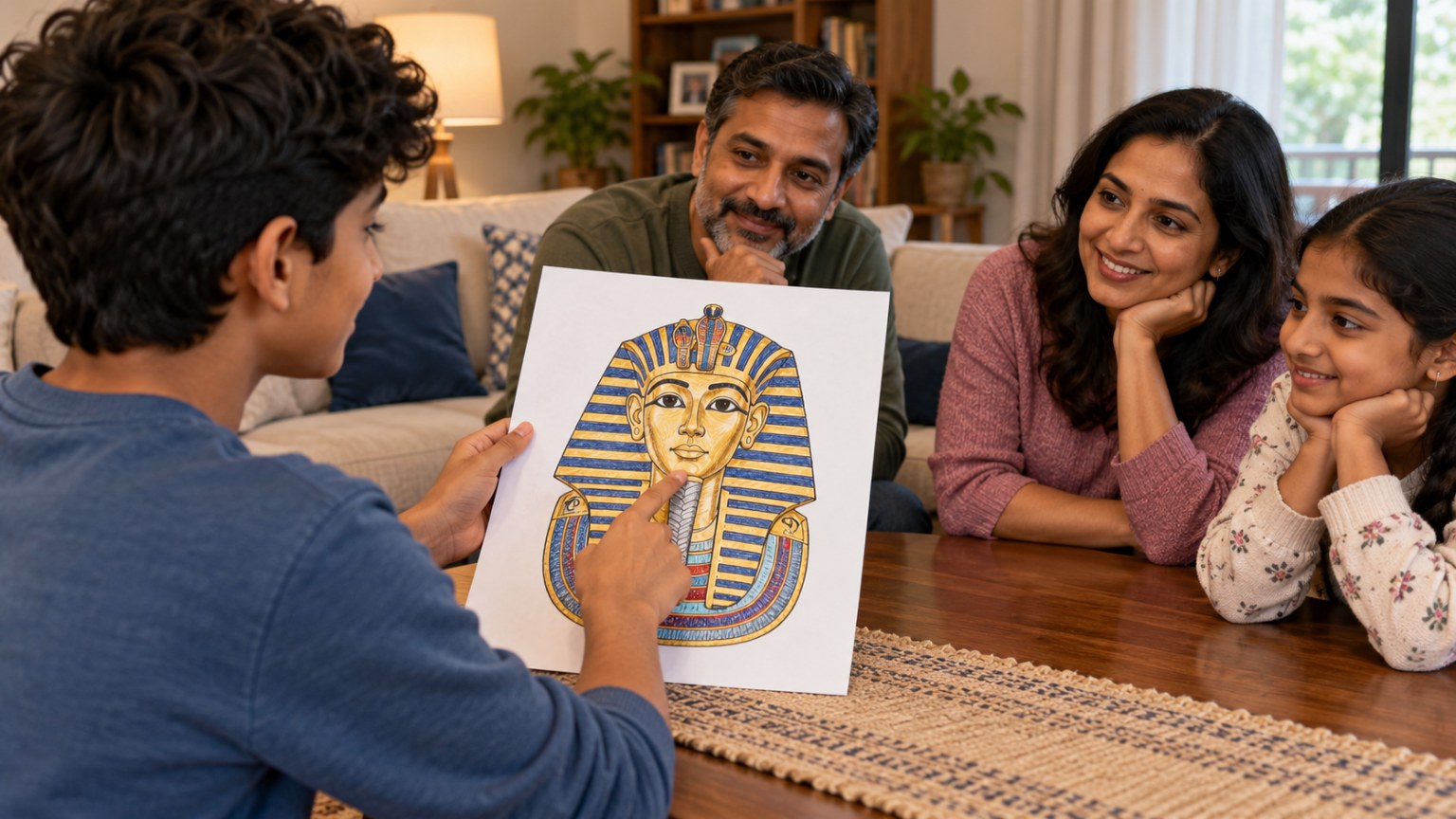
(6 min) Your teen presents the tribute to family members, ideally including the elder who was interviewed. Listeners share one detail that stayed with them.
Conclusion
Ask: which follow-up question got the best answer? What did you learn about your family? Oral histories are one way Día de los Muertos keeps memories alive across generations.
Make your own lesson plan in minutes
Describe a topic and Resource Portal AI writes the objectives, materials and steps for your group.
Try Resource Portal AI