Earth Day Carbon Footprint Math: Rates and Unit Conversions
Overview
Use unit rates to calculate and shrink your family's carbon footprint.
Description
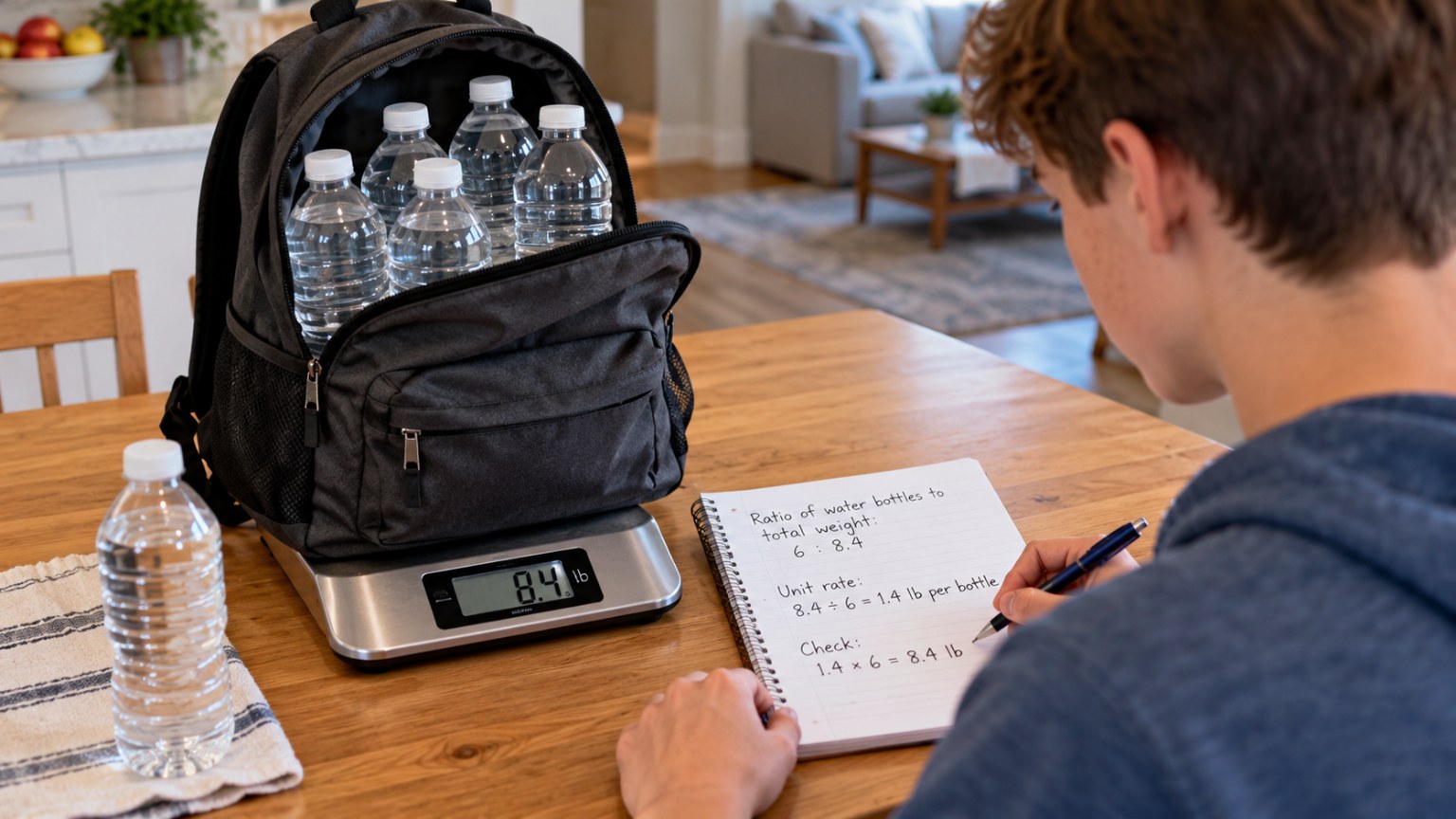
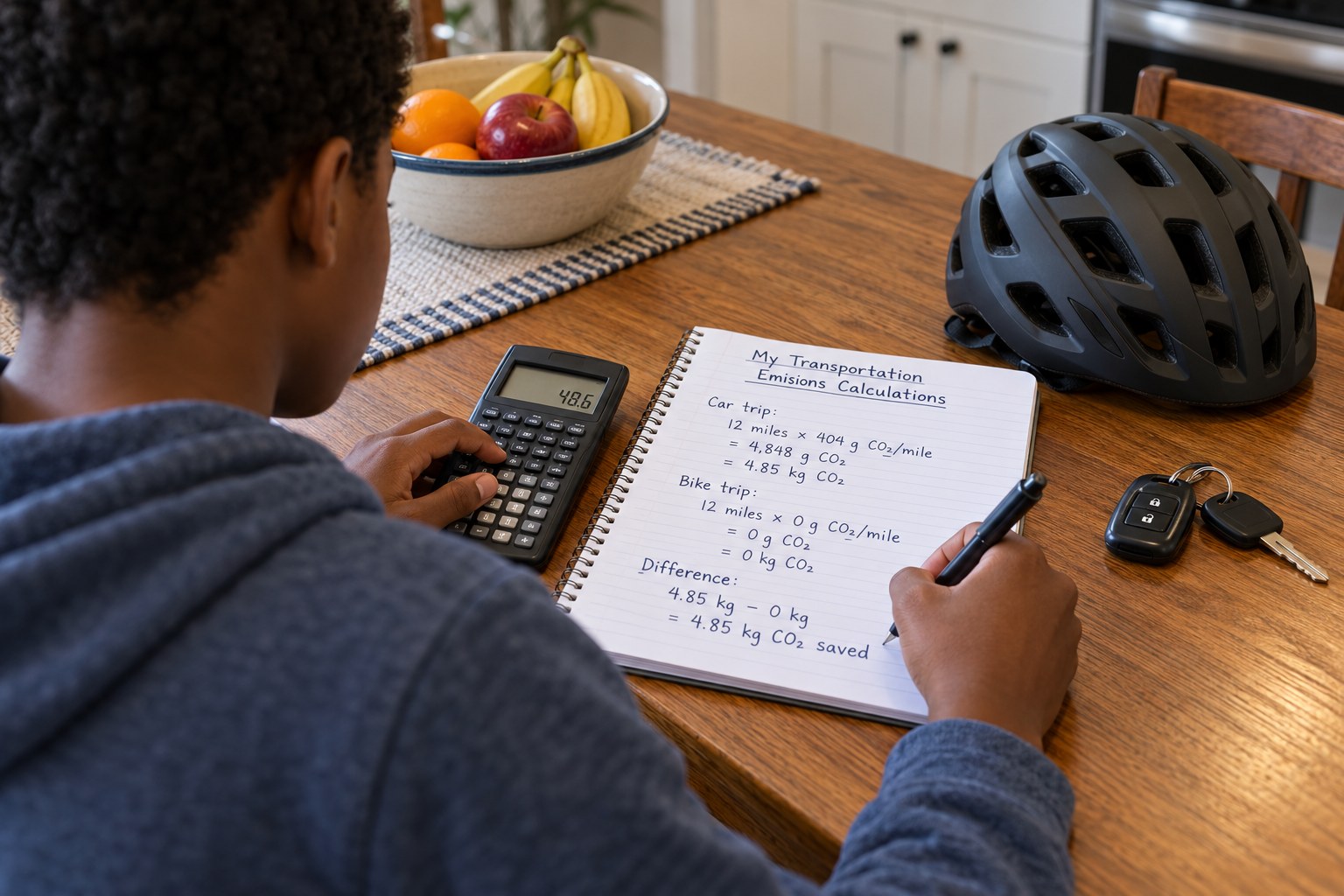
Your teen estimates the family's weekly car miles and electricity use, uses unit rates of about 400 grams of carbon dioxide per mile and 0.8 pounds per kilowatt-hour to calculate emissions, converts units, and compares how walking, biking or carpooling would change the total.
Objective
Your teen will solve unit rate problems about carbon dioxide emissions, convert between grams, kilograms and pounds, and use the results to compare transportation and energy choices.
Standards
Materials
| Item | Quantity |
|---|---|
| Calculator | 1 per teen |
| Paper and pencil or a spreadsheet | 1 per teen |
| Family calendar or memory of the week's car trips | 1 |
| A recent electric bill or a typical-use estimate (optional) | 1 |
| Map app or car odometer to check trip distances | 1 |
Vocabulary
Preparation
- Write the two reference rates on a card: a typical gasoline car emits about 400 grams of CO2 per mile (U.S. EPA estimate), and U.S. electricity produces on average about 0.8 pounds of CO2 per kWh (it varies by region; California's grid is cleaner than average).
- List the family's regular weekly trips (school, work, groceries, practice) with approximate round-trip miles.
Introduction
Ask your teen: if a car burned a gallon of gas, how much would the carbon dioxide weigh? About 8,900 grams, nearly 20 pounds, more than the gas itself, because carbon from the fuel combines with oxygen from the air. On Earth Day, many people calculate their carbon footprint. Today your teen will do it with real math.
Which do you think adds more CO2 to our week: driving or electricity?
How could a gas weigh more than the fuel it came from?
Steps
Conclusion
Ask: which unit rate surprised you most? Explain that Earth Day started in 1970 about pollution people could see, and today it also focuses on invisible greenhouse gases that affect climate.
Make your own lesson plan in minutes
Describe a topic and Resource Portal AI writes the objectives, materials and steps for your group.
Try Resource Portal AI