Polar Bear Paw Grip: Slippery or Bumpy on the Ice?
Overview
Test smooth and bumpy paws on real ice.
Description
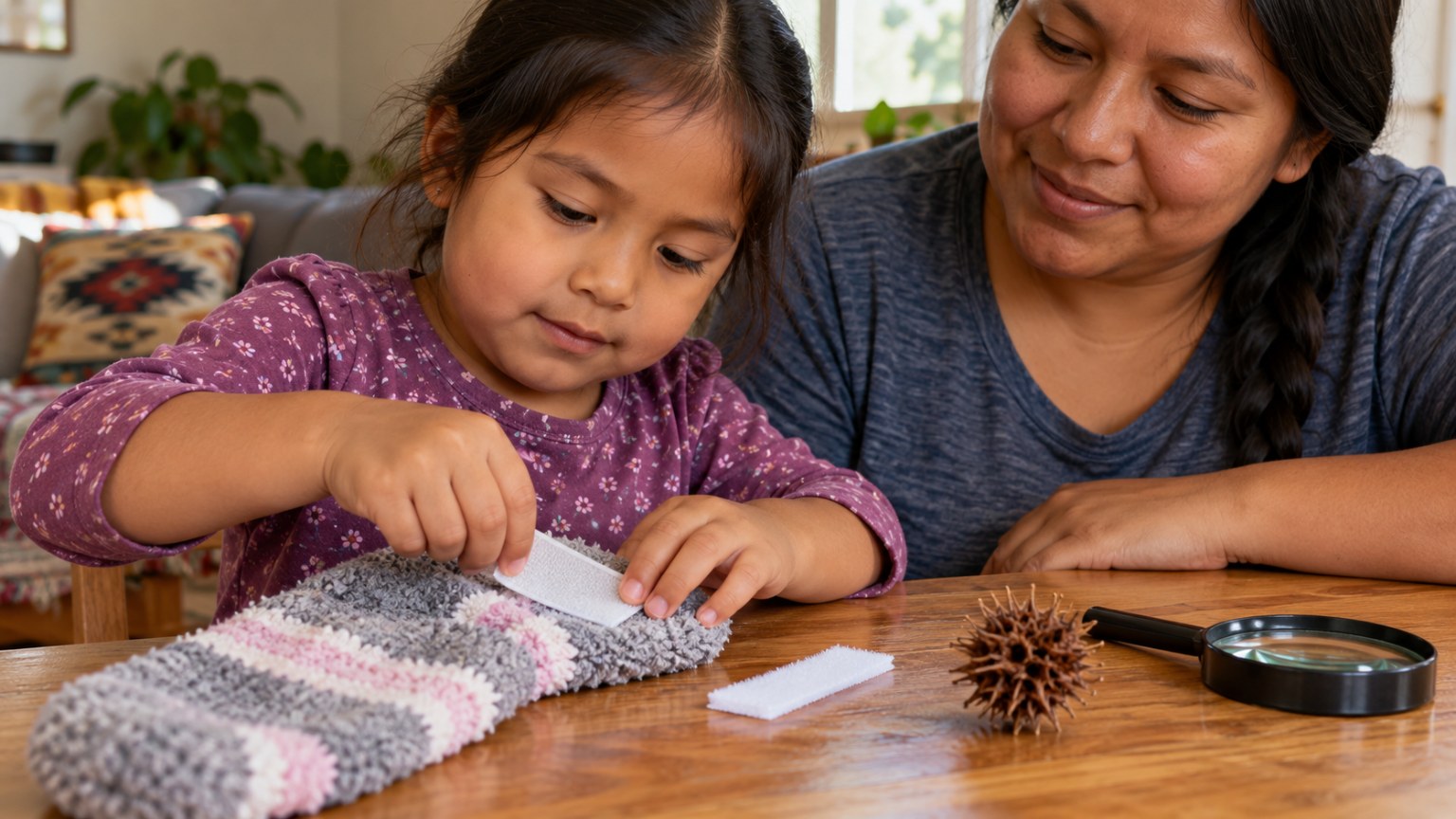
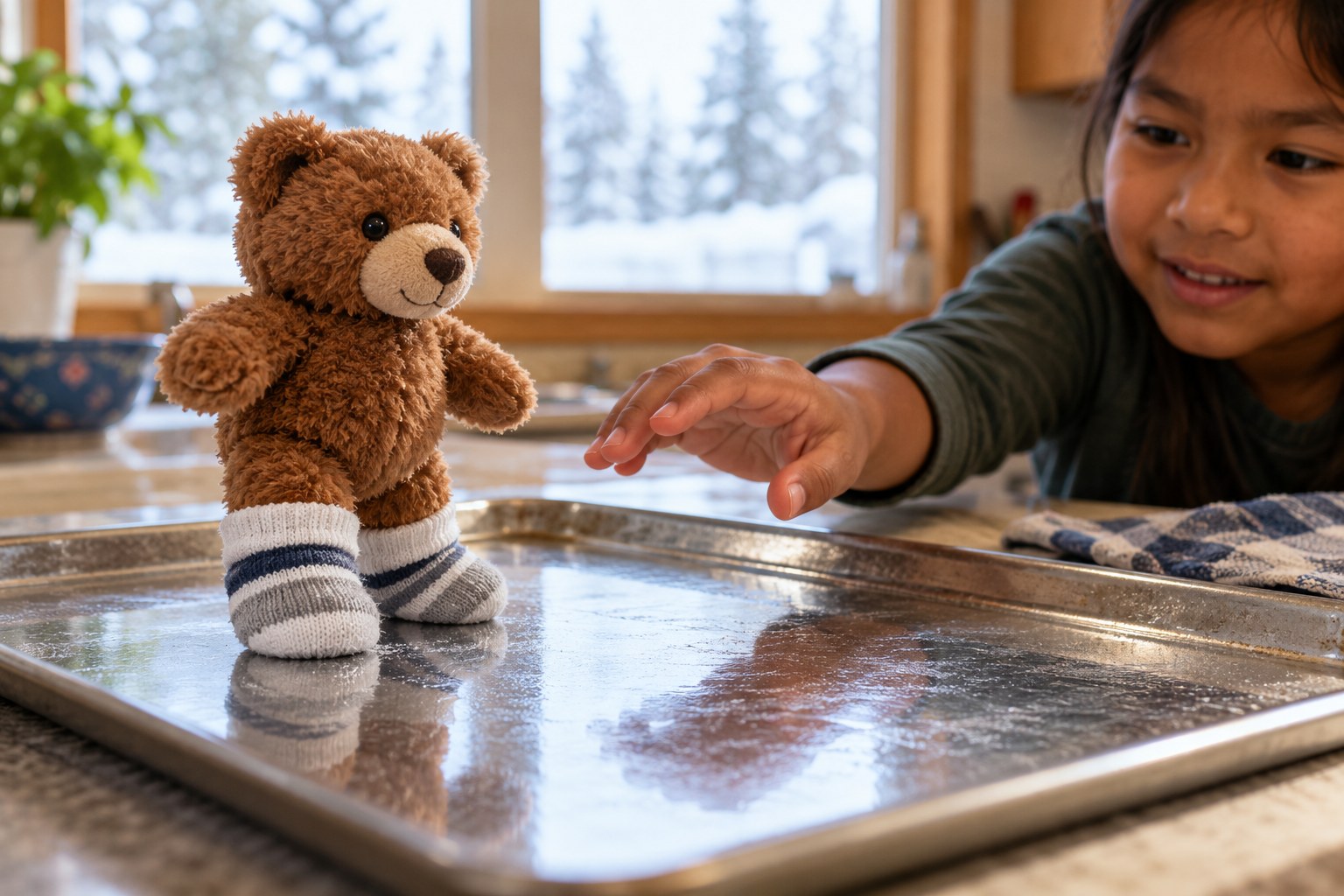
Your child finds out why polar bears do not slip on the ice by pushing a toy across a frozen tray with a smooth 'paw' and then a bumpy, fuzzy 'paw' made from a sock and bubble wrap.
Objective
Your child will compare how a smooth paw and a bumpy, fuzzy paw move on ice and tell which one grips better, like a polar bear's foot.
Materials
| Item | Quantity |
|---|---|
| Baking sheet or shallow tray with a thin layer of water frozen overnight | 1 |
| Small toy animal or block | 1 |
| Old sock | 1 |
| Piece of bubble wrap or a rubber dish glove | 1 |
| Smooth plastic sandwich bag | 1 |
| Towel | 1 |
Vocabulary
Preparation
- The night before, pour about 1/4 inch of water into a baking sheet and freeze it flat.
- Put a towel under the tray so drips stay off the table.
Introduction
Let your child touch the frozen tray with one fingertip. Ask: if you were a big polar bear walking on ice all day, would you want slippery feet or grippy feet?
What happens when you walk on a wet, slippery floor?
What do you think the bottom of a polar bear's foot feels like?
Steps
Conclusion
Ask: which paw slid the most? Which paw held on? Why is a bumpy, fuzzy paw good for a polar bear?
Make your own lesson plan in minutes
Describe a topic and Resource Portal AI writes the objectives, materials and steps for your group.
Try Resource Portal AI