Lesson planSpring Neighborhood Field Guide: Write an Informative Page
Writing45 minutesGrades: 3rd, 4th, 5th
Overview
Find three signs of spring and write a real field-guide page.
Description
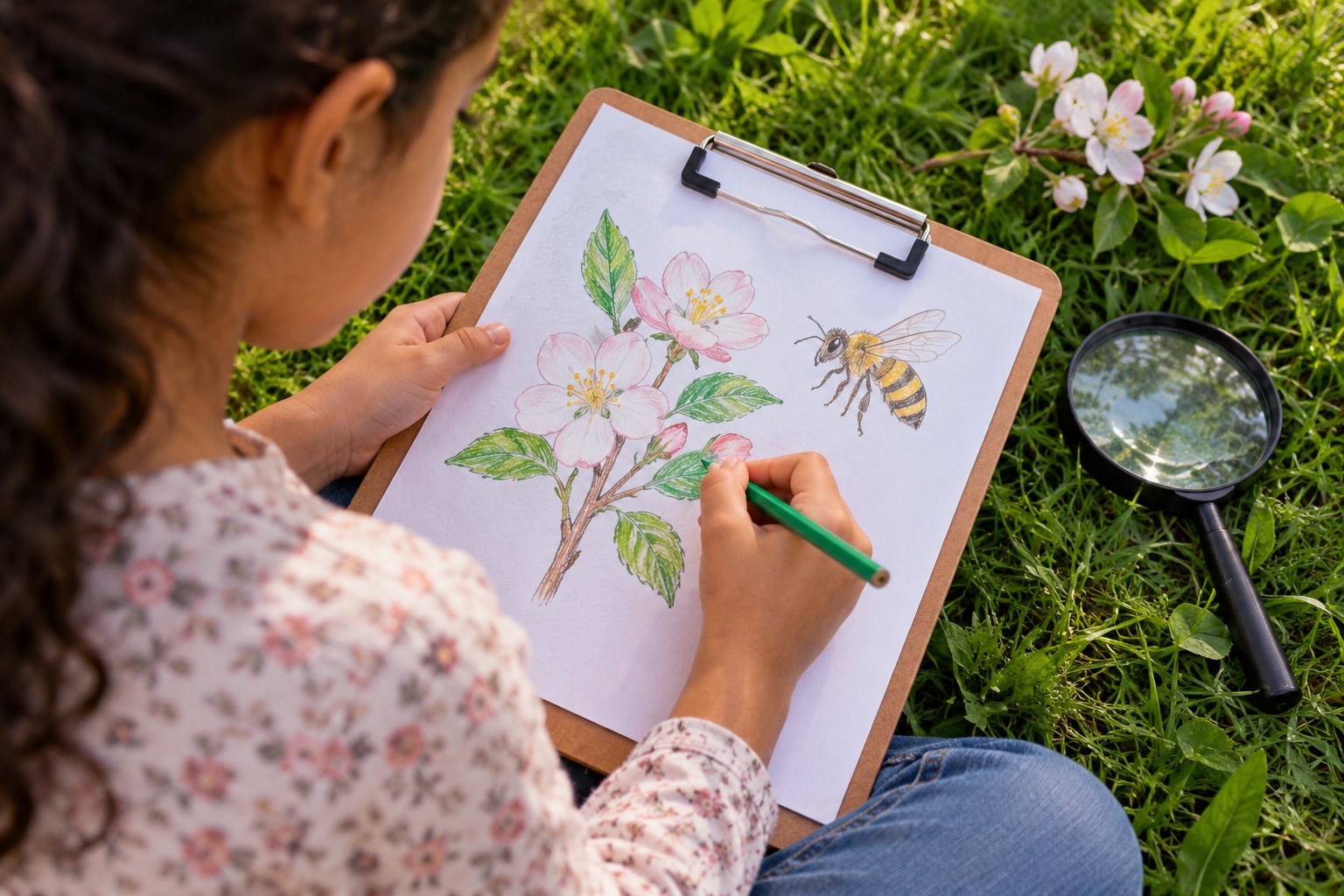
Your child explores the yard, block or park for three signs of spring (a blooming plant, a new leaf, an insect or bird), sketches and measures each one, and writes a field-guide page with headings, a labeled drawing, facts and precise science words.
Objective
Your child will introduce a topic, group information under headings, develop it with observed facts and details, and use precise, domain-specific words in an informative field-guide page.
Standards
Introduce a topic clearly and group related information in paragraphs and sections; include formatting (e.g., headings), illustrations, and multimedia when useful to aiding comprehension.
Develop the topic with facts, definitions, concrete details, quotations, or other information and examples related to the topic.
Use precise language and domain-specific vocabulary to inform about or explain the topic.
Materials
| Item | Quantity |
|---|
| Clipboard and blank paper | 1 clipboard and 3 sheets per child |
| Pencil, colored pencils | 1 set per child |
| Ruler or tape measure | 1 |
| Magnifying glass | 1 |
| Phone or field guide book for identifying (optional) | 1 |
Vocabulary
Field guide
A book that helps people identify plants or animals, with pictures and short facts.
Blossom
A flower, especially on a fruit tree or shrub.
Pollinator
An animal, like a bee, butterfly or hummingbird, that carries pollen from flower to flower.
Domain-specific word
An exact word used by experts in a subject, like 'petal', 'stamen' or 'larva'.
Preparation
- Plan a 15-minute route in your yard, block or a park where something is blooming or leafing out.
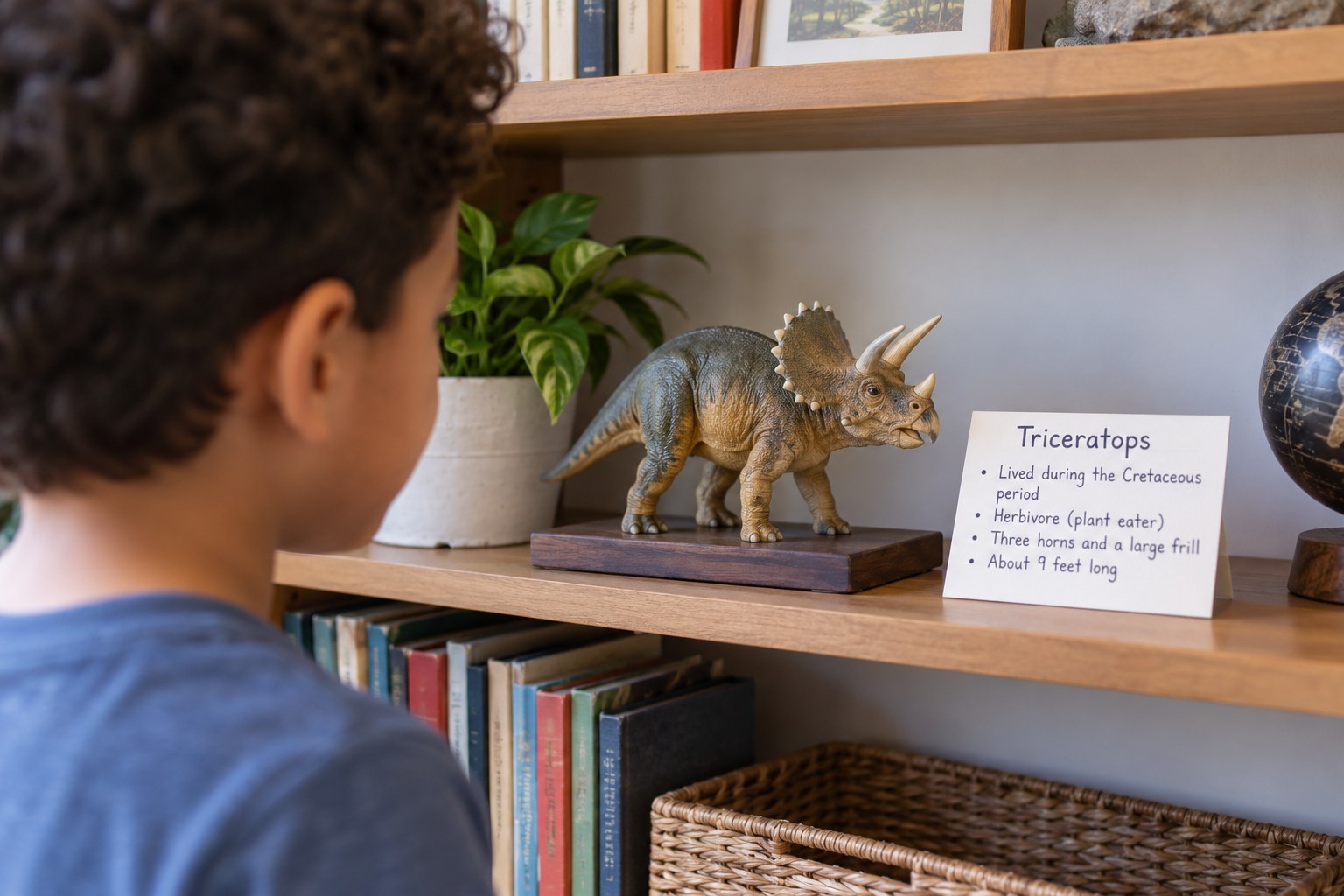
- Look at a real field guide page together (library book or website) and notice its headings, drawing and short facts.
Introduction
Show a field guide page and ask: 'If someone who had never seen spring in our neighborhood read your page, what would they need to know to find these living things?'
What changes do you notice outside this spring?
What makes a field guide easy to use?
Steps
1Step 1
Spring survey
(12 min) Walk your route and pick three signs of spring to study, such as a blooming shrub, a new leaf, a bee, a ladybug or a nesting bird. For each, your child sketches it, measures it with the ruler if it is safe to do so, and jots notes about color, shape, size and where it was found.
2Step 2
Sort the facts
(6 min) Back inside, your child sorts the notes for each living thing under four headings: What it looks like, Where to find it, What it is doing in spring, and Fun fact. Help them identify the name with a book or app if they don't know it.
3Step 3
Draw and label
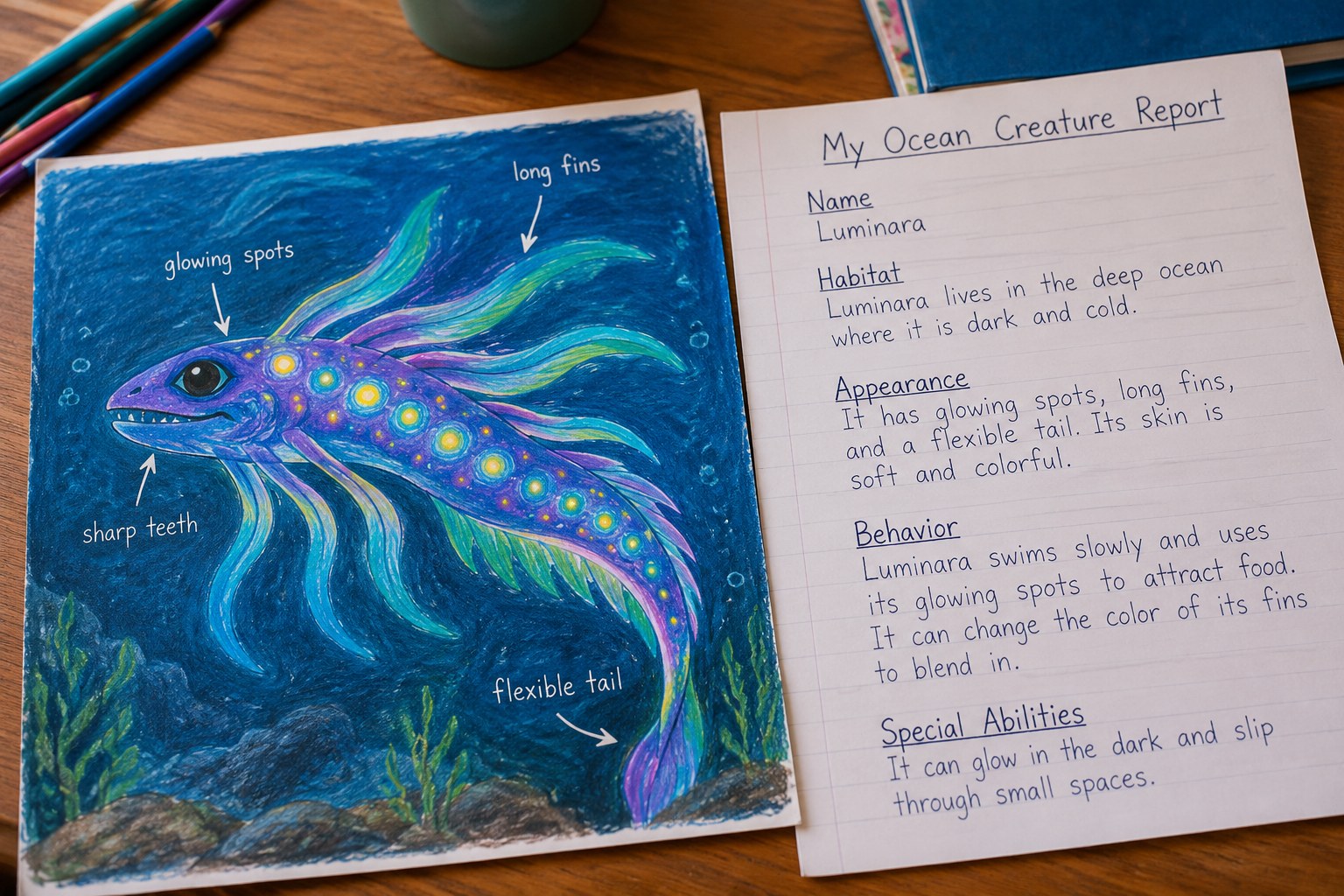
(10 min) Your child makes one large, careful drawing of their favorite find and labels at least four parts with exact words like petal, stem, bud, antenna or wing. Add a size line showing the real measurement.
4Step 4
Write the page
(14 min) Your child writes the field-guide page: a title, a one-sentence introduction about spring in your neighborhood, and short sections under the headings for each find. Check together that each section has at least two facts or details and one precise science word.
Conclusion
Read the page aloud and ask: could a visitor find these living things using only your page? Add new pages every few weeks to make a whole spring field guide.
Make your own lesson plan in minutes
Describe a topic and Resource Portal AI writes the objectives, materials and steps for your group.
Try Resource Portal AI