Ibn Battuta's Travels: Write a Traveler's Journal Entry
Overview
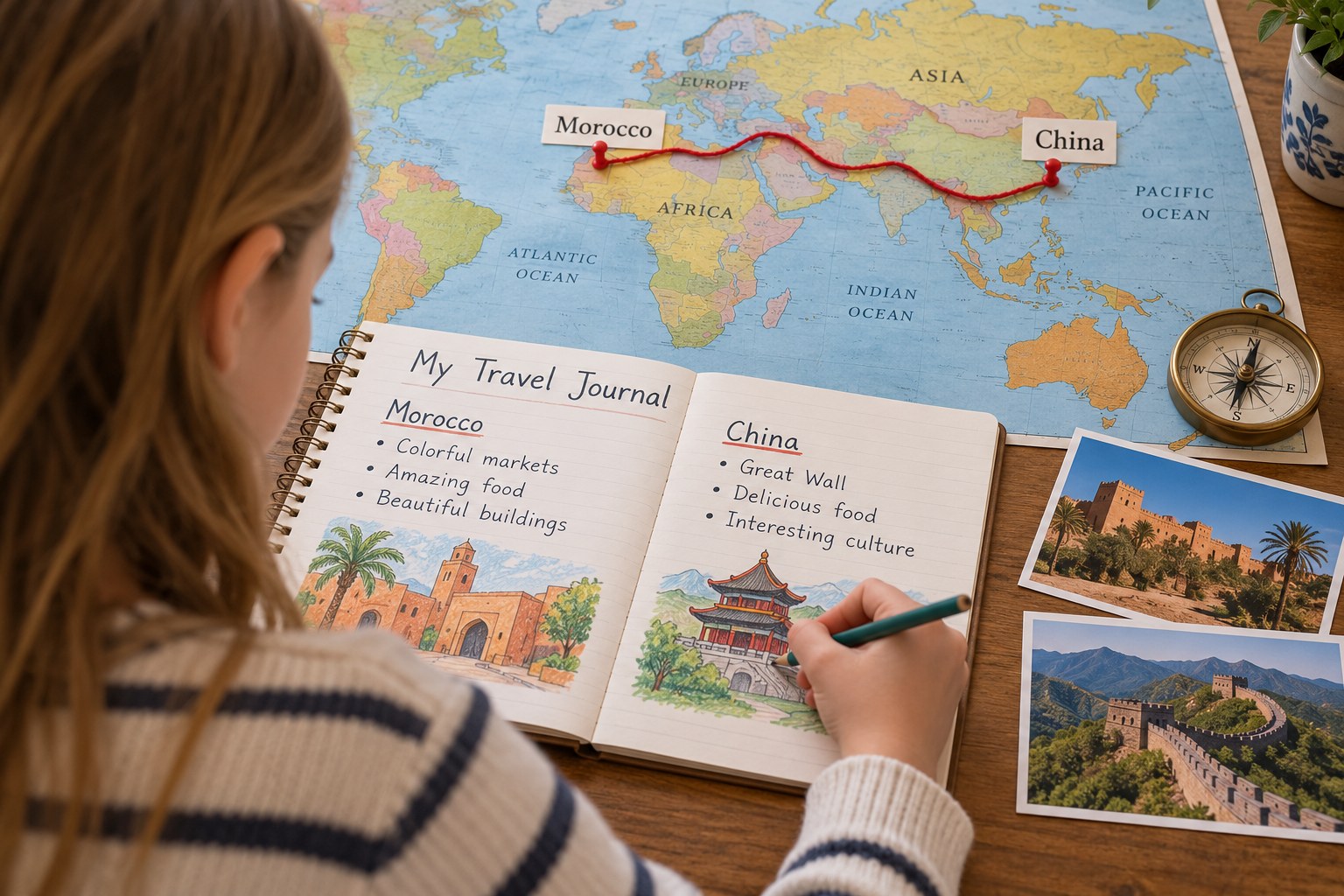
Trace Ibn Battuta's route and write a journal entry with sensory details.
Description
Your child learns about Ibn Battuta, the 14th-century traveler from Morocco whose book of journeys covered North Africa, the Middle East, East Africa, India, China and the Mali Empire, traces his route on a map, and writes a vivid journal entry as a traveler arriving in one of the cities he visited.
Objective
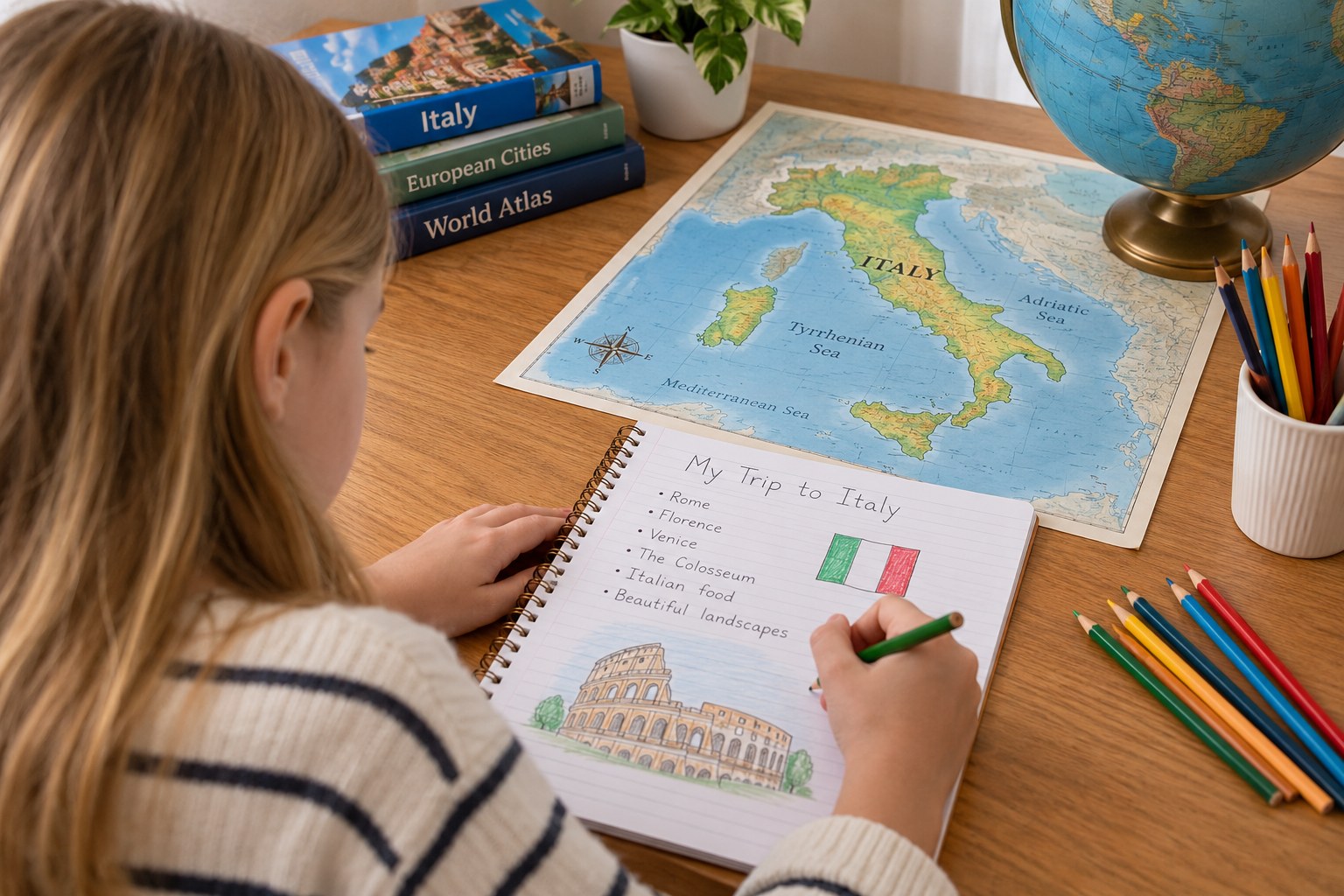
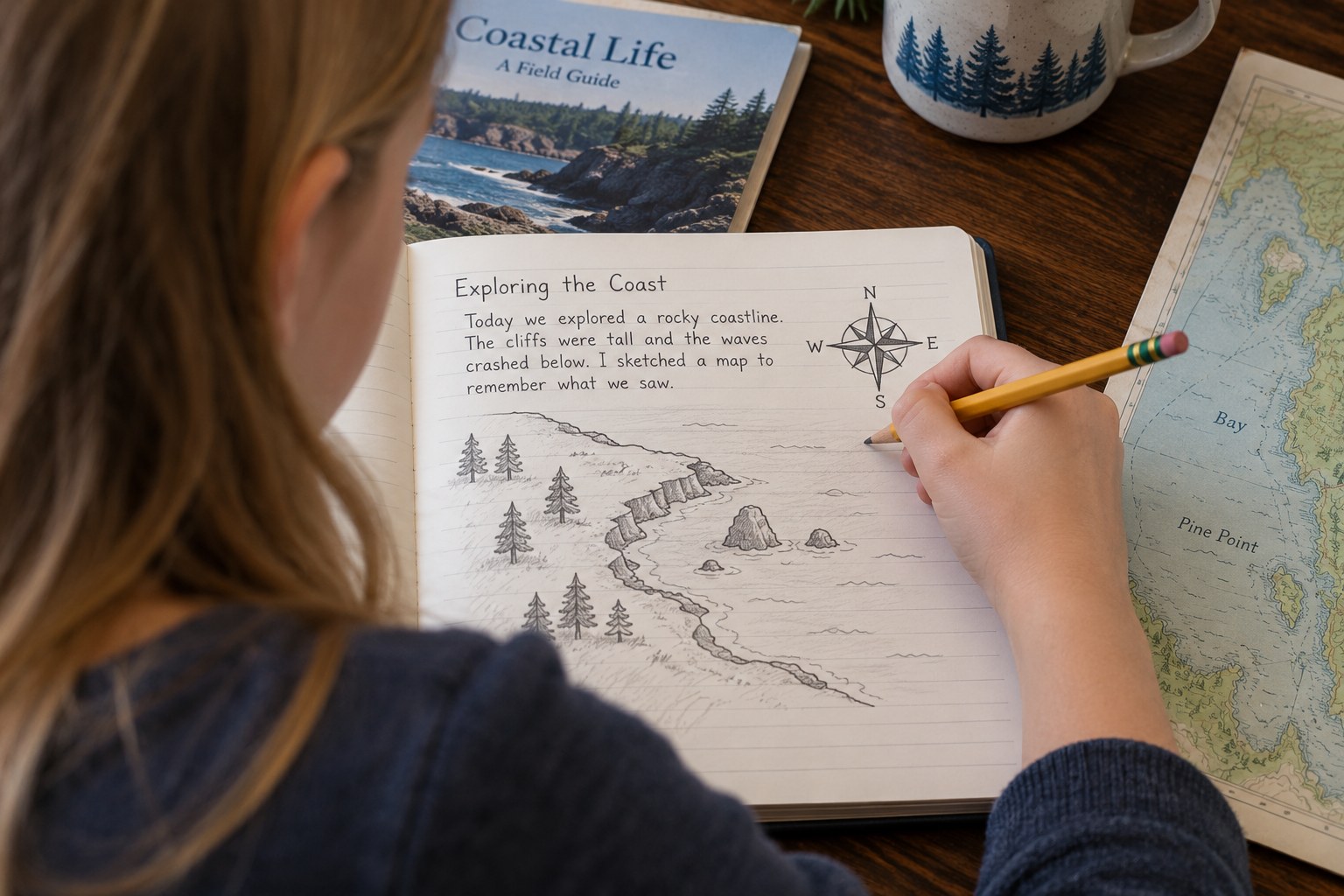
Your child will write a first-person journal entry that sets the scene, follows a clear sequence and uses precise words and sensory details.
Standards
Materials
| Item | Quantity |
|---|---|
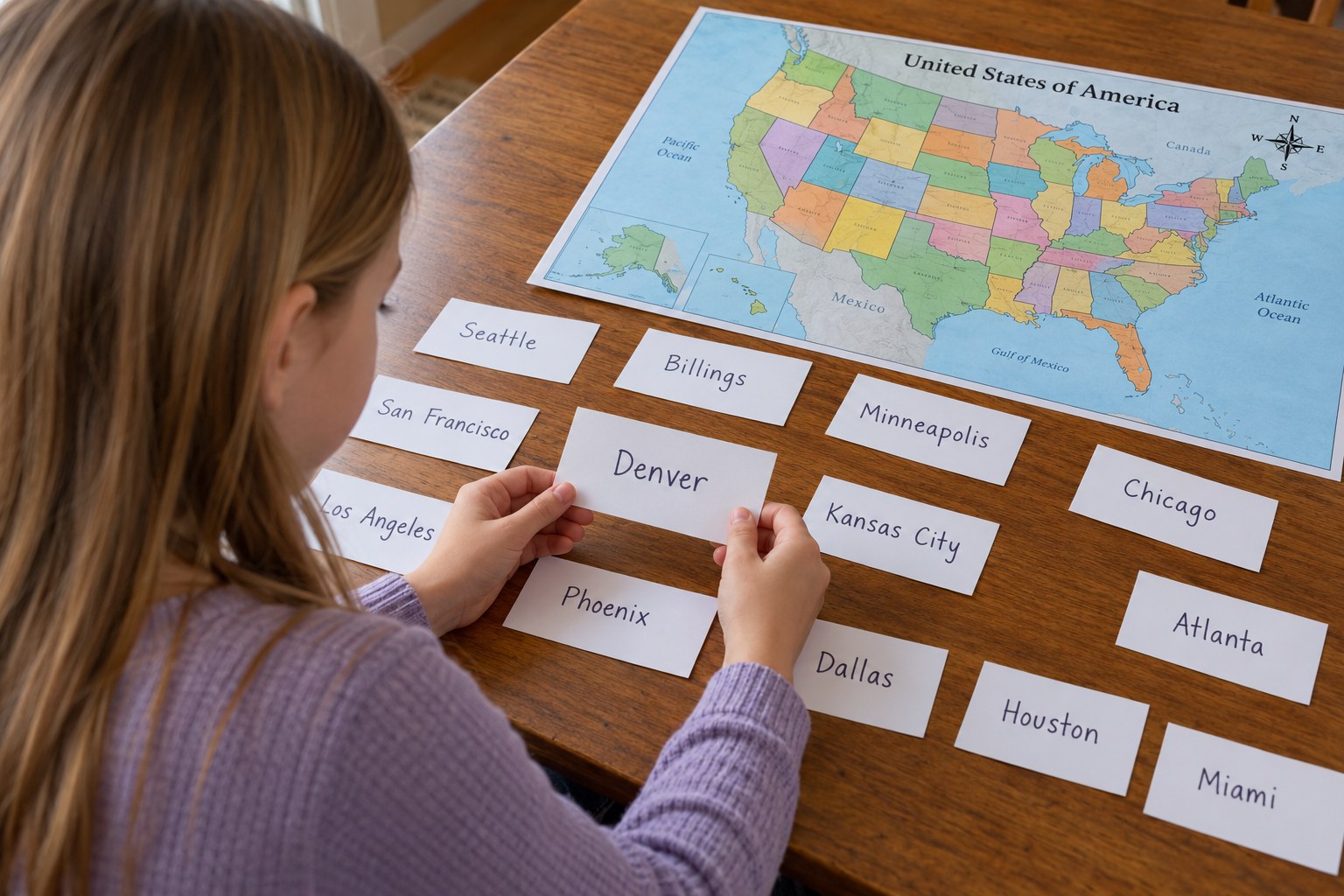
| World map or atlas (printed or on a tablet) | 1 |
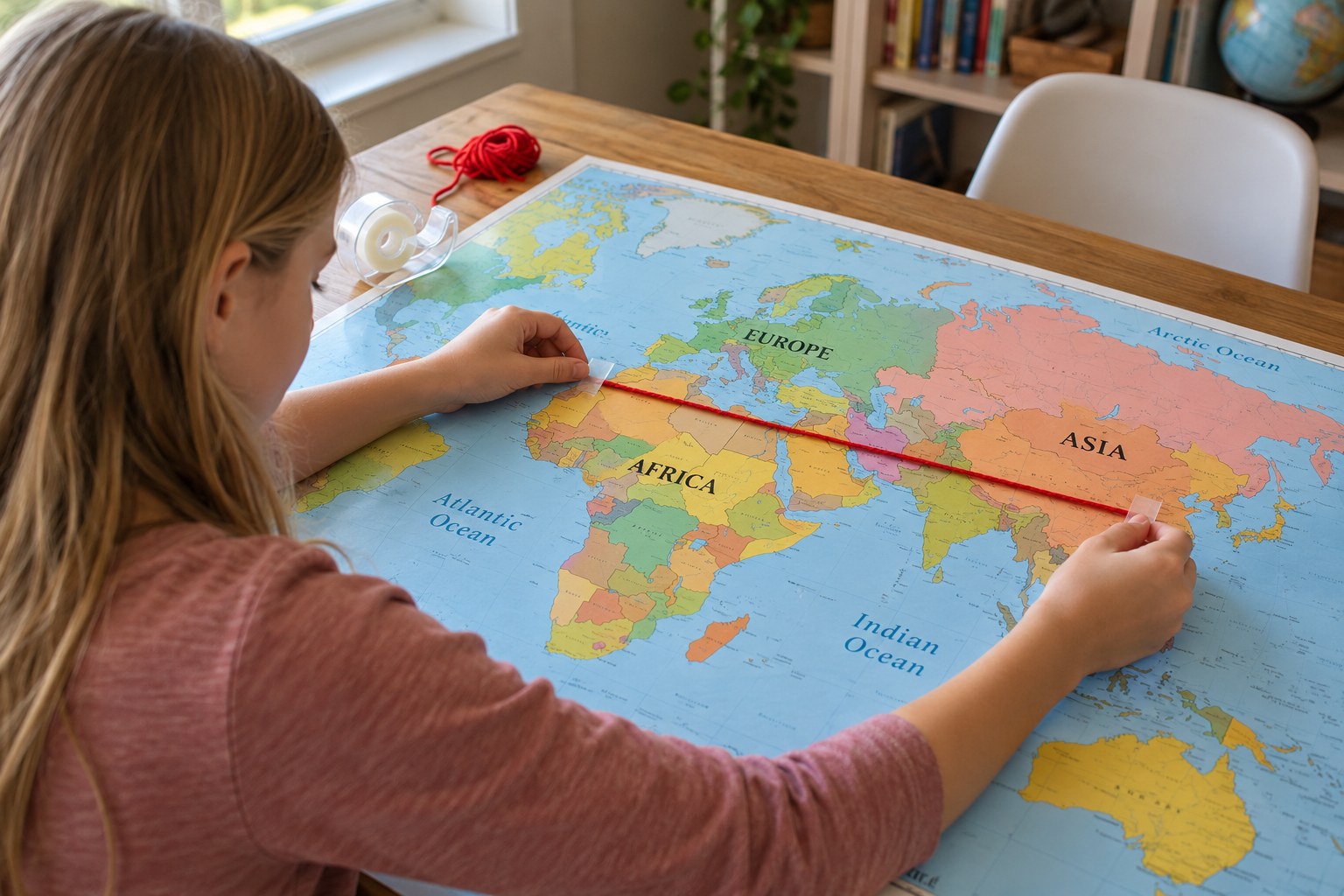
| String or yarn and tape to mark the route | 1 length |
| City cards (in Additional Sections) | 1 set |
| Lined paper or a notebook | 2 pages per child |
| Pencils and colored pencils | 1 set |
Vocabulary
Preparation
- Read the background and city cards in Additional Sections.
- Mark Tangier, Cairo, Mecca, Kilwa, Delhi, Quanzhou and Timbuktu on the map with small sticky notes or dots.
- Have the string ready for tracing the route.
Introduction
In 1325, a 21-year-old named Ibn Battuta left his home in Tangier, Morocco, to travel to Mecca. He did not come home for about 24 years! Later he told his story, and it was written down as one of the most famous travel books ever.
What would you pack for a trip that might last years?
How did people travel 700 years ago with no cars or planes?
What would you want to remember about a new city?
Steps

Conclusion
Your child explains why Ibn Battuta's book is valuable to historians today: it describes daily life in many places in the 1300s. Ask which city they would most want to visit and why.
Make your own lesson plan in minutes
Describe a topic and Resource Portal AI writes the objectives, materials and steps for your group.
Try Resource Portal AI