Lesson planDraft a Modern Declaration: The 1776 Argument Structure
Writing45 minutesGrades: 6th, 7th, 8th
Overview
Use the Declaration's structure to argue a real local issue.
Description
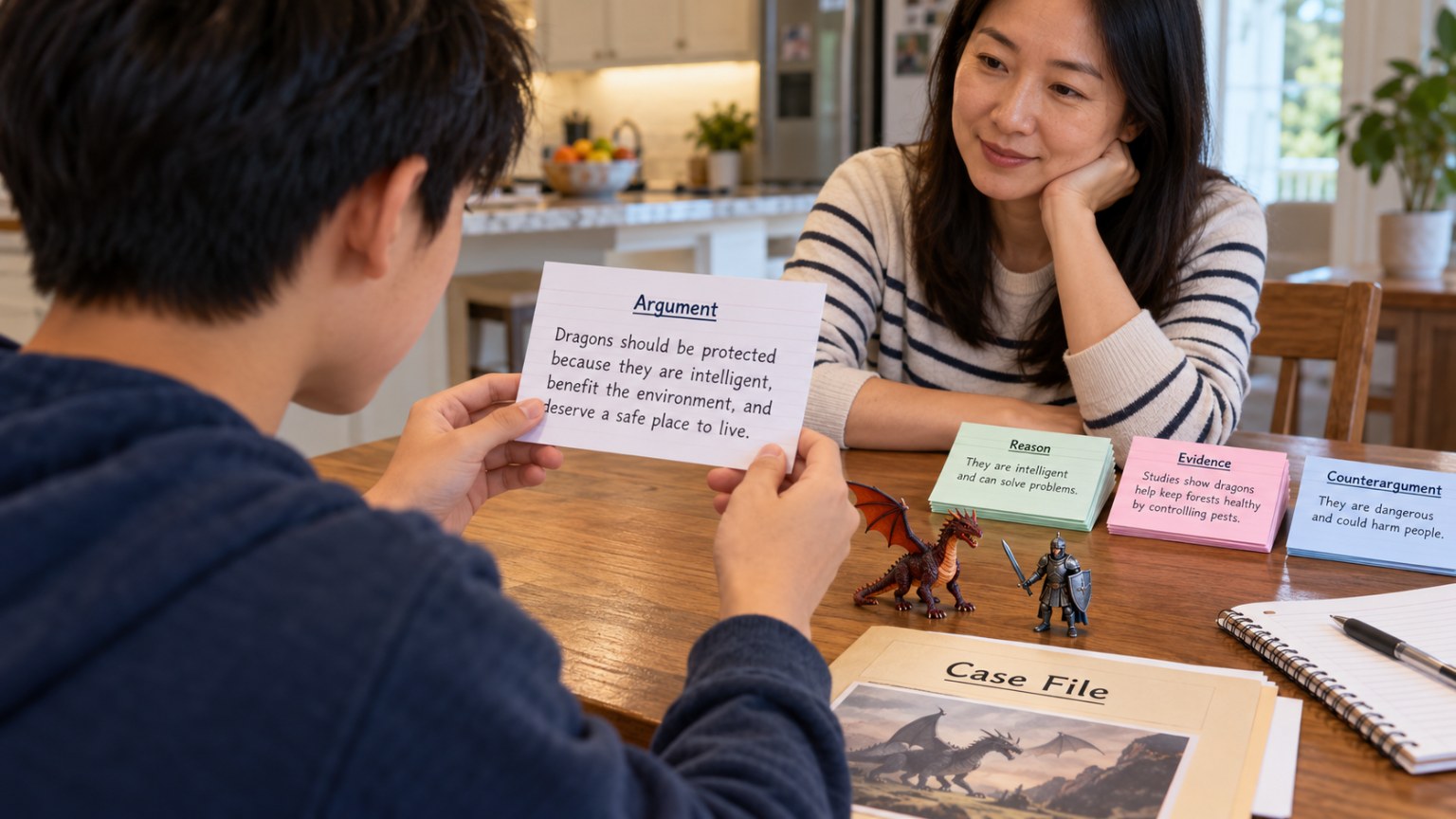
Your teen maps the four-part structure of the Declaration of Independence (purpose, beliefs, grievances as evidence, resolution), then uses it to write a one-page argument on a real local issue, adding the one thing Jefferson's committee left out: a fair response to the other side.
Objective
Your teen will identify the claim, reasoning and evidence structure of the Declaration, then write an argument with a clear claim, logically ordered evidence and an acknowledged counterclaim.
Standards
Introduce claim(s), acknowledge alternate or opposing claims, and organize the reasons and evidence logically.
Support claim(s) with logical reasoning and relevant evidence, using accurate, credible sources and demonstrating an understanding of the topic or text.
Introduce claim(s), acknowledge and distinguish the claim(s) from alternate or opposing claims, and organize the reasons and evidence logically.
Materials
| Item | Quantity |
|---|
| Copy of the Declaration of Independence (free from the National Archives website) | 1 |
| Highlighters in 4 colors | 1 set |
| Lined paper or a laptop | 1 per teen |
| Argument organizer (from the 'Four-part organizer' section) | 1 per teen |
| Local news article or city website page on the chosen issue (optional) | 1 |
Vocabulary
Claim
The main position an argument tries to prove.
Grievance
A formal complaint; the Declaration lists 27 against King George III.
Counterclaim
An opposing position that a strong argument acknowledges and answers.
Resolution
A formal statement of what will be done.
Preparation
- Print or pull up the full Declaration of Independence. It is about 1,300 words.
- Brainstorm 3 local issues your teen cares about, such as more shade trees at a park, a later school start time, a skate park, or library hours.
Introduction
Ask your teen: if you wanted to convince the whole world you were right, how would you organize your case? In 1776, Congress had to do exactly that, and their structure still works.
Who was the Declaration actually written for?
Why list 27 grievances instead of one or two?
Steps
1Step 1
Map the structure
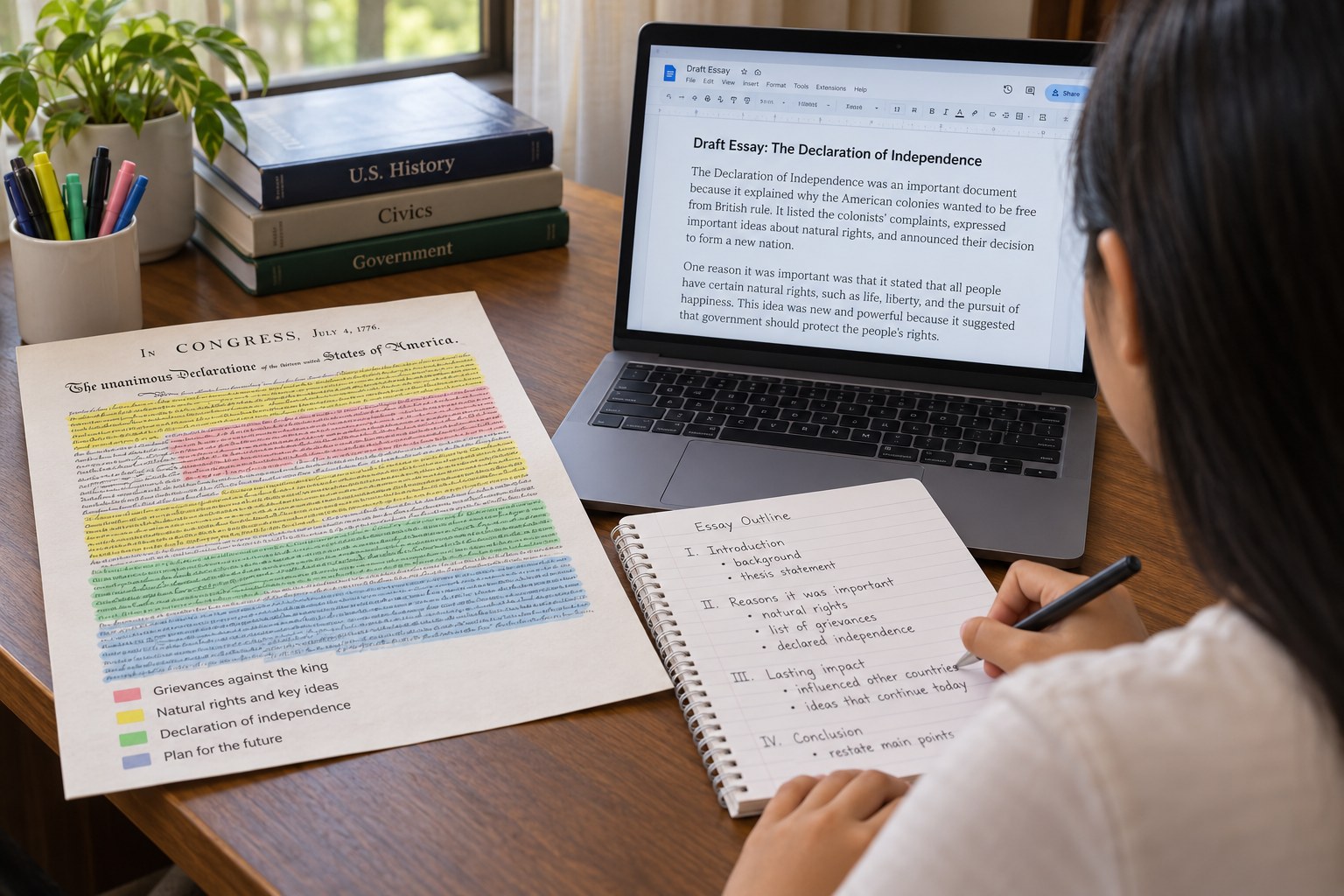
(10 min) Your teen skims the Declaration and highlights its four parts in four colors: the purpose (opening paragraph), the beliefs (the 'self-evident truths' paragraph), the grievances (the long list beginning 'He has...'), and the resolution (the final paragraph). Discuss why the writers put beliefs before evidence.
2Step 2
Analyze the evidence
(7 min) Your teen picks three grievances and asks: is this a fact, an accusation or an opinion? Notice that the document never includes Great Britain's side, and talk about how that makes it persuasive but one-sided.
3Step 3
Pick an issue and claim
(5 min) Your teen chooses one local issue and writes a one-sentence claim. An example is 'Our city should plant 200 shade trees in parks by 2028.' Check that it is specific and arguable, not a plain fact.
4Step 4
Plan with the organizer
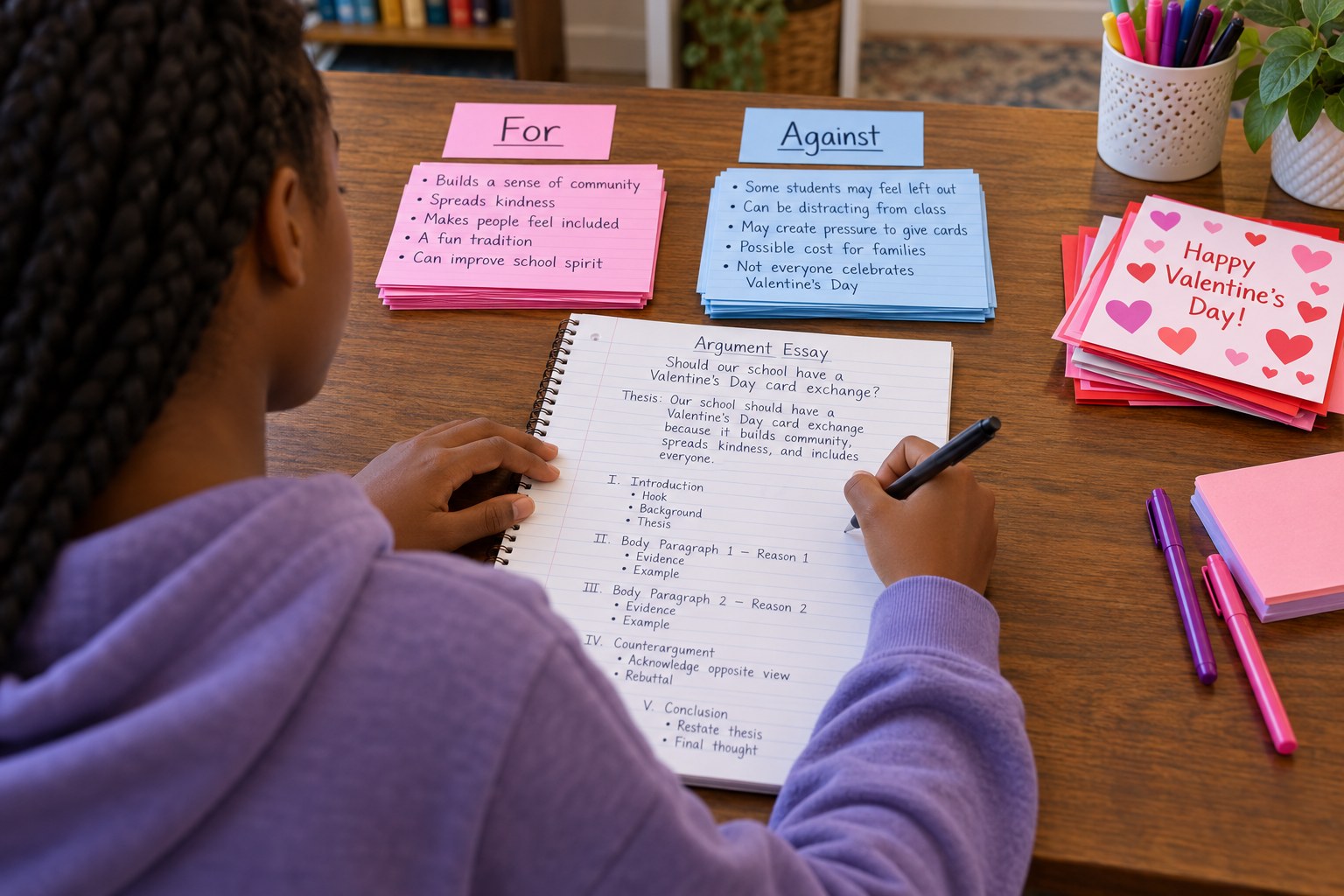
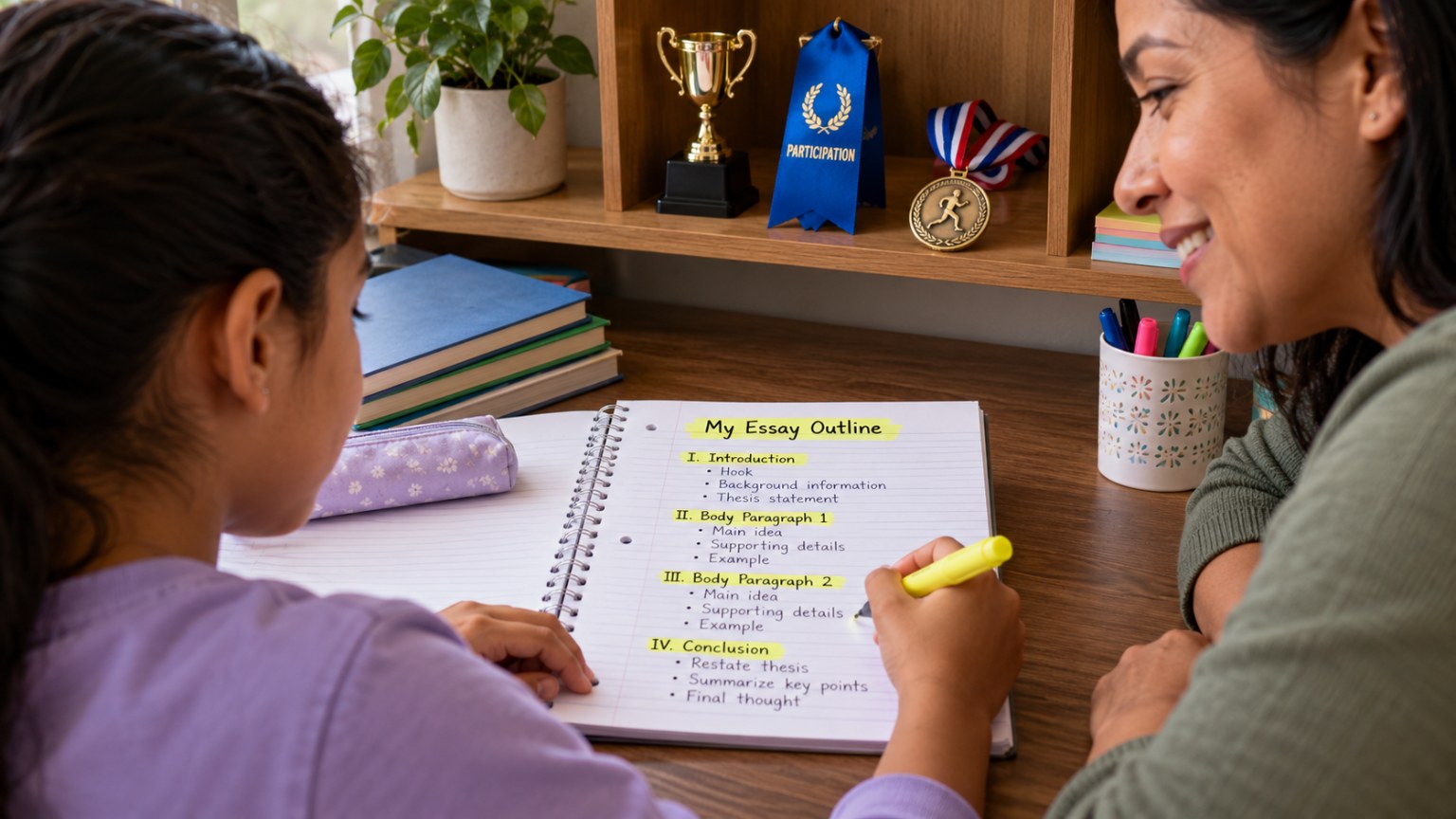
(8 min) Your teen fills in the four-part organizer: a purpose statement, 1-2 shared beliefs, three pieces of evidence (with sources if possible), and a resolution. Then they add a counterclaim paragraph: the strongest argument against them and their response.
5Step 5
Draft and read
(14 min) Your teen writes a one-page draft following the organizer, then reads it aloud to you. You play the opposing side and ask one tough question, and they note how to strengthen that spot.
Conclusion
Ask: what made the Declaration's argument so powerful, and what did it leave out? If the issue is real, consider sending a polished version as a public comment to the city council.
Make your own lesson plan in minutes
Describe a topic and Resource Portal AI writes the objectives, materials and steps for your group.
Try Resource Portal AI