Free lesson plan

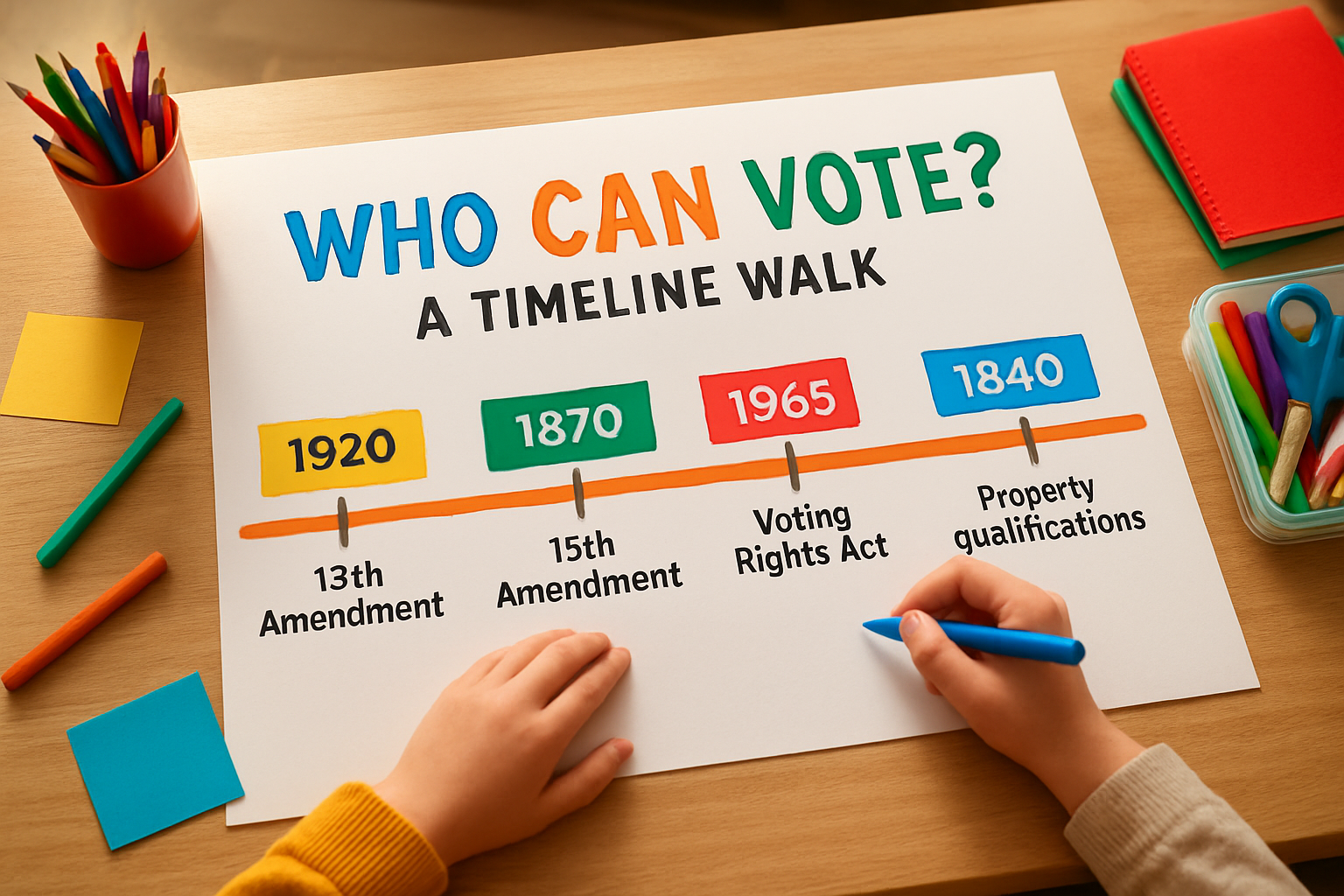
Who Can Vote? A Timeline Walk
STEAM1 HourGrades: 5th
Who Can Vote? A Timeline Walk

Overview

Explore the history of voting rights and create a timeline that shows who can vote in the U.S. Students will collaborate, communicate, and think critically about the topic.

Description

In this lesson, students will explore the history of voting rights in the United States through a creative timeline project. They will work collaboratively to research key milestones and create a visual representation of who can vote throughout history, using a string timeline to connect the events. The lesson emphasizes collaboration, communication, and critical thinking as students engage with a vital aspect of civic education.

Objective

Students will understand key milestones in voting rights history and collaborate to create a timeline that represents who can vote.

Materials

ItemQuantity
Poster boards5 sheets
Sticky notes2 packs
Printed research materials (articles, facts)1 set
Glue sticks5 sticks
Timeline cards1 set
Masking tape1 roll
String1 roll

Vocabulary

Suffrage
The right to vote in political elections.
Milestone
An important event in the history of something.
Disenfranchisement
The state of being deprived of a right, especially the right to vote.
Civil Rights
The rights of citizens to political and social freedom and equality.
Amendment
A change or addition to a legal or statutory document.
Timeline
The act of connecting events in a sequential manner.

Preparation

Introduction

Begin by asking students, 'What is one right you think is really important for everyone in our country?' This will spark their interest in discussing voting rights.
What does it mean to vote?
Why is voting important in a democracy?
Can everyone vote? Why or why not?

Steps
1Step 1
Research Key Milestones
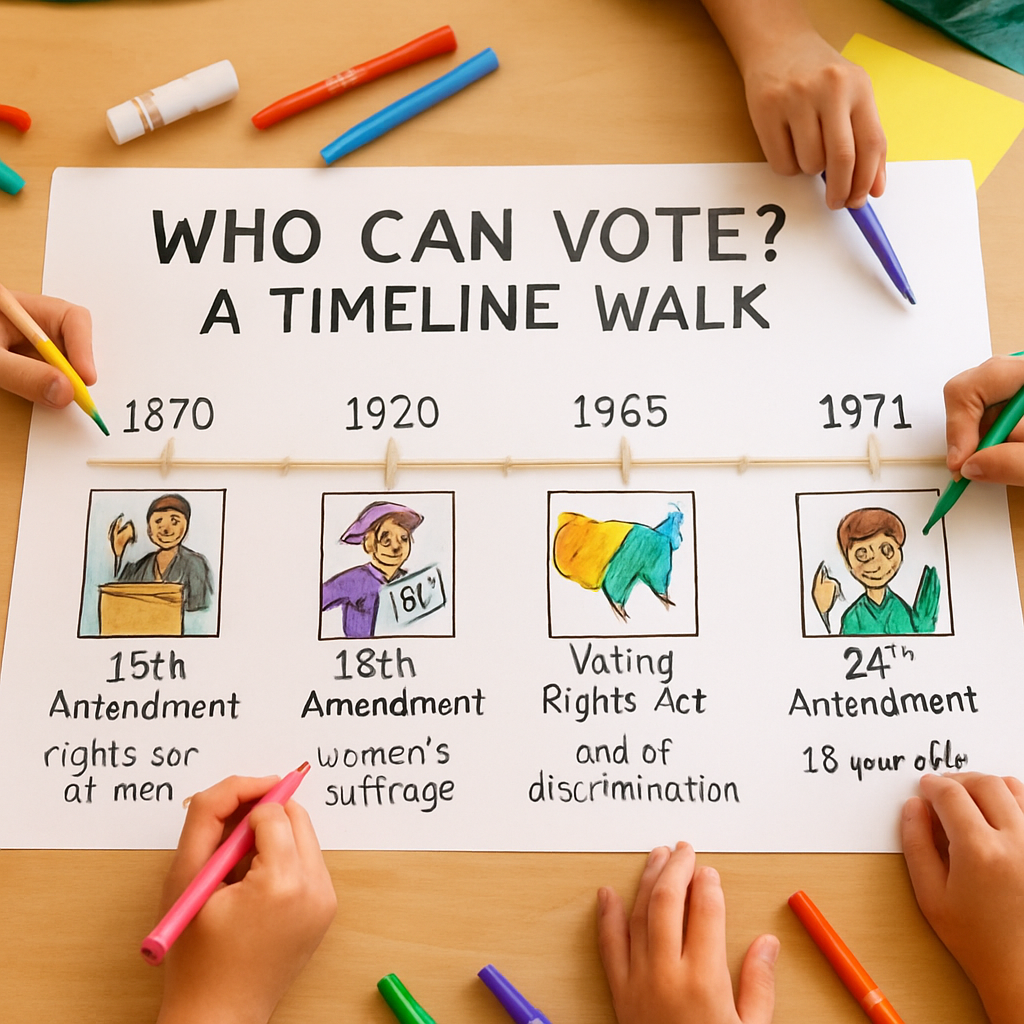
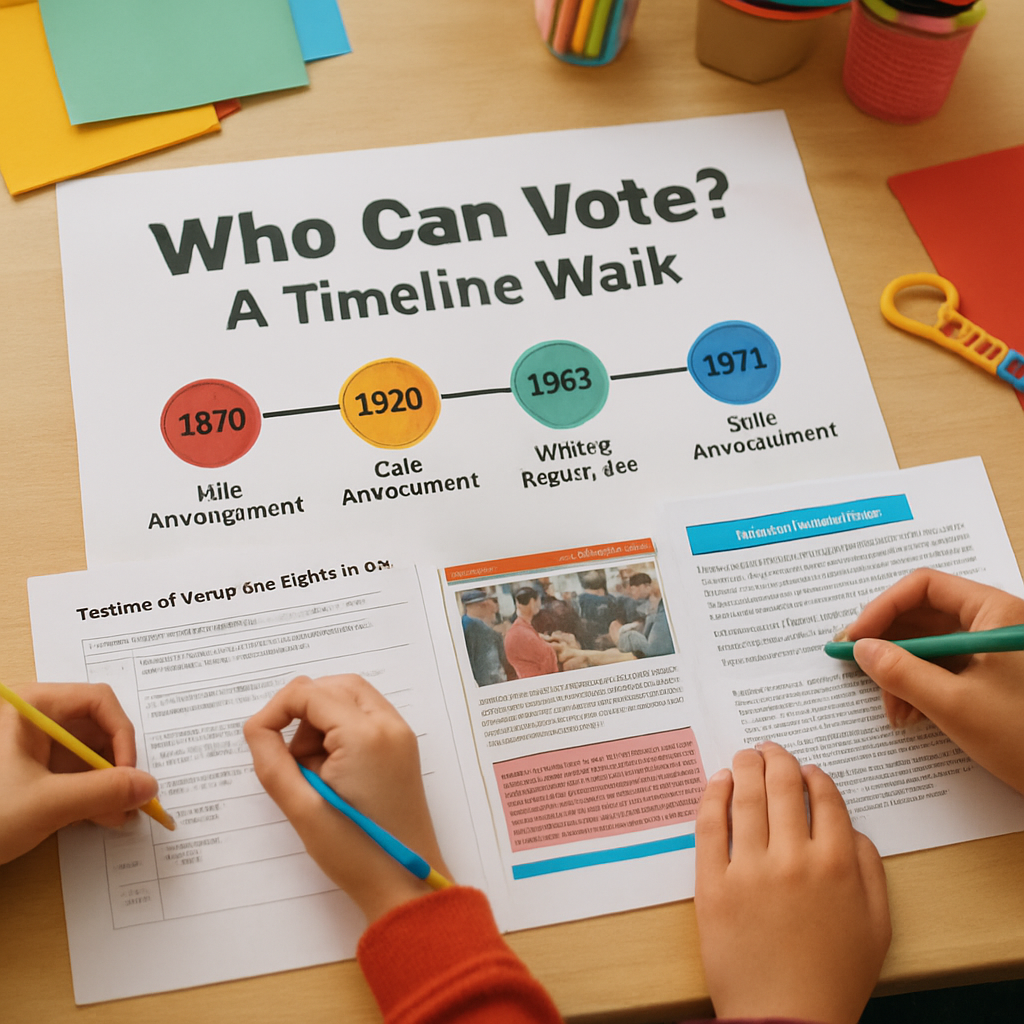
(10 min) In groups, students will research important milestones in the history of voting rights in the U.S., focusing on key events such as the 1870 15th Amendment and the 1920 19th Amendment. The group leader might say, 'Let's find out what happened in 1965 that changed voting rights for many people.' Each group will receive 2 printed research materials and will take notes together, discussing their findings. The finished work will be a set of detailed notes highlighting key milestones that will inform their timeline.
Step 1
2Step 2
Select Key Events
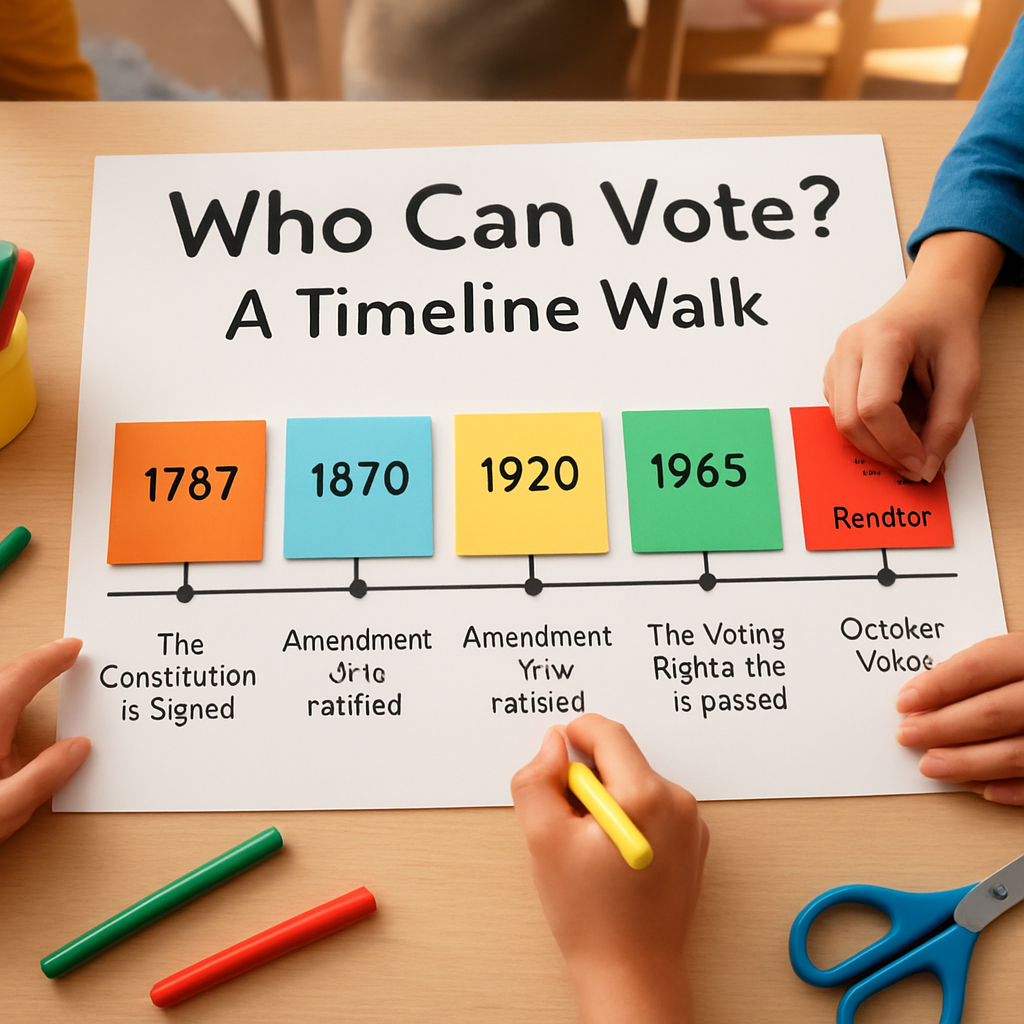
(10 min) Each group will select 3-5 key events from their research to include on their timeline and discuss why these events are significant in the context of voting rights. The leader might say, 'Which events do you think had the biggest impact on who can vote today?' Each group will use sticky notes to jot down their selected events and reasons for their choices. The finished work will be a collection of sticky notes displaying the chosen events and their significance, ready to be included on the timeline.
Step 2
3Step 3
Create the Timeline
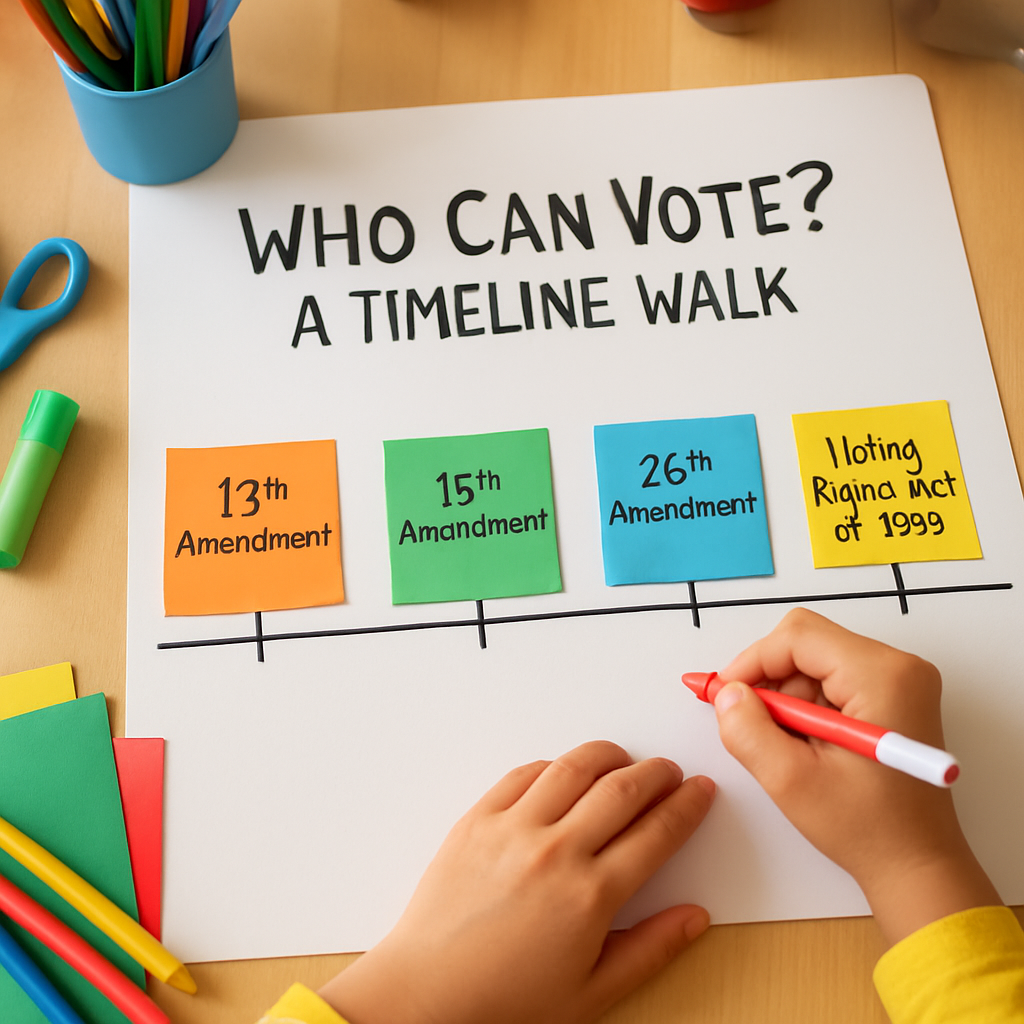
(20 min) Using the selected events, students will create a visual timeline on the poster board. The group leader may say, 'Let’s visualize how these events connect by drawing a timeline together!' Each group will receive 1 poster board, 5 glue sticks, and 12 markers. They will write dates, descriptions, and illustrations on the poster board, using masking tape and string to connect the events in chronological order. The finished product will be a large, collaborative timeline that visually represents the progression of voting rights, complete with colorful drawings and clear labels.
Step 3
4Step 4
Present the Timelines
(10 min) Each group will present their timeline to the class. The leader might say, 'Let’s share what we learned about these important events!' They will explain the key events they chose and their significance in voting rights history. Encourage them to use phrases like, 'This event is important because...' to articulate their understanding and engage their classmates. The finished work will be a presentation of the timeline, showcasing each group's findings and insights.
Step 4
5Step 5
Reflect on Learning
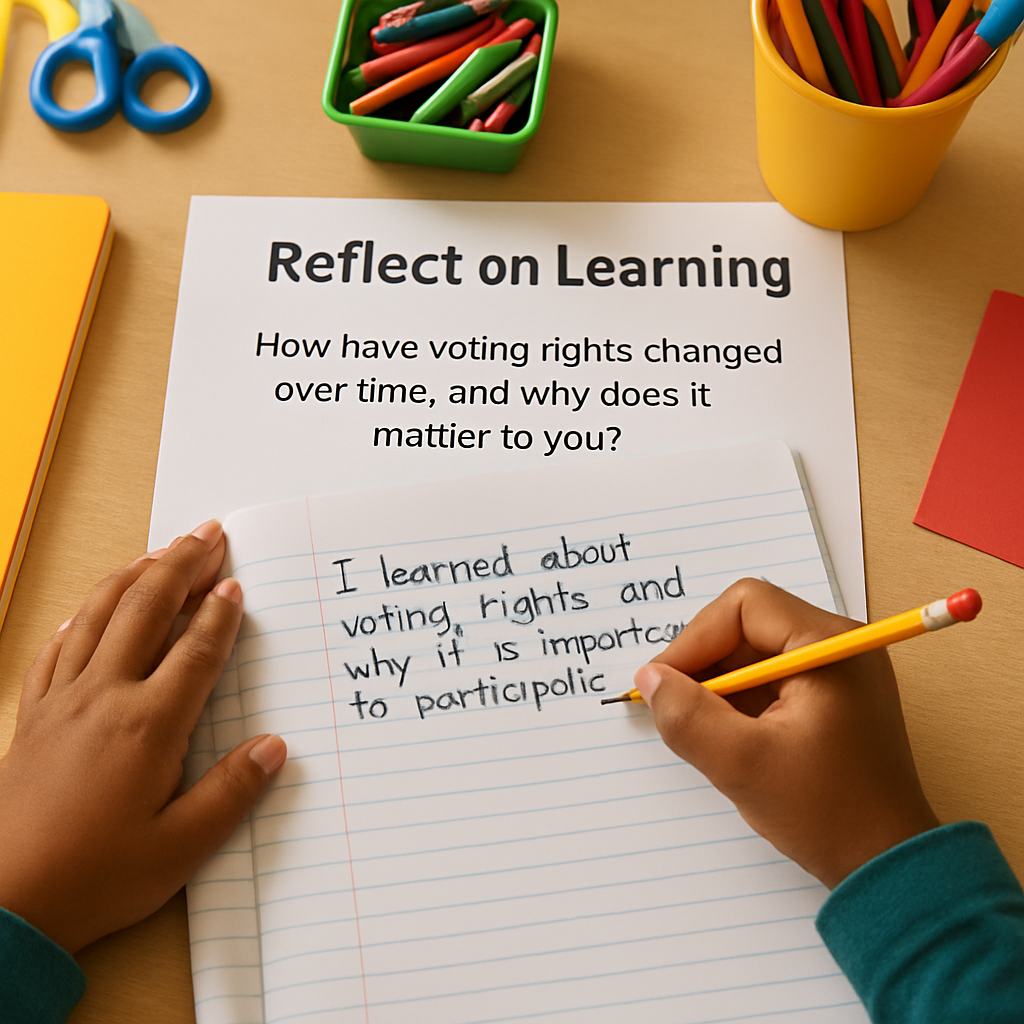
(10 min) Students will write a short reflection on what they learned about voting rights and the importance of participating in democracy. The leader might ask, 'How have voting rights changed over time, and why does it matter to you?' Each student will write in their notebooks, considering their personal connection to voting rights. The finished work will be a reflective writing piece that expresses their thoughts and insights on the topic.
Step 5

Conclusion

As a class, discuss how the timeline reflects the evolution of voting rights and why each milestone is significant for our democracy. Encourage students to think about how these changes impact their own right to vote in the future.

Make your own lesson plan in minutes

Describe a topic and Resource Portal AI writes the objectives, materials and steps for your group.

Try Resource Portal AI