Free lesson planUnderstanding California's Ballot Propositions
STEAM1 HourGrades: 4th, 5th
Overview
Explore California's ballot propositions through engaging group activities, fostering critical thinking and collaboration among students.
Description
This lesson introduces students to California's ballot propositions, teaching them about civic engagement, the voting process, and how to evaluate propositions critically. Through group activities and discussions, students will enhance their collaboration and communication skills as they create and present their own propositions.
Objective
Students will understand the purpose of ballot propositions and how to critically evaluate them as informed citizens.
Materials
| Item | Quantity |
|---|
| Printed copies of sample ballot propositions | 20 pieces |
| Graphic organizers for evaluating propositions | 20 pieces |
| Markers | 20 pieces |
| Colored pencils | 20 pieces |
| Poster boards | 5 pieces |
| Whiteboard and markers | 1 set |
| Proposition templates | 20 pieces |
| Ballots | 20 pieces |
| Ballot box | 1 piece |
Vocabulary
Proposition
A proposed law or change to existing laws that is voted on by the public.
Ballot
A piece of paper used to make a choice in an election.
Voting
The act of making a choice in an election.
Civic Engagement
Taking part in activities that influence how society is run.
Debate
A discussion where people have different opinions.
Preparation
- Gather printed copies of sample ballot propositions, graphic organizers, proposition templates, and poster boards.
- Set up the classroom for group activities with enough space for collaboration.
Introduction
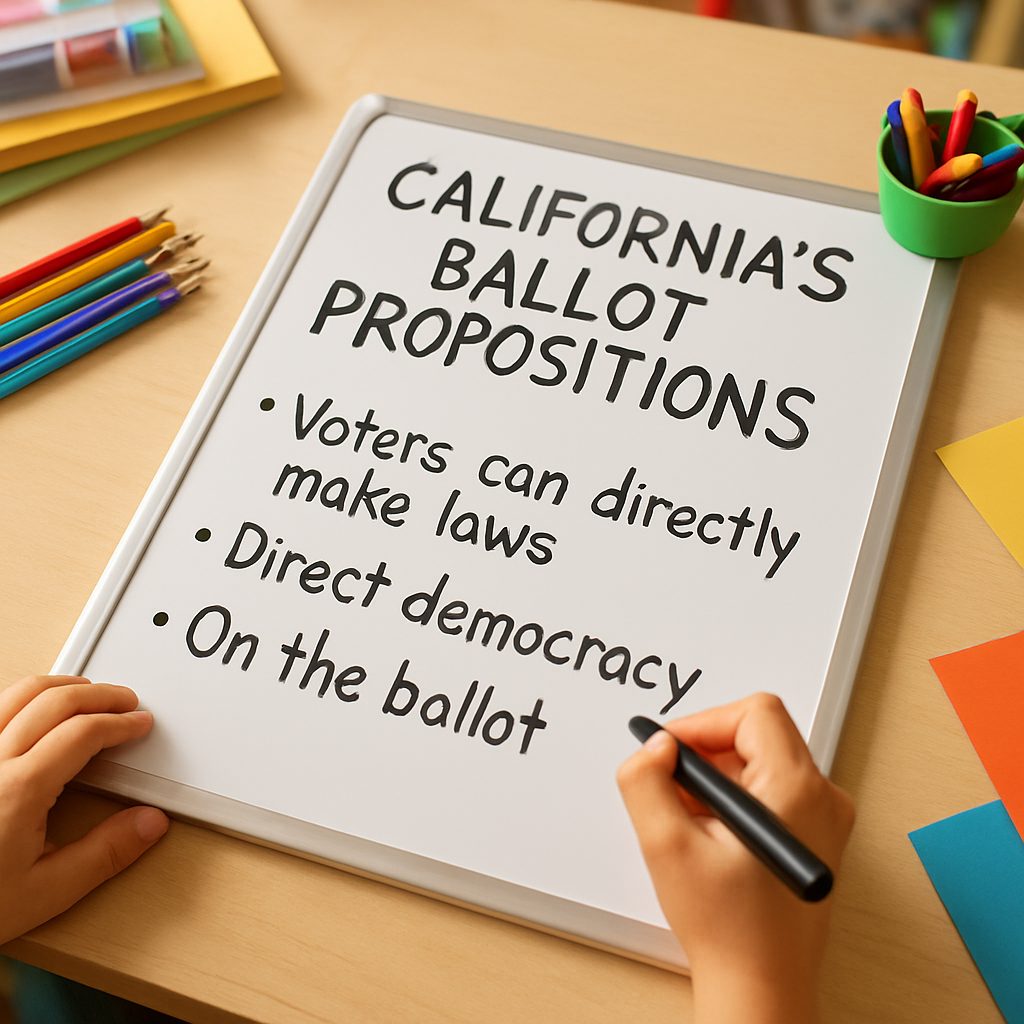
California lets voters make laws directly! Let's explore how this works and why it matters.
What do you think a ballot proposition is?
Why do you think voting is important?
Steps
1Step 1
Introduction to Ballot Propositions
(5 min) Start with a brief discussion about how California allows voters to directly influence laws through ballot propositions. Ask, "Why do you think it's important to understand what we're voting on?" Students will share their thoughts. Use the whiteboard to write down key points about civic engagement.
2Step 2
Group Brainstorming
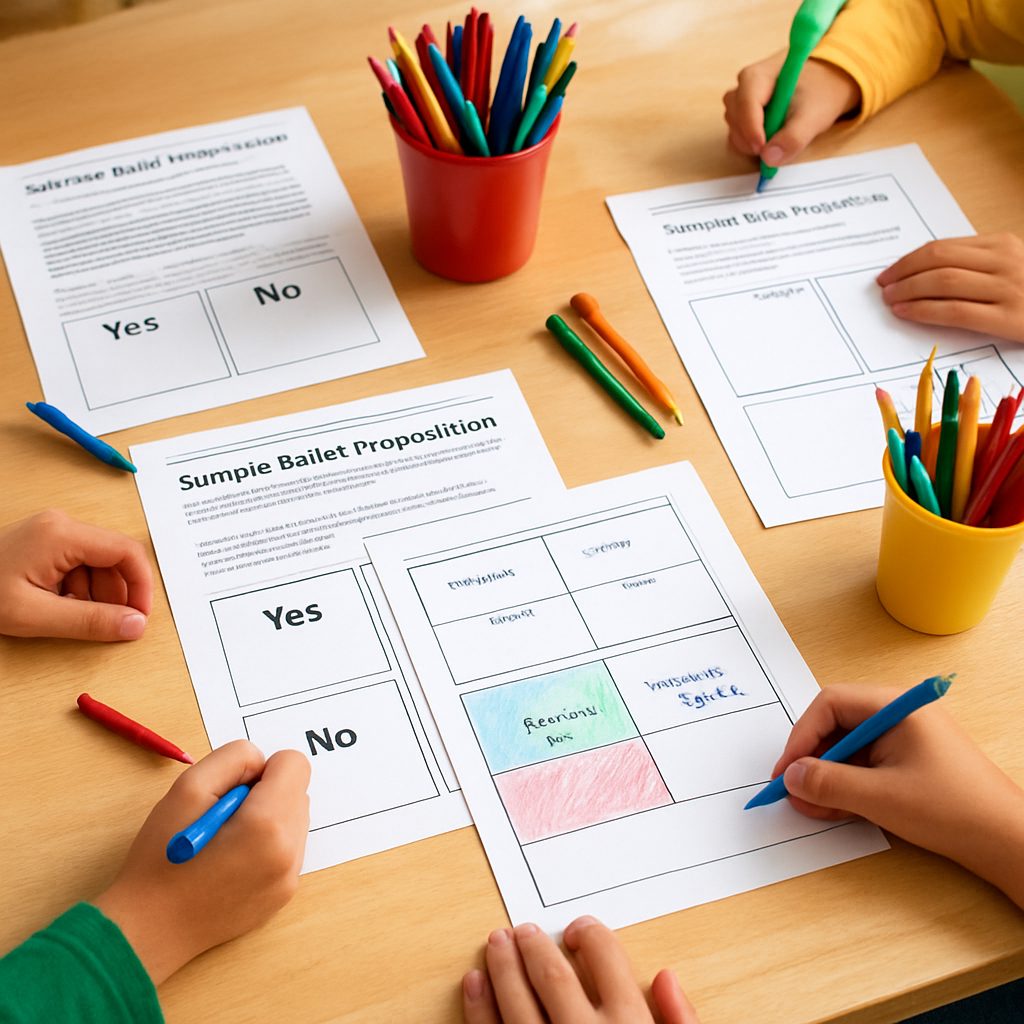
(10 min) Divide students into 5 groups of 4. Each group receives 4 printed copies of sample ballot propositions, 4 graphic organizers, 4 markers, and 4 colored pencils. The teacher says, "Let’s brainstorm what makes a good proposition!" Students discuss in their groups and jot down ideas on their graphic organizers. The finished work will be a collection of ideas that clearly outlines characteristics of a strong proposition.
3Step 3
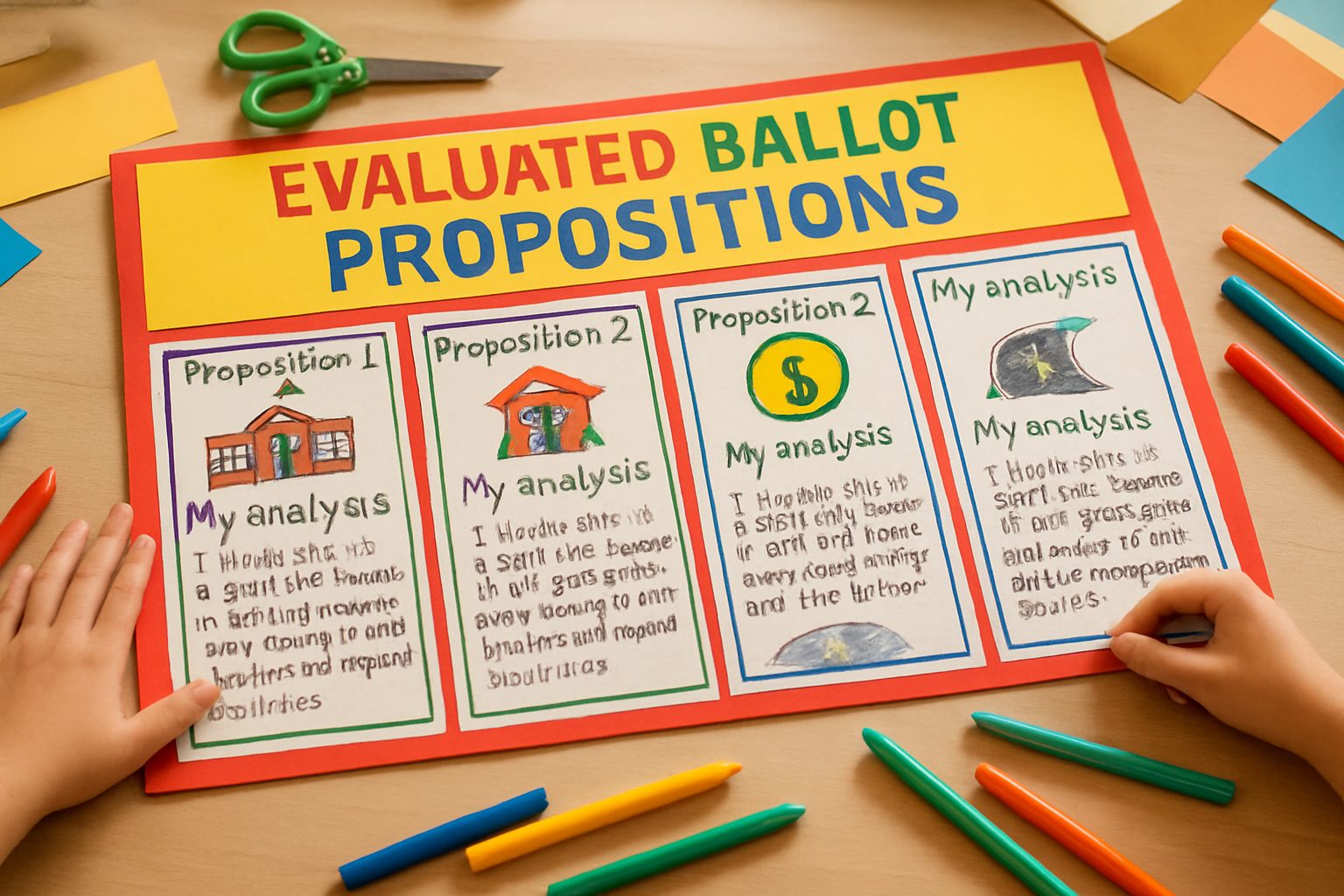
Writing Class Proposition
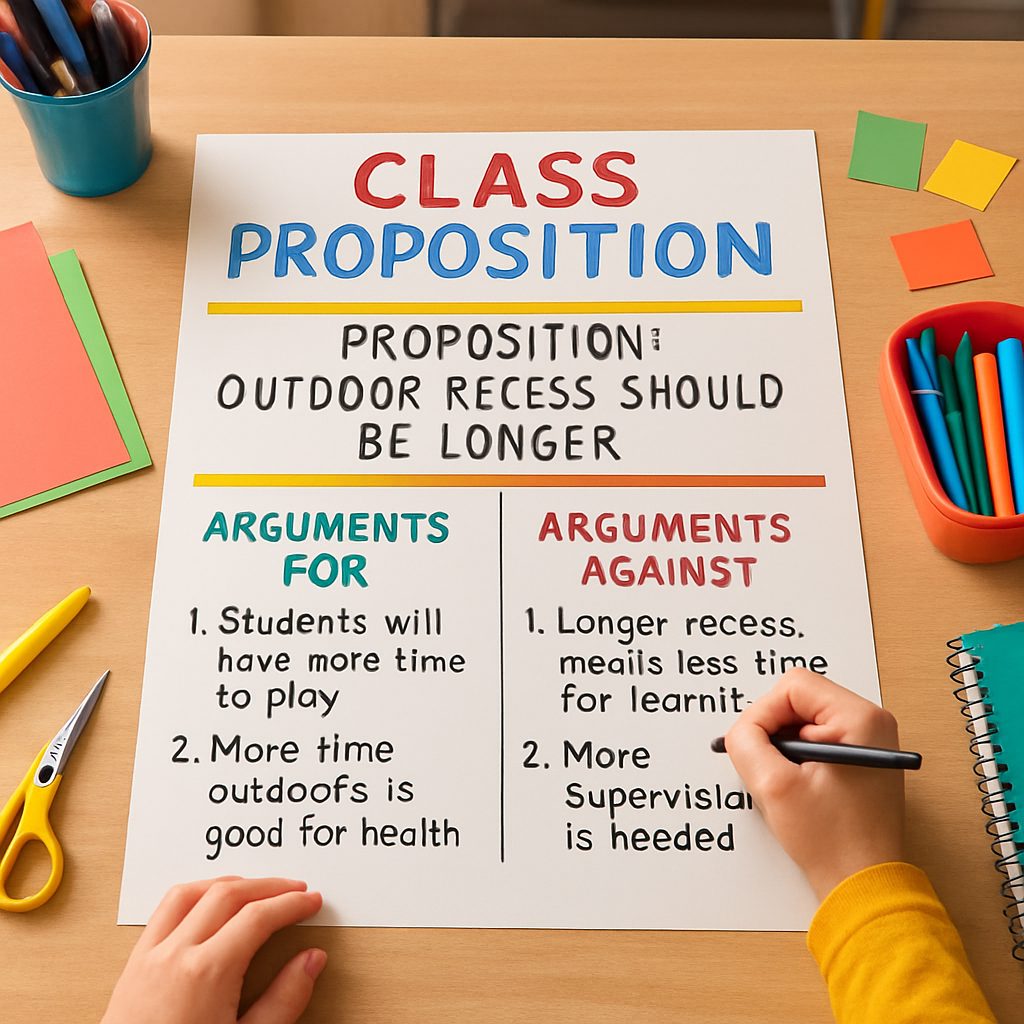
(20 min) Each group will write their own class proposition using the 4 provided proposition templates. They will create arguments for and against the proposition using their graphic organizers, which include 2 arguments for and 2 against. The teacher encourages, "Make sure your poster clearly explains your proposition and arguments!" The finished work will be an organized poster that presents their proposition along with supporting arguments and counterarguments.
4Step 4
Group Presentations
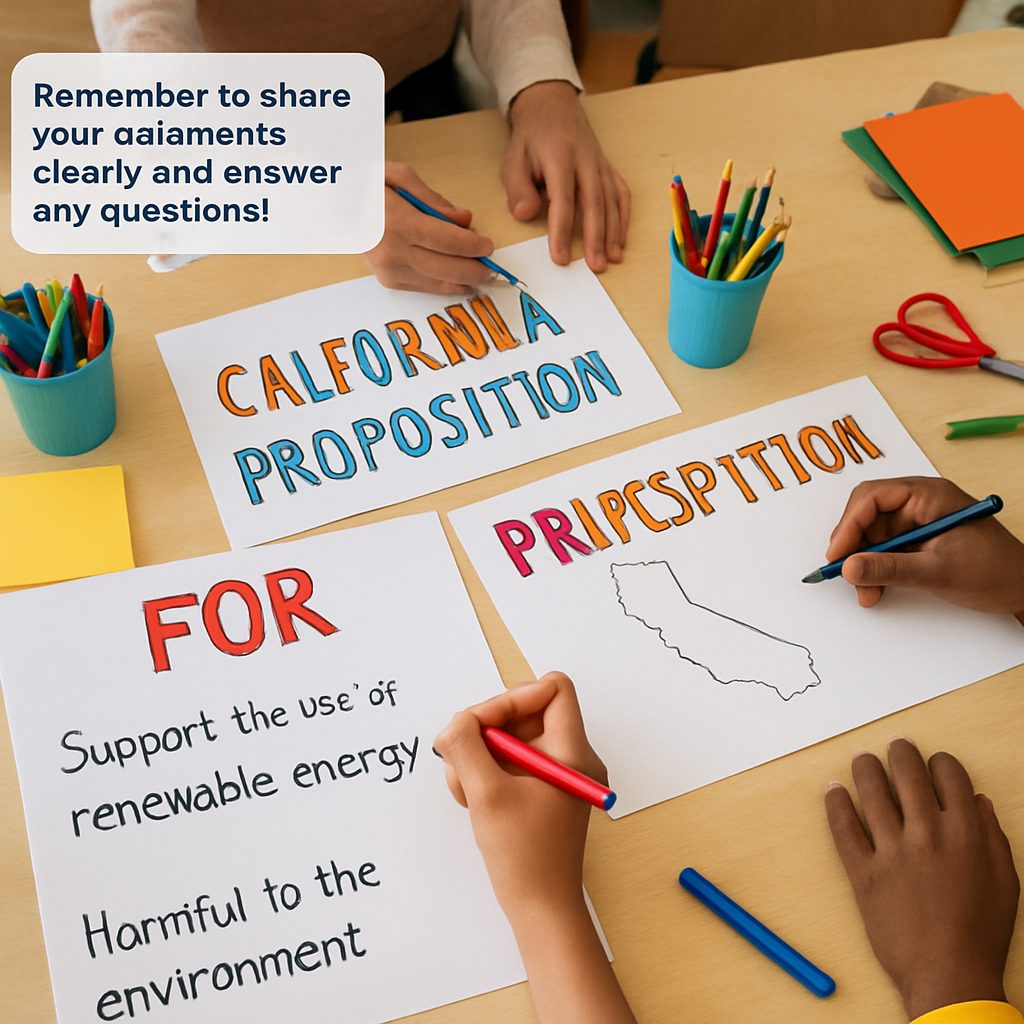
(15 min) Groups present their propositions to the class. The teacher prompts, "Remember to share your arguments clearly and answer any questions!" Each group shares their arguments for and against the proposition while the rest of the class listens and prepares questions. The finished work will be a verbal presentation supported by their posters, engaging the class in discussion.
5Step 5
Reflection
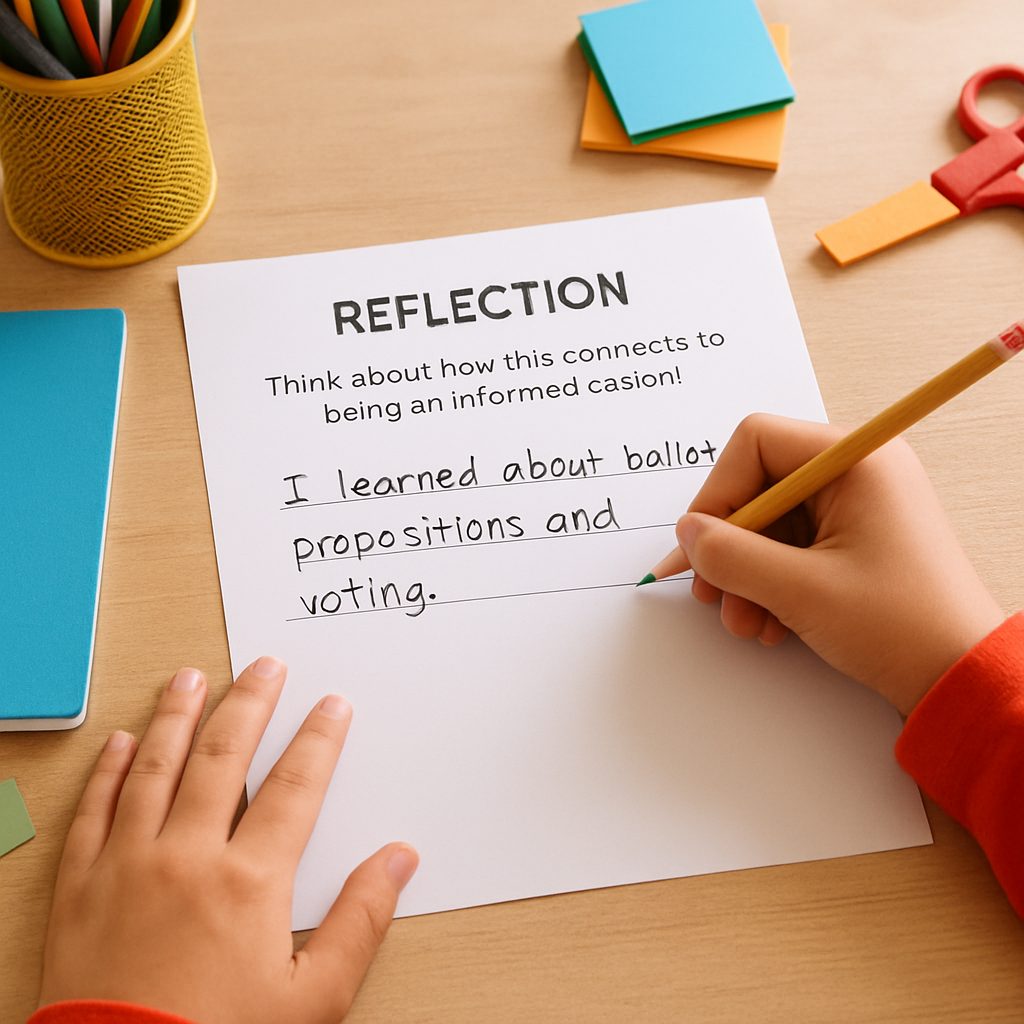
(10 min) To wrap up, students will reflect on their learning by writing down one thing they learned about ballot propositions and voting. The teacher says, "Think about how this connects to being an informed citizen!" They may share their thoughts with a partner or keep it private. The finished work will be their written reflections, capturing their learning experience from the lesson.
Conclusion
Summarize the key points about ballot propositions, the importance of informed voting, and how this process engages citizens in democracy. Encourage students to discuss what they learned about civic engagement and voting with their families.
Make your own lesson plan in minutes
Describe a topic and Resource Portal AI writes the objectives, materials and steps for your group.
Try Resource Portal AI