Summer Shade Shelter Challenge: Engineer Shade for an Ice Cube
Overview
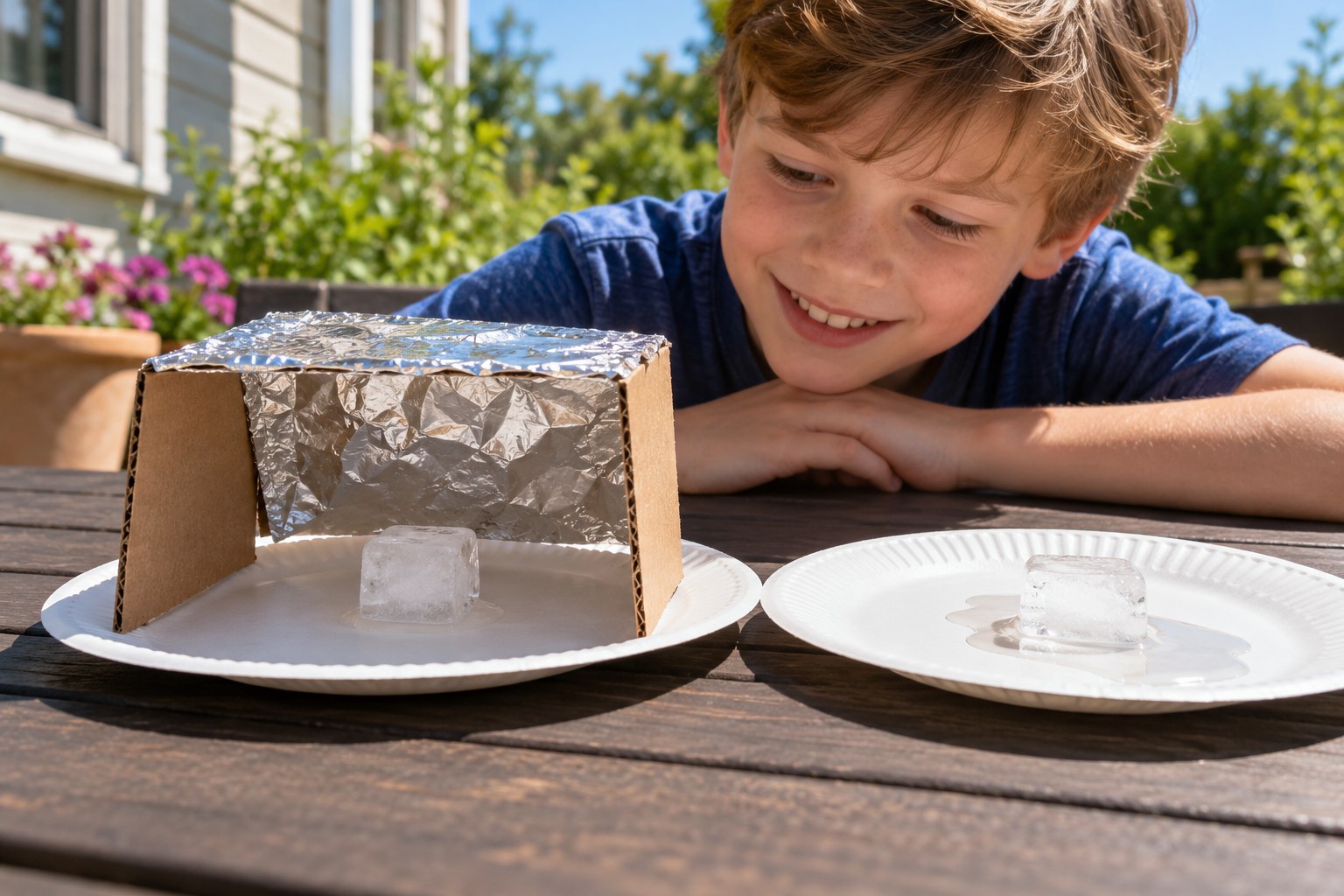
Build a mini shade shelter and see which keeps ice the longest.
Description
Your child becomes a summer shade engineer. They design and build a small shelter from household scraps to protect an ice cube from the sun, test it against an unshaded cube, then improve the design.
Objective
Your child will use the engineering design process to build, test and improve a shade structure, and explain how shade and color affect heat from the sun.
Materials
| Item | Quantity |
|---|---|
| Ice cubes from the same tray | 3-4 per child |
| Small paper plates or jar lids | 3 per child |
| Building scraps: cardboard, craft sticks, pencils, aluminum foil, white and dark fabric scraps, paper cups | a shared pile |
| Tape and safety scissors | 1 each to share |
| Timer or phone | 1 |
| Sunny outdoor spot and a shady spot for the testers | 1 |
Vocabulary
Preparation
- Make ice the night before so all cubes are the same size.
- Pick a test spot in full sun on a flat surface, and a shady spot nearby where kids can wait.
- Read 'Summer safety' and set out water bottles and hats.
Introduction
Ask your child to stand in the sun for 10 seconds, then step into shade. Ask: what changed? Today they will build shade for something that hates heat even more than we do: an ice cube.
What makes the best shade in your neighborhood: trees, umbrellas, buildings?
Do you think a white roof or a black roof would keep the ice colder?
Steps
Conclusion
Ask: what made your shelter work? Connect it to real life: trees, umbrellas and light-colored roofs keep people and buildings cooler in summer, and that is why we look for shade on hot afternoons.
Make your own lesson plan in minutes
Describe a topic and Resource Portal AI writes the objectives, materials and steps for your group.
Try Resource Portal AI