Free lesson planStructured Academic Controversy: Voting at 16
STEAM1 HourGrades: 10th, 11th, 12th
Overview
Engage students in a lively discussion on whether 16-year-olds should be allowed to vote, enhancing critical thinking and collaboration skills.
Description
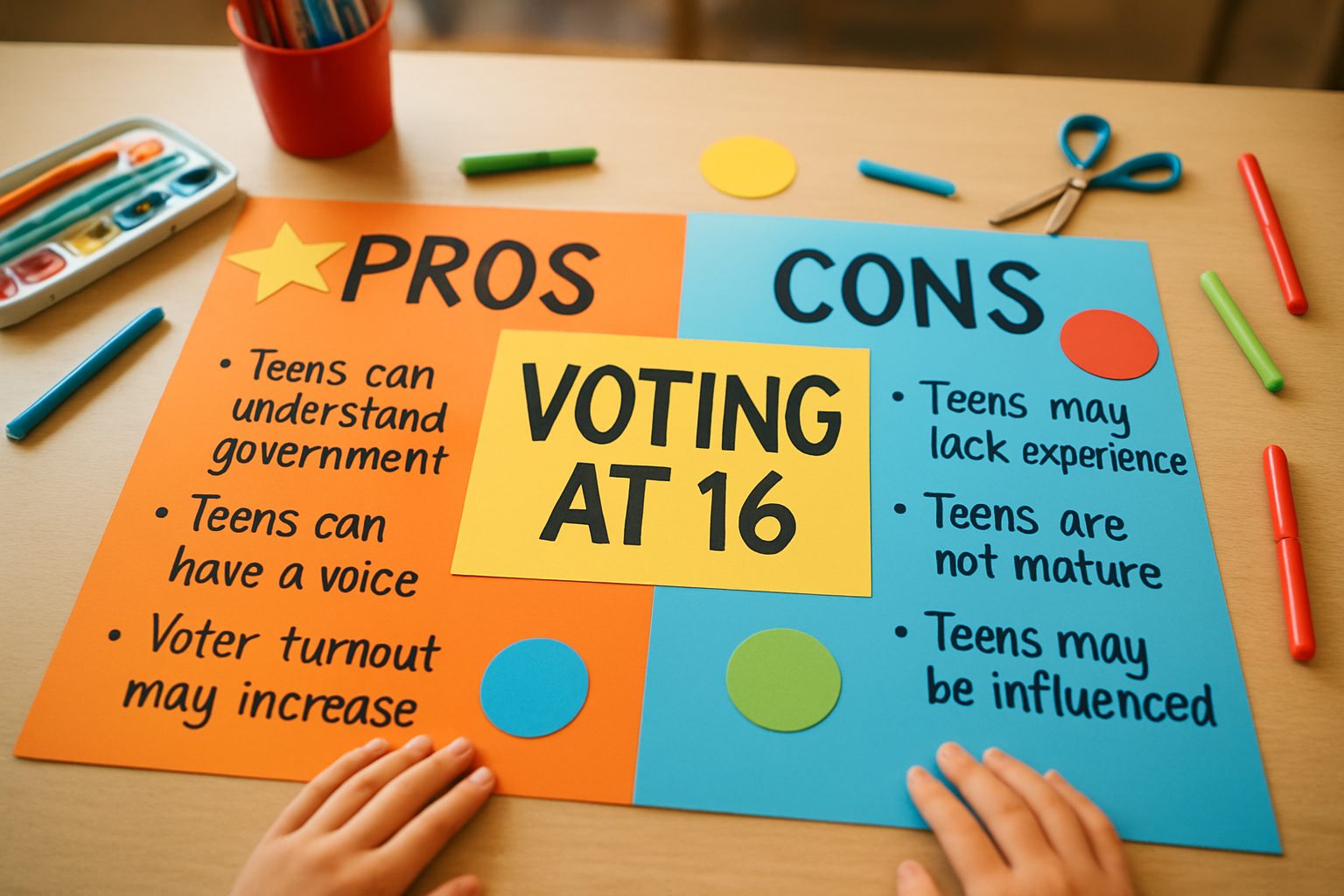
In this lesson, students will engage in a structured academic controversy about the implications and ethics of allowing 16-year-olds to vote. They will work in pairs to research, present, and debate both sides of the proposal, culminating in a group discussion to find common ground.
Objective
Students will analyze both sides of the argument regarding voting at 16, develop persuasive arguments, and effectively communicate their findings in a structured debate format.
Standards
SL.11-12.1ELA · Grade 11-12 · Speaking & Listening Initiate and participate effectively in a range of collaborative discussions (one-on-one, in groups, and teacher-led) with diverse partners on grades 11—12 topics, texts, and issues, building on others' ideas and expressing their own clearly and persuasively.
Materials
| Item | Quantity |
|---|
| Research articles on voting age | 1 set |
| Debate format guidelines handouts | 1 set |
| Reading packets | 20 pieces |
| SAC protocol sheets | 5 sets |
| Poster boards | 5 pieces |
| Evaluation rubrics | 5 sets |
Vocabulary
Democracy
A system where the people choose their leaders and influence laws.
Civic engagement
Active participation in political and social issues.
Legislation
Rules created by authorities to govern society.
Persuasion
The act of convincing someone to adopt a certain belief or action.
Argumentation
A reasoned discussion aimed at reaching a conclusion.
Youth suffrage
The right for young people to participate in elections.
Preparation
- Gather research articles and resources on voting age.
- Prepare debate format guidelines and evaluation rubrics.
- Set up the classroom for group discussions and presentations.
Introduction
Ask students to imagine a world where they could vote at 16 and discuss their thoughts about the potential impact.
What do you think about the current voting age?
How do you feel about young people's involvement in politics?
Steps
1Step 1
Hook: Introduction to the Debate
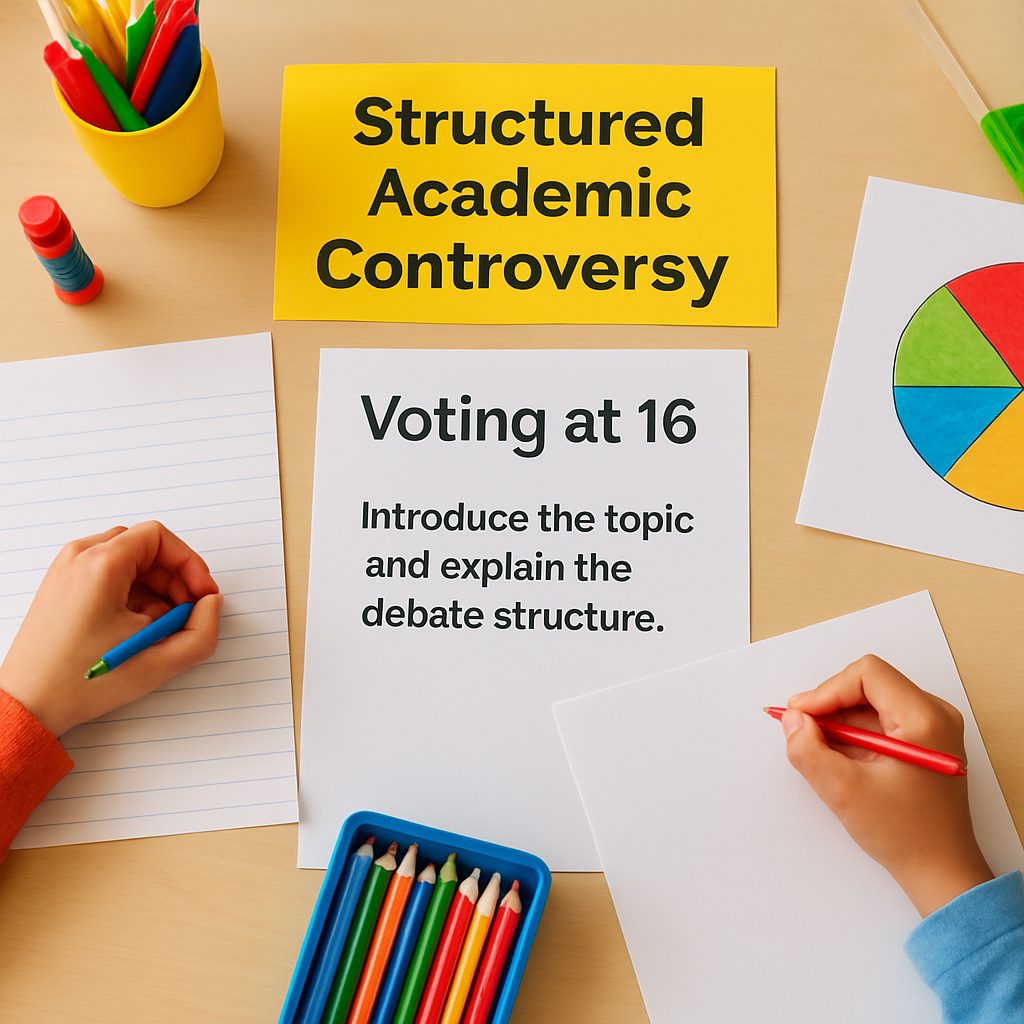
(5 min) Introduce the debate topic by saying, 'Imagine if you could vote at 16�what changes might that bring?' Allow students to discuss their initial thoughts in pairs. After 2 minutes, ask a few pairs to share their ideas with the class.
2Step 2
Group Formation
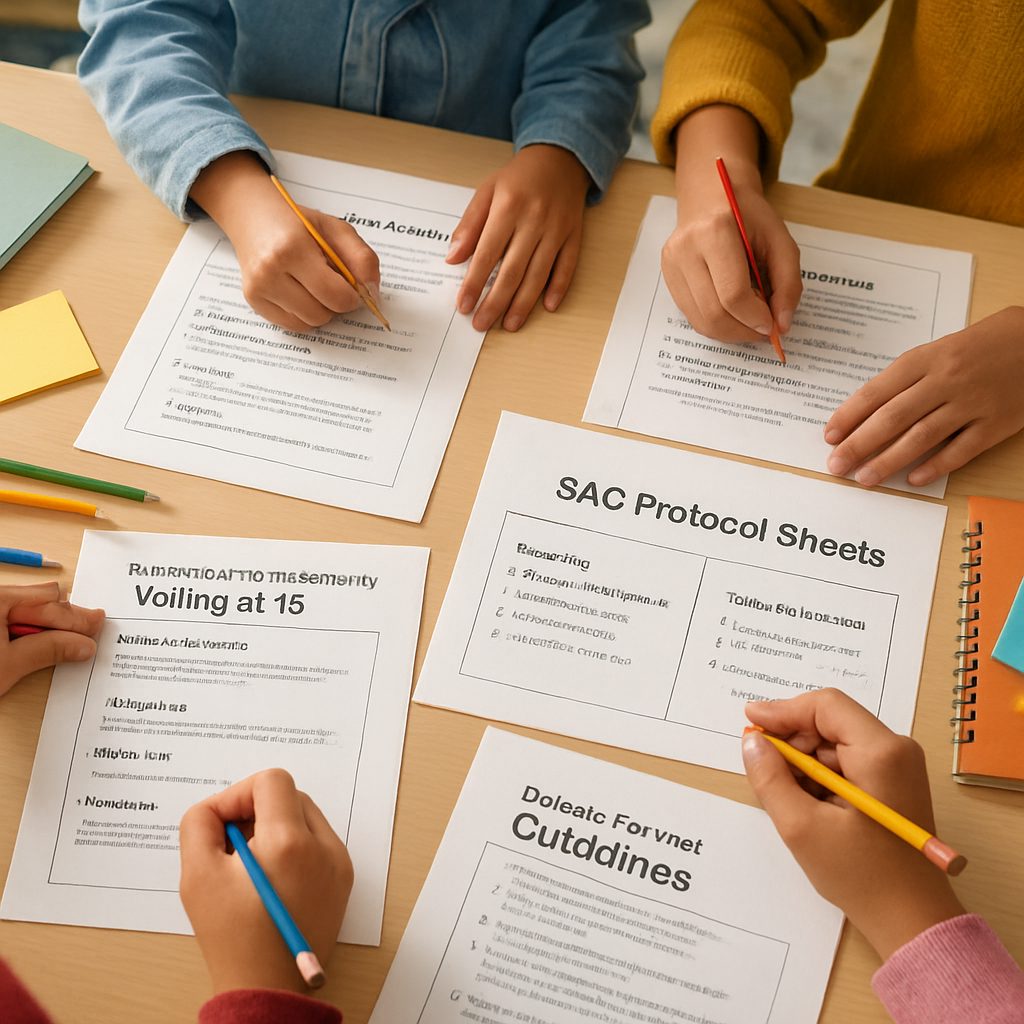
(10 min) Organize students into 5 groups of 4, ensuring a mix of perspectives. Distribute 1 set of debate format guidelines and 1 set of SAC protocol sheets to each group. The leader says, 'You will be researching both sides of the voting age issue.' Students will collaborate to read through the guidelines and SAC sheets, discussing how to approach their research and debate. Each group will prepare to engage in constructive discussions and take notes for their arguments.
3Step 3
Research and Argument Preparation
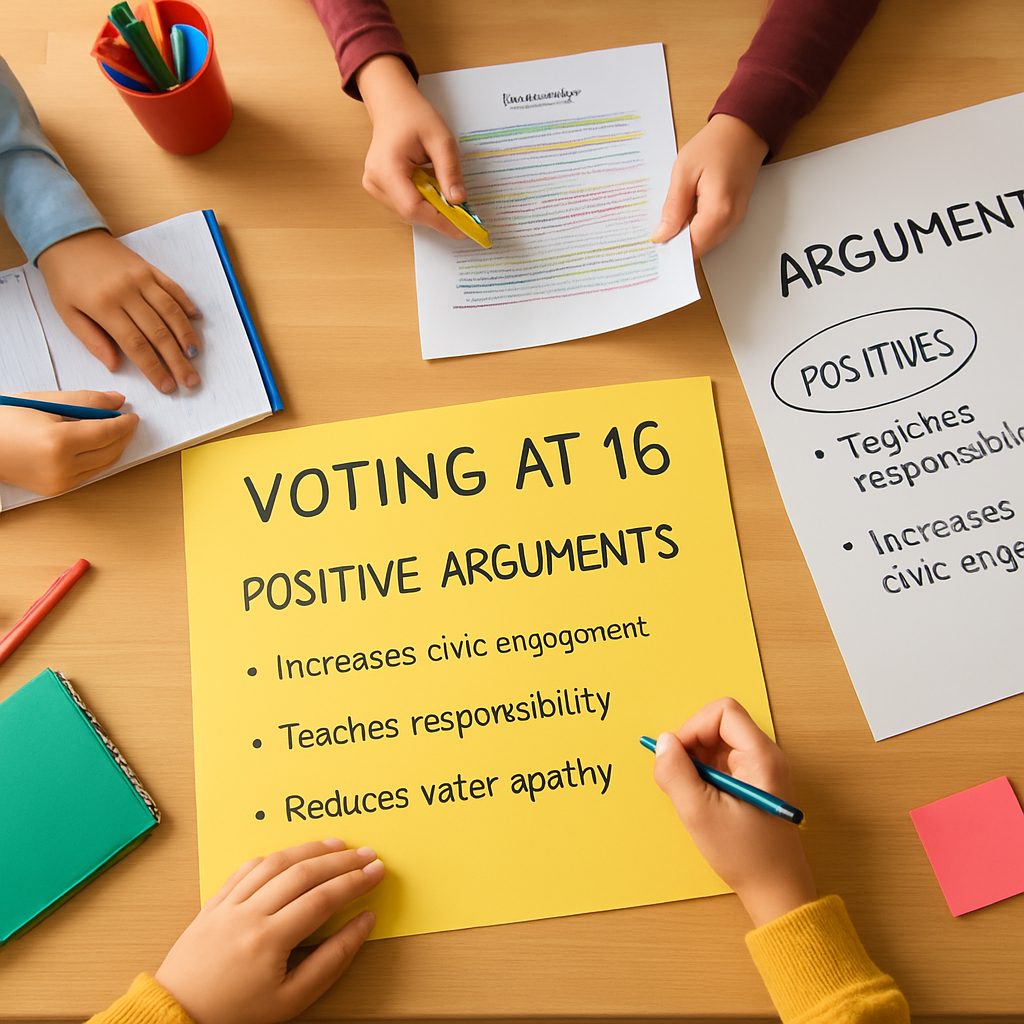
(25 min) Each group will spend 15 minutes researching their assigned position using the reading packets and research articles. The leader encourages, 'Think critically about your arguments as you prepare!' Students will read the materials, jot down key points, and work together to draft their main arguments on the poster boards. By the end of this step, each group will have a visually organized poster presenting their arguments clearly.
4Step 4
Debate: Presenting Arguments
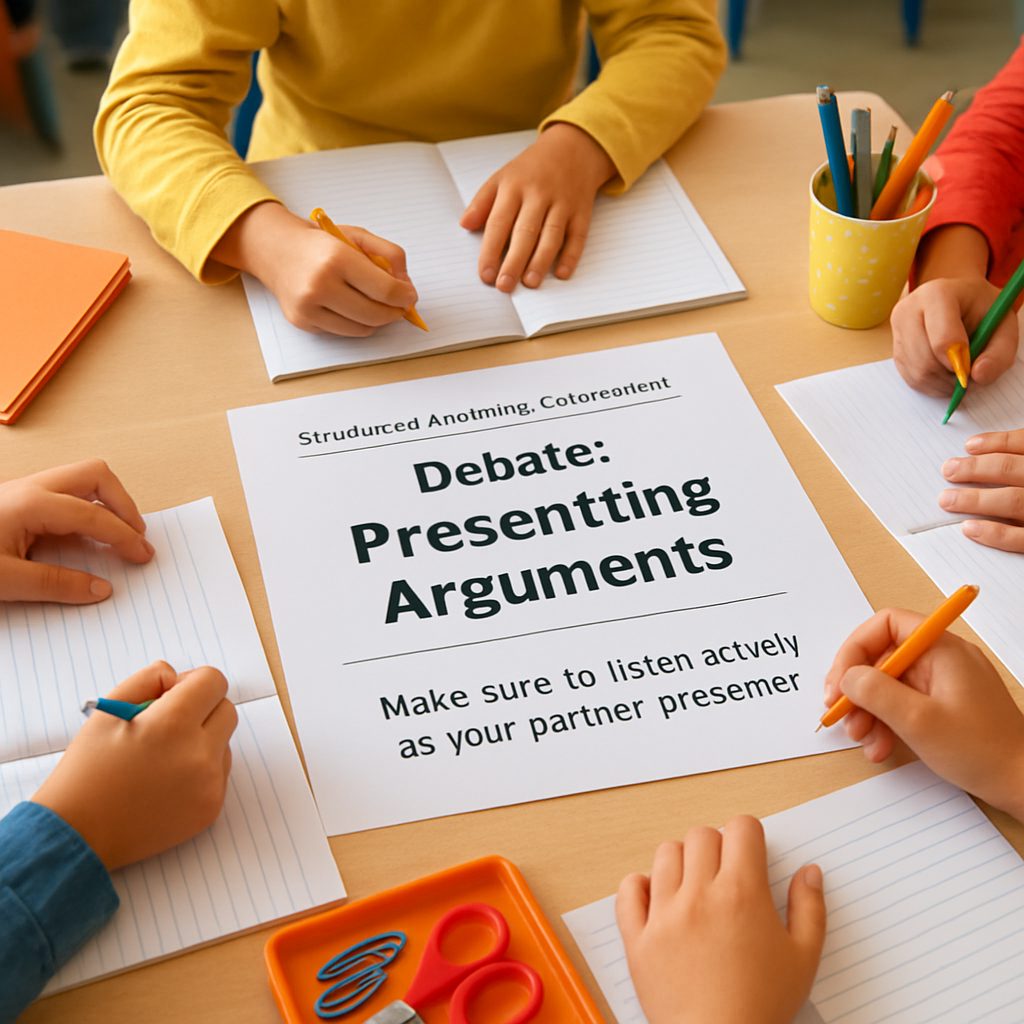
(10 min) Each pair presents their arguments for their assigned side to another pair for 5 minutes. The leader states, 'Make sure to listen actively as your partner presents!' Students will share their points and then switch roles to present the opposite side. Each pair should take notes during the presentations to prepare for the final discussion, ensuring they understand both perspectives.
5Step 5
Class Discussion: Finding Common Ground
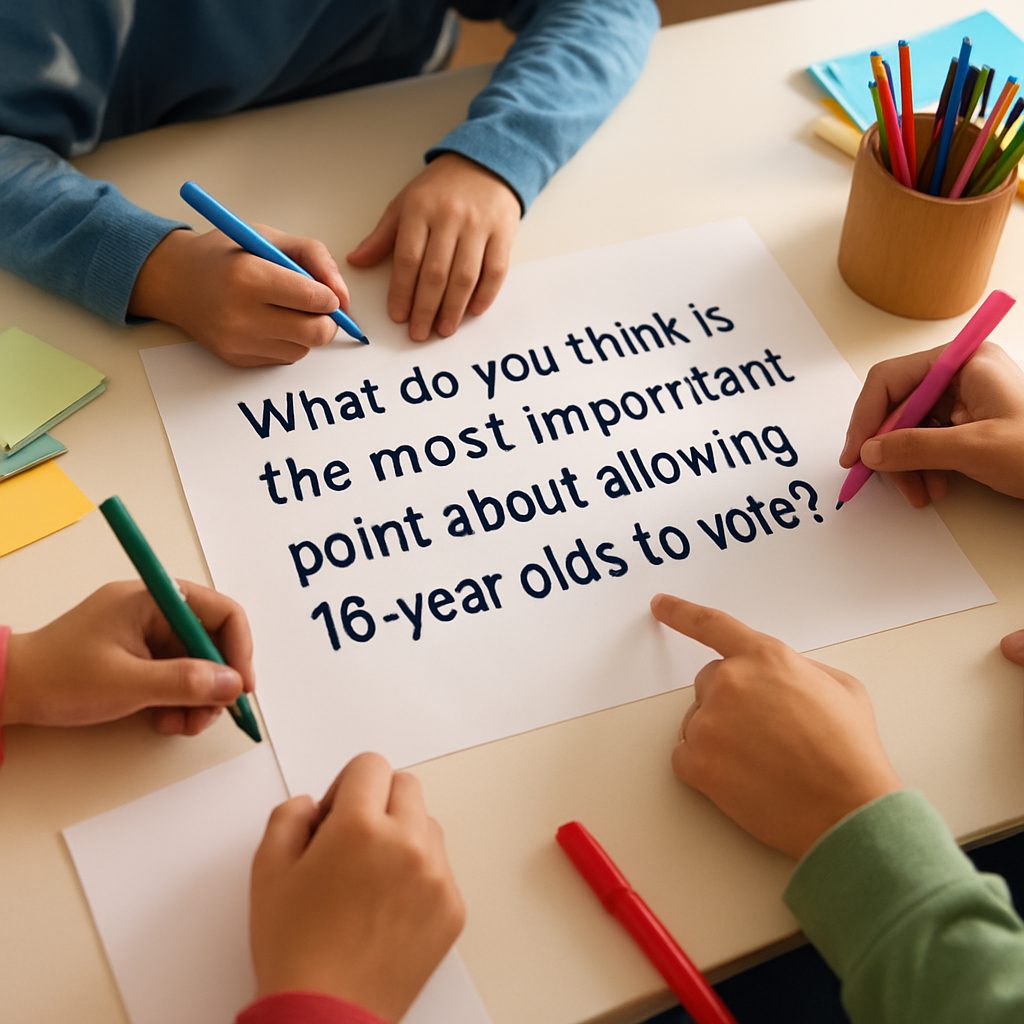
(5 min) Facilitate a class discussion where students drop their assigned sides and seek common ground on the issue. The leader asks, 'What do you think is the most important point about allowing 16-year-olds to vote?' Students will share their thoughts, emphasizing points of agreement and disagreement, and collaboratively explore the complexities of the issue.
6Step 6
Reflection
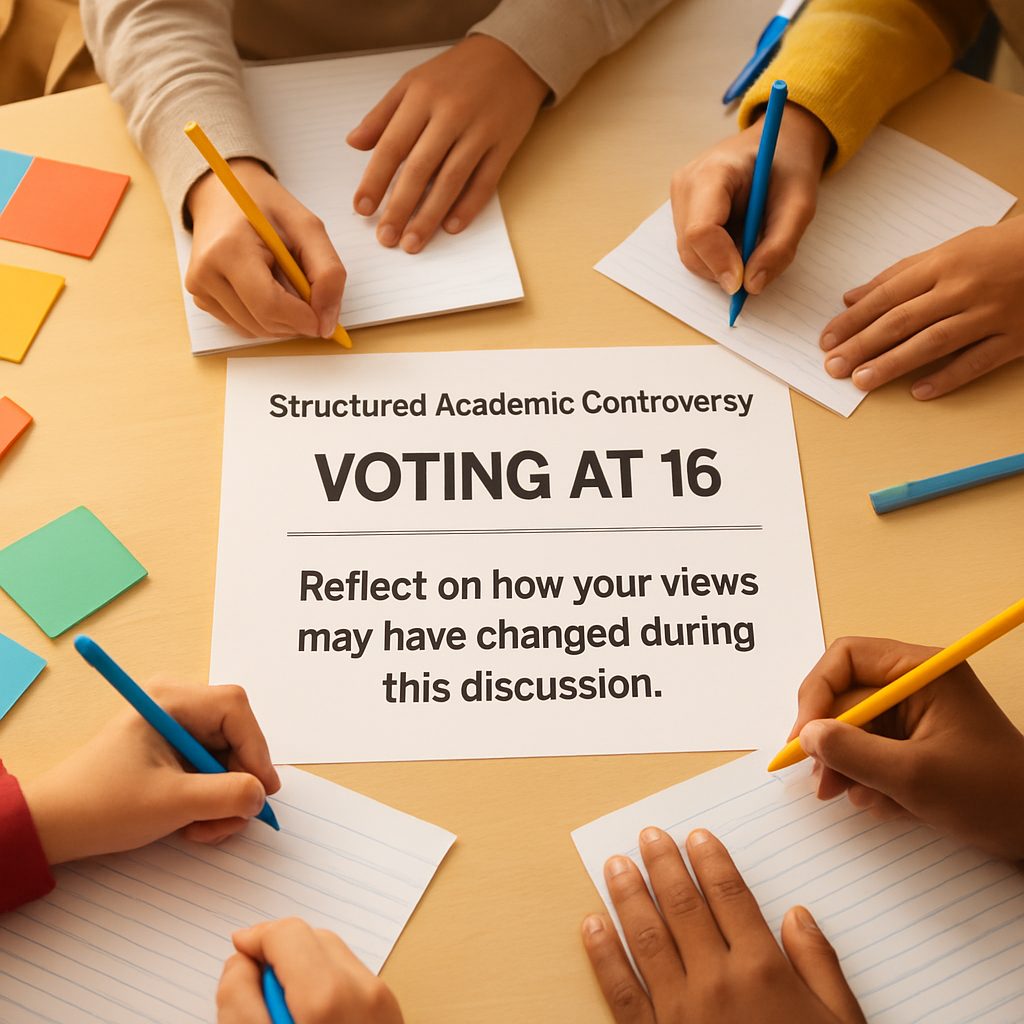
(5 min) Conclude by having each student share one insight gained from the debate either verbally or in writing. The leader encourages, 'Reflect on how your views may have changed during this discussion.' Students will express their thoughts and consider the role of young people in democracy, solidifying their learning experience.
Conclusion
Reflect on how discussing the voting age has influenced your understanding of civic engagement. Think about ways to stay involved and express your opinions on this topic beyond the classroom.
Make your own lesson plan in minutes
Describe a topic and Resource Portal AI writes the objectives, materials and steps for your group.
Try Resource Portal AI