Spider Web Engineering: Build a Yarn Web That Holds
Overview
Weave a yarn spider web and test how much it can catch.
Description
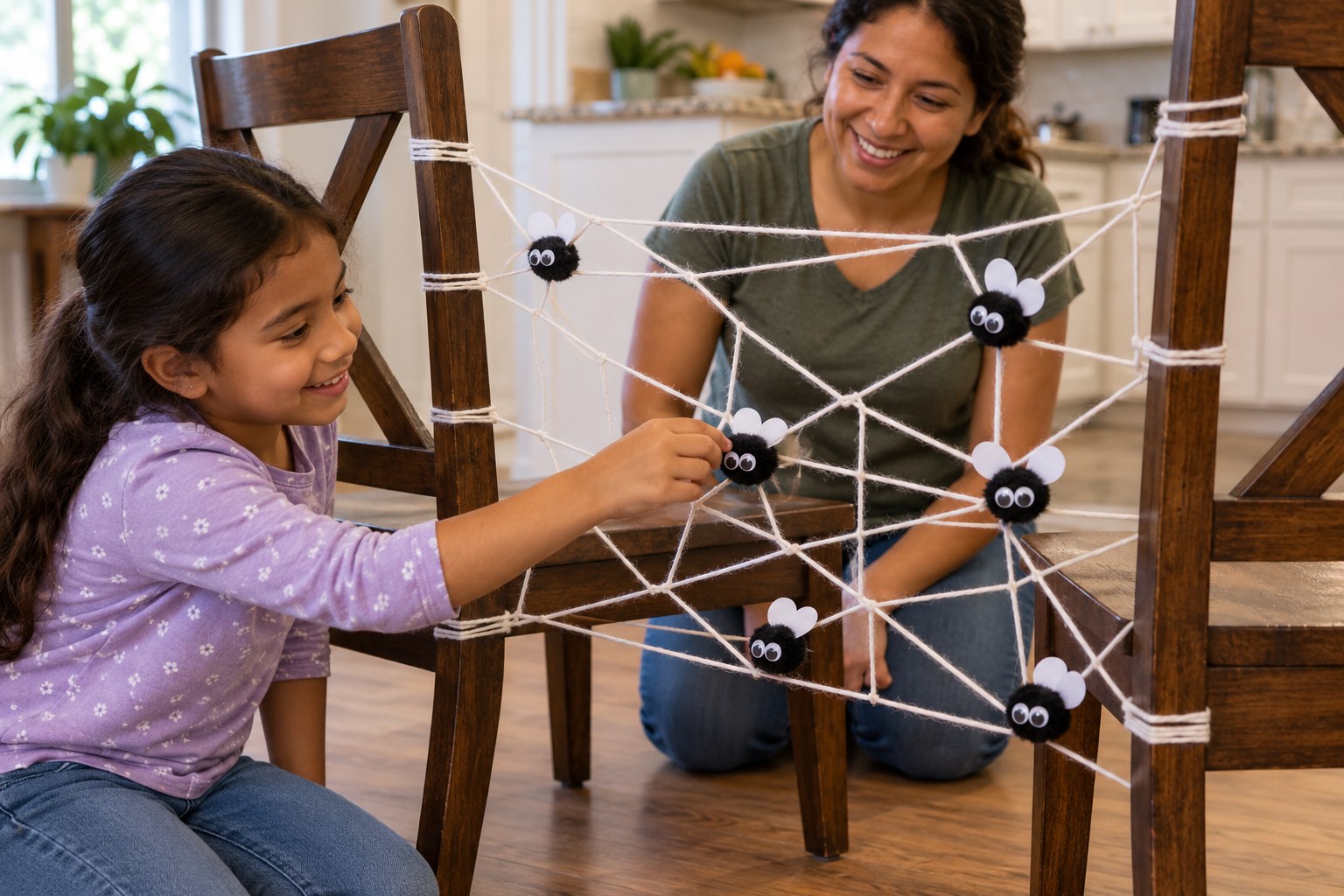
Your child learns how real spiders build webs, then weaves a yarn web between chair legs, tests how many paper 'flies' or pom-poms it can catch and hold, and improves the design.
Objective
Your child will build a web model, test it with a fair drop test, and change one part of the design to make it hold more.
Materials
| Item | Quantity |
|---|---|
| Yarn or string | 1 ball (about 20 yards) |
| 2 chairs, or a laundry basket turned upside down | 1 set |
| Masking or painter's tape | 1 roll |
| Cotton balls, pom-poms or crumpled paper balls (the flies) | 20 |
| Child-safe scissors | 1 |
| Paper and pencil for tallying | 1 each |
Vocabulary
Preparation
- Place two chairs back to back about 2 feet apart, or turn a laundry basket upside down so the legs make a frame.
- Cut a few 3-foot pieces of yarn to get started. Keep yarn away from necks and supervise at all times.
Introduction
Ask your child: 'Spiders don't have hands or nets from the store. How do they catch their food?' Show a photo of a spider web if you can.
What shape do you see in a spider web?
Why might a web need lots of crossing threads?
Steps
Conclusion
Ask: what did real spiders teach you about building strong nets? Engineers often copy ideas from nature, which is called biomimicry.
Make your own lesson plan in minutes
Describe a topic and Resource Portal AI writes the objectives, materials and steps for your group.
Try Resource Portal AI