Free lesson planRedistricting Commission Simulation
STEAM1 HourGrades: 11th, 12th
Overview
Explore the complexities of redistricting through a hands-on simulation where students create and analyze district maps, discussing the implications of their decisions.
Description
In this lesson, students will simulate a redistricting commission, exploring the complexities of district boundaries and their implications on representation. Students will work collaboratively to understand the importance of fair representation, analyze data, and propose their own district maps, all while adhering to the criteria set by California's Citizens Redistricting Commission.
Objective
Students will collaboratively design a district map while analyzing the impact of their choices on representation, developing skills in critical thinking and communication.
Materials
| Item | Quantity |
|---|
| Large graph paper pads | 5 pads |
| Markers (various colors) | 20 pieces |
| Rulers | 5 pieces |
| Data sets on demographics | 5 sets |
| Commission rules | 5 sets |
| Whiteboard and markers | 1 set |
Vocabulary
Redistricting
The process of redrawing district boundaries for electoral purposes.
Gerrymandering
Manipulating district boundaries to favor one party over another.
Demographics
Statistical data relating to the population and particular groups within it.
Representation
The action of speaking or acting on behalf of someone.
Boundaries
The lines that define the limits of a district.
Equity
Fairness and justice in the way people are treated.
Contiguous
The requirement that districts be drawn so they are connected and not divided.
Communities of Interest
Keeping similar communities together in the same district.
Preparation
- Prepare demographic data sets on local populations for each group.
- Print large graph paper pads for each group.
- Organize markers and rulers for student use.
- Set up a whiteboard for brainstorming and discussions.
Introduction
Show a brief video clip illustrating the impact of gerrymandering on local elections.
What is redistricting, and why is it important?
How can district boundaries affect representation in government?
Steps
1Step 1
Hook Discussion
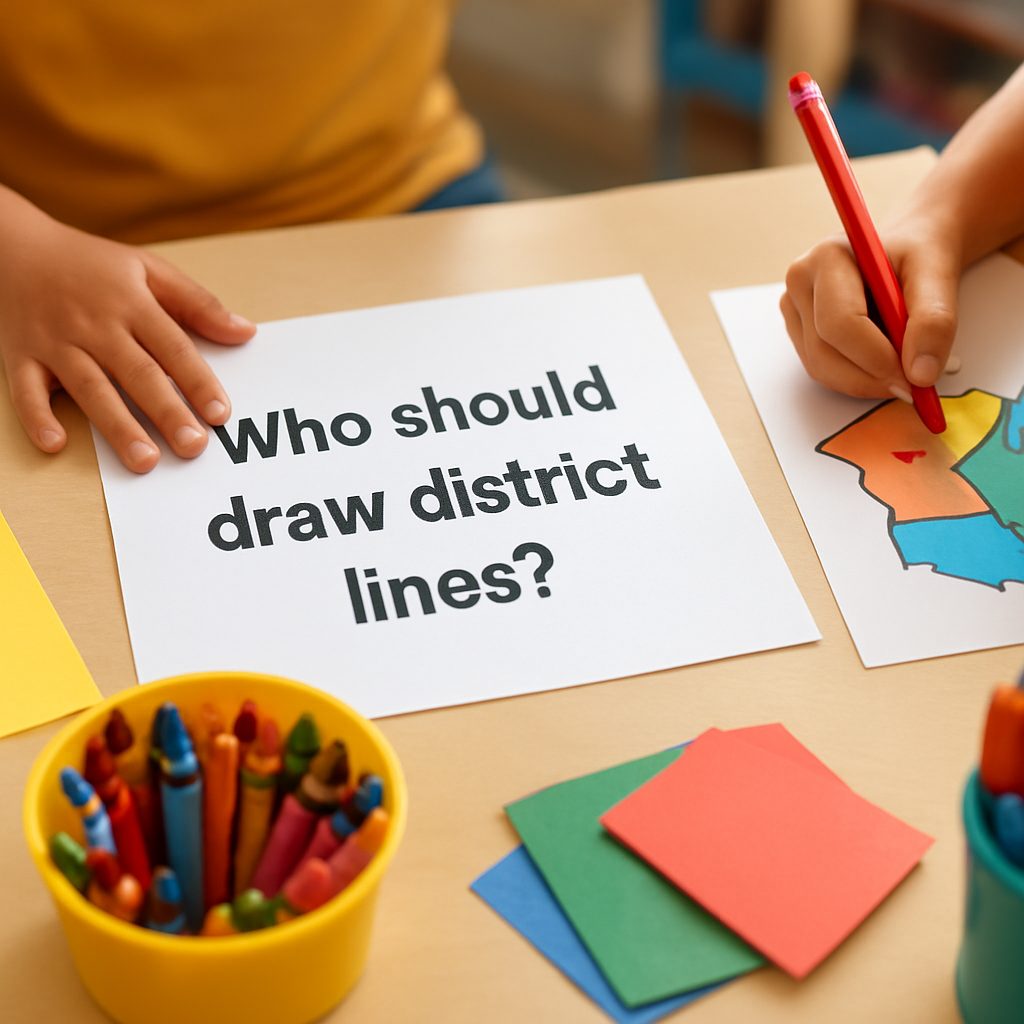
(5 min) Begin with a hook discussion by showing a brief video clip about gerrymandering. Ask students, 'How do district lines affect who gets elected?' Engage them in conversation to stimulate interest in the topic.
2Step 2
Form Groups
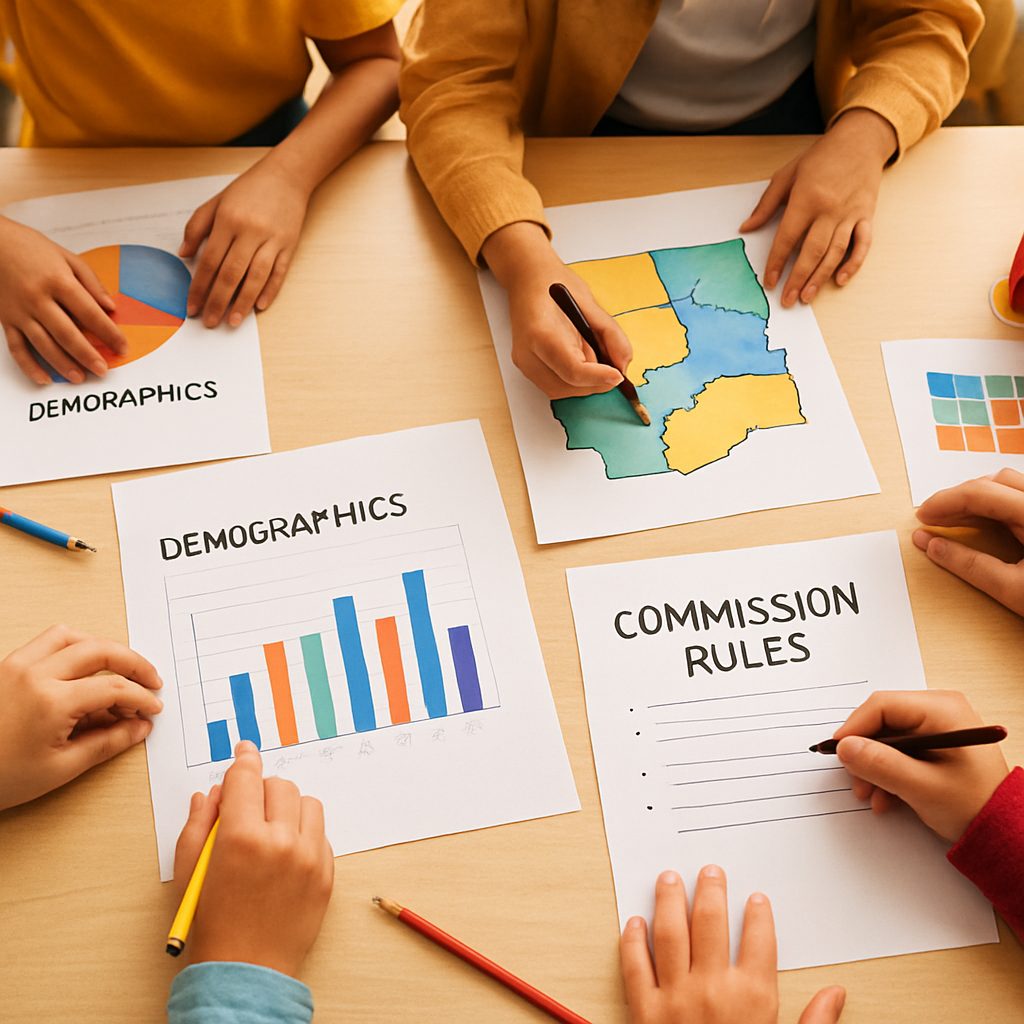
(10 min) Divide students into 5 groups of 4. Each group will receive 1 data set on demographics and 1 set of commission rules. The teacher will say, 'It's essential to consider both the population and community interests when creating your maps.' Students will discuss the criteria they need to follow, ensuring they understand the requirements before starting their work. By the end, each group should have a clear understanding of how to approach their map creation.
3Step 3
Analyze Data
(15 min) Groups will analyze their demographic data and commission rules. The teacher will guide them by saying, 'Remember to focus on compactness and community cohesion in your discussions.' Students will take time to review their data sets, taking notes on their findings and considering how to incorporate community interests into their maps. The finished work will include a list of key points and strategies for their proposed maps.

4Step 4
Draft District Maps
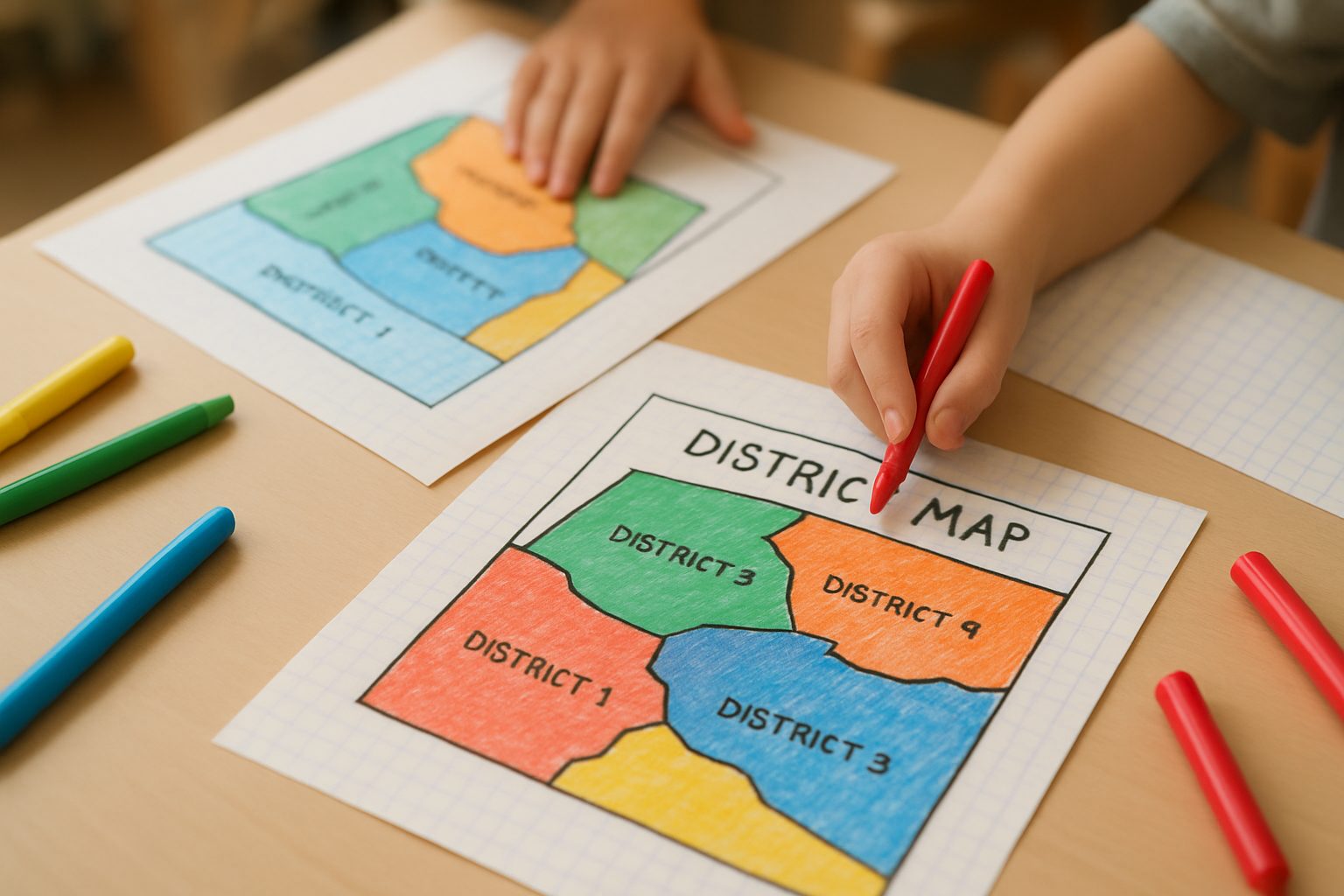
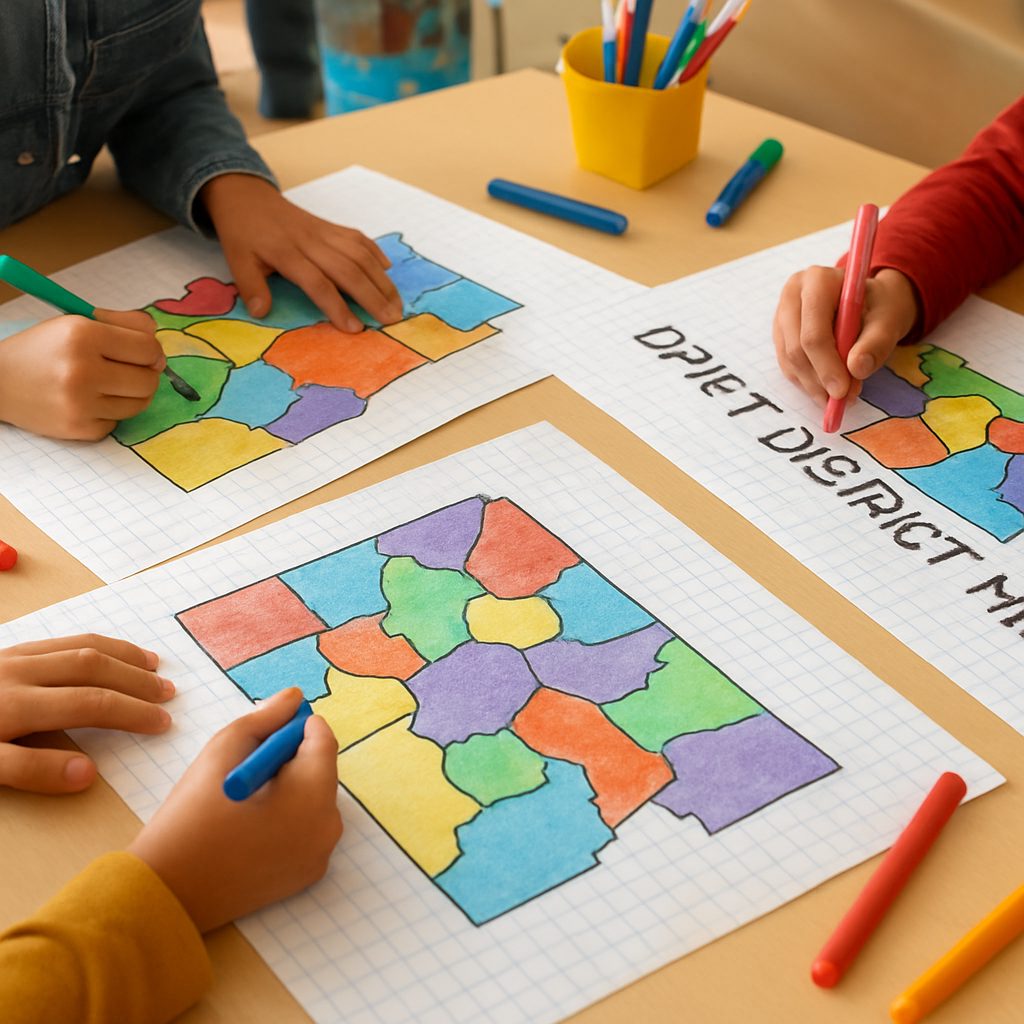
(20 min) With their large graph paper pads and markers, each group will begin drafting their district maps. The teacher will encourage them, saying, 'Make sure your boundaries are clear and represent the demographics effectively.' Students will collaborate to create maps that reflect their analysis, ensuring they follow the commission criteria. The finished maps should be colorful, clear, and demonstrate thoughtful district boundaries.
5Step 5
Present and Discuss
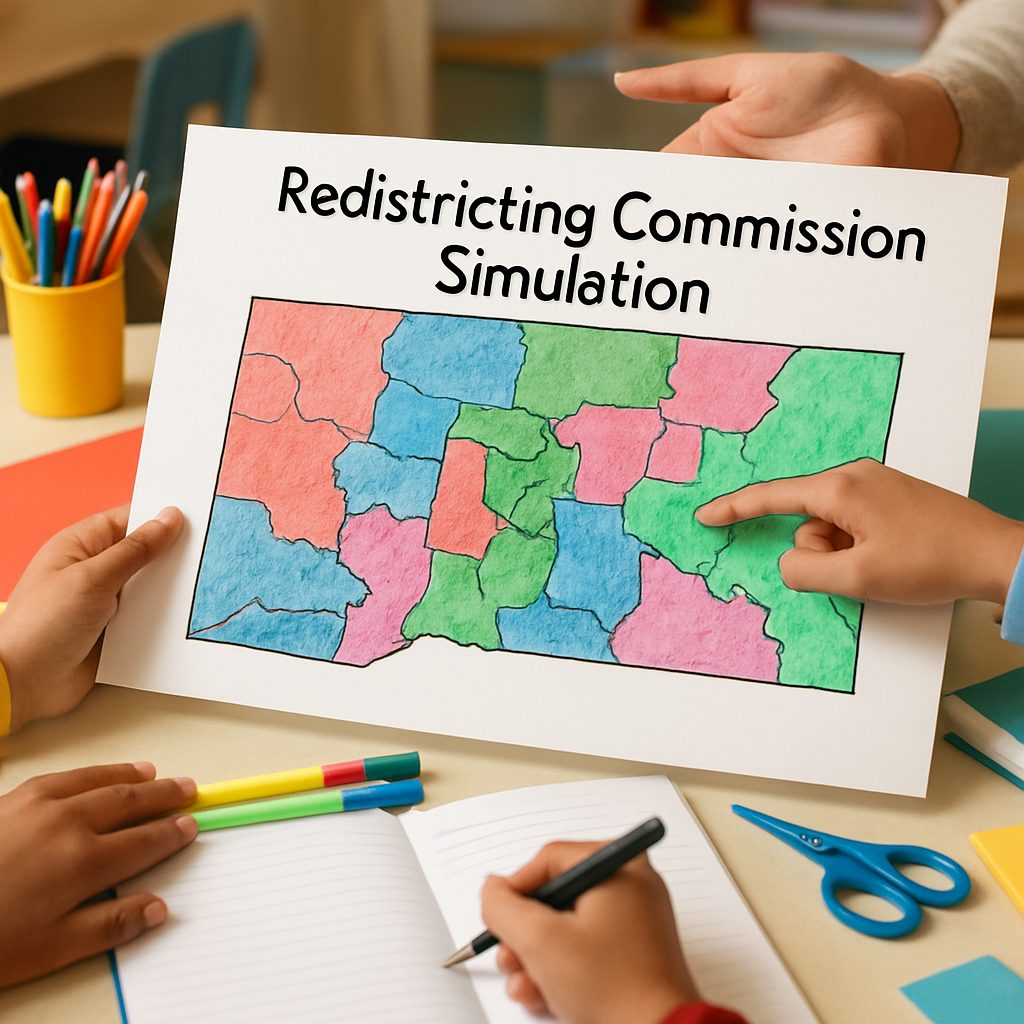
(5 min) Each group will present their maps to the class. The teacher will prompt them by saying, 'As you present, discuss the pros and cons of your approach.' Students will explain their choices and the reasoning behind their district boundaries, inviting feedback and questions from their peers. The finished work will include a group presentation and a visual representation of their map.
6Step 6
Reflection
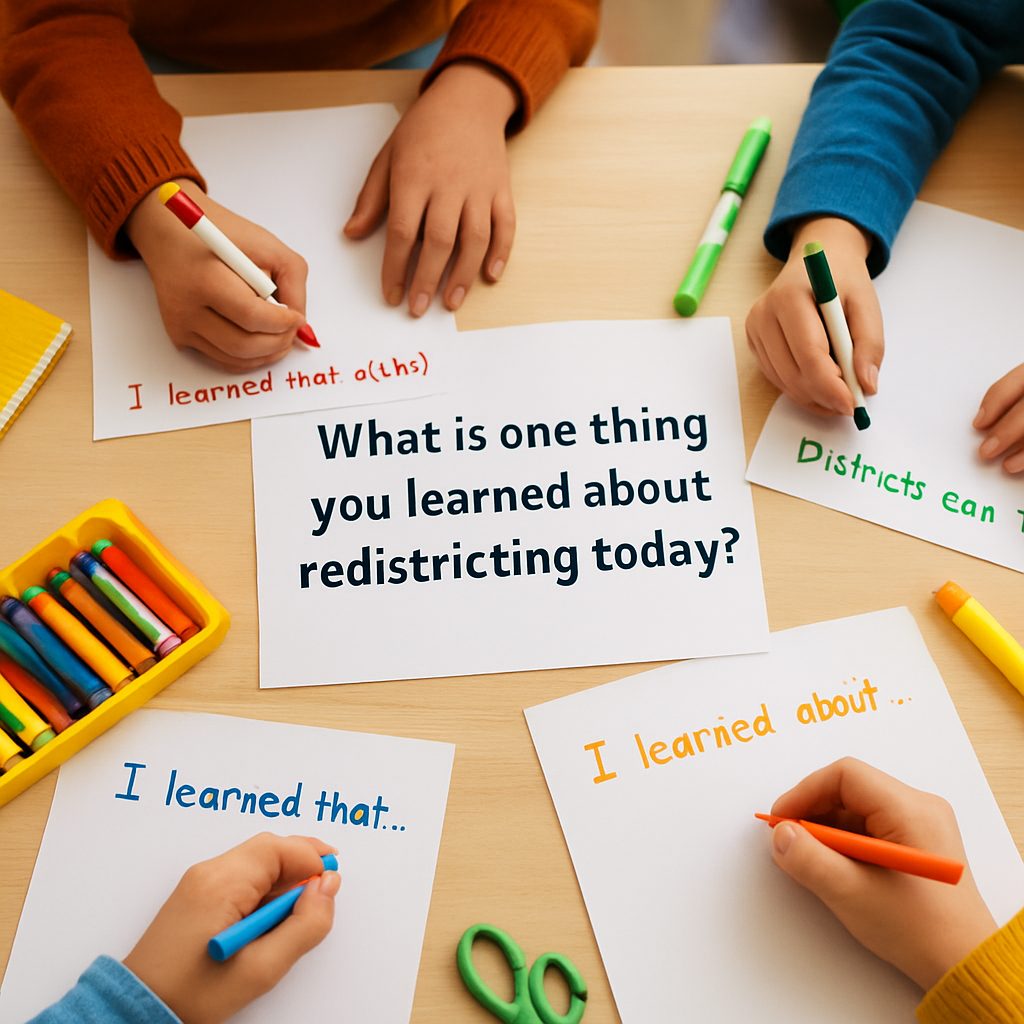
(5 min) Conclude the lesson with a reflection. The teacher will ask, 'What is one thing you learned about redistricting today?' Each student will share their thoughts, helping to solidify their understanding of the topic. The finished work will be a collection of individual reflections that capture their insights and learning outcomes.
Conclusion
Wrap up the lesson by discussing how redistricting affects communities and how students can advocate for fair representation in their local governance.
Make your own lesson plan in minutes
Describe a topic and Resource Portal AI writes the objectives, materials and steps for your group.
Try Resource Portal AI