Free lesson planNonpartisan Voter Guide for Families
STEAM1 HourGrades: 10th, 11th, 12th
Overview
Students will work in groups to research and create a nonpartisan voter guide, enhancing their understanding of the electoral process and developing communication and collaboration skills.
Description
This lesson focuses on creating a nonpartisan voter guide for families, enabling students to engage with civic responsibilities while developing essential skills in collaboration and critical thinking. Students will learn about the electoral process, the roles of candidates, and what a YES or NO vote means for measures on the ballot.
Objective
Students will research various candidates and initiatives to create a comprehensive nonpartisan voter guide that families can use to make informed voting decisions.
Standards
Write informative/explanatory texts to examine and convey complex ideas, concepts, and information clearly and accurately through the effective selection, organization, and analysis of content.
Materials
| Item | Quantity |
|---|
| Research Materials (articles, websites, etc.) | 5 sets (1 set per group) |
| Poster Boards | 5 pieces |
| Markers | 20 pieces |
| Printouts of Candidate Info | 20 pieces |
| Sticky Notes | 1 pack (minimum 100 pieces) |
| Sample Ballots | 20 pieces |
| Design Templates | 5 pieces (1 per group) |
| Translation Support Materials | 5 sets (1 set per group) |
Vocabulary
Nonpartisan
Not biased or affiliated with any political party.
Electoral Process
The method by which voters select their representatives.
Voter Guide
A document providing information about candidates and issues on the ballot.
Civic Duty
The responsibilities of a citizen to participate in their government.
Research
The systematic investigation into a subject to discover facts or principles.
Vote
A decision made on a ballot, indicating support or opposition to a candidate or measure.
Preparation
- Gather research materials and resources for students.
- Prepare poster boards and markers for the voter guide presentations.
- Print out information on candidates and ballot initiatives.
Introduction
Help families understand the Nov 3, 2026 ballot.
Why is it important to understand who and what we are voting for?
How can we provide trustworthy information to our families about the upcoming elections?
Steps
1Step 1
Introduction to the Project
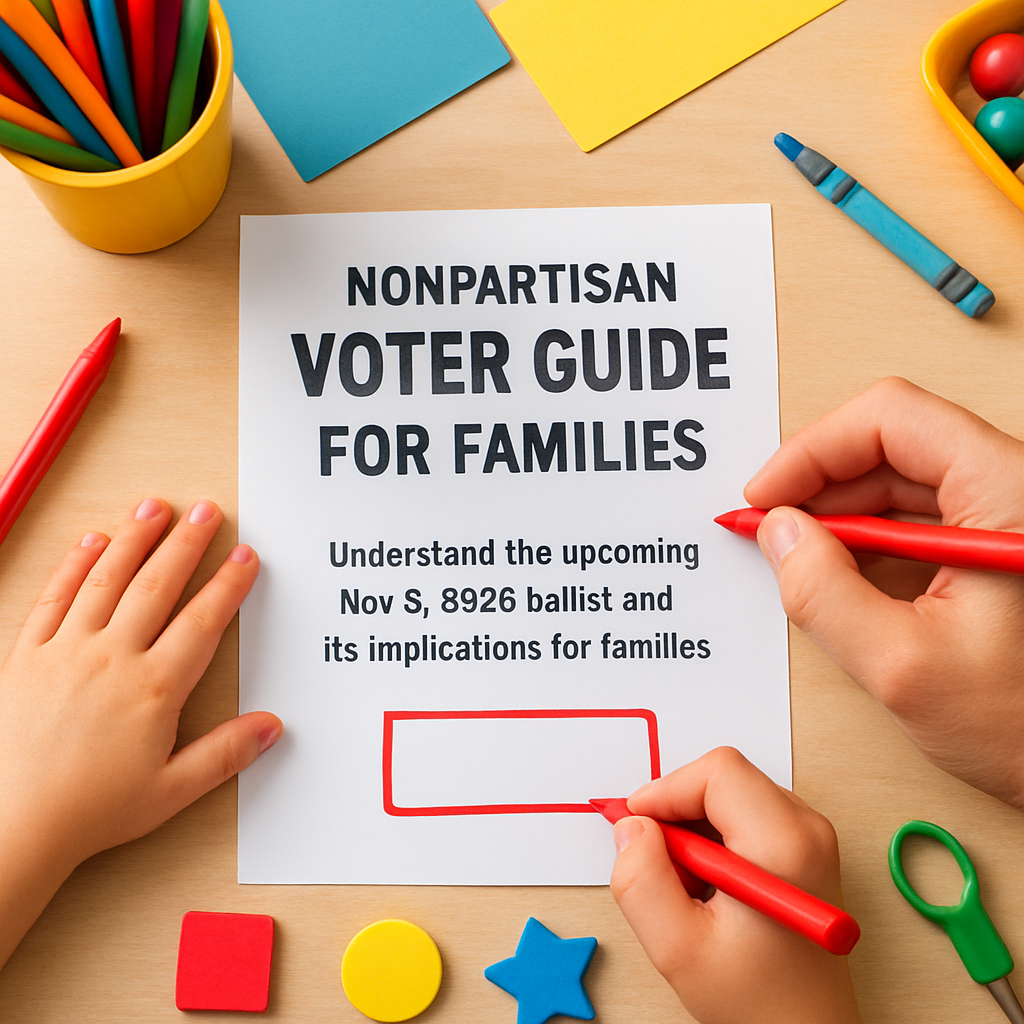
(10 min) Begin by introducing the lesson and explaining the importance of understanding the upcoming Nov 3, 2026 ballot. The teacher says, "Understanding this ballot is crucial for making informed decisions as voters." Distribute 1 set of research materials and 4 poster boards to each group, explaining that they will create a nonpartisan voter guide. Students should reflect on their prior knowledge and consider how they can contribute to the project.
2Step 2
Group Organization
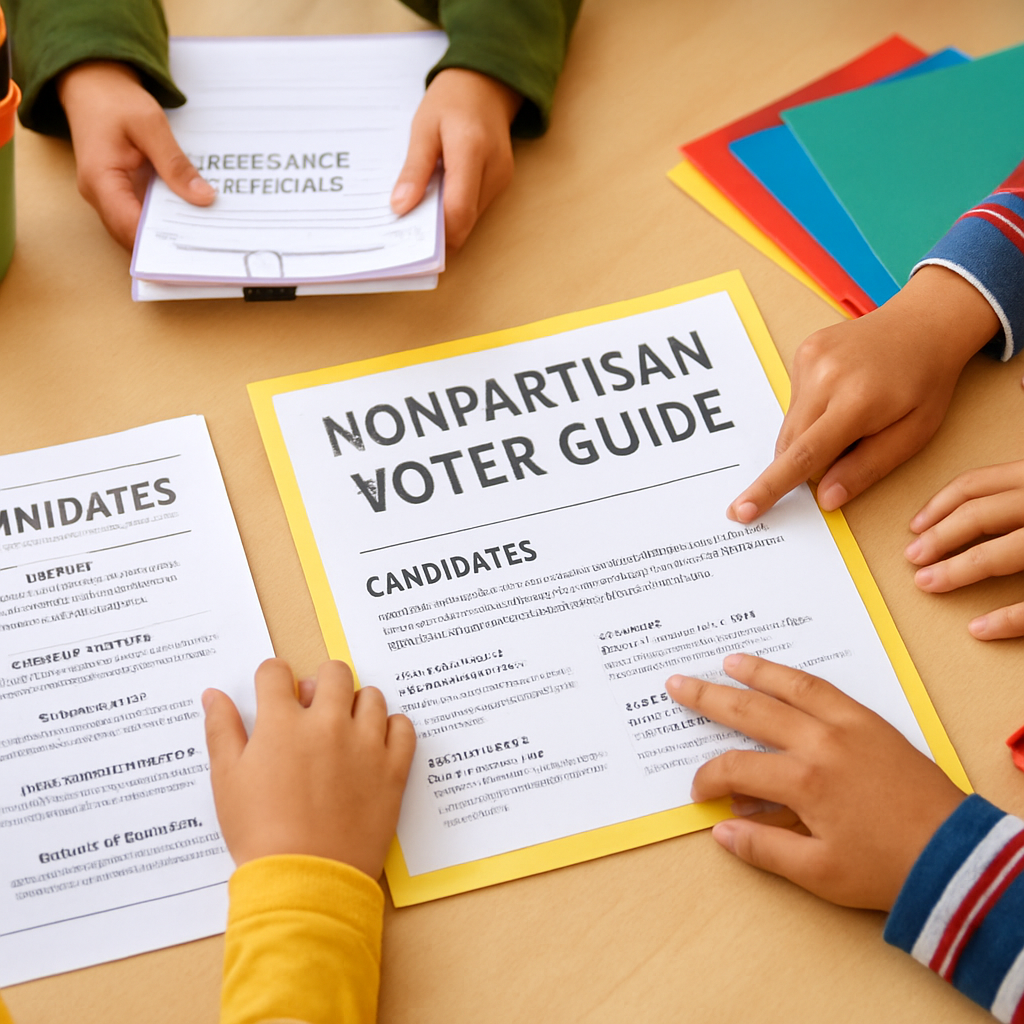
(10 min) Organize students into 5 groups of 4. Each group will receive 1 set of research materials, 20 printouts of candidate info, a pack of sticky notes, and 1 design template. The teacher instructs, "Make sure every group member understands the roles of the candidates and what a YES or NO vote means." In their groups, students will discuss these roles, jotting down notes on sticky notes for later use and ensuring to clarify any doubts about the electoral process.
3Step 3
Research and Drafting
(15 min) Groups will conduct research using the provided materials to create their nonpartisan voter guide. Each group will use their design template and draft their guide on a poster board with markers. The teacher reminds them, "Remember, your guide should explain the roles of different offices clearly." Students will ensure their guide states what a YES or NO vote means for each measure, aiming for clarity and neutrality, so the finished guides are informative and visually appealing for families.
4Step 4
Peer Review
(10 min) Groups will exchange their drafts with another group for constructive feedback. The teacher encourages, "This is your chance to improve your guide based on peer insights." During this peer review, students will discuss their guides and refine their content, focusing on ensuring that the guide remains nonpartisan and clear for families. Each group should take notes on suggestions to enhance their final product.
5Step 5
Final Presentation
(10 min) Each group presents their nonpartisan voter guide to the class, explaining their research and findings. The teacher prompts, "Highlight how each office works and what a YES or NO vote means for each measure." Students will present their guides, ensuring their classmates understand the key information and are encouraged to ask questions. The finished presentations should be engaging and educational, facilitating discussion among peers.
6Step 6
Reflection
(5 min) Conclude with a reflection where each student shares one key takeaway from the project. The teacher prompts, "Think about how you can share this information with your families." This reflection helps reinforce their understanding of the electoral process and the significance of being informed voters, as students discuss their insights and how they plan to communicate these ideas at home.
Conclusion
As a class, discuss the importance of understanding the roles of candidates and what a YES or NO vote means for each measure, reinforcing the value of being informed voters.
Make your own lesson plan in minutes
Describe a topic and Resource Portal AI writes the objectives, materials and steps for your group.
Try Resource Portal AI