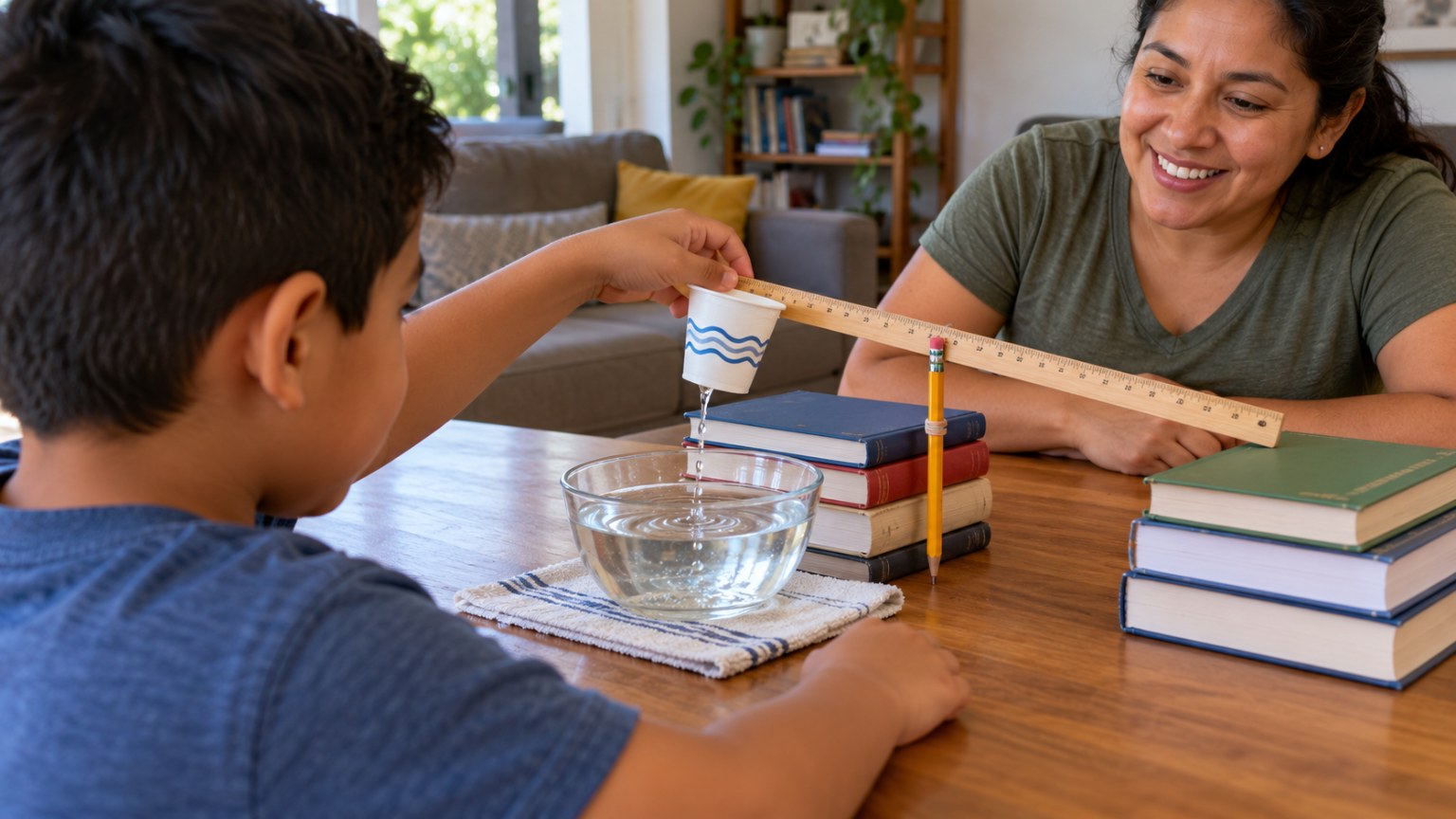
New Year's Ball Drop Engineering: A 10-Second Descent
Overview
Engineer a ball that slides down a string in exactly 10 seconds.
Description
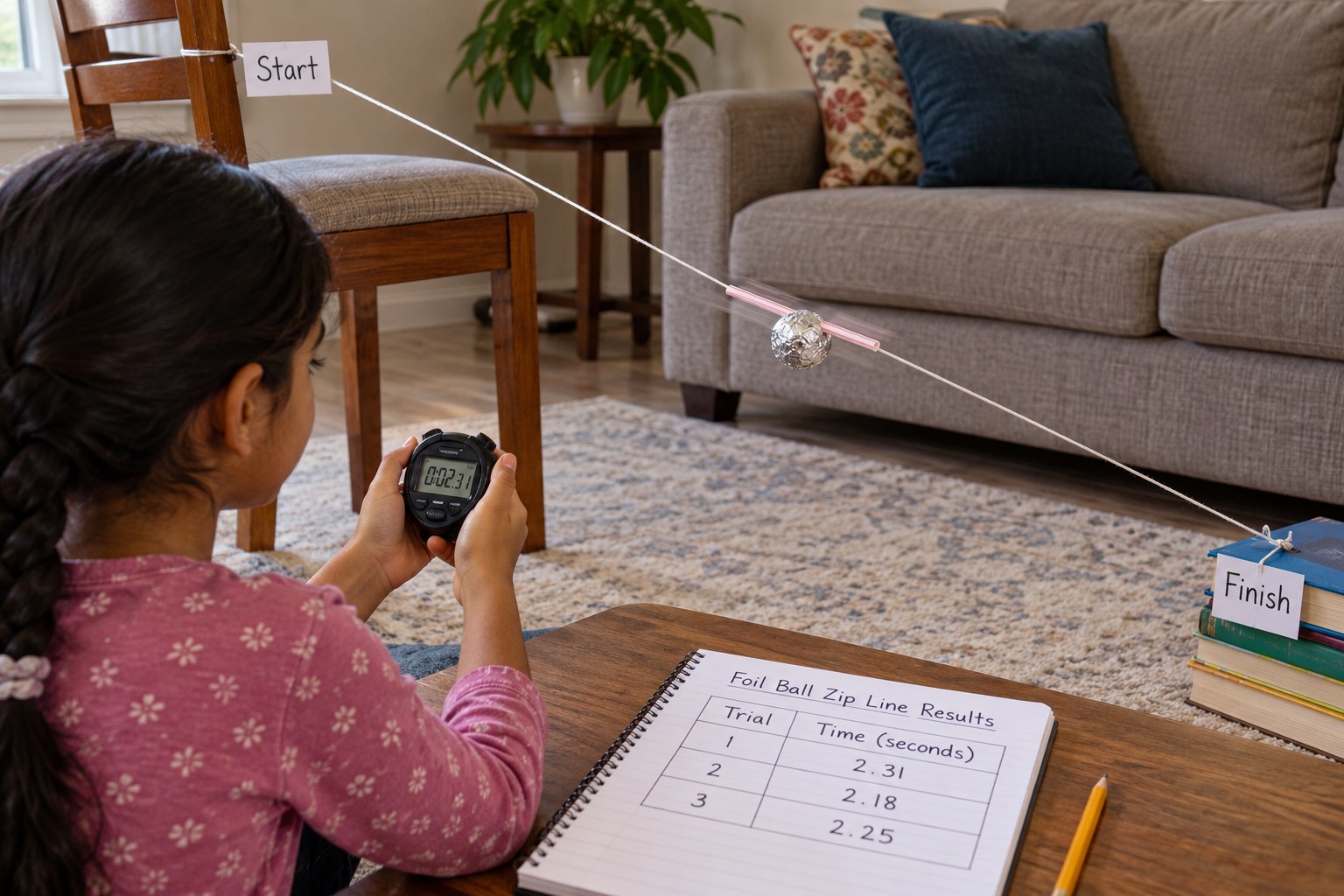
Your child builds a foil 'New Year's ball' that rides down a string zip line, then tests and redesigns it, changing one thing at a time, until the trip takes as close to 10 seconds as possible, matching a countdown from 10.
Objective
Your child will design and test a zip-line ball, run fair tests changing one variable at a time, record times, and use data to improve the design toward a 10-second goal.
Materials
| Item | Quantity |
|---|---|
| String, yarn or fishing line | about 10 feet |
| Plastic drinking straws | 3-4 |
| Aluminum foil | about 2 feet |
| Tape | 1 roll |
| Paper, index cards and paper clips for brakes and sails | a few of each |
| Pennies or washers for weight | 5-10 |
| Stopwatch or phone timer | 1 |
| Paper and pencil for a data table | 1 each |
Vocabulary
Preparation
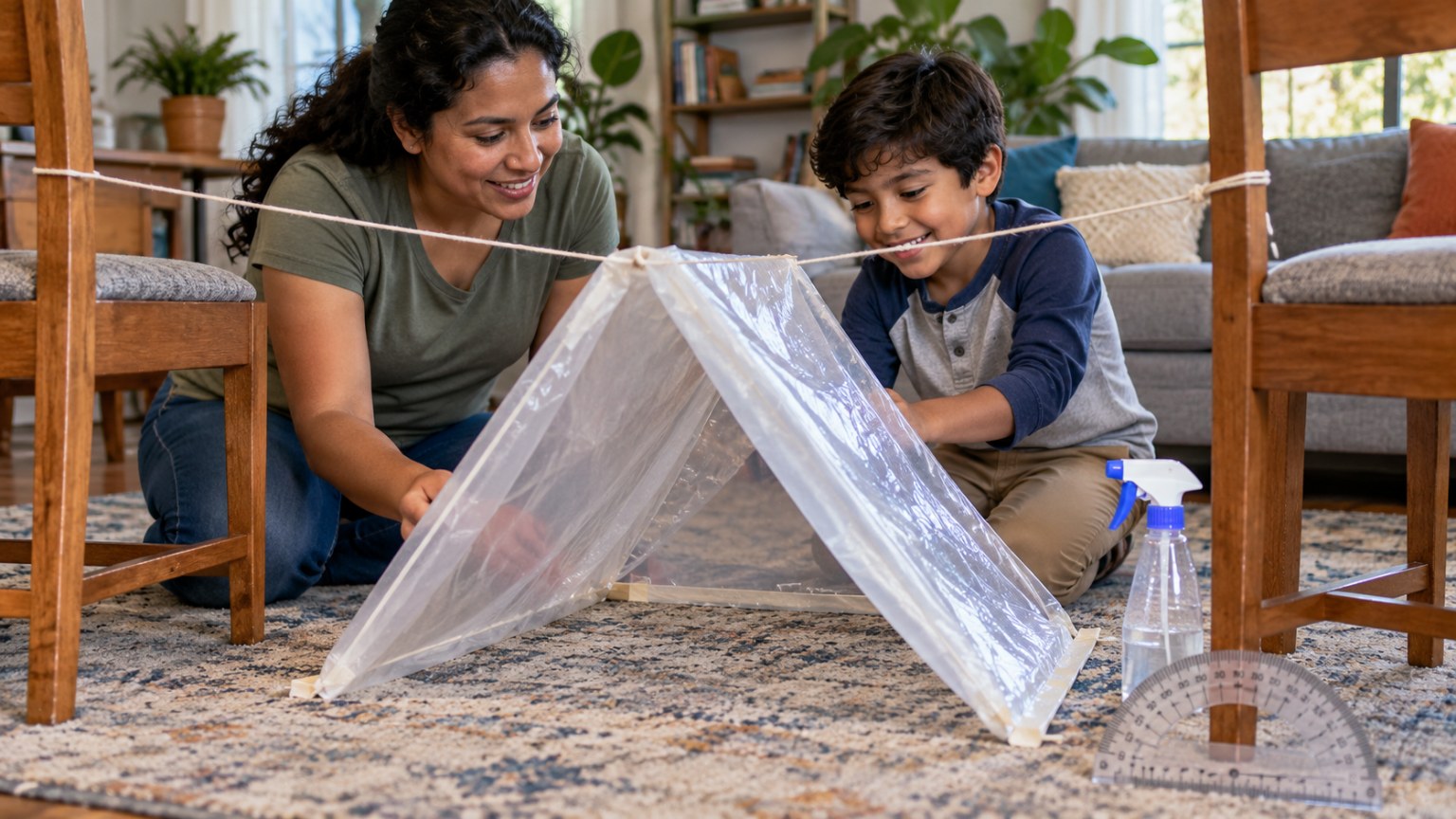
- Tie one end of the string to a sturdy chair back or doorknob about 3 to 4 feet high, thread one straw onto the string, and tape the other end to the floor about 8 feet away so the string slopes gently.
- Draw a data table with columns for Trial, What I changed, Time (seconds) and Notes.
Introduction
Say: 'In New York City, a giant glittering ball is lowered down a pole during the last 60 seconds of the year, and crowds count down the final 10. Your job is to engineer a ball that takes exactly 10 seconds to reach the bottom.'
What makes something slide fast or slow down a slope?
How could you slow a ball down without stopping it?
Steps
Conclusion
Ask: which variable slowed the ball the most, and was it friction, slope or air? Use your ball drop for your family's own countdown.
Make your own lesson plan in minutes
Describe a topic and Resource Portal AI writes the objectives, materials and steps for your group.
Try Resource Portal AI