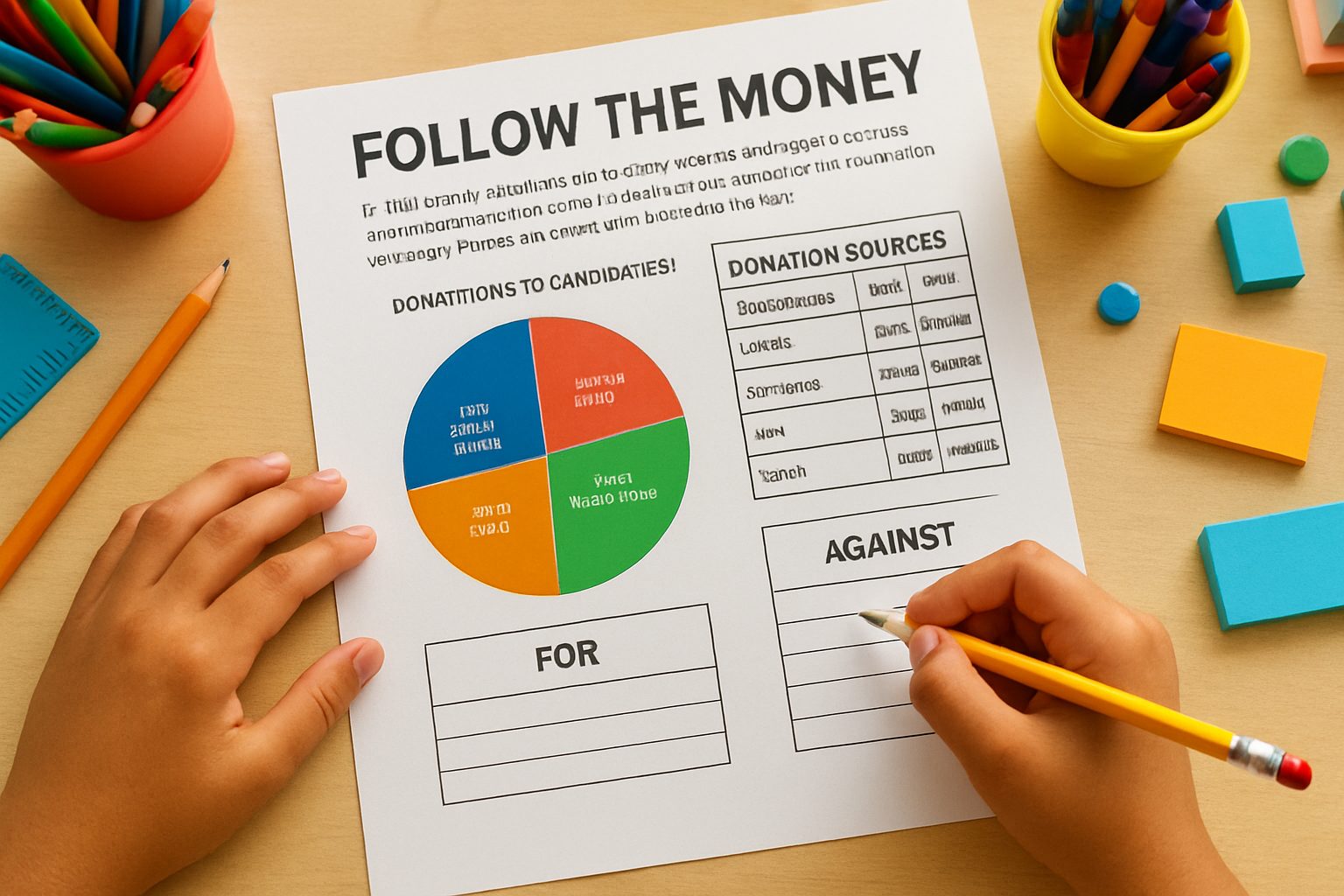
Free lesson planFollow the Money
STEAM1 HourGrades: 11th, 12th
Overview
Students will engage in research and collaboration to analyze public campaign finance data, enhancing their critical thinking and communication skills.
Description
In this lesson, students will explore public campaign finance data for fictional candidates, analyzing donation sources and debating campaign finance rules from both sides. They will engage with concepts like contributions, donors, and disclosure in a collaborative environment.
Objective
Students will analyze public campaign finance data, chart donation sources, and engage in debate regarding campaign finance rules.
Materials
| Item | Quantity |
|---|
| Public campaign finance data sets | 5 sets |
| Chart paper | 10 sheets |
| Markers | 40 pieces |
| Sticky notes | 50 pieces |
| Video clip on campaign finance | 1 |
Vocabulary
Contribution
A sum of money given to a campaign or candidate to support their election efforts.
Donor
An individual or organization that gives money to a campaign.
PAC
Political Action Committee that raises and spends money to elect candidates.
Super PAC
A type of PAC that can raise unlimited sums of money from corporations, unions, and individuals.
FEC
The agency that regulates campaign finance laws in the U.S.
Disclosure
The requirement for candidates to publicly disclose their campaign contributions and expenditures.
Contribution Limit
A limit set on the amount of money one individual can contribute to a campaign.
Preparation
- Gather public campaign finance data sets relevant to fictional candidates.
- Prepare chart paper and markers for group presentations.
- Set up a collaborative workspace for student groups.
Introduction
Begin by asking, 'How do you think candidates raise money for their campaigns?' Explain that students will investigate fictional campaign finance data to uncover the truth behind campaign contributions.
What is a Super PAC?
How do contribution limits impact elections?
Why is disclosure important in campaign finance?
Steps
1Step 1
Introduction to Campaign Finance
(10 min) Begin with a question: 'How do you think candidates raise money for their campaigns?' Introduce the lesson by explaining that students will investigate fictional campaign finance data. Distribute the video clip on campaign finance and ask students to watch it together as a class to spark their interest.

2Step 2
Group Formation
(5 min) Divide students into 5 groups of 4. Each group will receive 1 public campaign finance data set to analyze. The teacher will say, 'Each group will focus on understanding their unique data set and what it reveals about campaign contributions.' Distribute the materials, including 2 sheets of chart paper and 8 markers per group, so students are prepared for their research.
3Step 3
Data Analysis
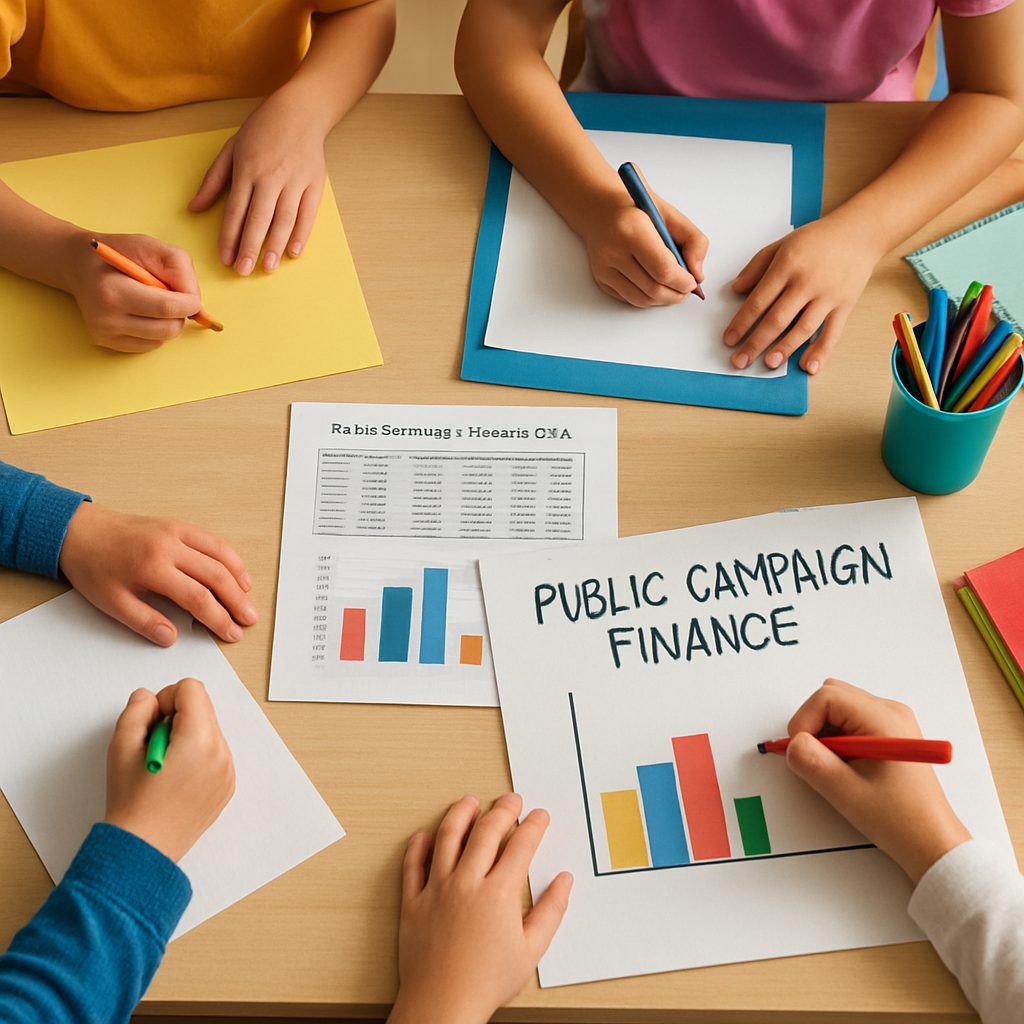
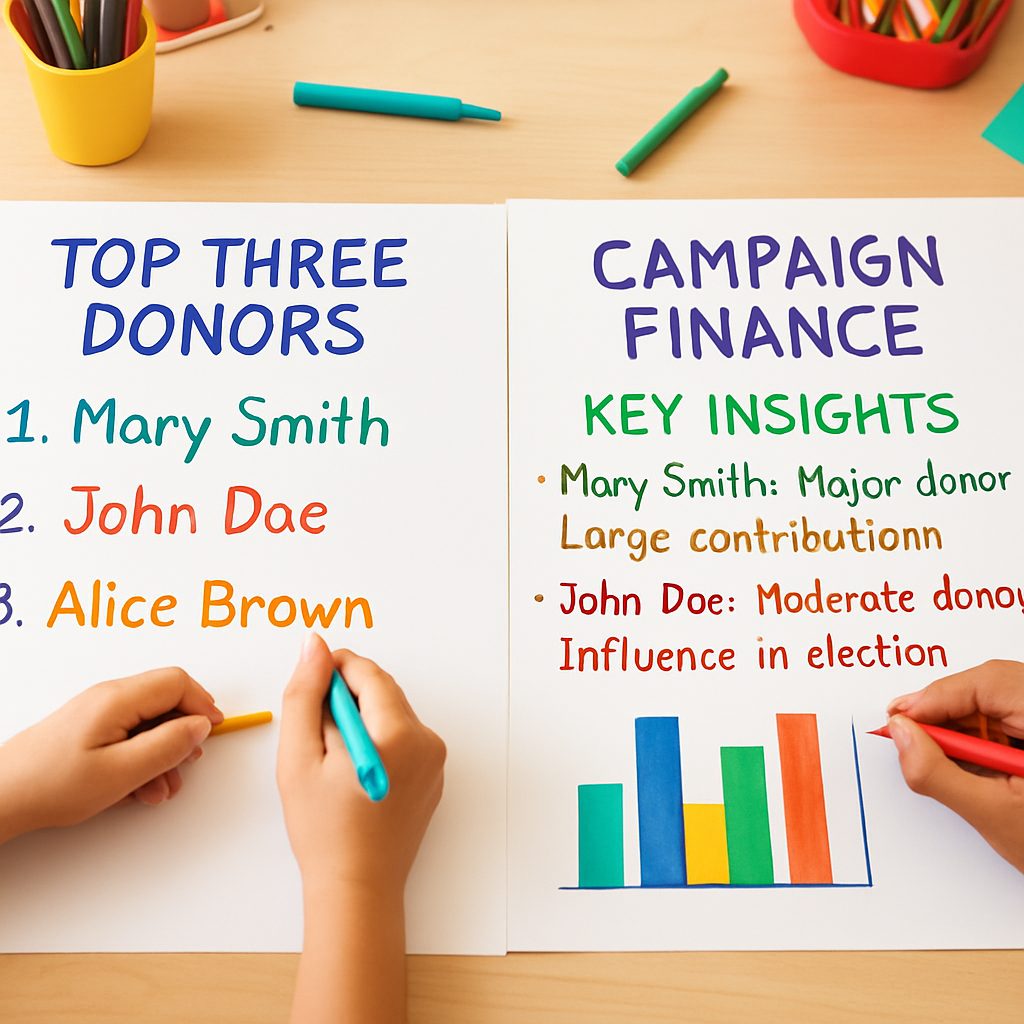
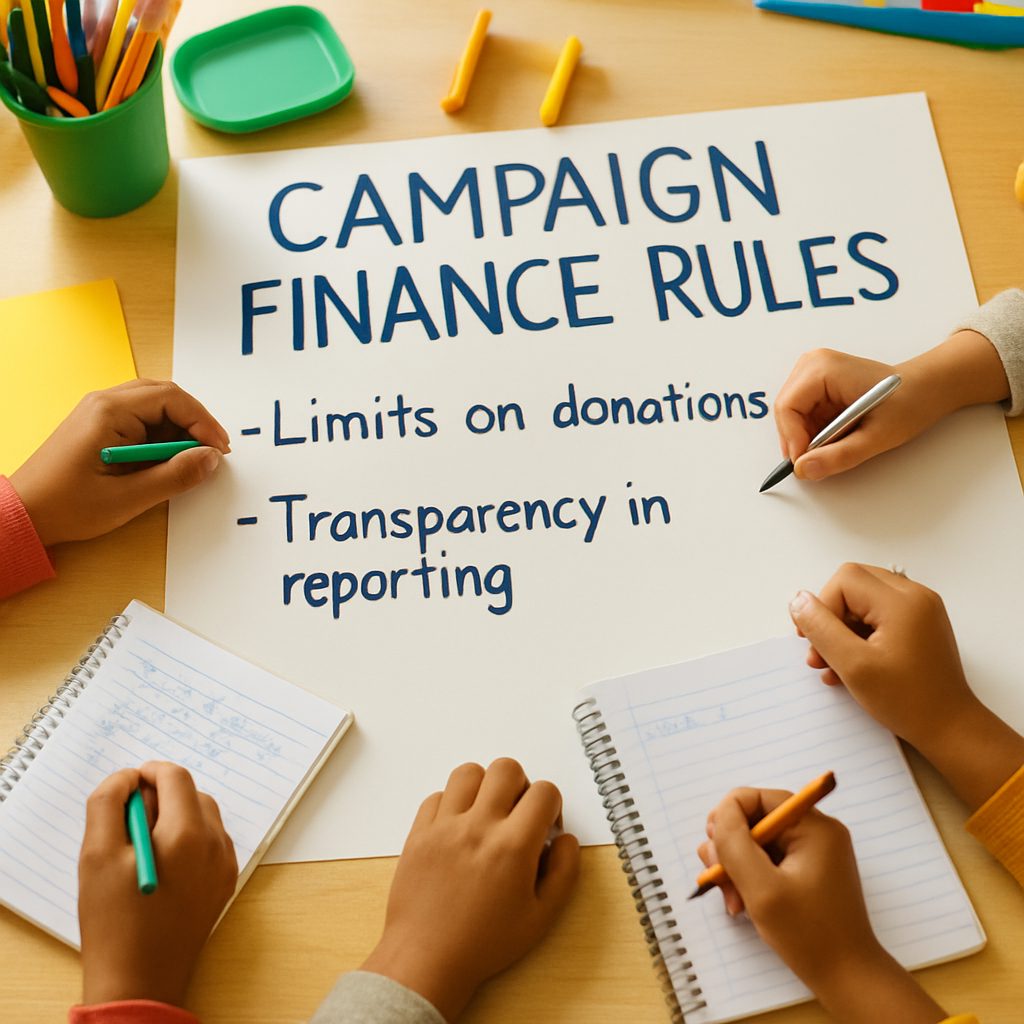
(25 min) Each group analyzes their assigned campaign finance data set, identifying key donors and contributions. The group leader will say, 'Let's find the top three donors and discuss their impact.' Students will work collaboratively, charting these findings on their 2 sheets of chart paper using 8 markers. The finished work will display a clear visual representation of their analysis with names of donors, amounts contributed, and key insights about the data.
4Step 4
Debate Preparation
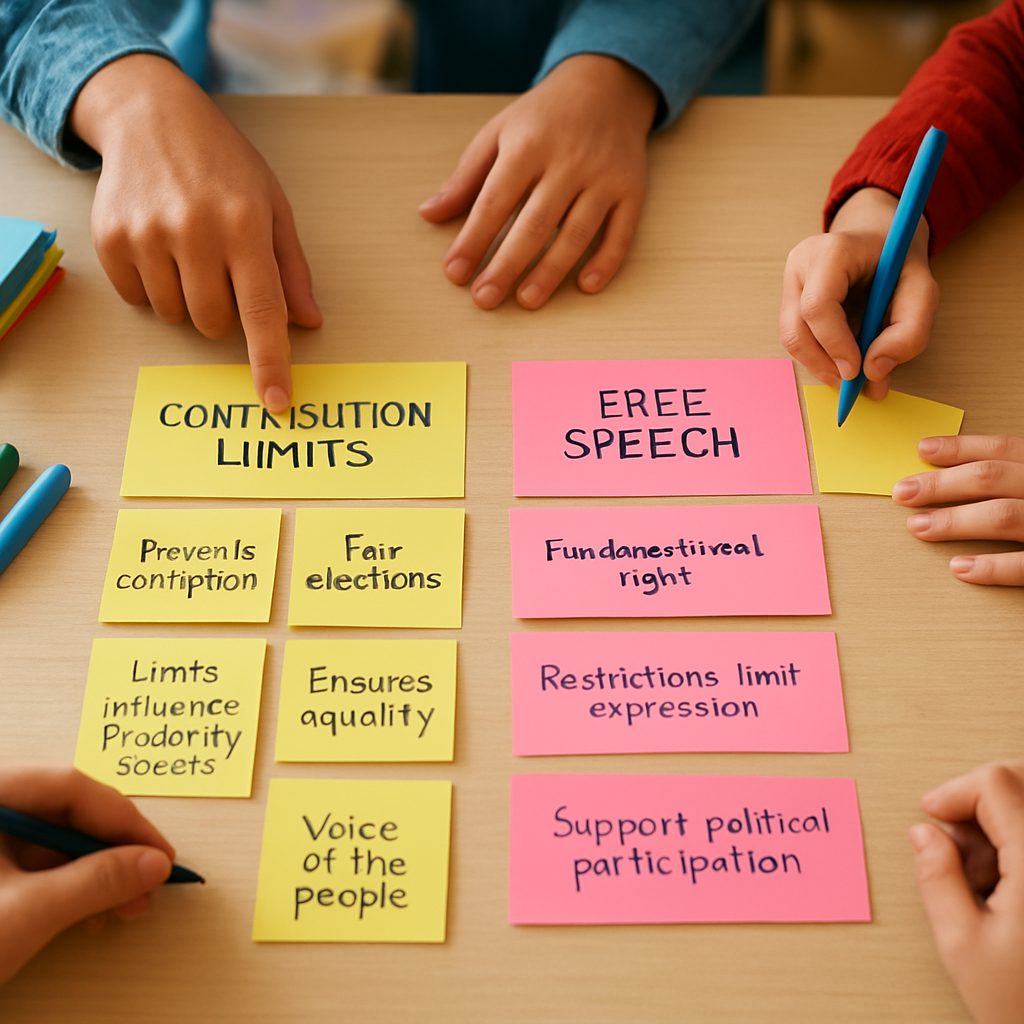
(10 min) Groups prepare their arguments for a debate on campaign finance rules, focusing on topics like contribution limits versus free speech. The group leader will say, 'We need to prepare for both sides of the argument.' Students will use 10 sticky notes to jot down key points and organize their thoughts. Each group will create a structured outline on their sticky notes that clearly presents their arguments and counterarguments for the debate.
5Step 5
Group Debates
(5 min) Each group presents their arguments regarding campaign finance rules to the class. The teacher will remind them, 'Remember to listen actively and respect each other's viewpoints.' Students will take turns presenting while their peers listen and take notes on each group's perspectives for the final reflection. The finished presentation will showcase the group's arguments and insights in a respectful debate format.
6Step 6
Reflection
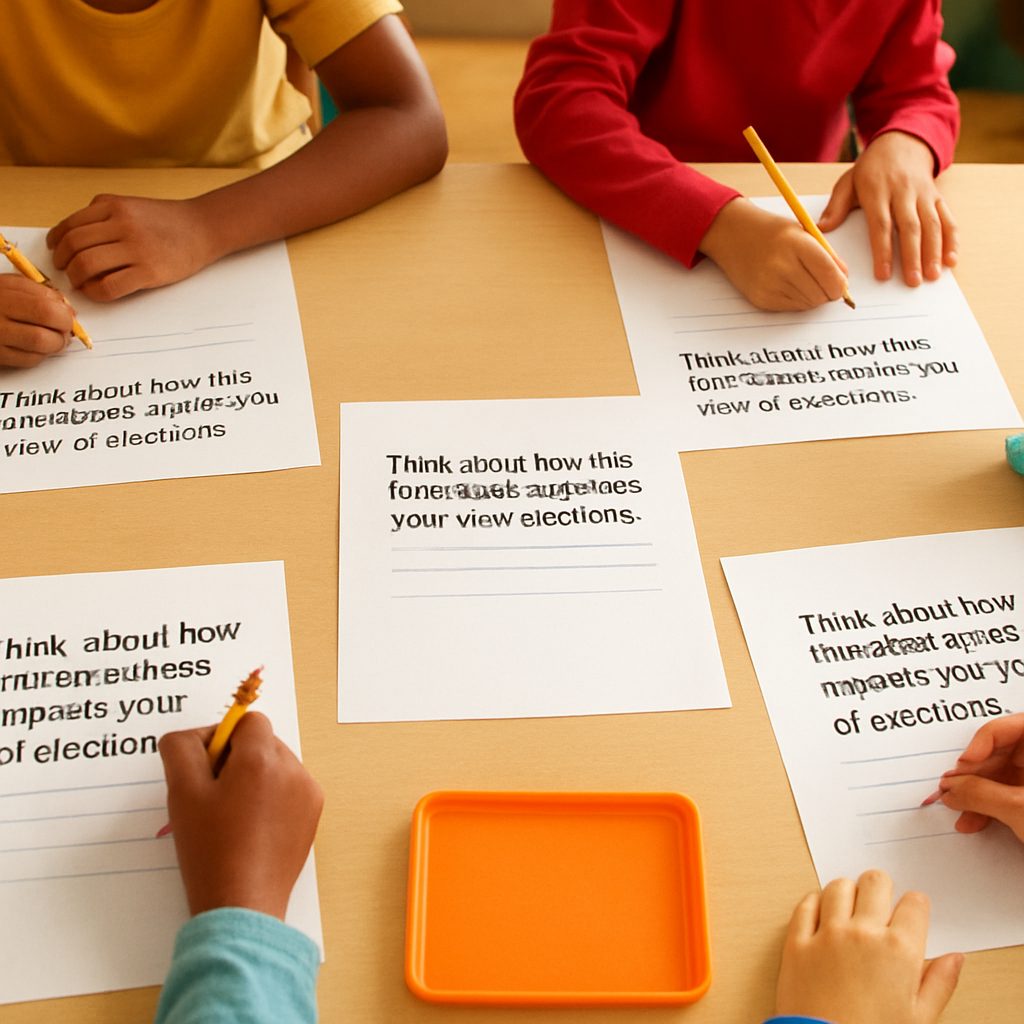
(5 min) Conclude with a short reflection where each student shares or writes down one new insight they gained about campaign finance during the lesson. The teacher will prompt, 'Think about how this knowledge impacts your view of elections.' Facilitate a brief discussion on how understanding these concepts can impact their view of elections. The finished work will be a collection of individual insights shared with the class and written reflections.
Conclusion
Wrap up the lesson by highlighting key insights from each group's debate and discussing the implications of campaign finance rules in shaping democracy.
Make your own lesson plan in minutes
Describe a topic and Resource Portal AI writes the objectives, materials and steps for your group.
Try Resource Portal AI