Free lesson plan

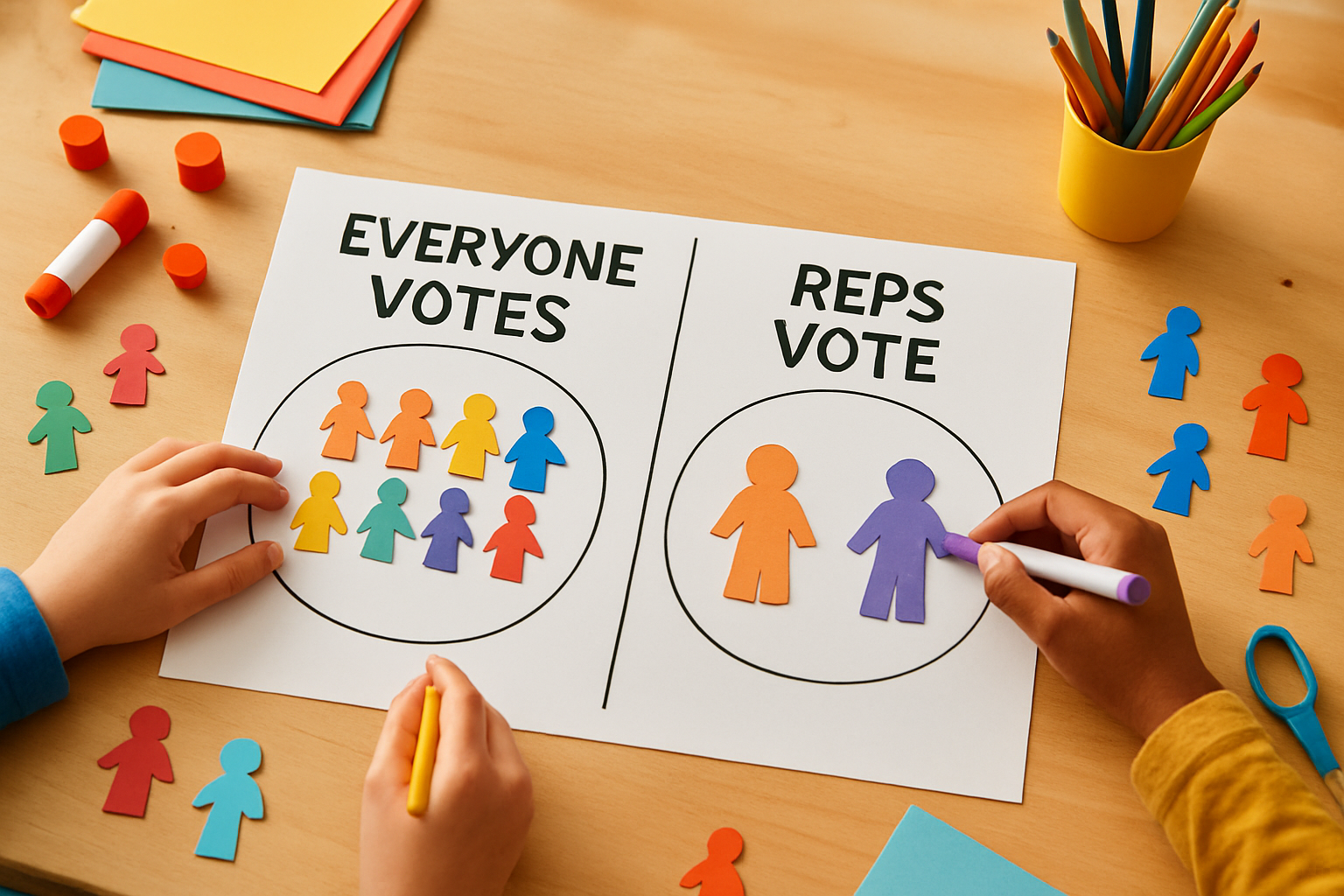
Everyone Votes vs. Reps Vote
STEAM1 HourGrades: 1st, 2nd
Everyone Votes vs. Reps Vote

Overview

Students learn about voting systems through hands-on activities that foster collaboration and critical thinking.

Description

This lesson explores the differences between everyone voting and representatives voting in a fun, interactive way. Students will engage in hands-on activities that promote collaboration and critical thinking about decision-making.

Objective

Students will understand the difference between everyone voting and representatives voting and will collaborate to create a voting system.

Materials

ItemQuantity
Colored paper20 sheets
Markers20 pieces
Glue sticks5 pieces
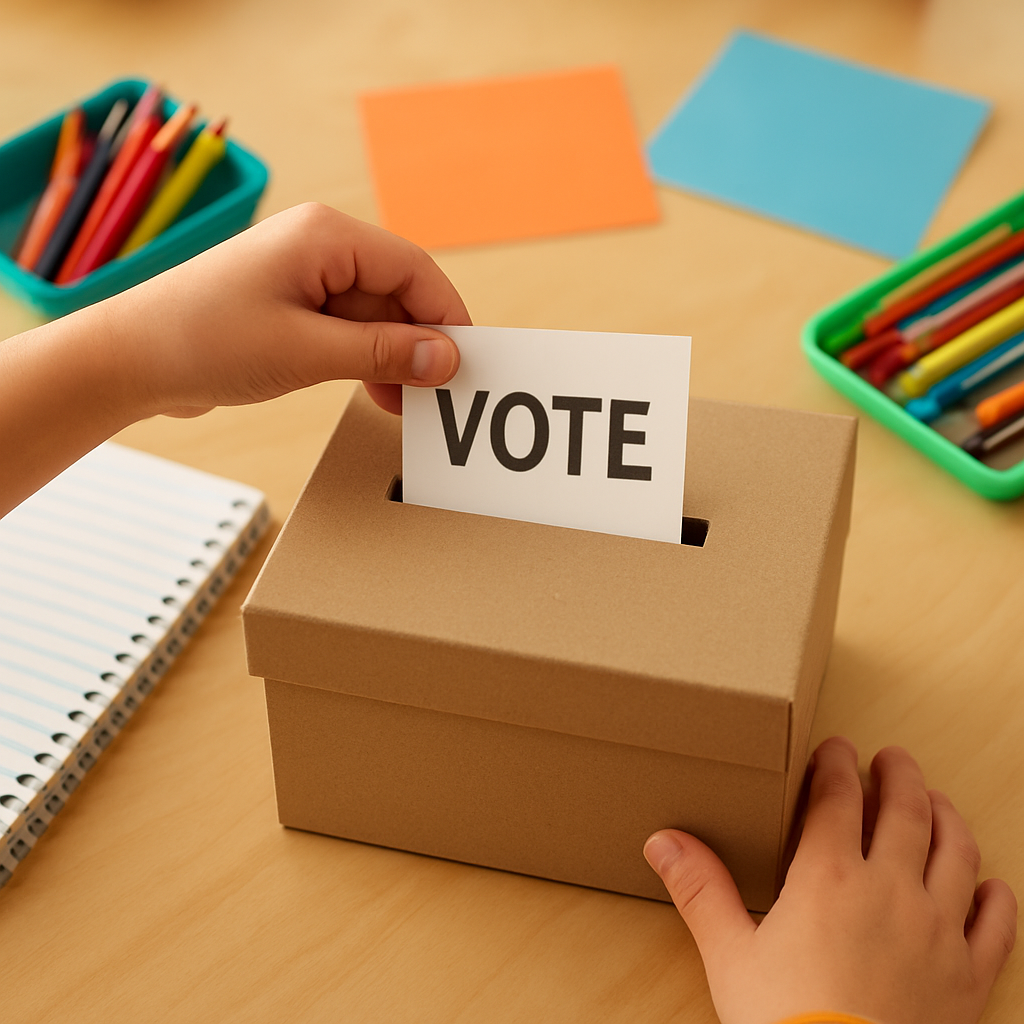
Voting box (made from a shoe box)1 box
Stickers (for voting)60 pieces
Snack option 1 (e.g., fruit slices)20 servings
Snack option 2 (e.g., crackers)20 servings
Paper ballots20 pieces
Representative badges3 pieces

Vocabulary

Vote
To choose something by saying yes or no.
Representative
A person chosen to speak or decide for others.
Democracy
A way of making decisions where everyone has a say.
Ballot
A piece of paper used to vote.
Voting box
A box where votes are placed.
Sticker
A small sticky circle used to show choice.

Preparation

Introduction

Show students a colorful voting box and ask them what they think it is for. Discuss two ways a group can make a decision.
What is a vote?
Why do we vote?
Can everyone vote?

Steps
1Step 1
Introduction to Decision Making
(5 min) Introduce the lesson by showing the colorful voting box. Ask students, 'What do you think this box is for?' Discuss how groups can make decisions together. Explain that they will be voting today.
Step 1
2Step 2
Vote on a Snack
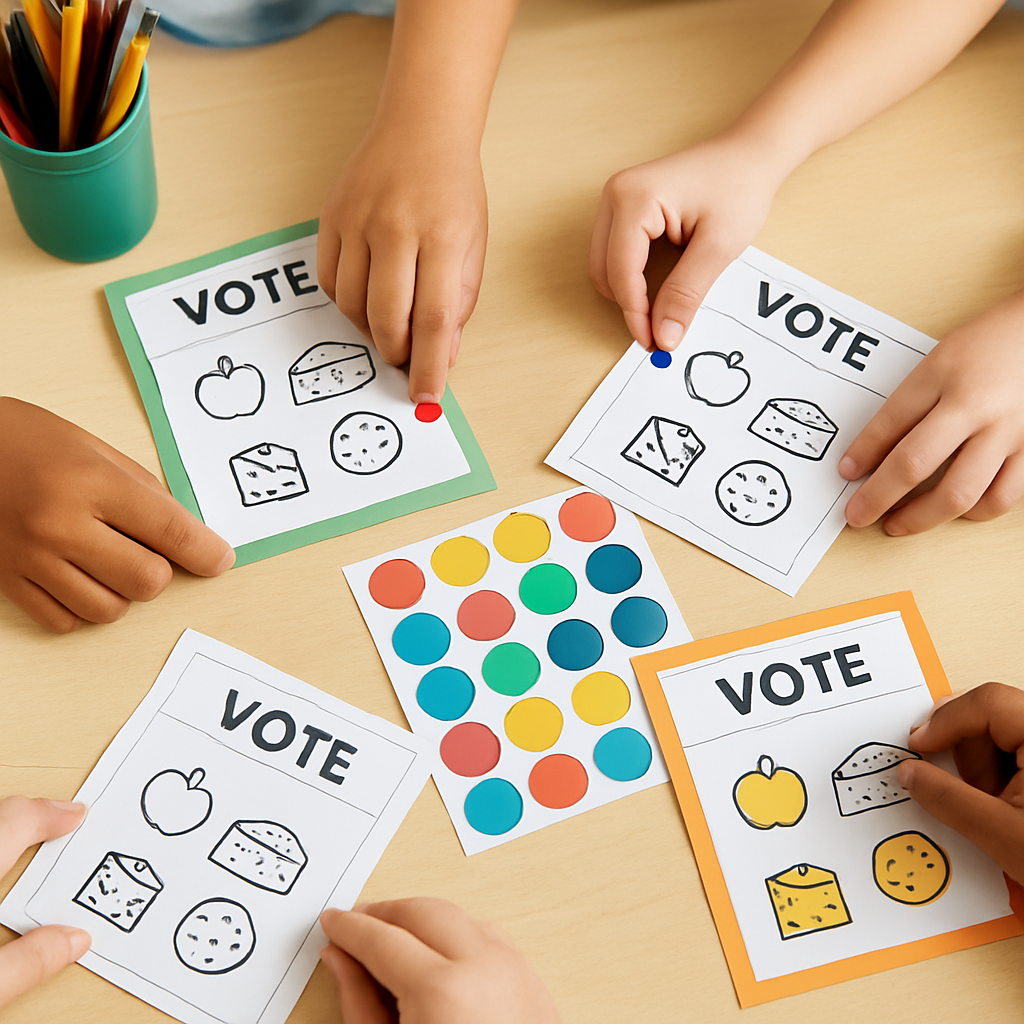
(15 min) In groups of 4, students will vote on their favorite snack using 12 stickers and 5 paper ballots per group. Each student will get 1 sticker to place on their chosen snack option. After voting, collect the ballots and discuss the results. The leader may say, 'Let's see which snack is the favorite!' They will have a visual tally of stickers and ballots to share.
Step 2
3Step 3
Elect Representatives
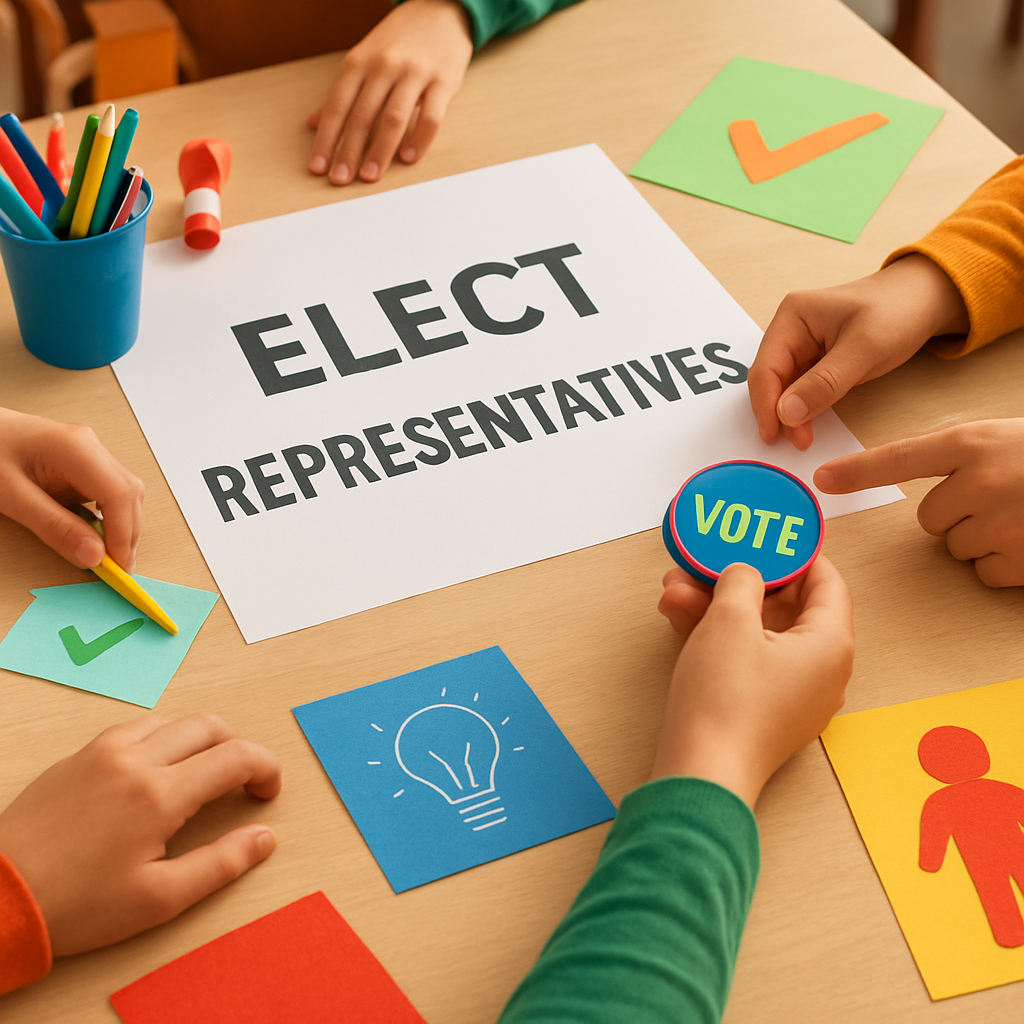
(10 min) The whole class will elect 3 representatives who will receive badges. The leader will say, 'Why do you think these classmates would make great representatives?' Each group will discuss and share one reason before selecting their representatives. The badges will be handed out to the chosen students, and each group will have a chance to explain their choice.
Step 3
4Step 4
Representatives Make a Choice
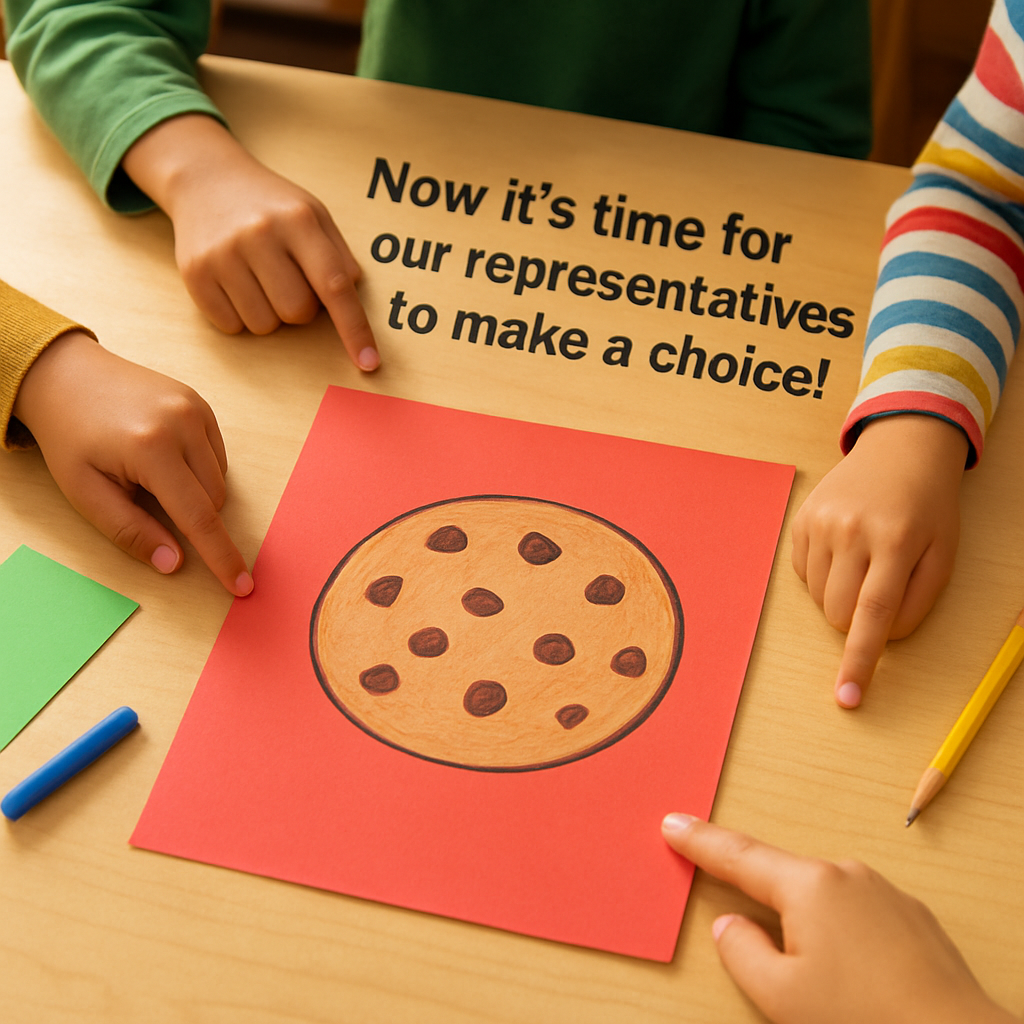
(15 min) The elected representatives will decide on the snack for the whole class using the results from the first voting round. The leader will say, 'Now it's time for our representatives to make a choice!' The representatives will discuss the options, and once they decide, they will explain their choice to the class. They can use a piece of colored paper as a visual aid to present their chosen snack.
Step 4
5Step 5
Compare Decision-Making Methods
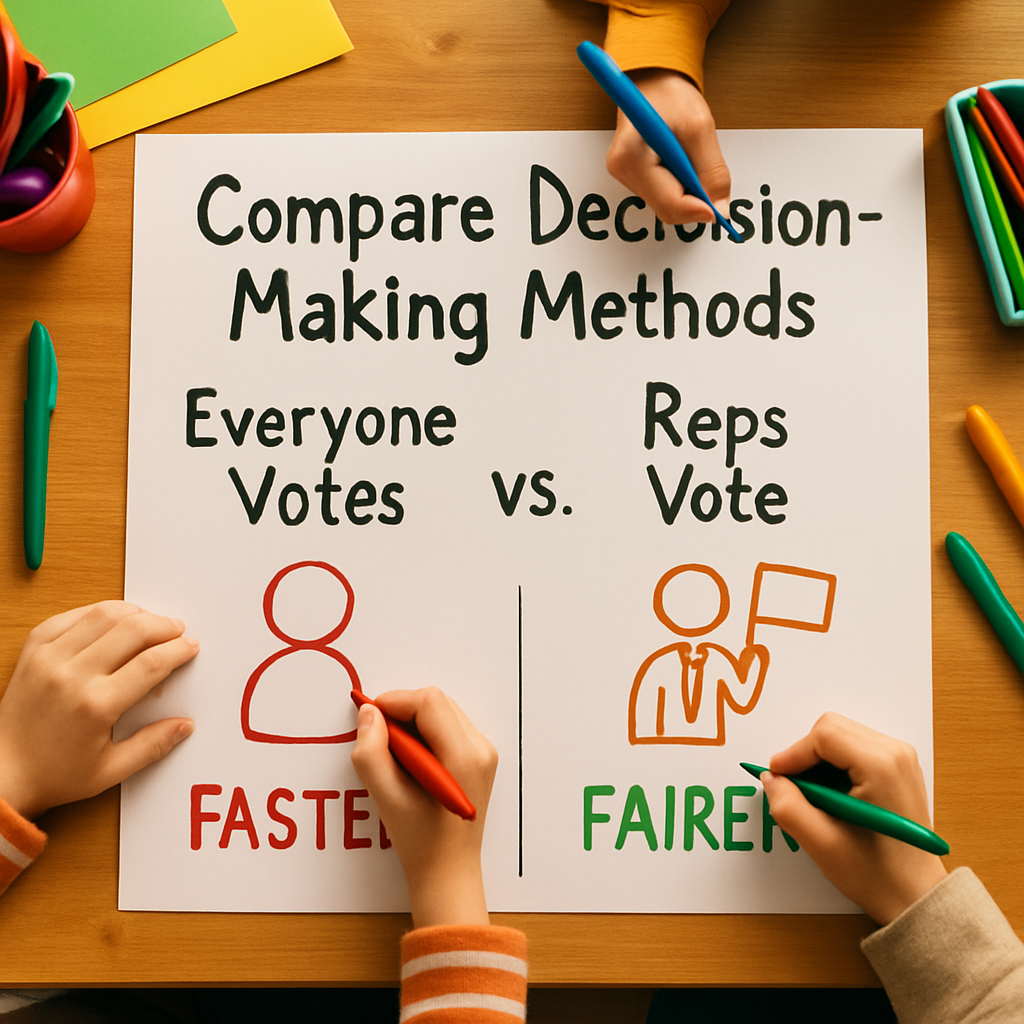
(10 min) As a class, discuss which way of making a decision was faster and which felt fairer. The leader may say, 'Let's talk about how we made our decisions today.' Encourage students to share their thoughts and experiences about voting directly versus through representatives. Students may use their markers to draw or write their feelings on a poster board.
Step 5
6Step 6
Reflection
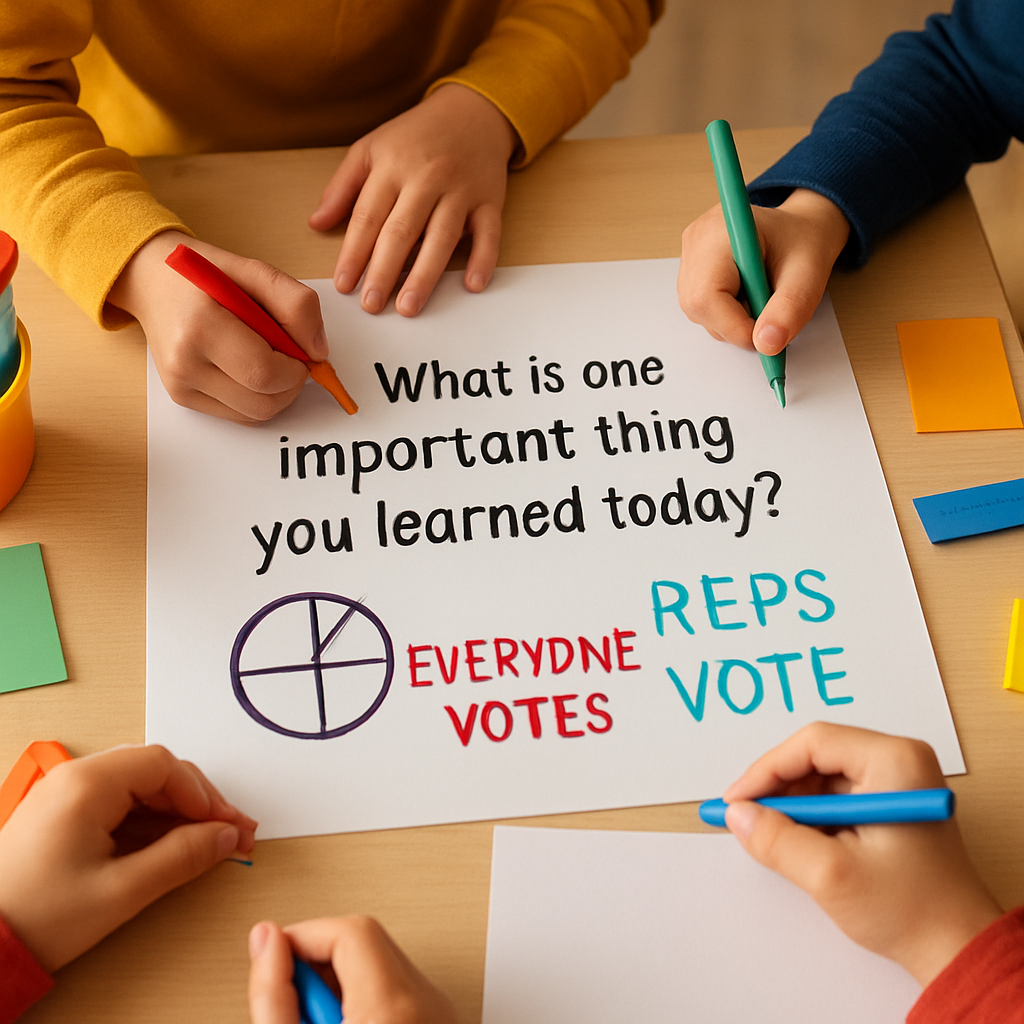
(5 min) Each student shares or writes one thing they learned about voting and decision-making. This reflection will help students express their understanding of the lesson. The leader will say, 'What is one important thing you learned today?' Students can use their markers to write or draw their reflections on paper.
Step 6

Conclusion

Discuss how voting directly felt different from voting through representatives. Ask, 'Which way do you think is better for making decisions?'

Make your own lesson plan in minutes

Describe a topic and Resource Portal AI writes the objectives, materials and steps for your group.

Try Resource Portal AI