Free lesson plan

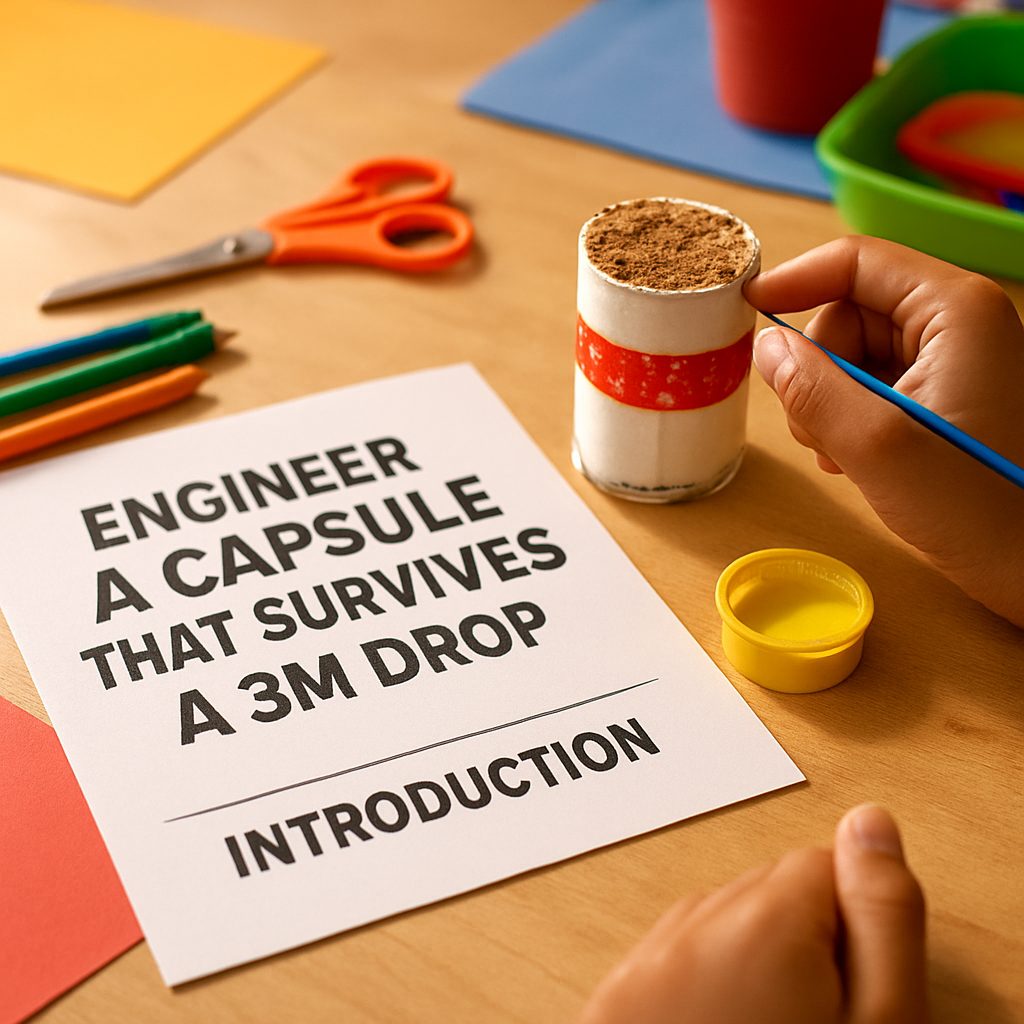
Engineer a Capsule That Survives a 3m Drop
STEAM1 HourGrades: 6th, 7th, 8th
Engineer a Capsule That Survives a 3m Drop

Overview

Students will engineer a capsule to survive a drop, focusing on teamwork and design thinking.

Description

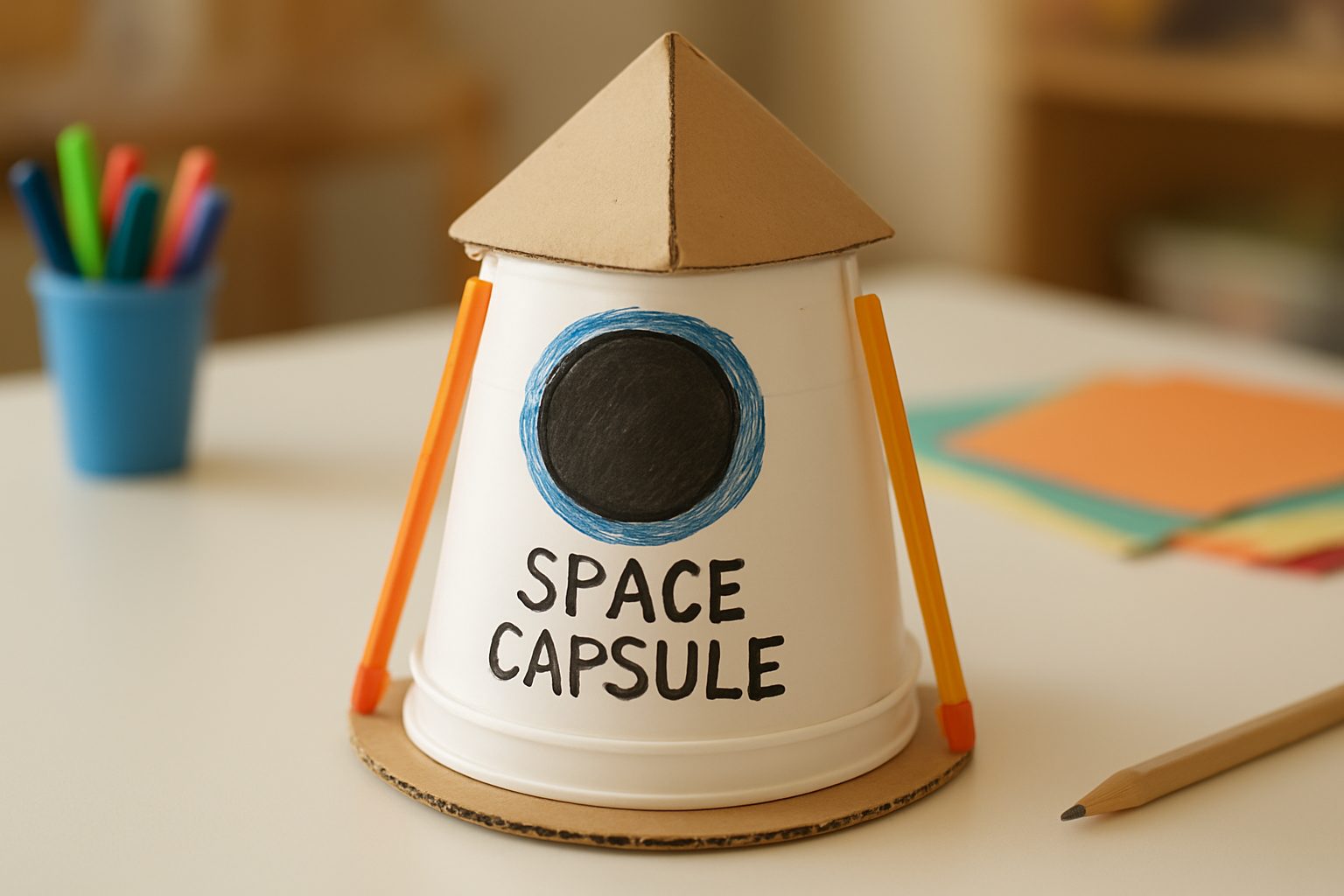
In this lesson, students will engineer a capsule designed to survive a drop with a raw egg 'astronaut' inside. They will work in teams to design, build, and test their capsules using a parachute and crumple-zone base while managing a materials budget. The focus will be on collaboration, problem-solving, and applying scientific principles.

Objective

Students will design and build a capsule that can withstand a 3-meter drop, demonstrating teamwork and critical thinking skills.

Standards

6.SP.1Math · Grade 6 · Statistics & Probability
Recognize a statistical question as one that anticipates variability in the data related to the question and accounts for it in the answers.
7.G.6Math · Grade 7 · Geometry
Solve real-world and mathematical problems involving area, volume and surface area of two- and three-dimensional objects composed of triangles, quadrilaterals, polygons, cubes, and right prisms.
MP.1Math · Grade K-12 · Mathematical Practices
Make sense of problems and persevere in solving them.
MP.4Math · Grade K-12 · Mathematical Practices
Model with mathematics.

Materials

ItemQuantity
Raw eggs5 pieces
Plastic cups20 pieces
Straws40 pieces
Cotton balls20 pieces
Tape5 rolls
Cardboard sheets10 sheets
Coffee filters20 pieces
String50 meters

Vocabulary

Drag
The force that opposes the motion of an object through the air.
Impact
The force that occurs when an object hits another object.
Parachute
A device used to slow down the fall of an object by creating air resistance.
Crumple Zone
A design feature that helps absorb energy and protect contents during a fall.
Prototype
An early version of a product used to test a concept.

Preparation

Introduction

Today, we're going to explore how spacecraft safely return to Earth. Can you think of what happens when they come back through the atmosphere?
What challenges do you think a spacecraft faces when re-entering the atmosphere?
Why is it important to protect the payload inside a capsule?

Steps
1Step 1
Introduction
(5 min) Begin by discussing the challenges spacecraft face during re-entry. Ask the students, "What do you think is needed to protect the astronauts inside?" This sets the context for the activity and engages their curiosity about engineering solutions.
Step 1
2Step 2
Form Teams and Distribute Materials
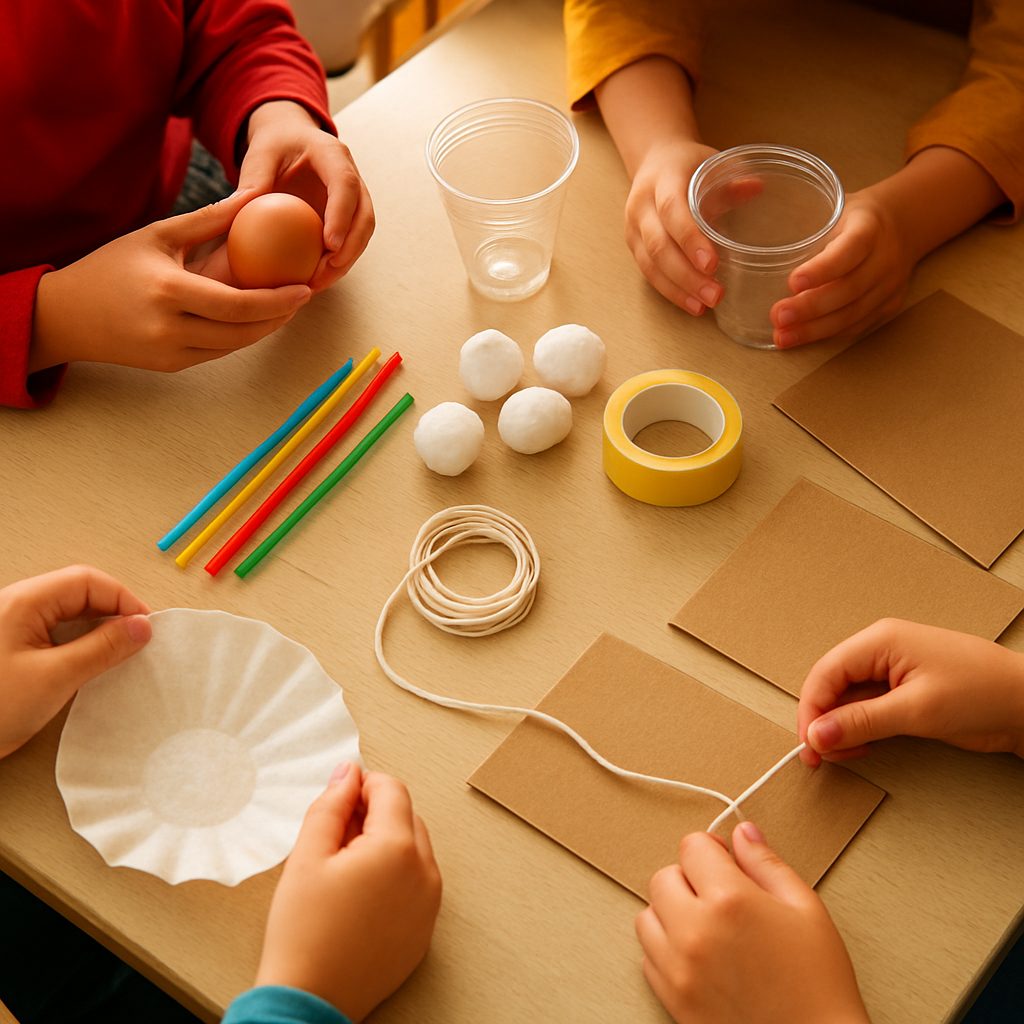
(5 min) Divide students into 5 groups of 4. Each group receives 1 raw egg, 4 plastic cups, 8 straws, 4 cotton balls, 1 roll of tape, 2 cardboard sheets, 4 coffee filters, and 10 meters of string. The teacher says, "Now, let's make sure every group has what they need to get started!" Students will gather their materials and prepare their workstations for building. The expectation is that they have everything laid out for the next steps.
Step 2
3Step 3
Brainstorm and Design
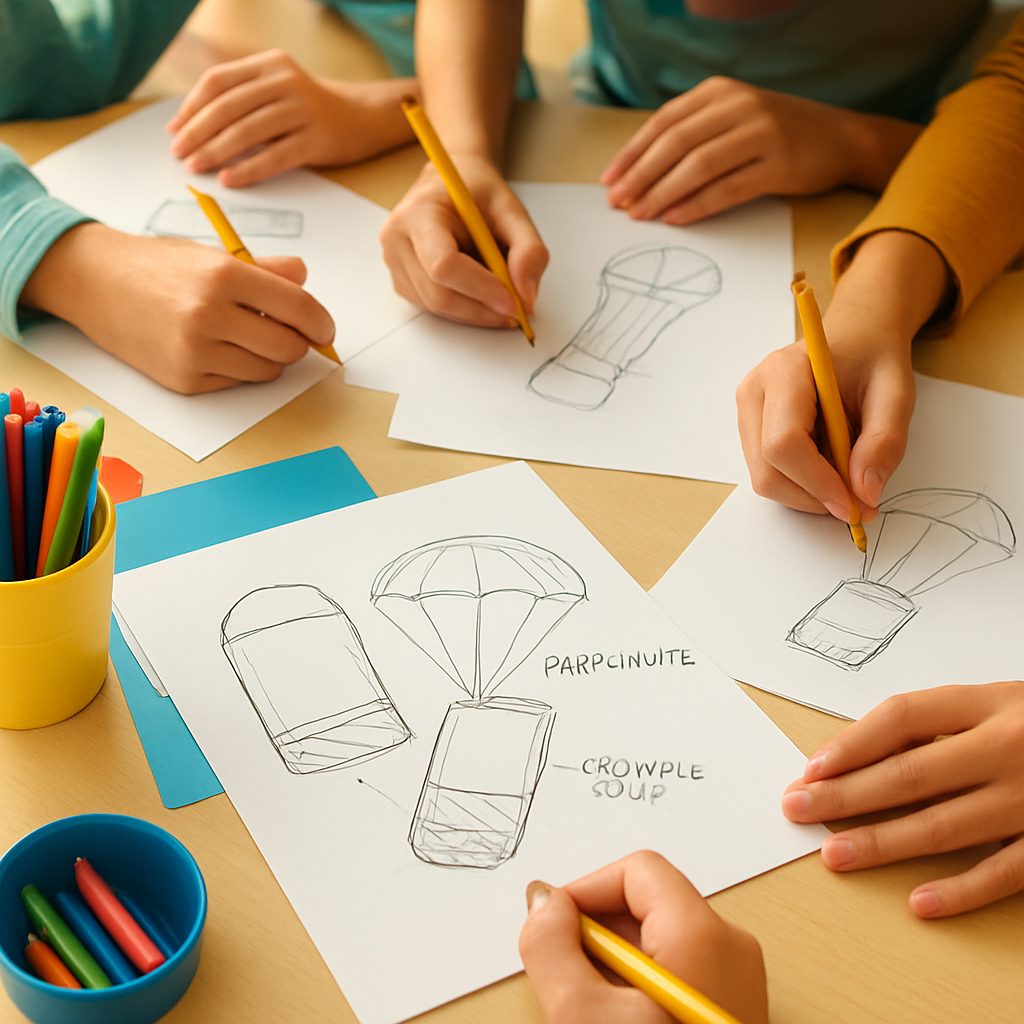
(15 min) In their groups, students brainstorm and sketch their capsule designs. The teacher encourages, "Think about how to create a crumple zone and include a parachute in your design!" Students will discuss their ideas and draw their designs on paper. The final outcome will be a clear sketch illustrating their planned capsule structure, highlighting the crumple zone and parachute placement.
Step 3
4Step 4
Build the Capsule
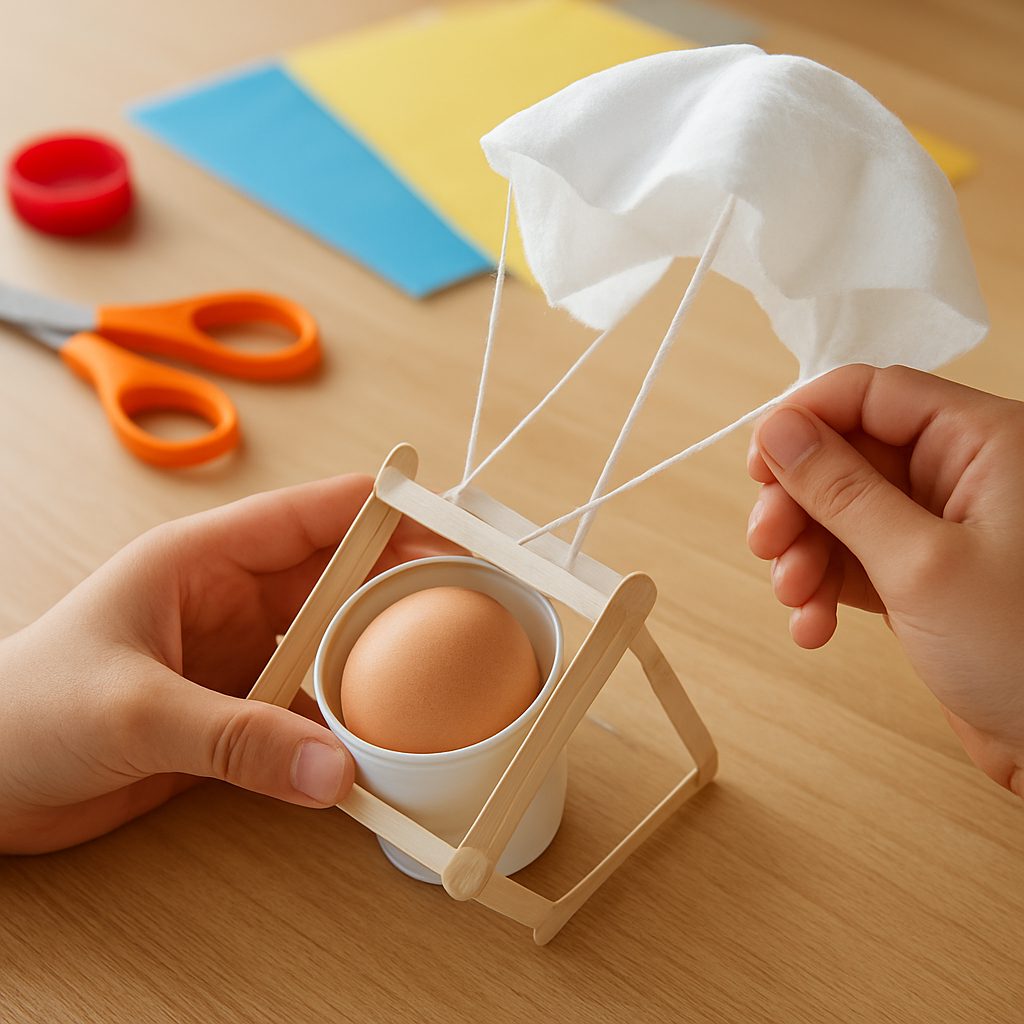
(20 min) Using the provided materials, students will build their capsules according to their designs. The teacher reminds them, "Focus on creating a protective structure for the egg and ensuring the parachute can deploy effectively!" Students will use their materials to assemble their capsules, ensuring the egg is securely protected. The finished work should be a fully constructed prototype that showcases their design and includes a deployed parachute.
Step 4
5Step 5
Test the Capsule
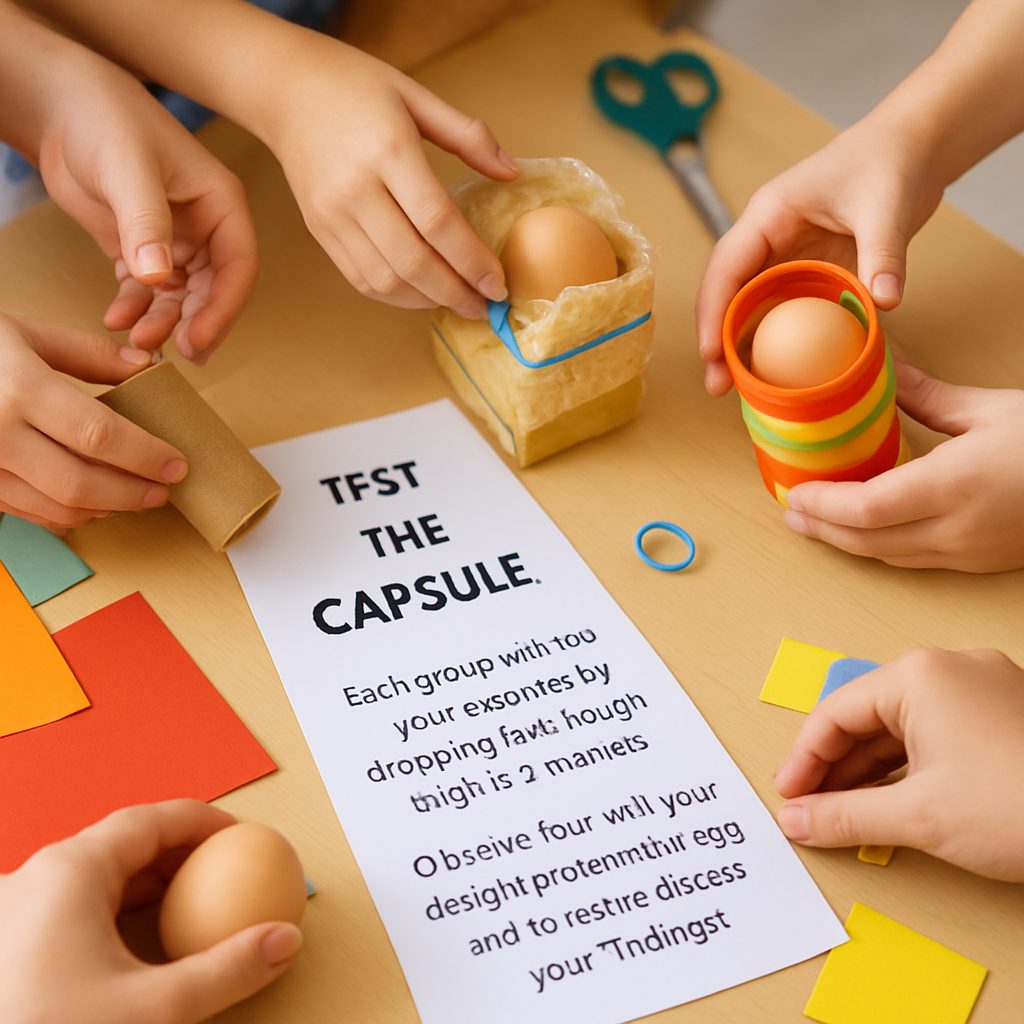
(10 min) Each group will test their capsule by dropping it from a height of 3 meters. The teacher says, "Observe how well your design protects the egg and be ready to discuss your findings!" Students will take turns dropping their capsules and noting the results. The outcome will be a discussion on whether the egg survived, along with reflections on their design's effectiveness.
Step 5
6Step 6
Reflection
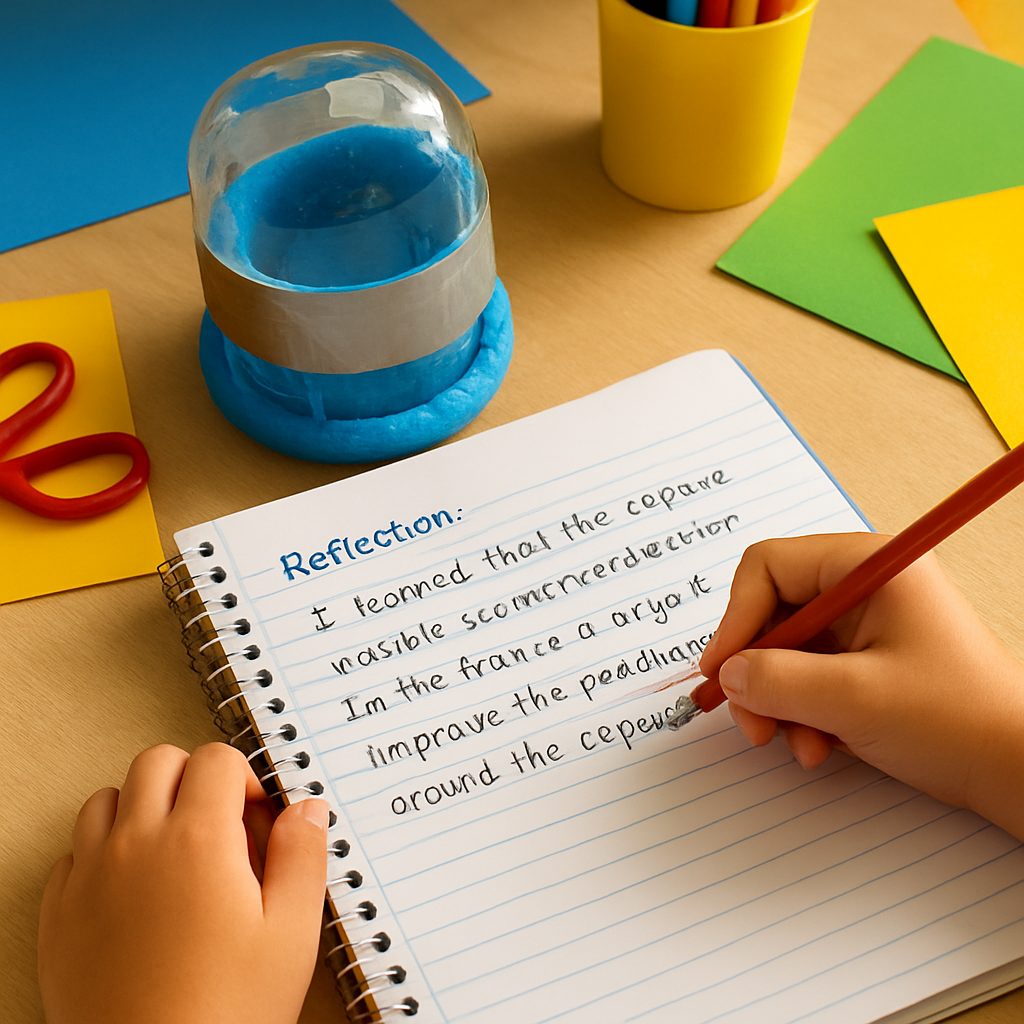
(5 min) In their groups, students will reflect on their designs and write two sentences about what they learned. The teacher prompts, "Consider how you might improve your capsule in the future!" Students will articulate their thoughts in writing, focusing on their learning process and possible enhancements. The final product will be a reflective statement that captures their insights and ideas for improvement.
Step 6

Conclusion

As a class, reflect on the different designs created by each group and discuss how well they protected the egg during the drop. Highlight the importance of teamwork and iterative design in engineering challenges.

Make your own lesson plan in minutes

Describe a topic and Resource Portal AI writes the objectives, materials and steps for your group.

Try Resource Portal AI