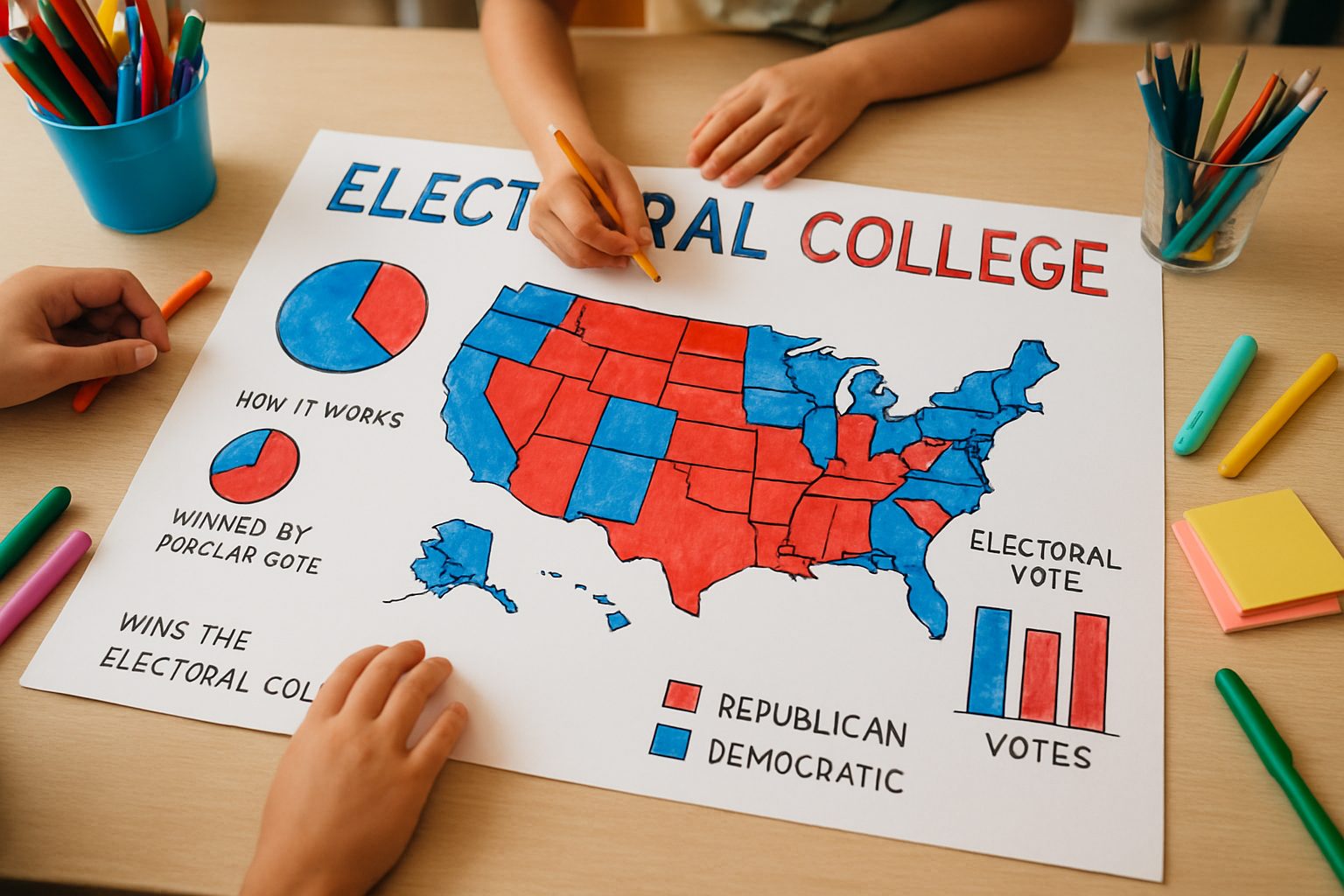
Free lesson planElectoral College Math
STEAM1 HourGrades: 11th, 12th
Overview
Students will engage in collaborative problem-solving as they explore the Electoral College through mathematical analysis.
Description
In this lesson, students will explore the mathematics behind the Electoral College system in the United States. They will work collaboratively to analyze data, calculate electoral votes, and understand the implications of their findings.
Objective
Students will understand the mathematical principles behind the Electoral College and apply critical thinking skills to analyze its effects on elections.
Materials
| Item | Quantity |
|---|
| Calculators | 5 pieces (1 per group) |
| Electoral College Data Sheets | 5 sheets (1 per group) |
| Graph Paper | 20 sheets (4 per group) |
| Markers | 10 pieces (2 per group) |
| Whiteboard | 1 piece |
| Electoral Vote Map | 5 pieces (1 per group) |
| Scenario Cards | 5 sets (1 per group) |
Vocabulary
Electoral College
A body of electors established by the United States Constitution to elect the President and Vice President.
Electoral Votes
The total number of electoral votes needed to win the presidency, which is 270 out of 538.
Winner-Take-All
An electoral system where the candidate who receives the most votes wins all the electoral votes from that state, used by most states in the U.S.
Census Allocation
To estimate the number of electoral votes each state has based on its population and representation in Congress.
Swing State
A state where both major political parties have similar levels of support among voters, often critical in elections.
Preparation
- Prepare Electoral College Data Sheets with current electoral vote distribution.
- Gather necessary materials including calculators, graph paper, markers, electoral vote maps, and scenario cards.
- Set up the classroom for group activities, ensuring enough space for collaboration.
- Familiarize yourself with key concepts related to the Electoral College and mathematical analysis.
Introduction
Begin with a brief discussion about the significance of 270 electoral votes. Ask, "Why do you think this number is crucial in U.S. elections?"
What do you know about the Electoral College?
Why do you think the Electoral College was established?
How do you think population affects electoral votes?
Steps
1Step 1
Introduction to Reaching 270
(10 min) Introduce the lesson by asking, "How do candidates reach 270 electoral votes?" Engage students in a brief discussion about its importance. Have them share what they know about the Electoral College and its impact on elections. Use this time to spark interest and curiosity.

2Step 2
Group Setup
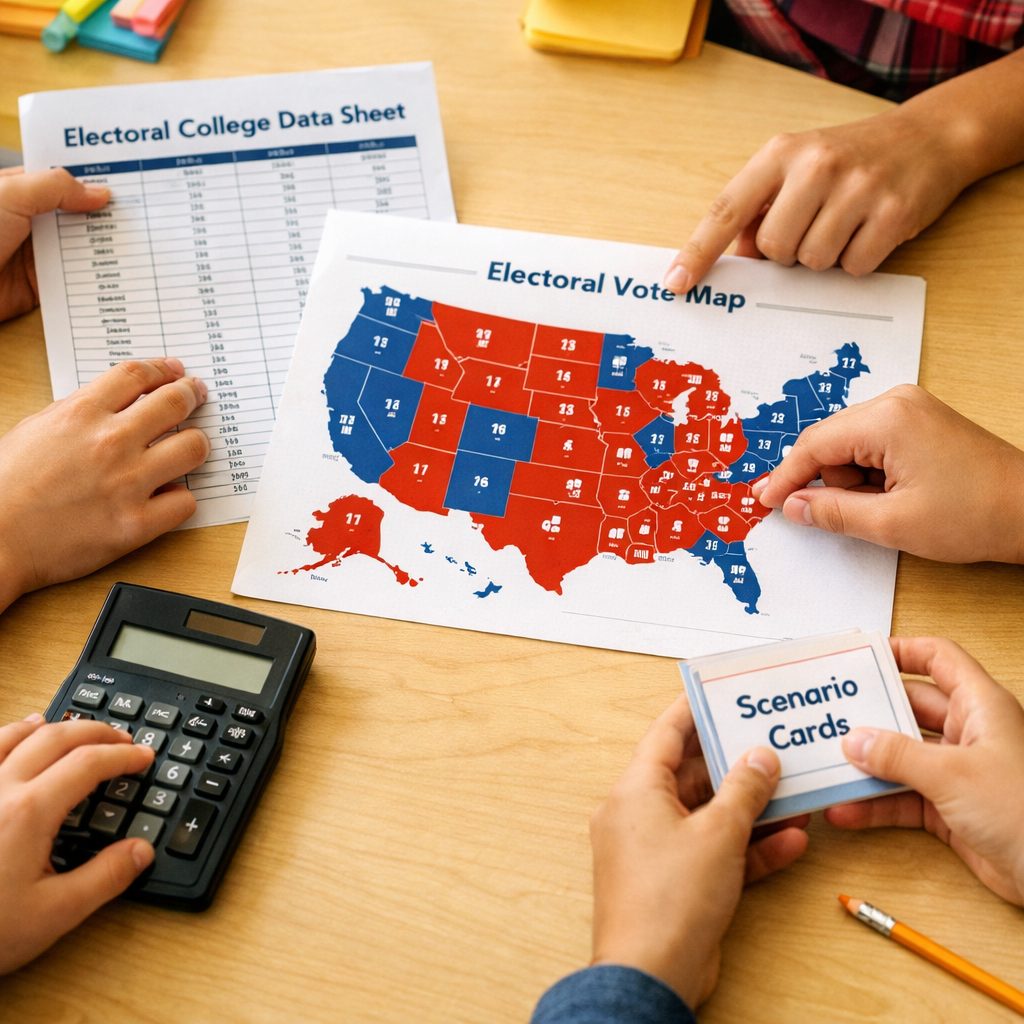
(5 min) Organize students into 5 groups of 4. Distribute 1 calculator, 1 Electoral College Data Sheet, 1 Electoral Vote Map, and 1 set of Scenario Cards to each group. The teacher says, "Make sure you understand how to use these materials for our activities." Students will familiarize themselves with their materials and discuss how they will work together to analyze the Electoral College system. Finished work will include a clear understanding of their roles and responsibilities for the upcoming tasks.
3Step 3
Data Analysis
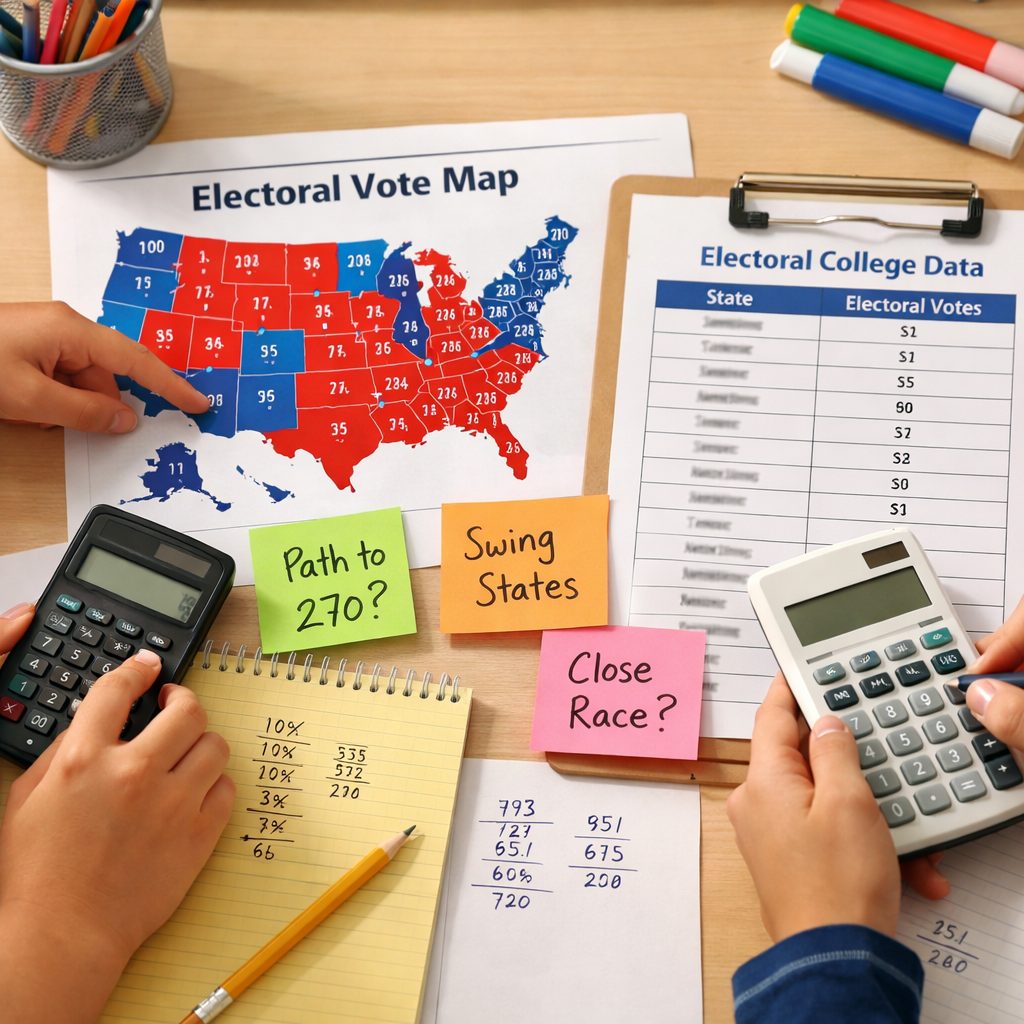
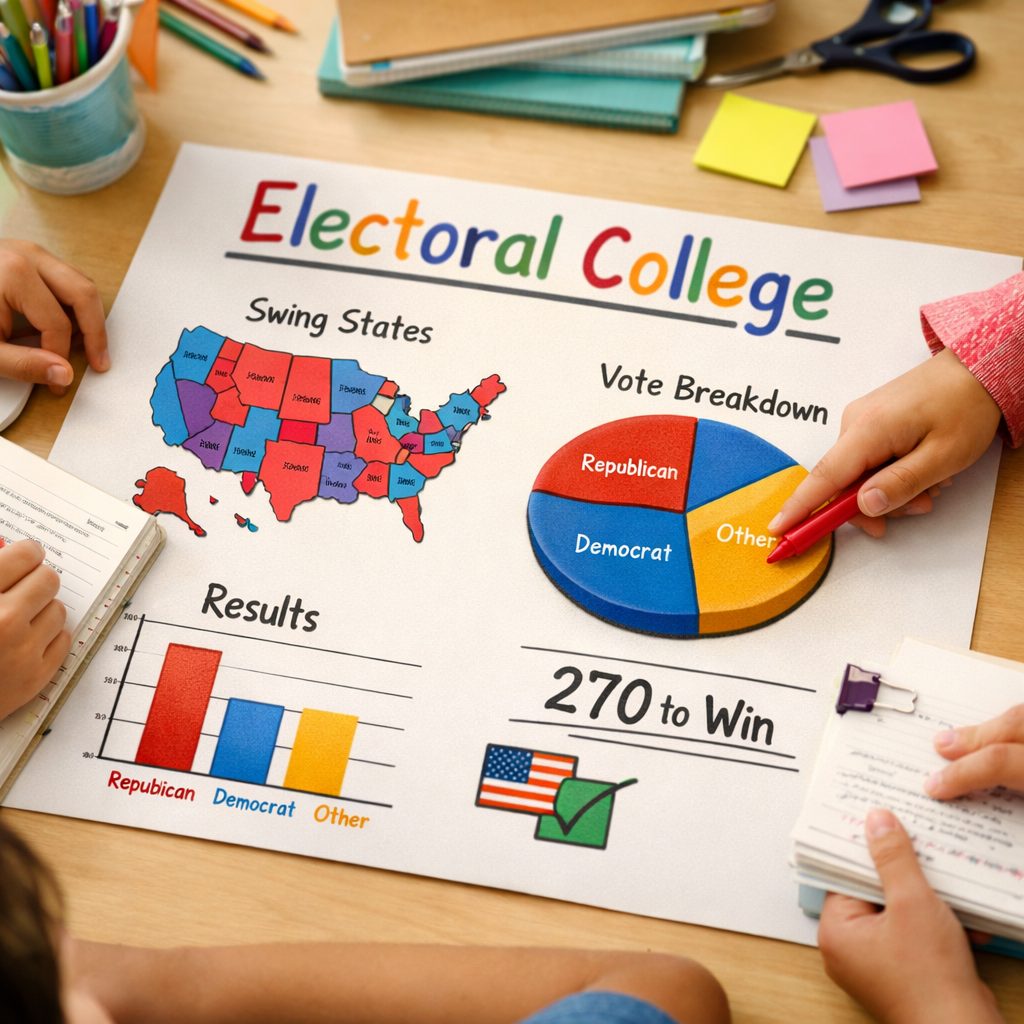
(20 min) Each group will analyze the Electoral Vote Map and Electoral College Data Sheet to explore different scenarios. The teacher prompts, "Calculate the paths to 270 electoral votes and consider the implications of each scenario you analyze." Students will work collaboratively using their calculators to determine how different states contribute to reaching 270 electoral votes, discussing their findings throughout. Finished work will consist of calculated scenarios that highlight key data points and potential outcomes.
4Step 4
Discussion and Preparation
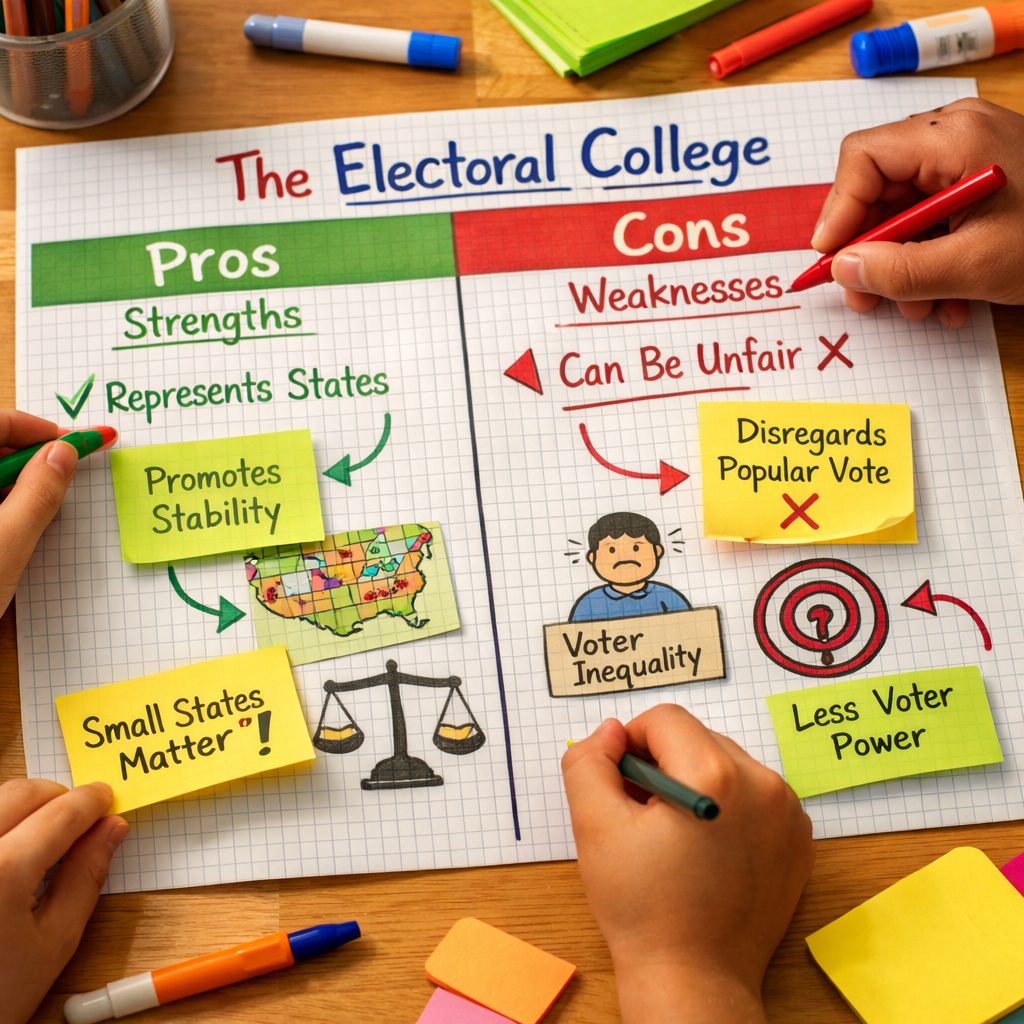
(15 min) Groups will discuss arguments for and against the Electoral College. The teacher encourages, "Use your graph paper and markers to note key points and prepare your arguments for presentation." Students will collaboratively write down strengths and weaknesses of the Electoral College, illustrating their points on graph paper. Finished work will include a visual representation of their arguments with clear notes and discussion points for the presentation.
5Step 5
Presentations
(5 min) Each group will present their analysis and findings to the class. The teacher states, "Explain the paths you identified to reach 270 electoral votes and your rationale behind your arguments." Students will present their findings, using visual aids on the whiteboard as necessary to support their explanations. Finished work will consist of a clear presentation demonstrating their understanding and collaborative work on the Electoral College.
6Step 6
Reflection
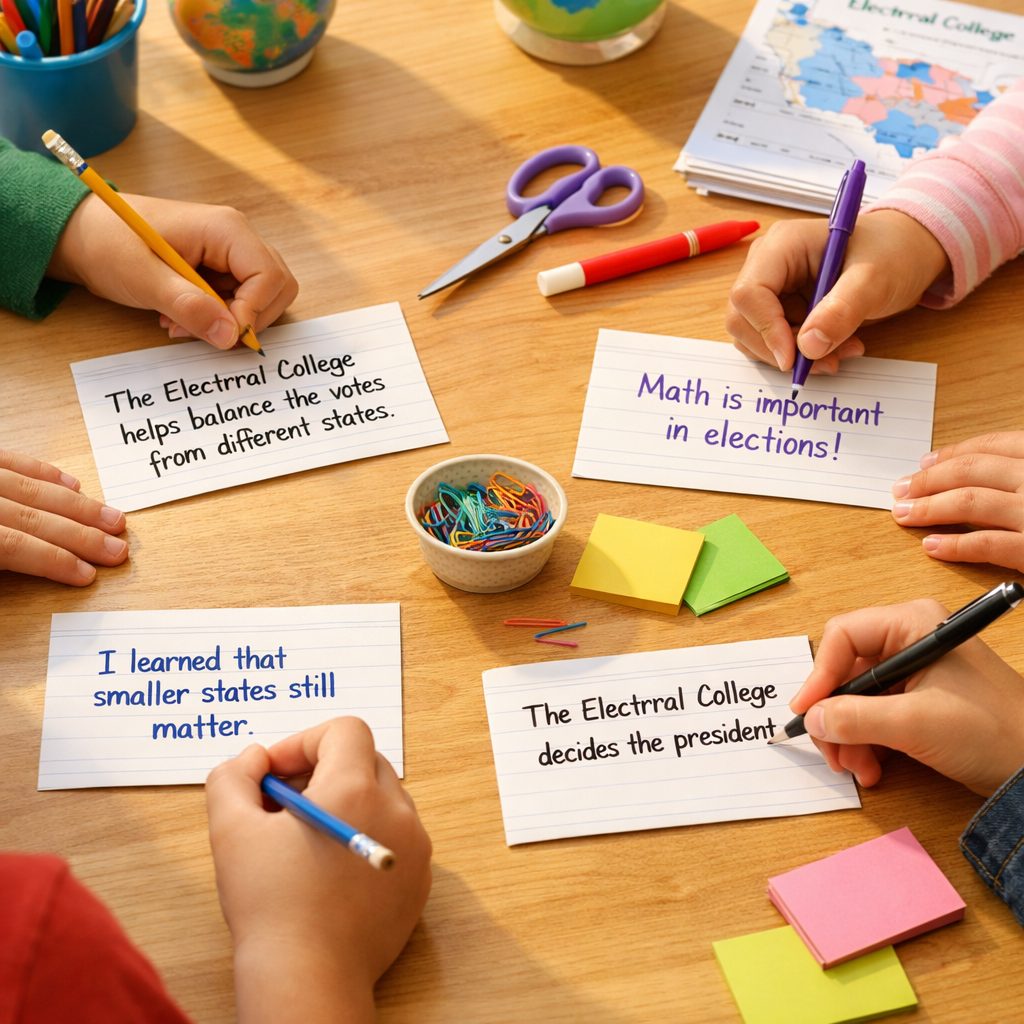
(5 min) Each student will write down one thing they learned about the Electoral College and the role of mathematics in understanding elections. The teacher encourages, "Share your reflections with the class to reinforce your learning and foster discussion." Students will share their reflections, contributing to a larger conversation about the Electoral College and its implications. Finished work will include individual reflections that highlight personal insights and learning outcomes.
Conclusion
Wrap up the lesson by discussing how the Electoral College impacts elections and how math is vital in understanding this process. Encourage students to think critically about the implications of their findings on real-world voting and representation.
Make your own lesson plan in minutes
Describe a topic and Resource Portal AI writes the objectives, materials and steps for your group.
Try Resource Portal AI