Free lesson plan

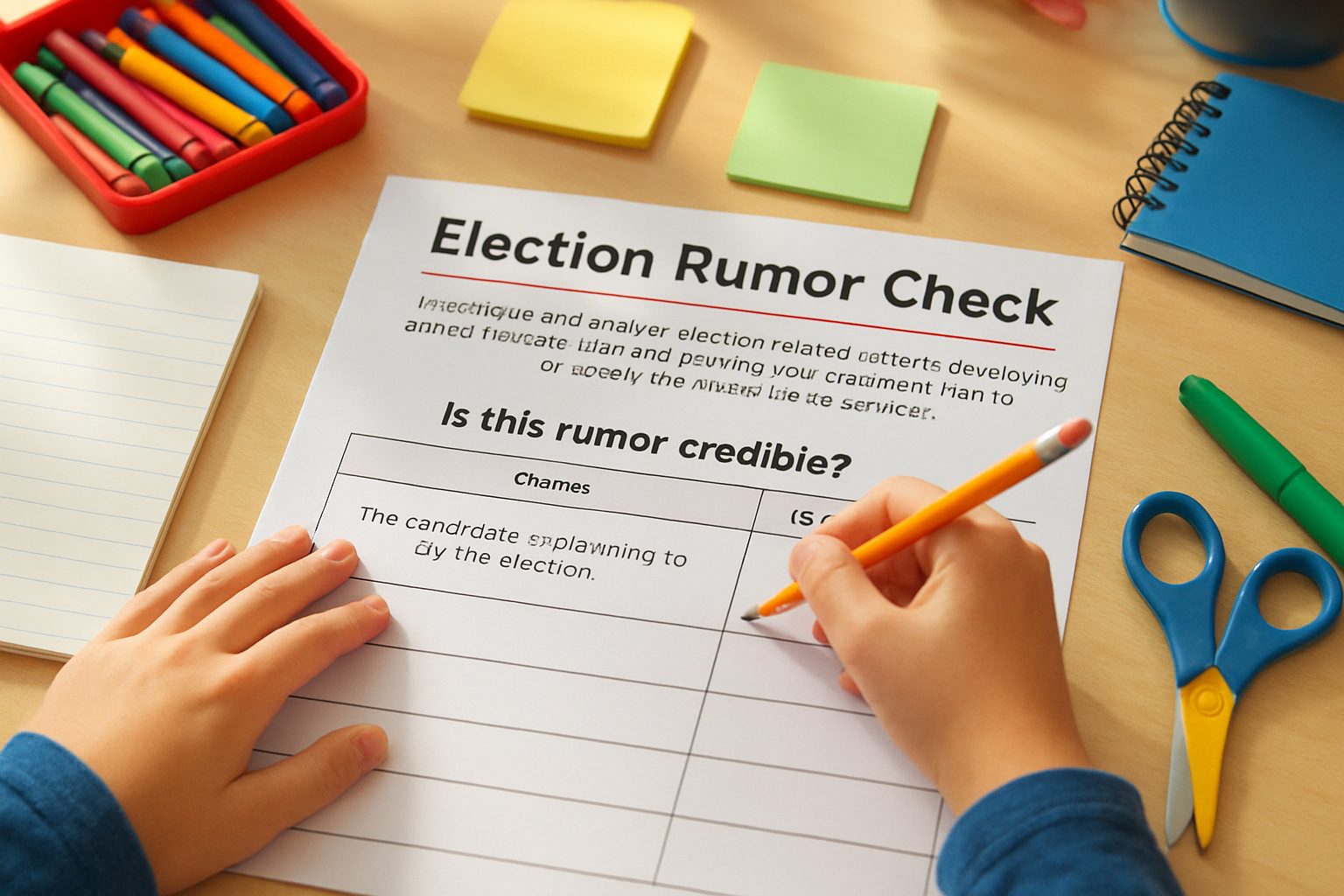
Election Rumor Check
STEAM1 HourGrades: 10th, 11th, 12th
Election Rumor Check

Overview

In this lesson, students will engage in a collaborative research project to evaluate claims about voting, enhancing their analytical and communication skills.

Description

In this lesson, students will investigate and analyze election-related claims about voting processes, developing critical thinking skills and learning how to assess the credibility of sources.

Objective

Students will be able to critically assess and verify claims about voting processes using credible sources and collaborate effectively in groups.

Standards

RI.11-12.7ELA · Grade 11-12 · Reading: Informational Text
Integrate and evaluate multiple sources of information presented in differentmedia or formats (e.g., visually, quantitatively) as well as in words in order toaddress a question or solve a problem.

Materials

ItemQuantity
Access to computers or tablets5 units
Projector and screen1 set
Whiteboard markers5 pieces
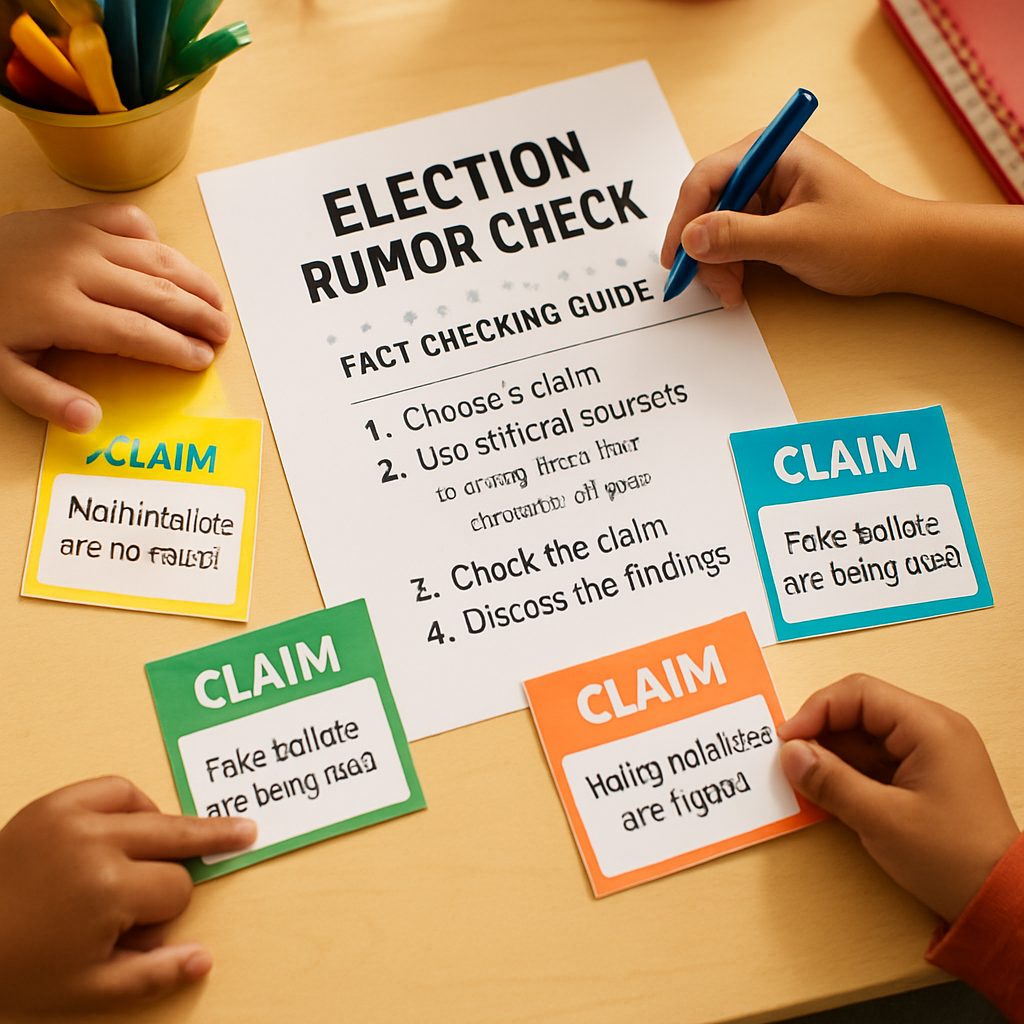
Printed fact-checking guide20 copies
Post-it notes2 packs
Voting claim cards20 cards
Checklist template5 copies

Vocabulary

Credibility
The quality of being trusted and believed in.
Verification
The process of establishing the truth or accuracy of something.
Bias
A tendency to favor one perspective over another.
Source
A place or person from which information comes.
Fact-checking
The act of checking the factual accuracy of information.
Rumor
A claim that is uncertain and may not be true.

Preparation

Introduction

Start with a brief discussion on recent claims about voting processes. Ask, 'What are some claims you’ve heard about how people can vote?' This will encourage students to think critically about the information they encounter.

Steps
1Step 1
Hook
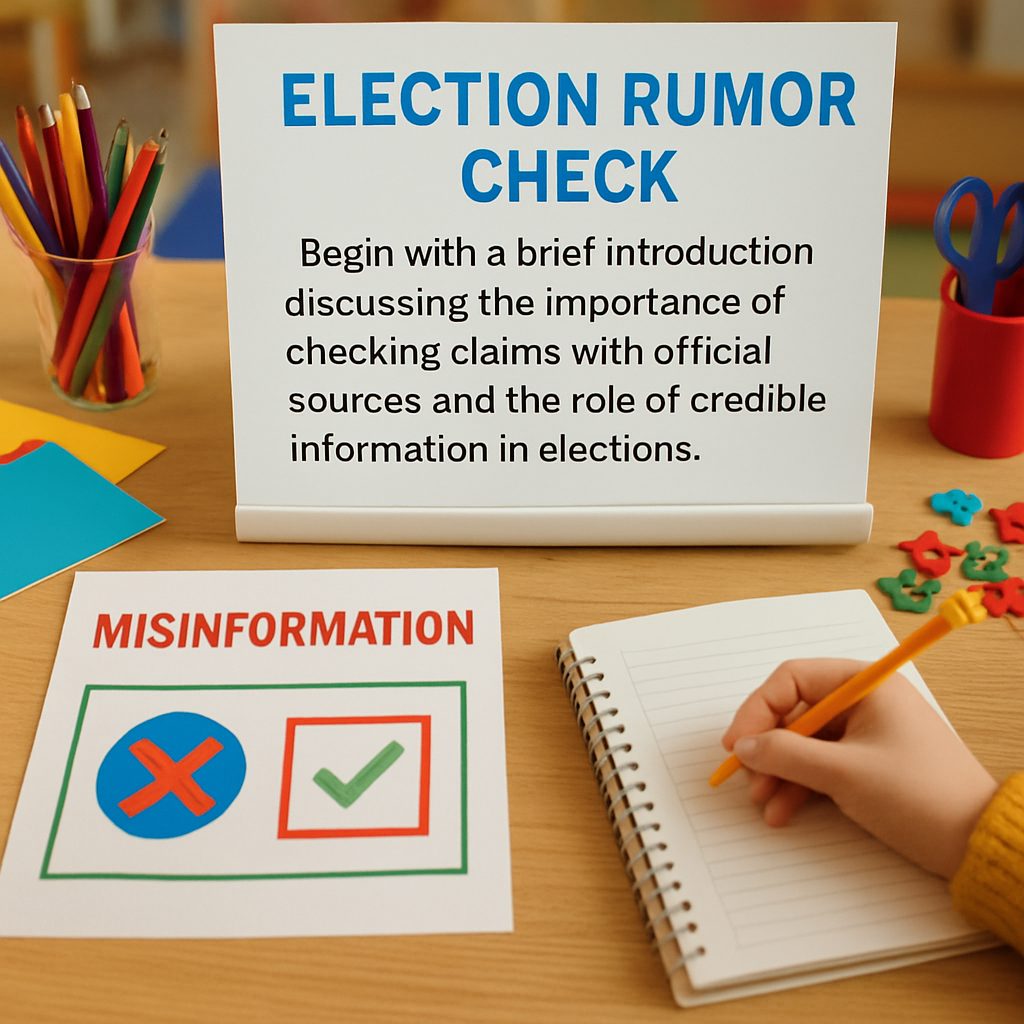
(5 min) Begin with a brief introduction discussing the importance of verifying information about voting claims. Use the projector to display a few common voting claims. Ask, 'Why do you think it’s important to know the truth about how voting works?' This sets the stage for the investigation.
Step 1
2Step 2
Group Formation and Research
(10 min) Organize students into 5 groups of 4. Distribute 1 printed fact-checking guide and 4 voting claim cards to each group. The teacher says, 'Choose one claim to investigate, and let’s find out if it’s true!' Students discuss their options and select a claim, then begin researching it using official sources like the county registrar and Secretary of State websites. Each group will have a clear understanding of the claim they are investigating and will take notes on their findings for later use.
Step 2
3Step 3
Analysis and Checklist Creation
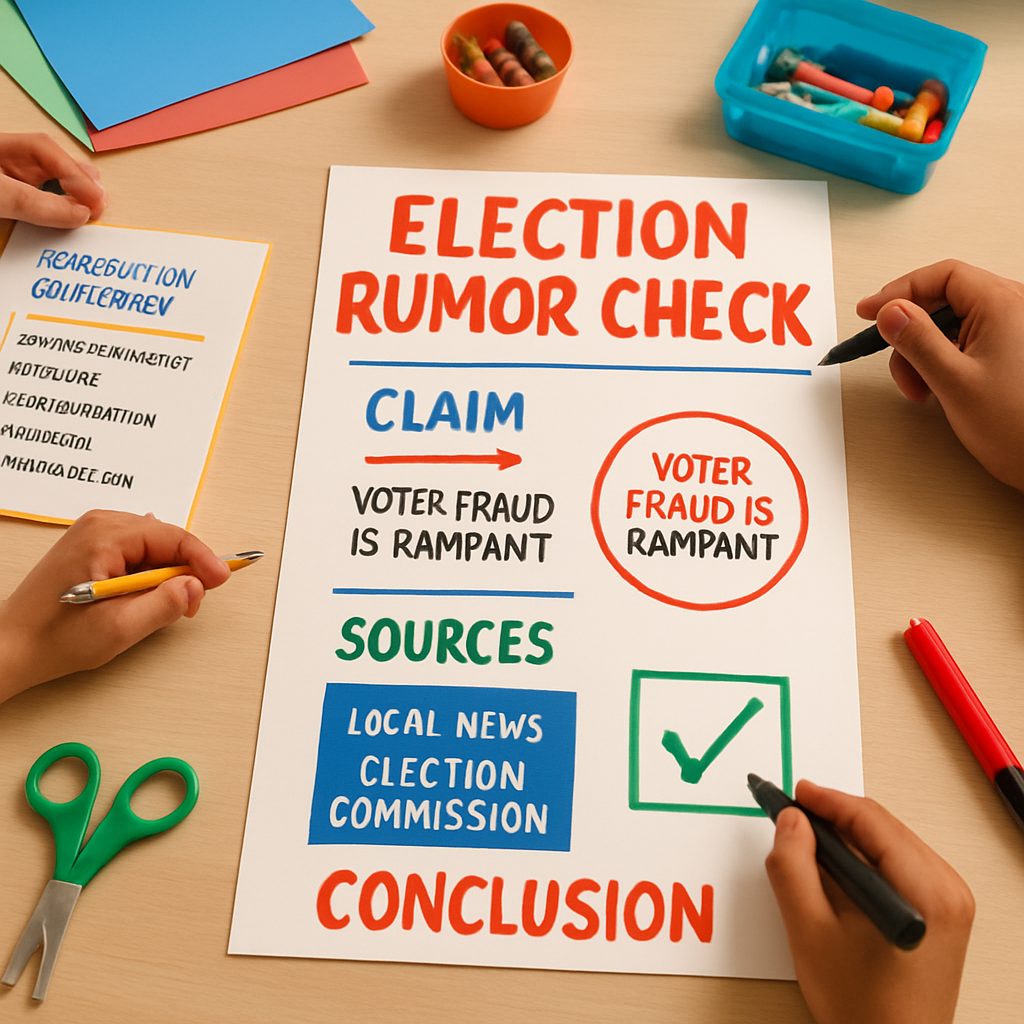
(20 min) Each group analyzes the credibility of their claim using the provided guide and official sources. The teacher encourages them by saying, 'Use the checklist to guide your analysis!' Students develop a verification checklist that includes criteria for assessing the claim's validity and create a visual representation of their findings, such as a poster or digital presentation, to share with the class. This visual representation will clearly outline their claim, sources, and conclusions.
Step 3
4Step 4
Present Findings
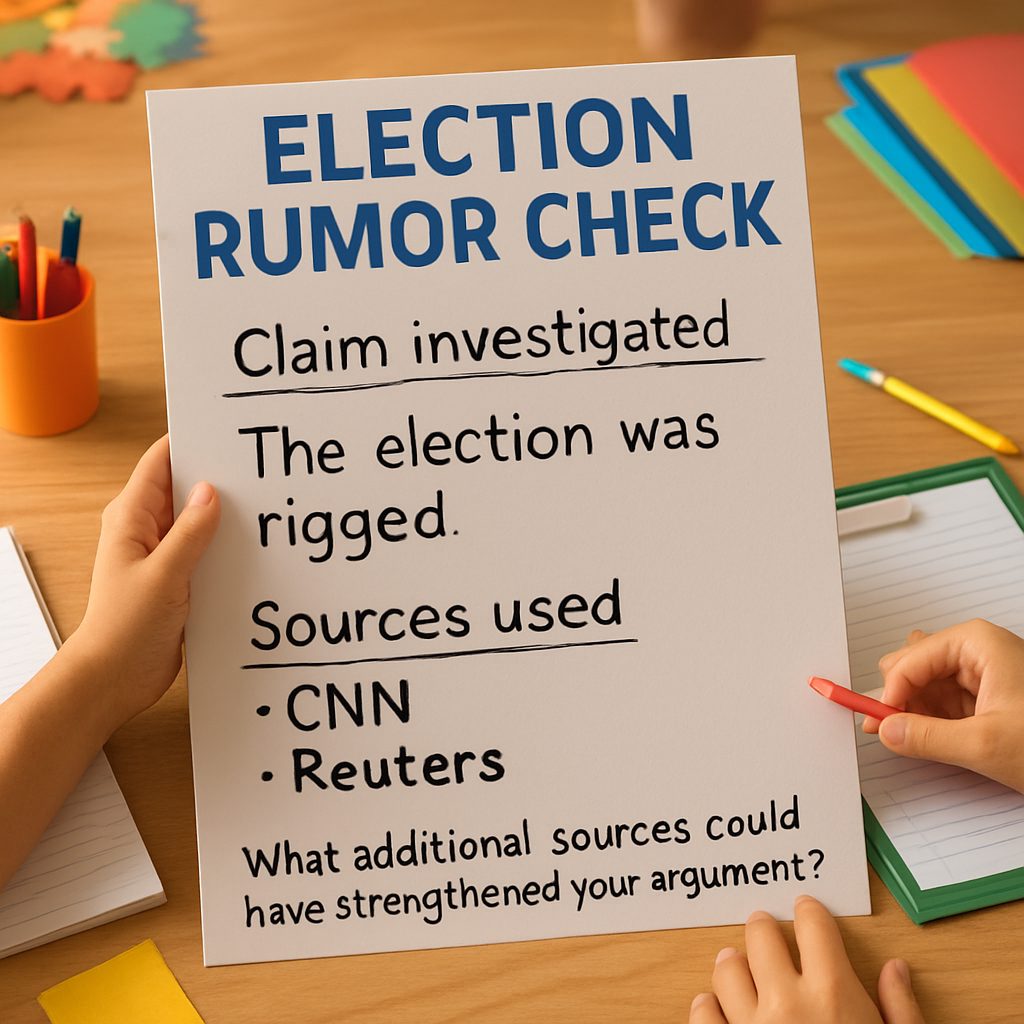
(15 min) Groups present their findings to the class, focusing on the claim they investigated and the sources they used. Encourage constructive feedback by asking, 'What additional sources could have strengthened your argument?' This promotes critical discussion among peers.
Step 4
5Step 5
Reflection
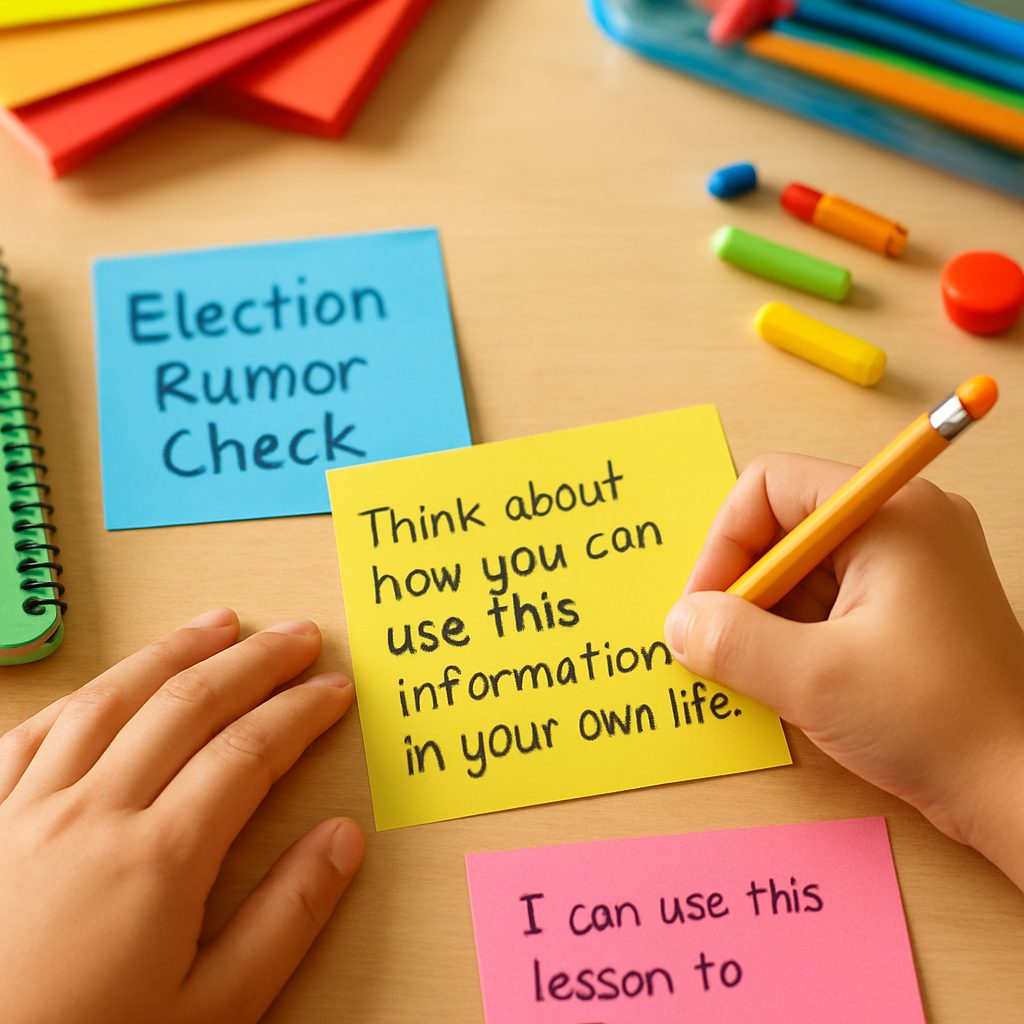
(10 min) Conclude with a reflection activity where each student writes down one key takeaway from the lesson on a Post-it note. The teacher prompts, 'Think about how you can use this information in your own life.' Students should consider how this lesson can help them in navigating information about voting in the future and share their thoughts. The collected notes will serve as a gauge for their understanding of the lesson's key concepts.
Step 5

Conclusion

Wrap up by discussing how understanding the truth about voting processes can empower them as informed citizens who can challenge misinformation.

Make your own lesson plan in minutes

Describe a topic and Resource Portal AI writes the objectives, materials and steps for your group.

Try Resource Portal AI