Free lesson planBallot Measure Breakdown
STEAM1 HourGrades: 11th, 12th
Overview
Students will analyze a ballot measure, mapping arguments for and against, enhancing their critical thinking and collaborative skills.
Description
This lesson engages students in analyzing a specific ballot measure from the California Voter Information Guide for the November 3, 2026 election. They will research its implications, gather data, and collaborate to present their findings without taking sides.
Objective
Students will analyze a ballot measure from the California Voter Information Guide, evaluate arguments for and against, and present their findings collaboratively.
Materials
| Item | Quantity |
|---|
| Access to online resources and databases | 1 access |
| Printed copies of the California Voter Information Guide | 20 copies |
| Argument map template | 20 templates |
| Poster boards for presentations | 5 boards |
Vocabulary
Ballot Measure
A proposed law submitted to voters for approval or rejection.
Implications
The possible effects or outcomes of a proposed measure.
Stakeholders
Individuals or groups who may be affected by or have a stake in a ballot measure.
Analysis
The process of examining the details of a ballot measure to understand its components and effects.
Advocacy
The act of supporting a cause or proposal through argument or action.
Civic Engagement
Active involvement in civic affairs and the public decision-making process.
Preparation
- Select a relevant ballot measure from the California Voter Information Guide for the November 3, 2026 election.
- Gather printed copies of the guide for all students.
- Prepare access to online resources and databases.
- Set up the classroom for group work and presentations.
Introduction
Begin by asking students, 'What do you think influences voting decisions?' This will engage them in thinking critically about the voting process.
What do you think a ballot measure is?
Why is it important to understand both sides of ballot measures?
Steps
1Step 1
Introduce the Ballot Measure
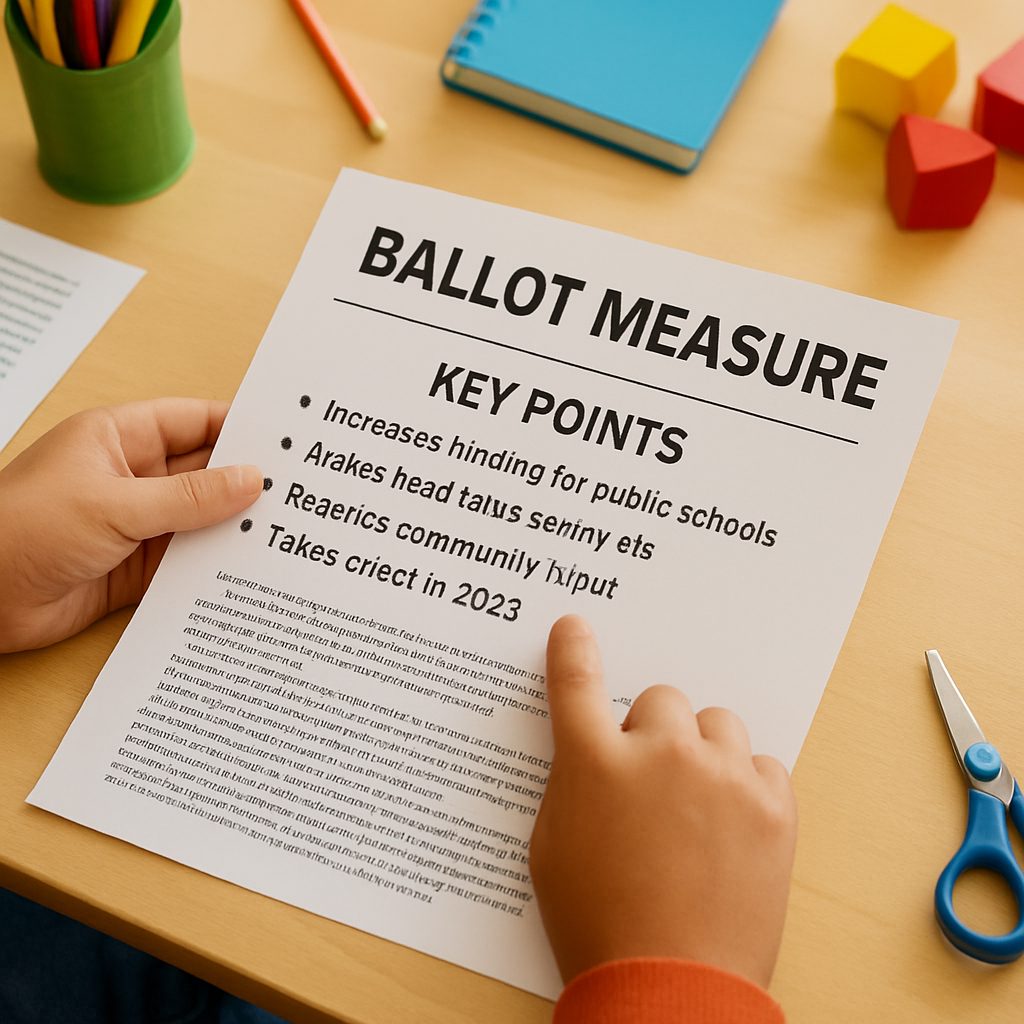
(10 min) Introduce the Ballot Measure by distributing copies of the California Voter Information Guide to each student. Explain that they will be analyzing a specific ballot measure from the guide and mapping arguments for and against it. Ask, "What are some key points we should look for in this measure?" Students will receive their copies and begin to identify important sections relevant to the measure.
2Step 2
Group Research
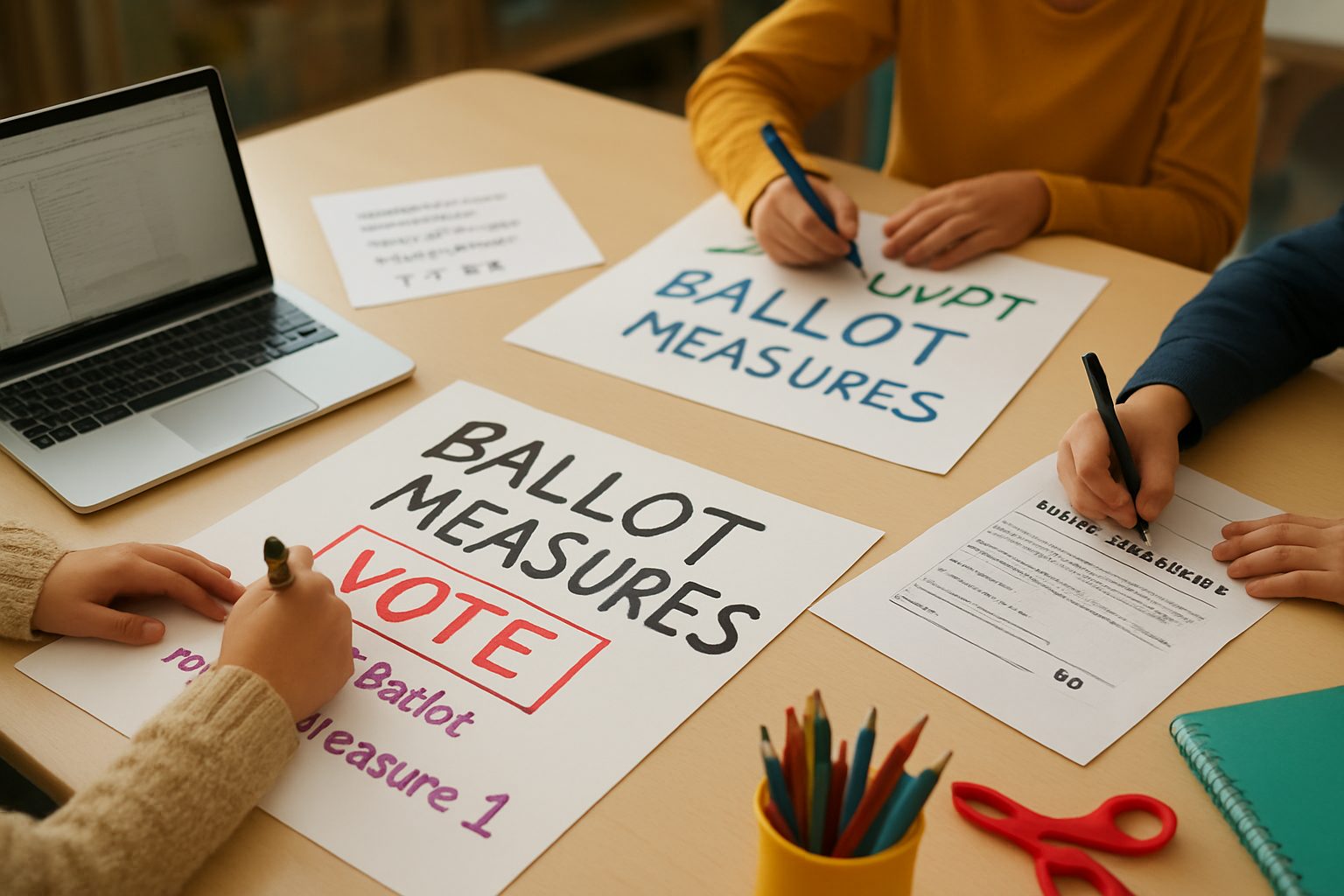
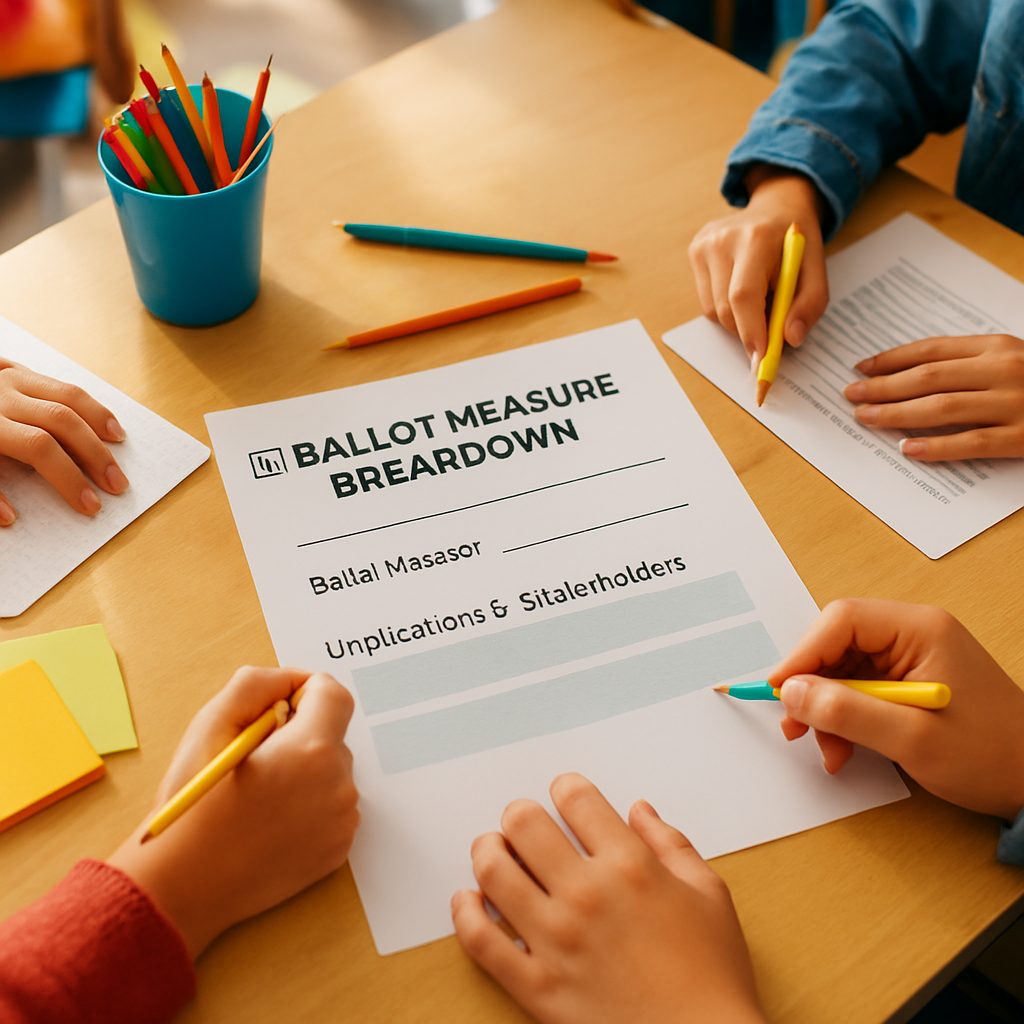
(20 min) Group Research: In small groups, students will research the ballot measure's implications, identifying arguments for and against as they map their findings on the argument map template. Each group will have access to 4 copies of the guide, along with 4 templates. They will also use 4 markers to annotate their maps. Encourage them to ask, "What are the strongest points on both sides?" and ensure they consider all perspectives.
3Step 3
Prepare Presentations
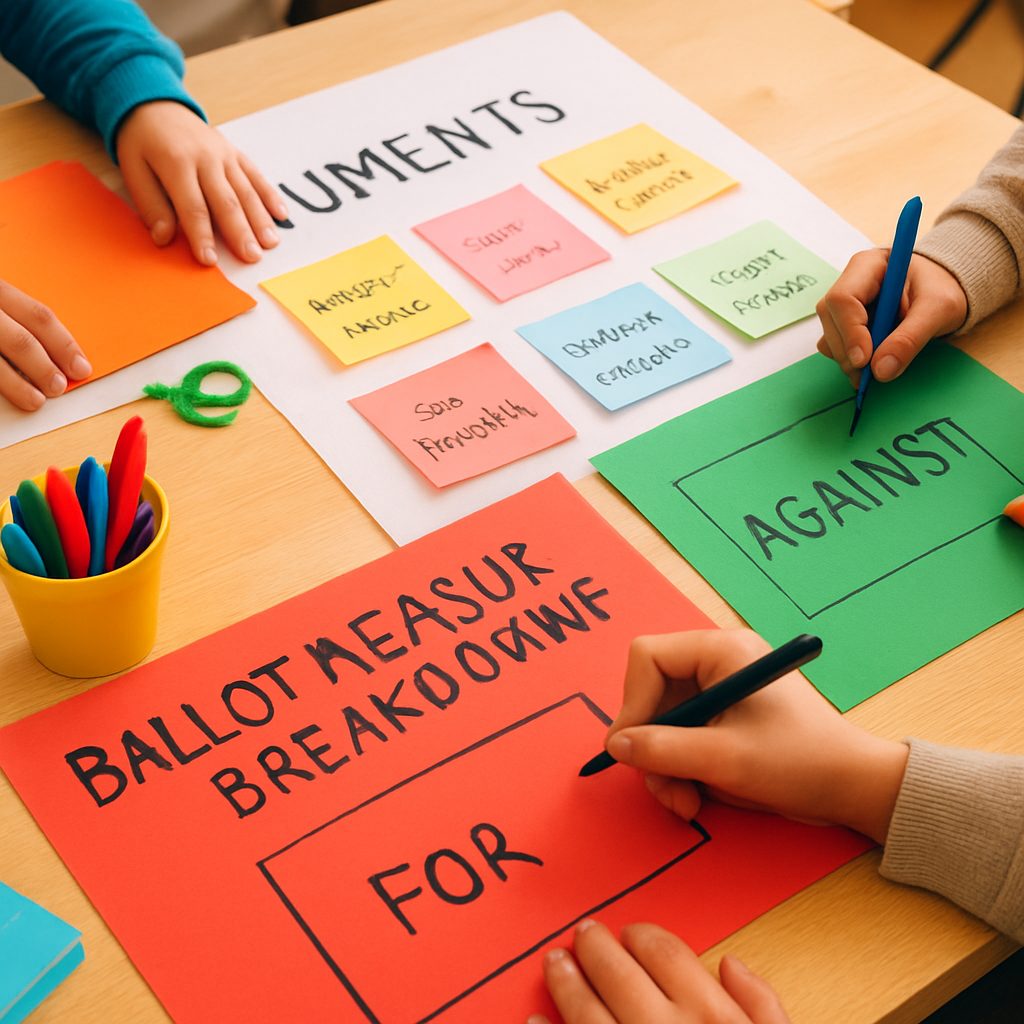
(15 min) Each group will analyze their mapped arguments and prepare a short presentation to share with the class. They will use the poster boards to visually represent their findings and prepare to discuss both sides of the measure. Ask them, "How can you clearly convey the arguments you've found?" Each group should aim to have their poster ready for presentation.
4Step 4
Present Findings
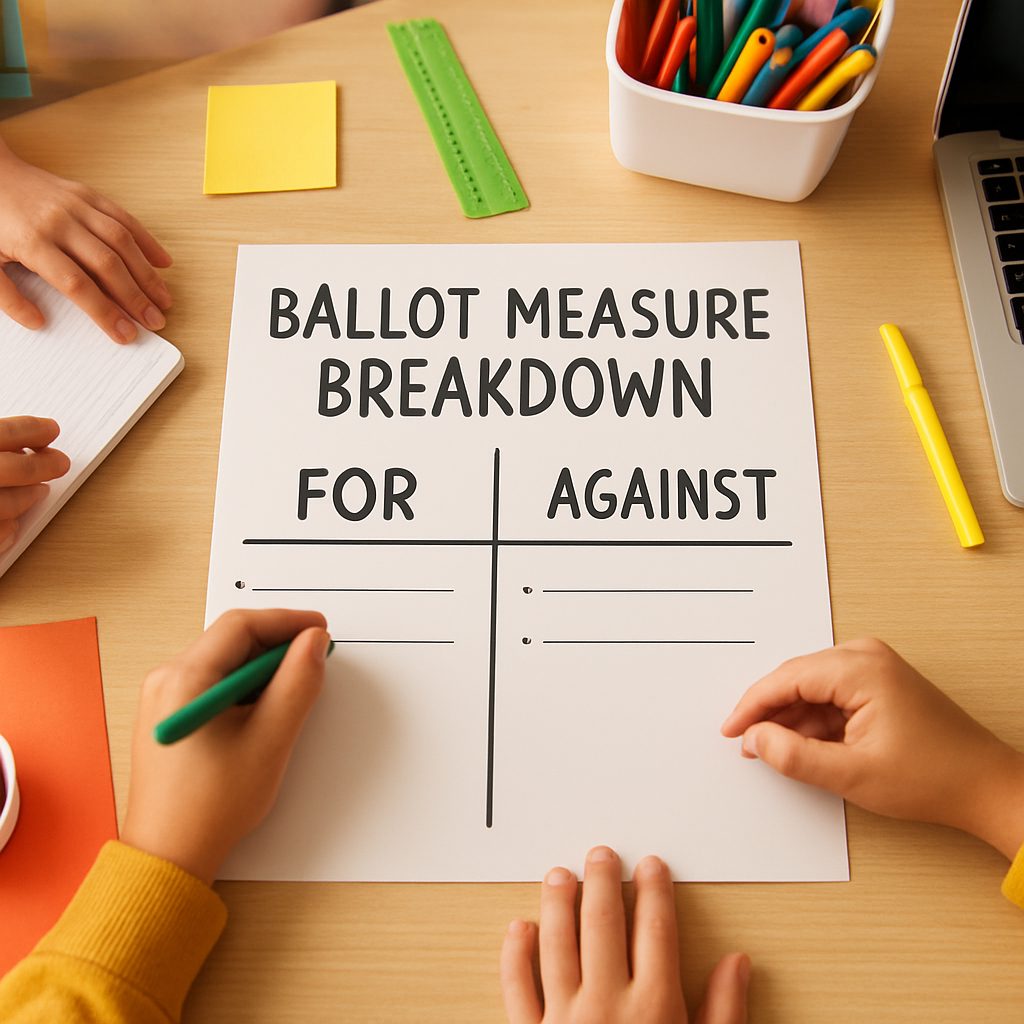
(10 min) Each group will present their analysis of the ballot measure to the class, discussing the implications of the arguments for and against. They will use the projector for visual support. Encourage the audience to ask questions after each presentation, fostering a discussion on the measure's impact. Each group should aim to cover the main points clearly and thoughtfully.
5Step 5
Class Discussion
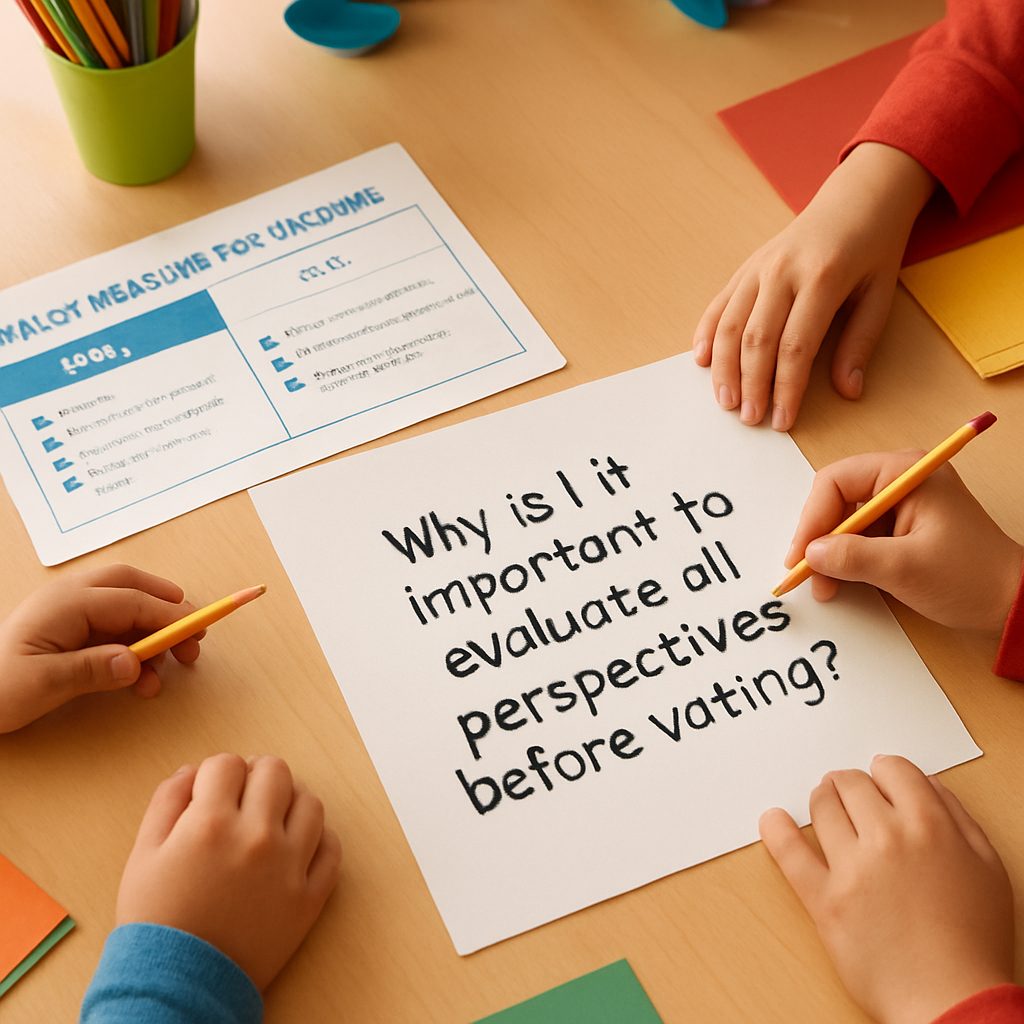
(5 min) Conclude the lesson with a class discussion reflecting on what they learned about the ballot measure and how understanding both sides can influence their future voting decisions. Prompt with, "Why is it important to evaluate all perspectives before voting?" Students will share their thoughts, reinforcing the lesson's objective and ensuring they grasp the importance of being informed voters.
Conclusion
Wrap up by discussing how understanding both sides of a ballot measure can empower them as informed voters in their community. Ask students how they might apply this knowledge in future elections.
Make your own lesson plan in minutes
Describe a topic and Resource Portal AI writes the objectives, materials and steps for your group.
Try Resource Portal AI