Dry-Land Swim Strokes: Windmill Arms and Flutter Kicks
Overview
Practice swim strokes on dry land.
Description
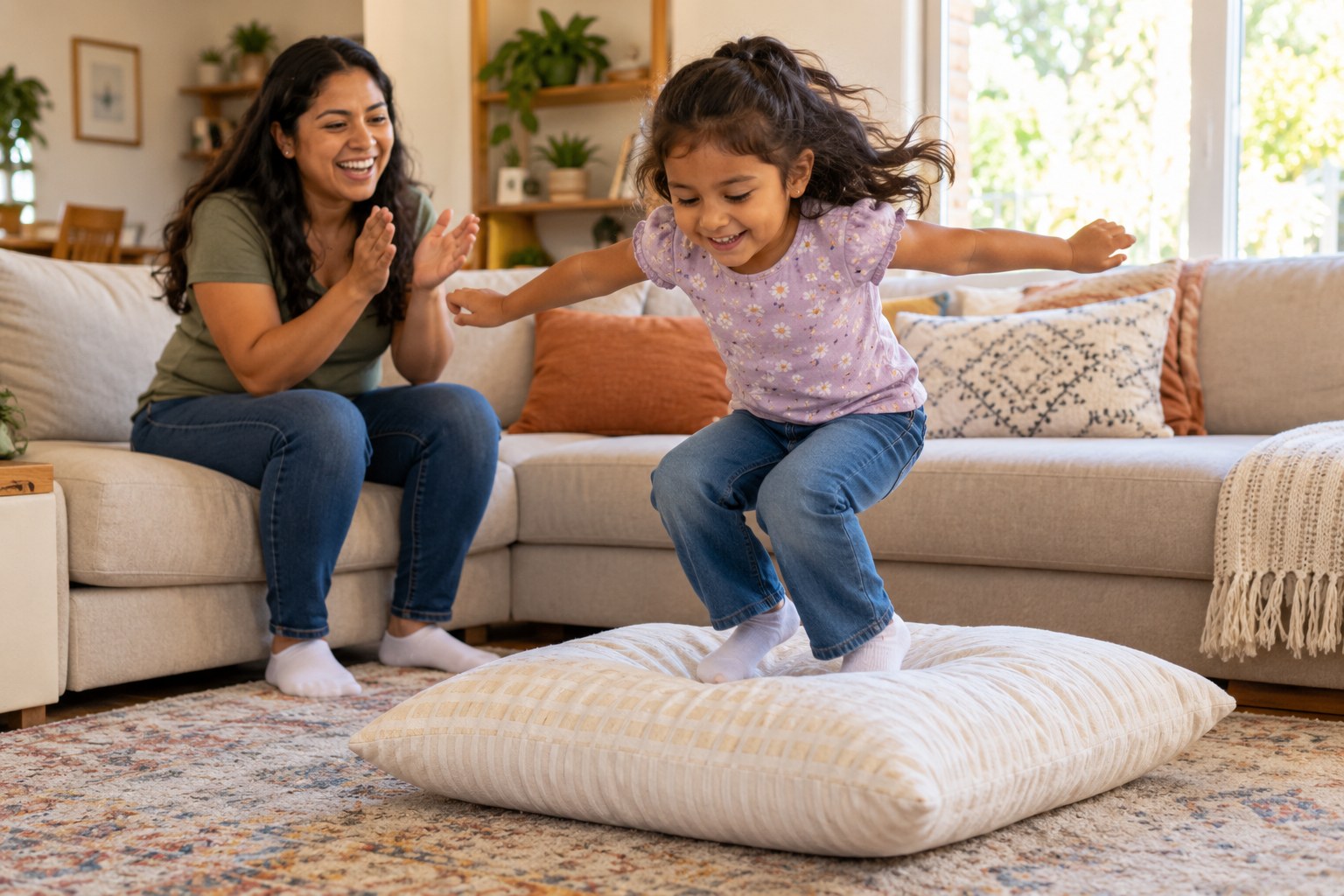
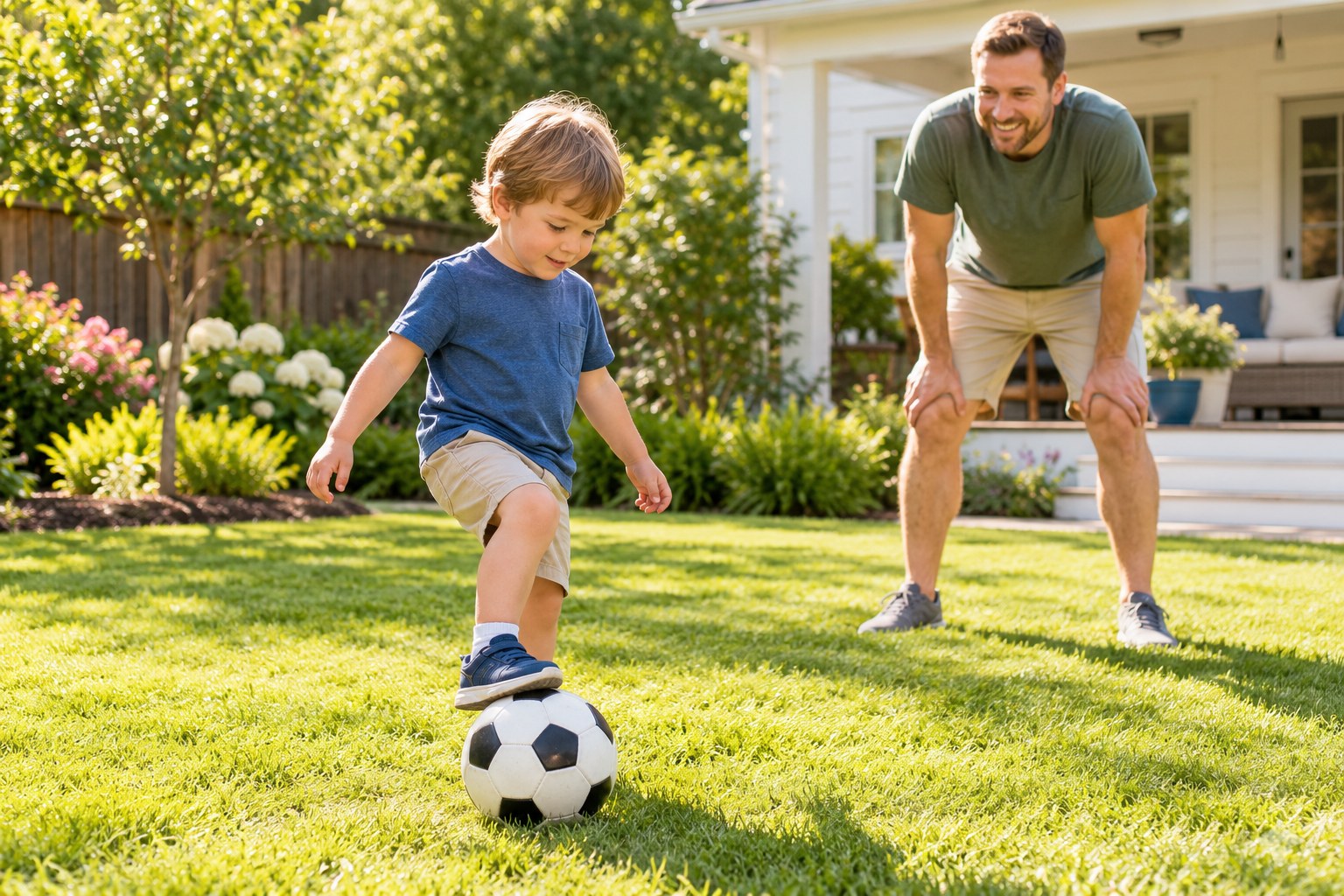
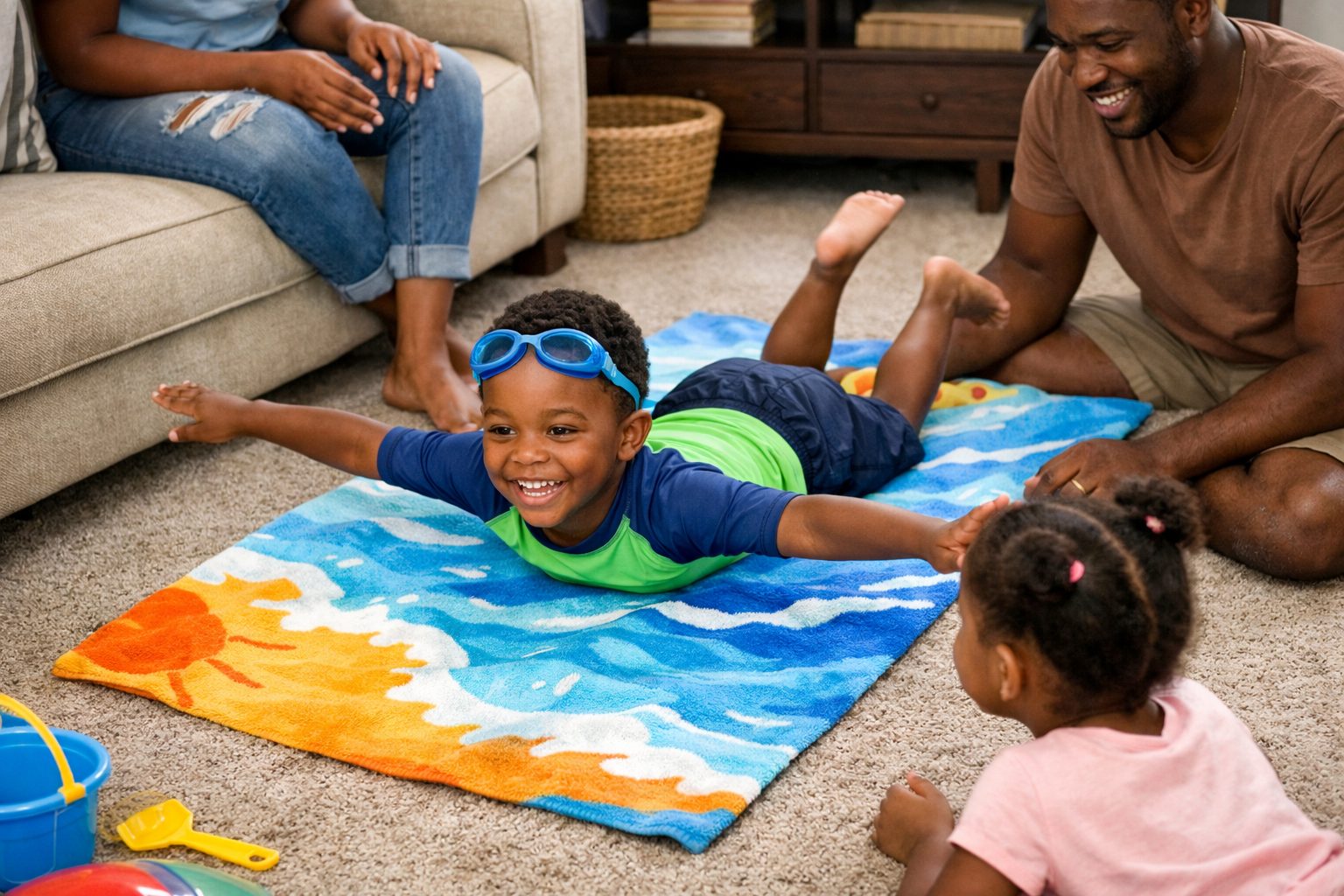
Your child practices freestyle 'windmill' arms, flutter kicks and blowing bubbles on dry land and with a bowl of water, then puts them together in a pretend swim across the rug.
Objective
Your child will practice the arm pull, flutter kick and bubble breathing used in freestyle swimming and name one water-safety rule.
Materials
| Item | Quantity |
|---|---|
| Bath towel | 1 per child |
| Bowl of room-temperature water | 1 medium bowl |
| Paper towels | 3 sheets |
| Pillow | 1 per child |
Vocabulary
Preparation
- Lay 1 bath towel flat on the floor for each child.
- Fill a medium bowl halfway with room-temperature water and set it on a table with paper towels nearby.
Introduction
Ask: how do you think a swimmer moves through water without touching the ground?
What should you always have when you go in a pool or lake?
Why do swimmers blow bubbles?
Steps
Conclusion
Ask your child to teach you the three swim moves. Remind them that real swimming is always learned and practiced in the water with an adult or swim teacher.
Make your own lesson plan in minutes
Describe a topic and Resource Portal AI writes the objectives, materials and steps for your group.
Try Resource Portal AI