Savanna Food Chain Paper Chain
Overview
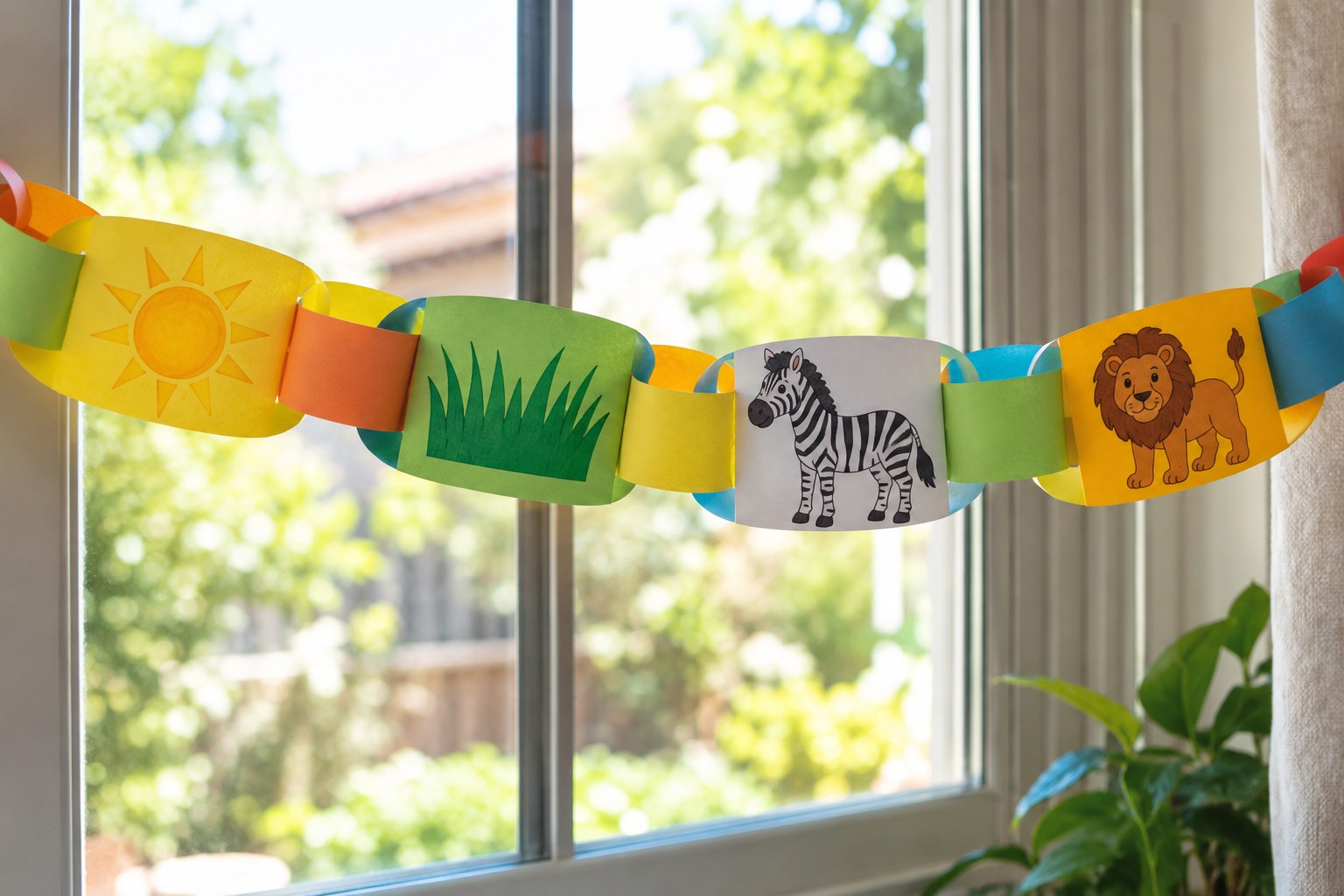
Link the sun, grass, zebra and lion in a paper chain.
Description
Your child builds a paper chain that shows how energy moves on the savanna, from the sun to the grass to a zebra to a lion, then plays a 'what if' game to see what happens when one link is missing.
Objective
Your child will put the links of a savanna food chain in order, explain that plants get energy from the sun and animals get energy from what they eat, and predict what happens when a link is removed.
Materials
| Item | Quantity |
|---|---|
| Strips of construction paper or scrap paper, about 1 by 8 inches | 8-10 per child |
| Tape, stapler (adult) or glue stick | 1 |
| Crayons or markers | 1 set |
| Scissors (child-safe) | 1 |
Vocabulary
Preparation
- Cut the paper strips. Make a yellow strip for the sun if you have colored paper.
- Read the background section so you can answer questions about who eats what.
Introduction
Ask, 'Did you know a lion gets its energy from the sun?' Let your child guess how that could be true, because lions do not eat sunshine!
What do you eat that gives you energy?
What does grass need to grow?
Steps
Conclusion
Ask: where does the energy in a food chain start? Why does every link matter? Name one thing in our family's food chain, like sun to wheat to bread to you.
Make your own lesson plan in minutes
Describe a topic and Resource Portal AI writes the objectives, materials and steps for your group.
Try Resource Portal AI