Free lesson planBasketball Earth, Tennis-Ball Moon: Scaling Artemis II's Record Trip
Science1 HourGrades: 6th, 7th, 8th
Overview
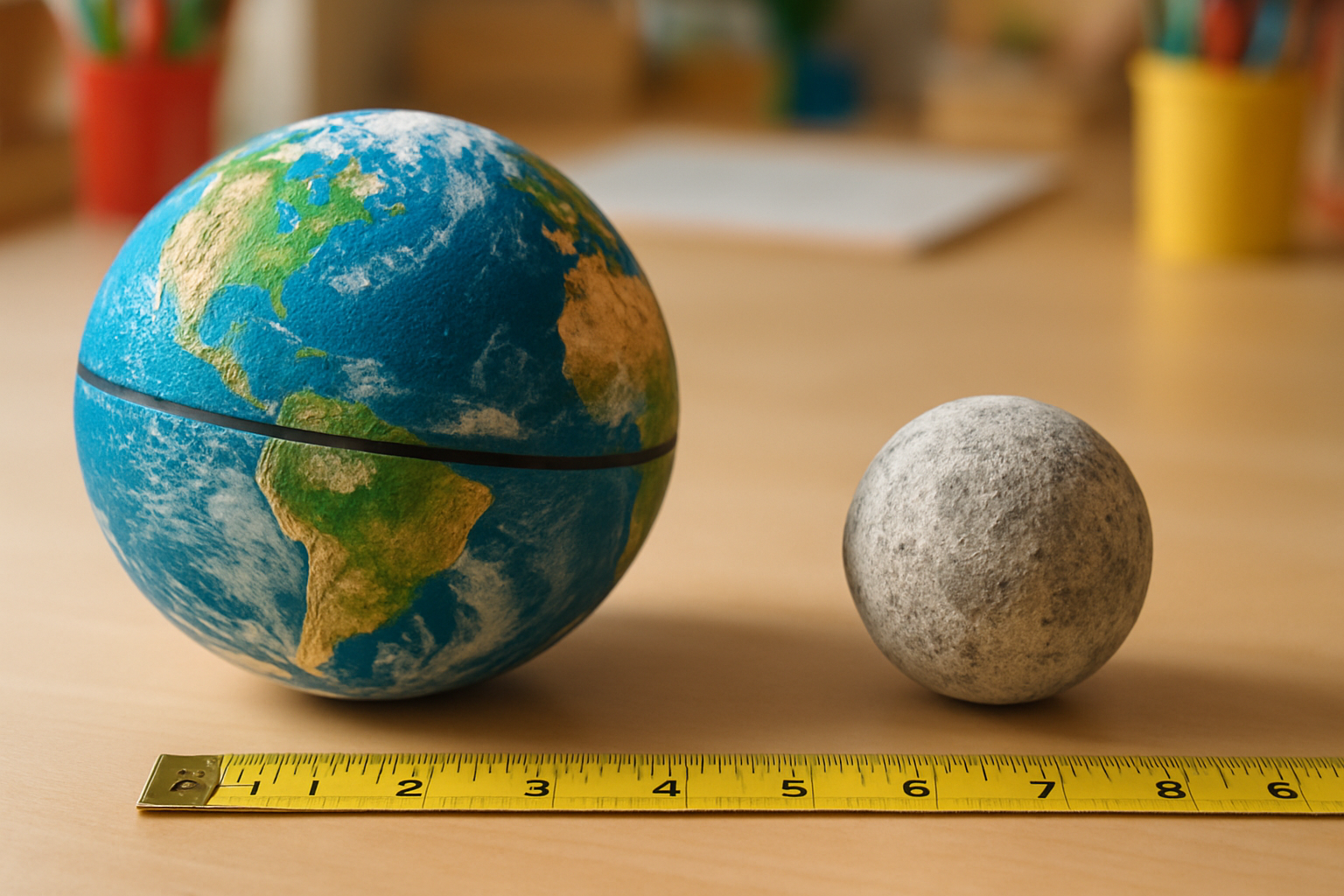
Explore the vast distances of space by scaling Earth's size to a basketball and the Moon's size to a tennis ball. Create models while developing critical thinking and collaboration skills.
Description
In this lesson, students will explore the vast distances of space by creating a scaled-down model of the Earth and Moon using basketballs and tennis balls. They will work collaboratively in groups to design and build their models, enhancing their critical thinking skills while learning about the scale of the universe. By the end of the lesson, students will have a tangible representation of the Earth-Moon system and a deeper understanding of space exploration.
Objective
Students will understand the relative sizes of the Earth and Moon and apply scaling concepts to create a physical model, demonstrating teamwork and problem-solving skills.
Standards
6.RP.3Math · Grade 6 · Ratios & Proportional Relationships Use ratio and rate reasoning to solve real-world and mathematical problems, e.g., by reasoning about tables of equivalent ratios, tape diagrams, double number line diagrams, or equations.
7.G.1Math · Grade 7 · Geometry Solve problems involving scale drawings of geometric figures, including computing actual lengths and areas from a scale drawing and reproducing a scale drawing at a different scale.
MP.4Math · Grade K-12 · Mathematical Practices Model with mathematics.
Materials
| Item | Quantity |
|---|
| Basketballs | 5 pieces |
| Tennis Balls | 5 pieces |
| Tape Measures | 5 pieces |
| Masking Tape | 5 rolls |
| Calculators | 5 pieces |
| Fine-Tip Markers | 5 pieces |
| Artemis II Mission Data Sheet | 20 copies |
| Scale-Factor Worksheet | 20 copies |
Vocabulary
Scale
The size relationship between a model and the actual object it represents.
Model
A visual or physical representation of an object.
Proportion
The relationship of one part to another or to the whole.
Distance
The amount of space between two objects.
Collaboration
Working together with others to achieve a goal.
Preparation
- Gather materials and set up workstations.
- Prepare a brief introduction about the Artemis II mission and the importance of understanding scale in space.
- Create a demonstration model for students to observe.
Introduction
(5 min) Share that Artemis II reached 252,756 miles from Earth; ask students to guess how far apart a basketball Earth and tennis-ball Moon should be. Encourage them to think about the vastness of space and how we can represent it in a classroom. Show excitement about the upcoming activity.
Steps
1Step 1
Hook
(5 min) To kick off the lesson, the teacher shares, "Did you know Artemis II reached 252,756 miles from Earth?" Students are prompted to guess how far apart a basketball Earth and a tennis-ball Moon should be. They will discuss their ideas with their group before the activity begins, setting an engaging tone for the exploration ahead.
2Step 2
Group Formation
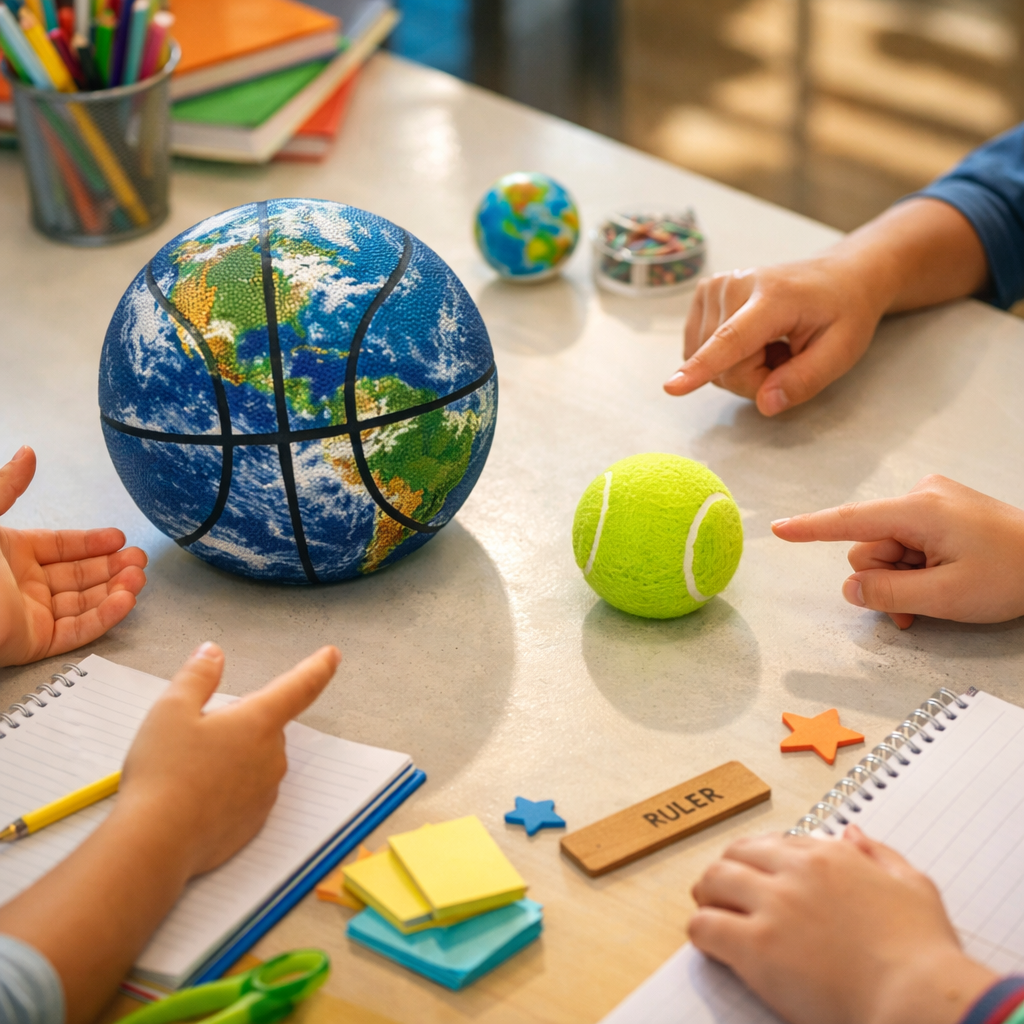
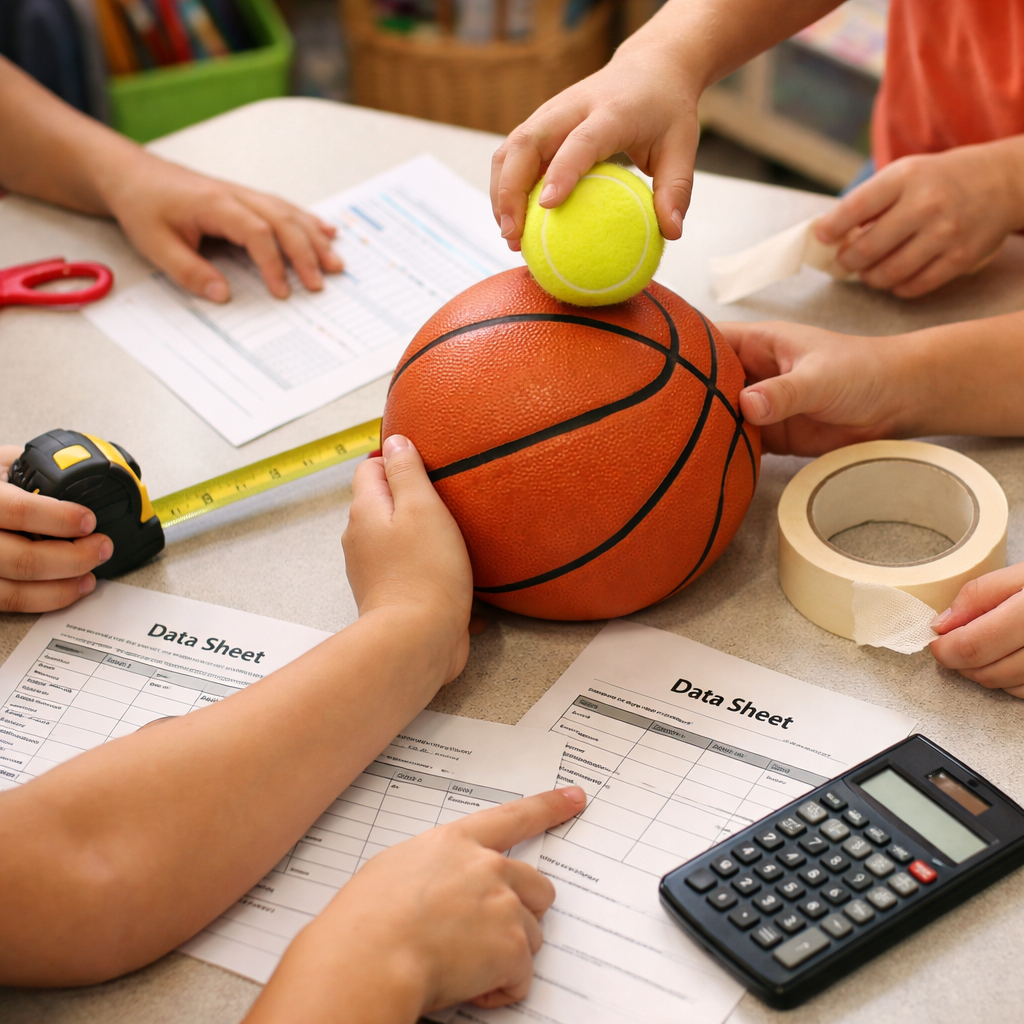
(10 min) The teacher says, "Let's divide into groups!" Students will form 5 groups of 4, and each group will receive 1 basketball, 1 tennis ball, 1 tape measure, 1 roll of masking tape, and 1 calculator. They will also get 4 data sheets for reference. Each group will collaborate on how to use these materials to build their models, ensuring everyone understands their roles in the project.
3Step 3
Calculate Scale
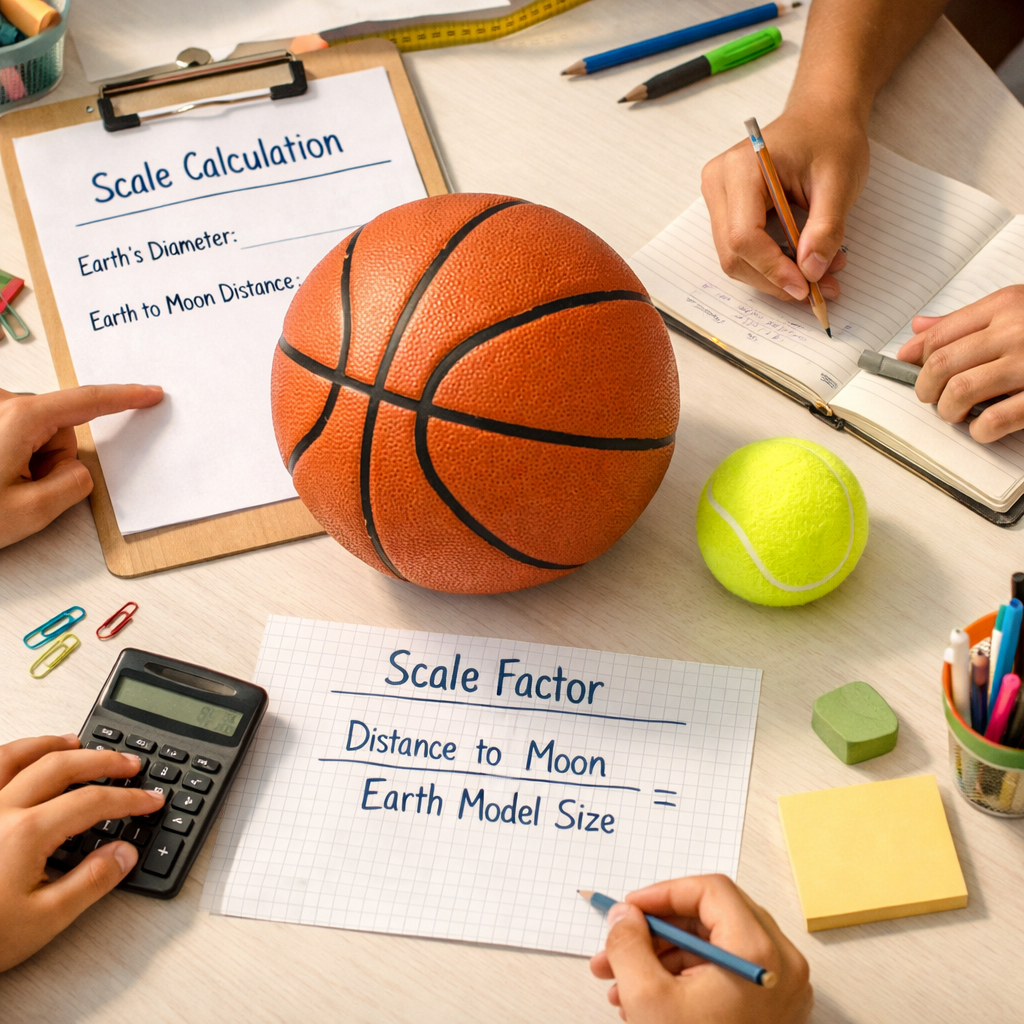
(15 min) The teacher explains, "A 24 cm basketball represents Earth's diameter. Let's calculate the scale together!" Students will work in their groups using the provided data to determine the distance for the Moon by dividing the distance from Earth to Moon by the scale factor. They will engage in discussion, asking, "What distance do you think we need to measure out for the Moon?" They will ultimately find that the Moon should be positioned about 7.2 meters away from the Earth model.
4Step 4
Build the Model
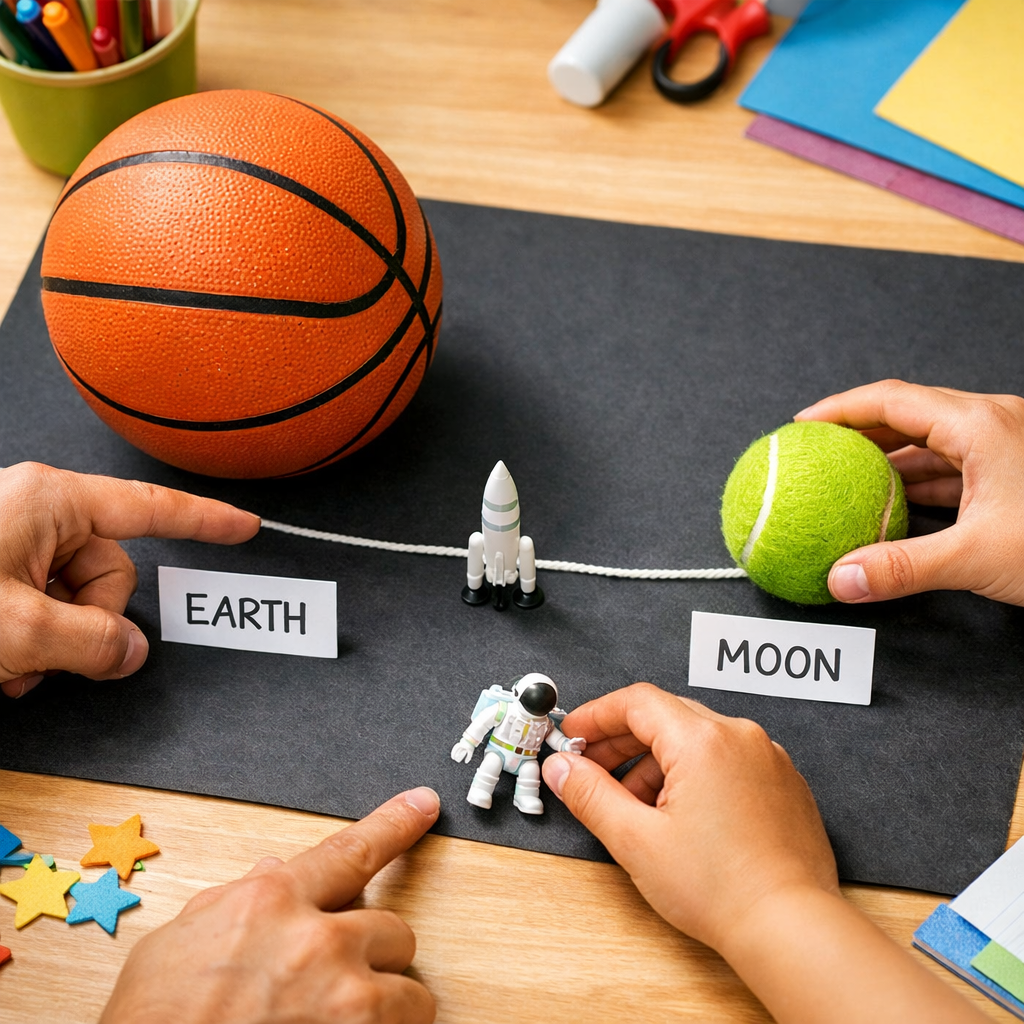
(20 min) The teacher instructs, "Now, let's create our model!" Students will take their basketball to the hallway and measure out 7.2 meters for the tennis ball. They will use masking tape to secure the tennis ball's spot as well as tape down Orion's farthest point. Their model will clearly display the distance between the Earth and Moon, along with Orion's reach, showcasing their teamwork and understanding of the scale.
5Step 5
Gallery Walk
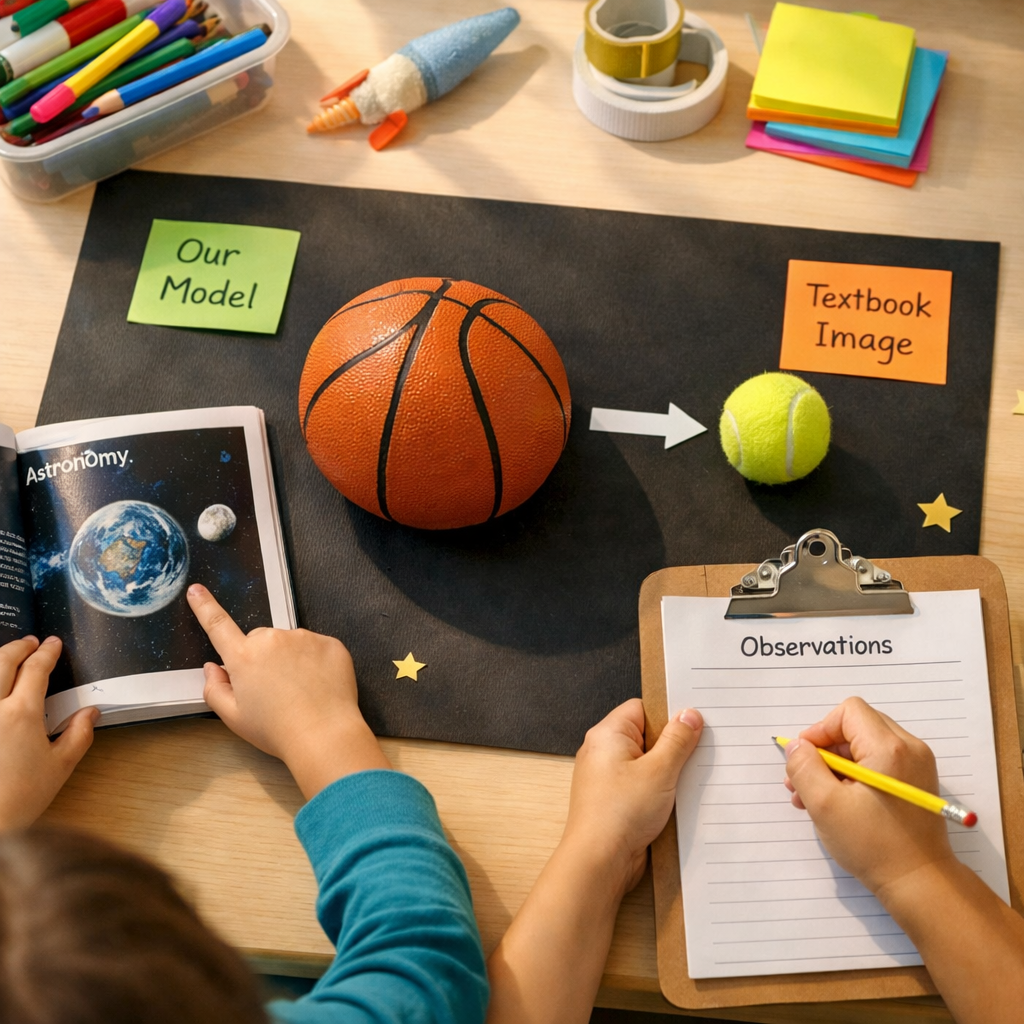
(5 min) The teacher encourages, "Let's take a gallery walk to see everyone's models!" Students will walk around to view each group's creation and compare it with a textbook diagram. They will discuss differences and similarities, reflecting on questions like, "How does your model compare to what you see in textbooks?" This activity fosters critical thinking and peer feedback.
6Step 6
Reflection
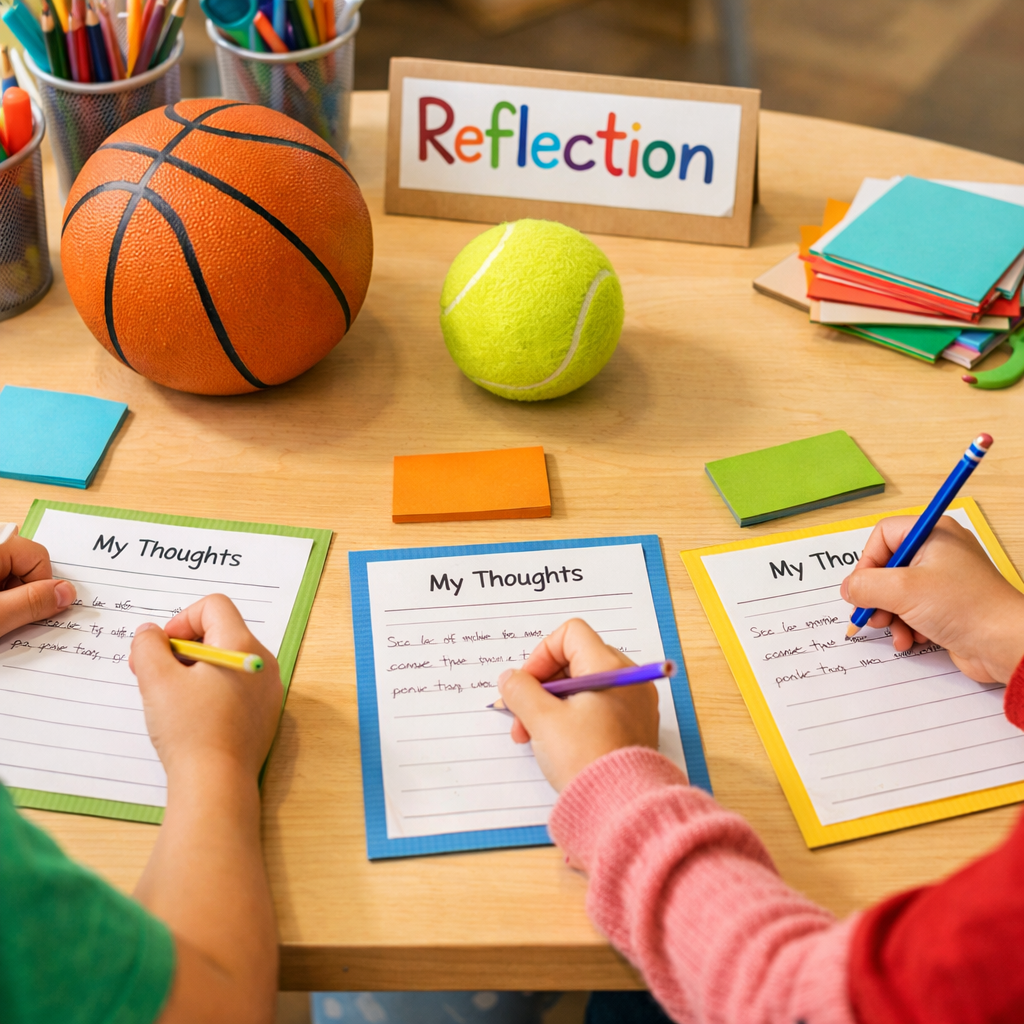
(5 min) The teacher prompts, "Take a moment to reflect on your learning." Each student will write 2 sentences about what surprised them regarding the scale of the Earth and Moon. After writing, they will share their reflections with their group, enhancing their understanding and communicating their thoughts on the models they created.
Conclusion
Reflect on the scale of the Earth and Moon and how this knowledge applies to space exploration. Discuss the importance of teamwork in completing the project and what surprised them about the distances involved.
Make your own lesson plan in minutes
Describe a topic and Resource Portal AI writes the objectives, materials and steps for your group.
Try Resource Portal AI