Lesson planThe Montgomery Bus Boycott in Order: An MLK Day Story Sequence
Reading30 minutesGrades: K, 1st, 2nd
Overview
Sequence the true events of the Montgomery bus boycott.
Description
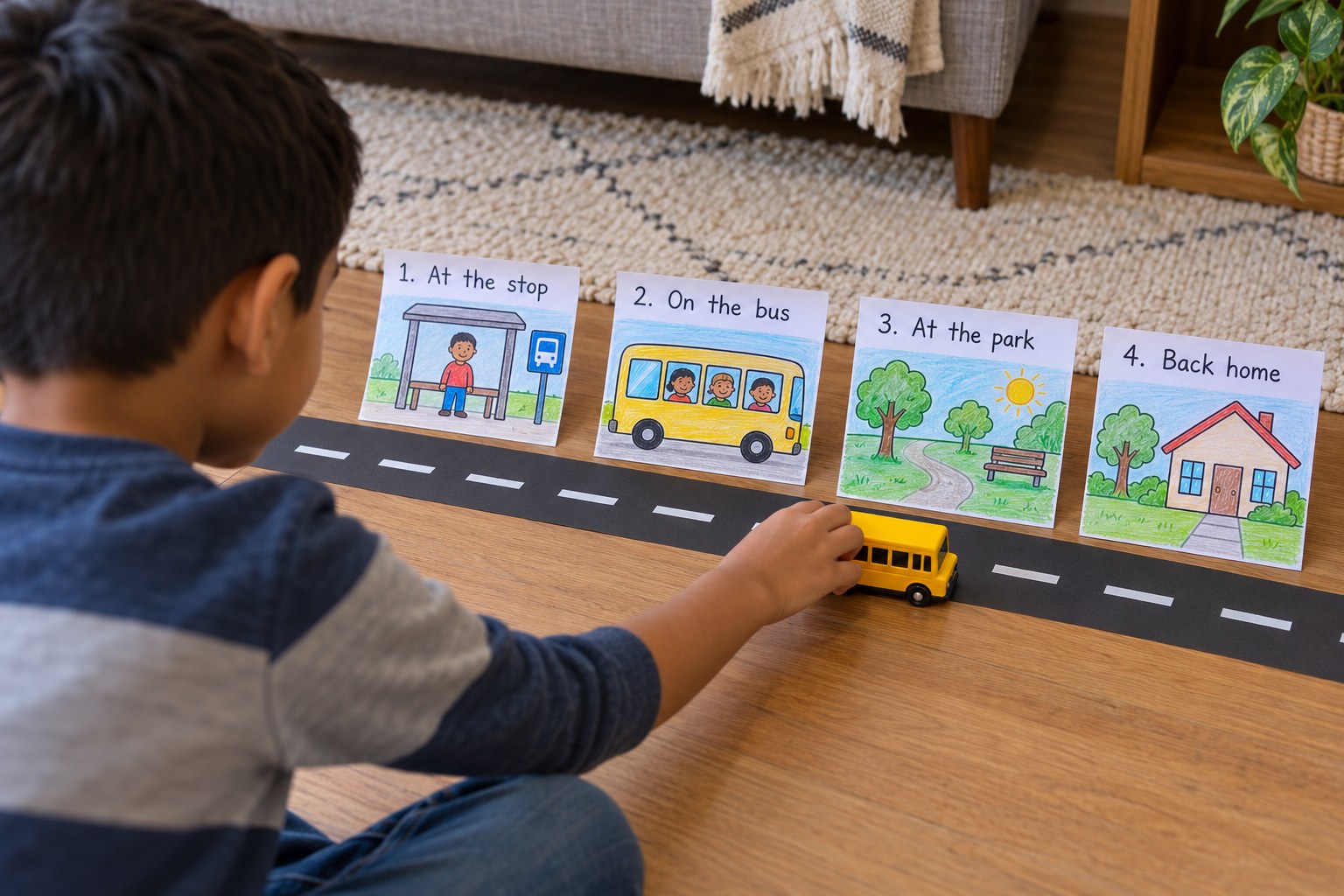
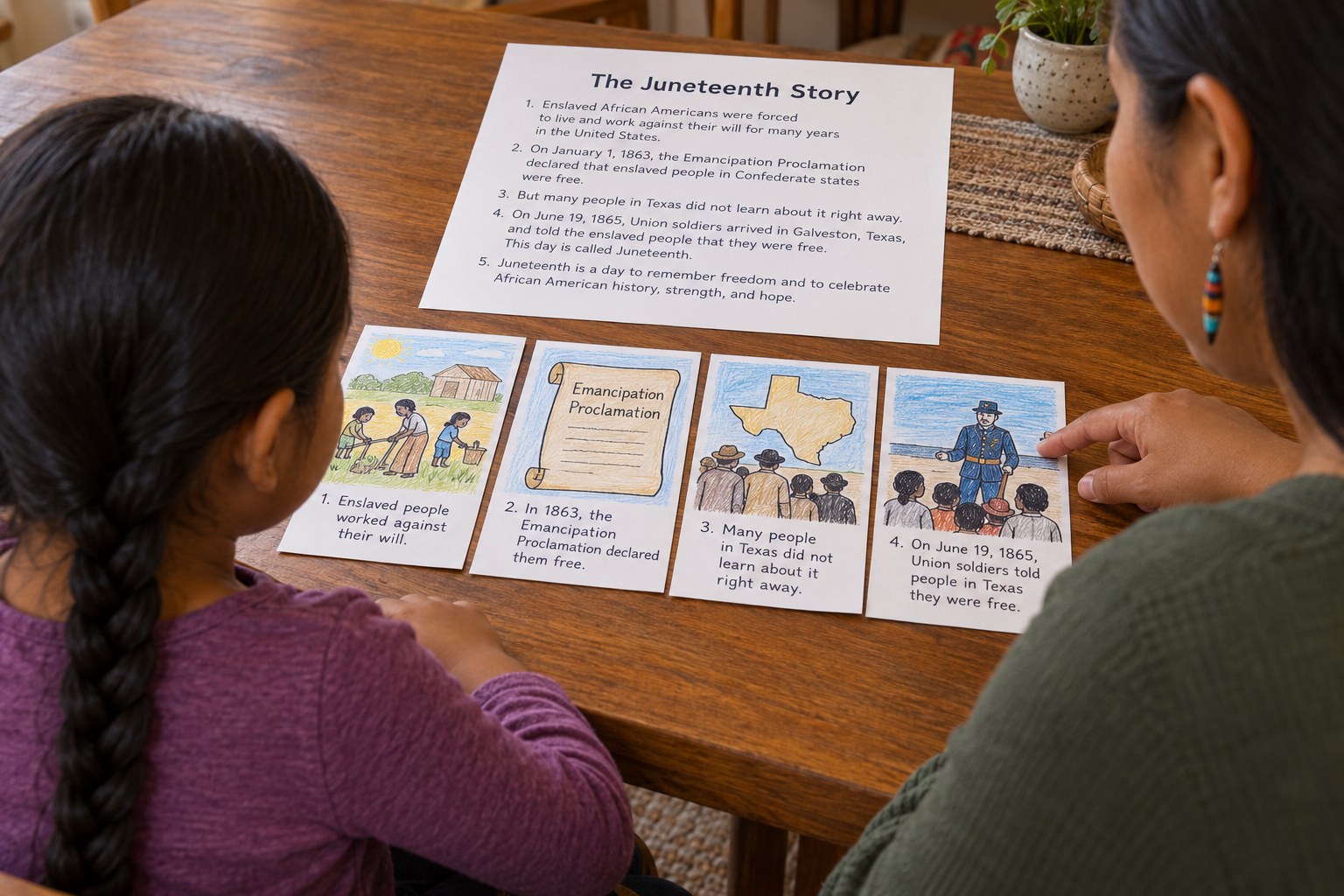
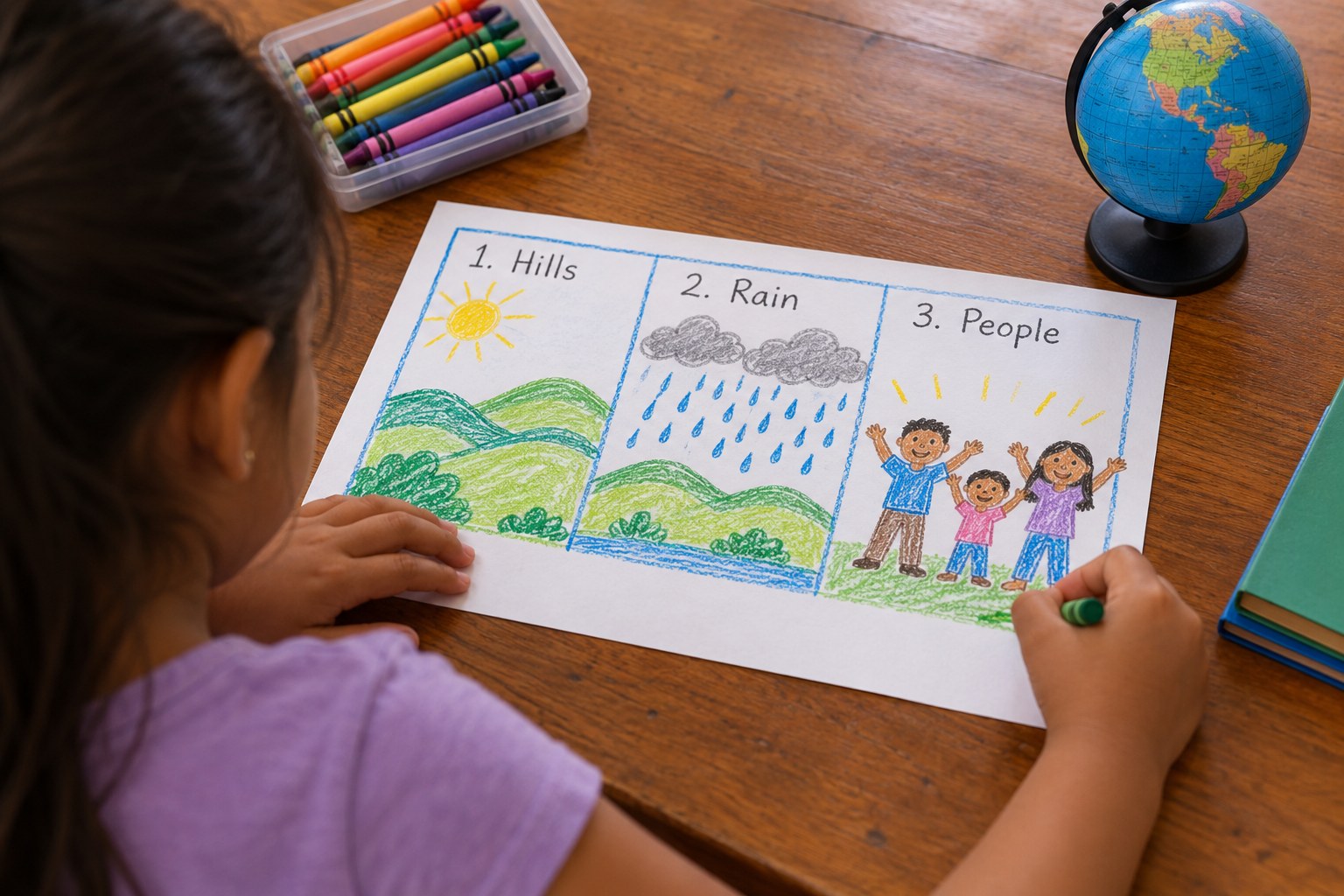
You read a short, true account of the Montgomery bus boycott together, then your child draws four picture cards of the key events, puts them in order on a pretend bus road, and explains how each event led to the next.
Objective
Your child will retell the main events of the Montgomery bus boycott in order and describe how one event led to another (for example, the unfair rule led Rosa Parks to refuse, which led people to stop riding).
Standards
RI.1.3ELA · Grade 1 · Reading: Informational Text Describe the connection between two individuals, events, ideas, or pieces of information in a text.
RI.2.3ELA · Grade 2 · Reading: Informational Text Describe the connection between a series of historical events, scientific ideas or concepts, or steps in technical procedures in a text.
RI.K.3ELA · Grade K · Reading: Informational Text With prompting and support, describe the connection between two individuals, events, ideas, or pieces of information in a text.
Materials
| Item | Quantity |
|---|
| Index cards or paper cut into quarters | 4 per child |
| Crayons or colored pencils | 1 set |
| Long strip of paper or painter's tape for a road | 1 |
| Toy car or bus (optional) | 1 |
| Printed or written read-aloud from the 'Read-aloud' section | 1 |
Vocabulary
Boycott
When people stop buying or using something to show a rule is unfair.
Segregation
Unfair rules that kept Black and white people apart.
Arrest
When police take someone away for breaking a rule or law.
Protest
Showing in a public way that you disagree with something.
Preparation
- Copy the read-aloud from the 'Read-aloud' section onto paper or have it open to read.
- Lay a long strip of paper or painter's tape on the floor or table to be the bus road.
Introduction
Roll a toy bus slowly along the table. Ask: what if the bus had a rule that some people could not sit wherever they wanted just because of their skin color? Would that be fair?
Who decides the rules on a bus?
What can people do when a rule is unfair?
Steps
1Step 1
Read together
(7 min) Read the read-aloud to your child, pausing after each paragraph to ask what happened. Second graders can read parts aloud themselves.
2Step 2
Draw the four events
(10 min) Your child draws one card each for these events: the unfair bus rule, Rosa Parks saying no, people walking and sharing rides instead of riding buses, and everyone sitting in any seat after the rule changed. Older children write a short caption on each card.
3Step 3
Build the road
(6 min) Your child places the cards in order along the paper road and drives the toy bus past each one, retelling the event. Mix up the cards once and have them fix the order.
4Step 4
Connect the events
(5 min) Point to two cards that are next to each other and ask: how did this one cause that one? Your child answers with a 'because' sentence, such as 'People stopped riding the bus because Rosa Parks was arrested for not giving up her seat'. Then try another pair.
Conclusion
Ask: what did the people of Montgomery do that took the most courage? Today, it is against the law to make people sit in a certain place because of their race.
Make your own lesson plan in minutes
Describe a topic and Resource Portal AI writes the objectives, materials and steps for your group.
Try Resource Portal AI