Reading the History of Día de los Muertos: From Mexica Festivals to UNESCO
Overview
Trace how Día de los Muertos took shape over 500+ years.
Description
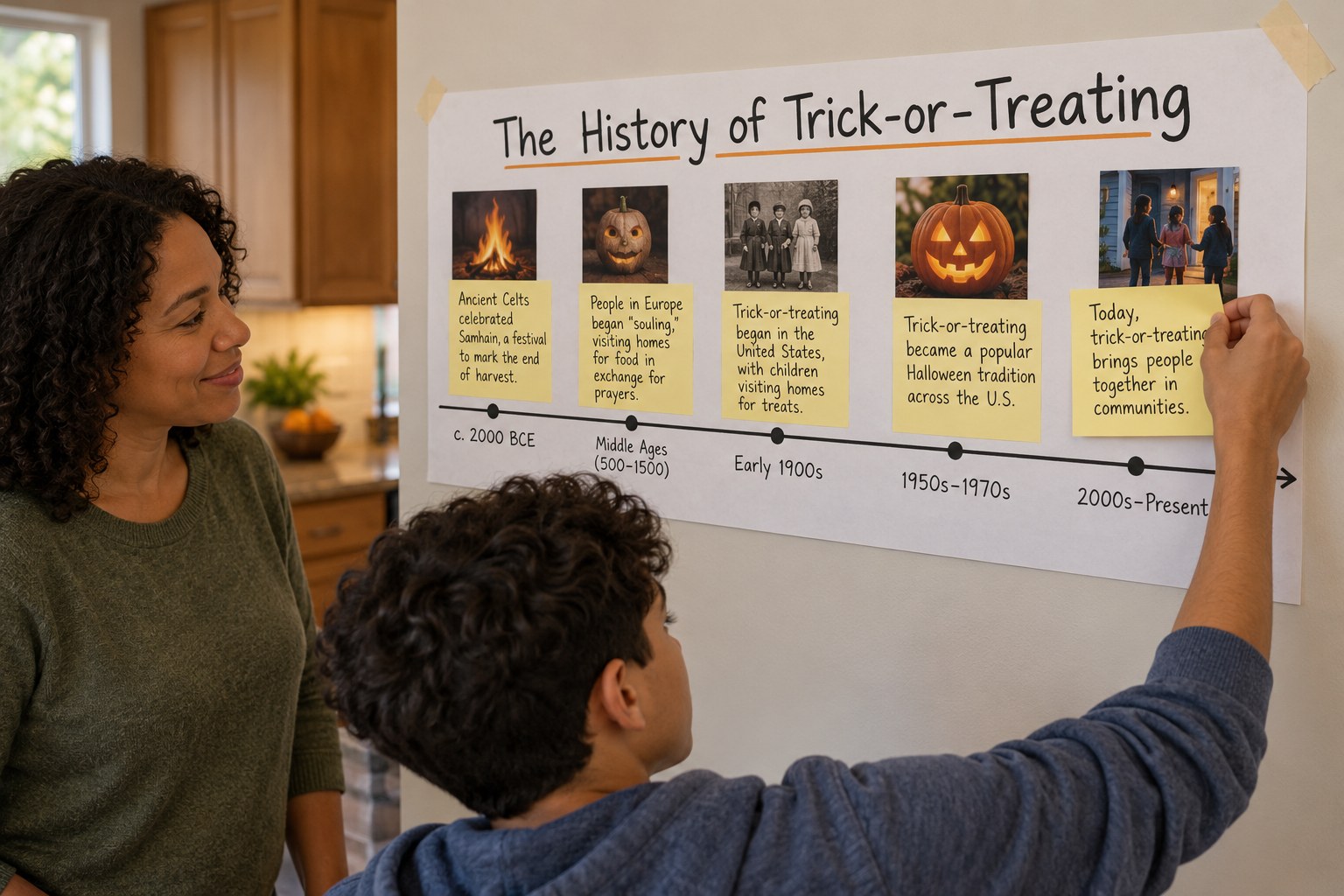
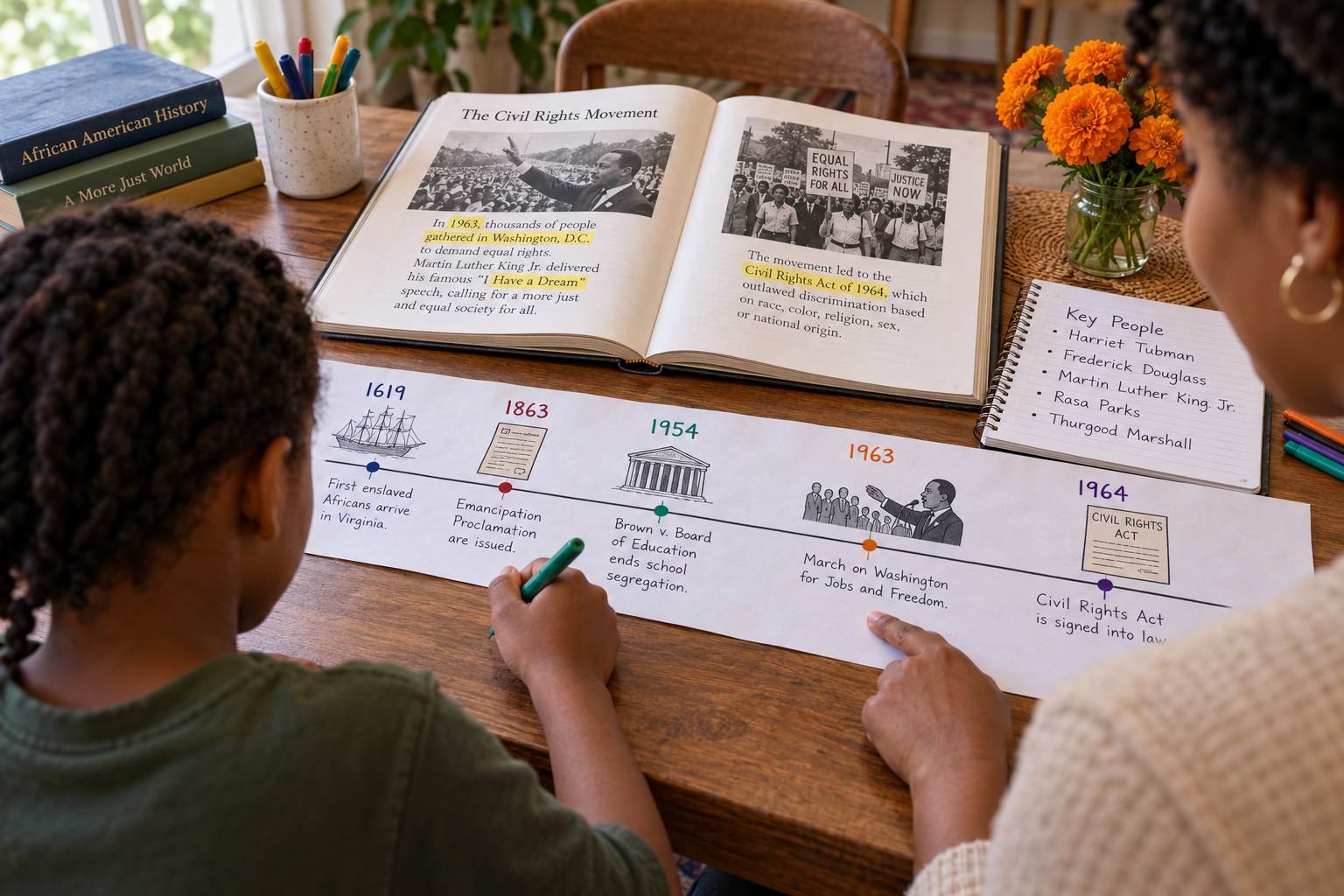
Your teen reads three short informational passages about how Día de los Muertos developed, from Mexica (Aztec) festivals for the dead through the colonial blending with Catholic holidays to Posada's calaveras and UNESCO recognition, then builds a timeline, writes a central-idea summary of each passage and explains how one era shaped the next.
Objective
Your teen will determine the central idea of each passage, summarize it objectively, build an accurate timeline, and explain how specific people, events and ideas influenced one another.
Standards
Materials
| Item | Quantity |
|---|---|
| The three passages in the additionalSections (printed or on a screen) | 1 copy per reader |
| Highlighter or colored pencil | 1 per reader |
| Long strip of paper or tape-together sheets for a timeline | 1 |
| Pencil and notebook | 1 each |
Vocabulary
Preparation
- Print or open the three passages. Draw a long horizontal line on the timeline strip with marks for 1400, 1500, 1600 ... 2000 and 2025.
- Read the passages yourself first so you can discuss them.
Introduction
Ask your teen: 'How old do you think Día de los Muertos is? 50 years? 500? 3,000?' Then say: 'Historians say the answer is complicated, because the holiday grew out of several traditions that met and mixed. Let's read the evidence.'
What happens when two cultures with different customs live side by side?
Why might a tradition become a national symbol?
Steps
Conclusion
Ask: what was the most surprising change in the holiday's history? Why do historians still debate how much of today's celebration comes from Mexica traditions?
Make your own lesson plan in minutes
Describe a topic and Resource Portal AI writes the objectives, materials and steps for your group.
Try Resource Portal AI