Human Body Fast Heart, Slow Heart: Animal Moves and Rest
Overview
Move like animals and feel your heart speed up and slow down.
Description
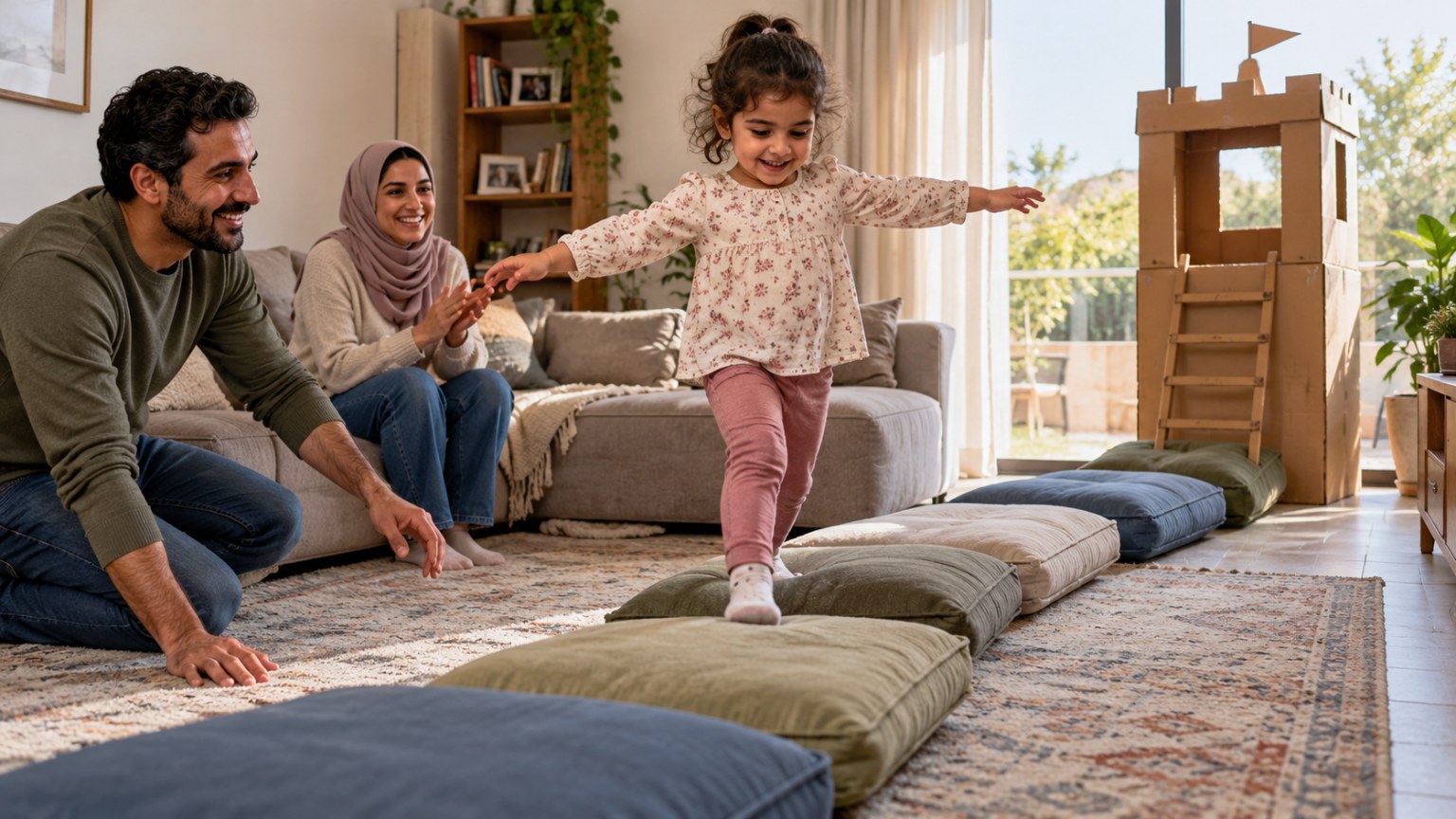
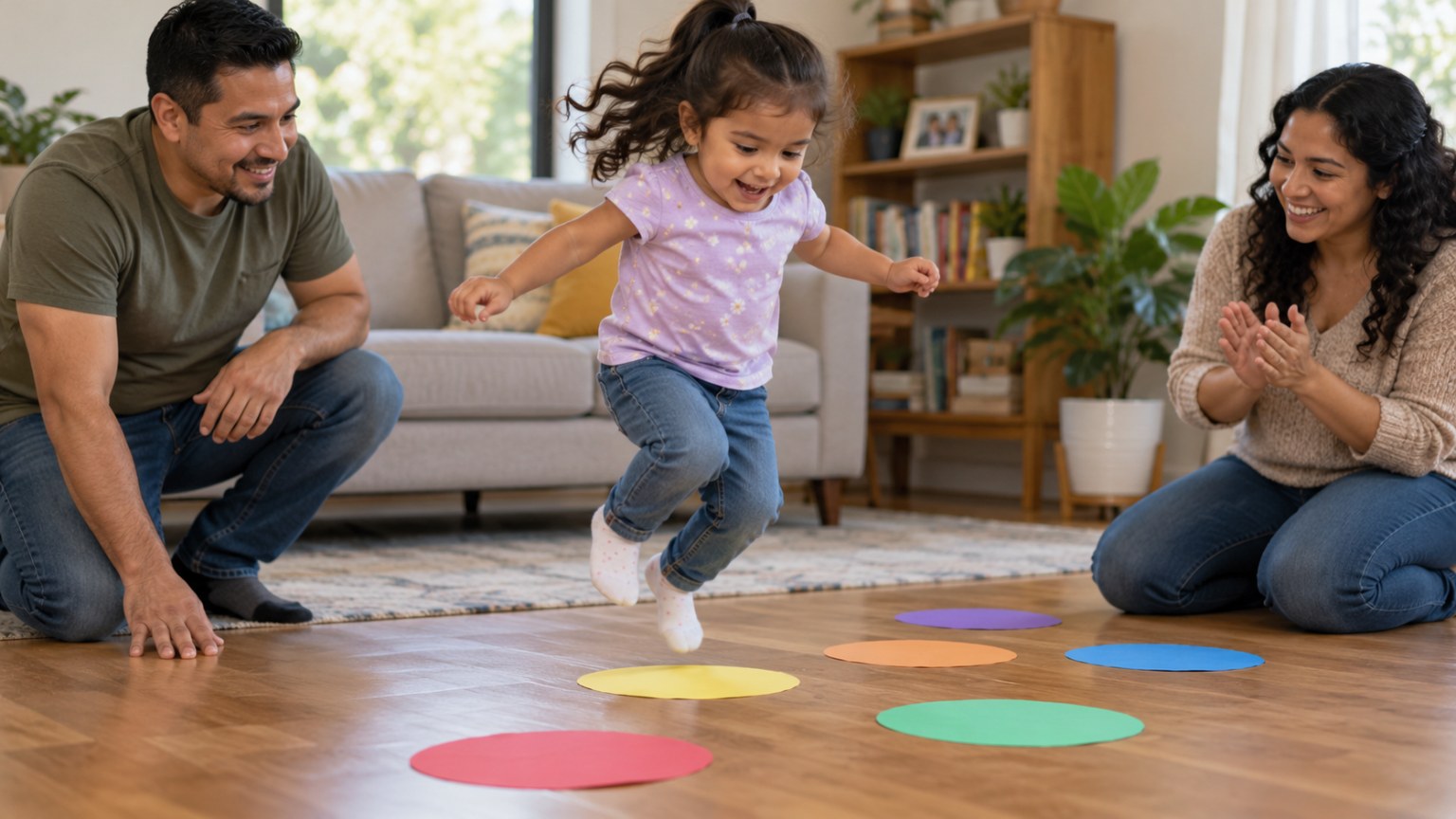
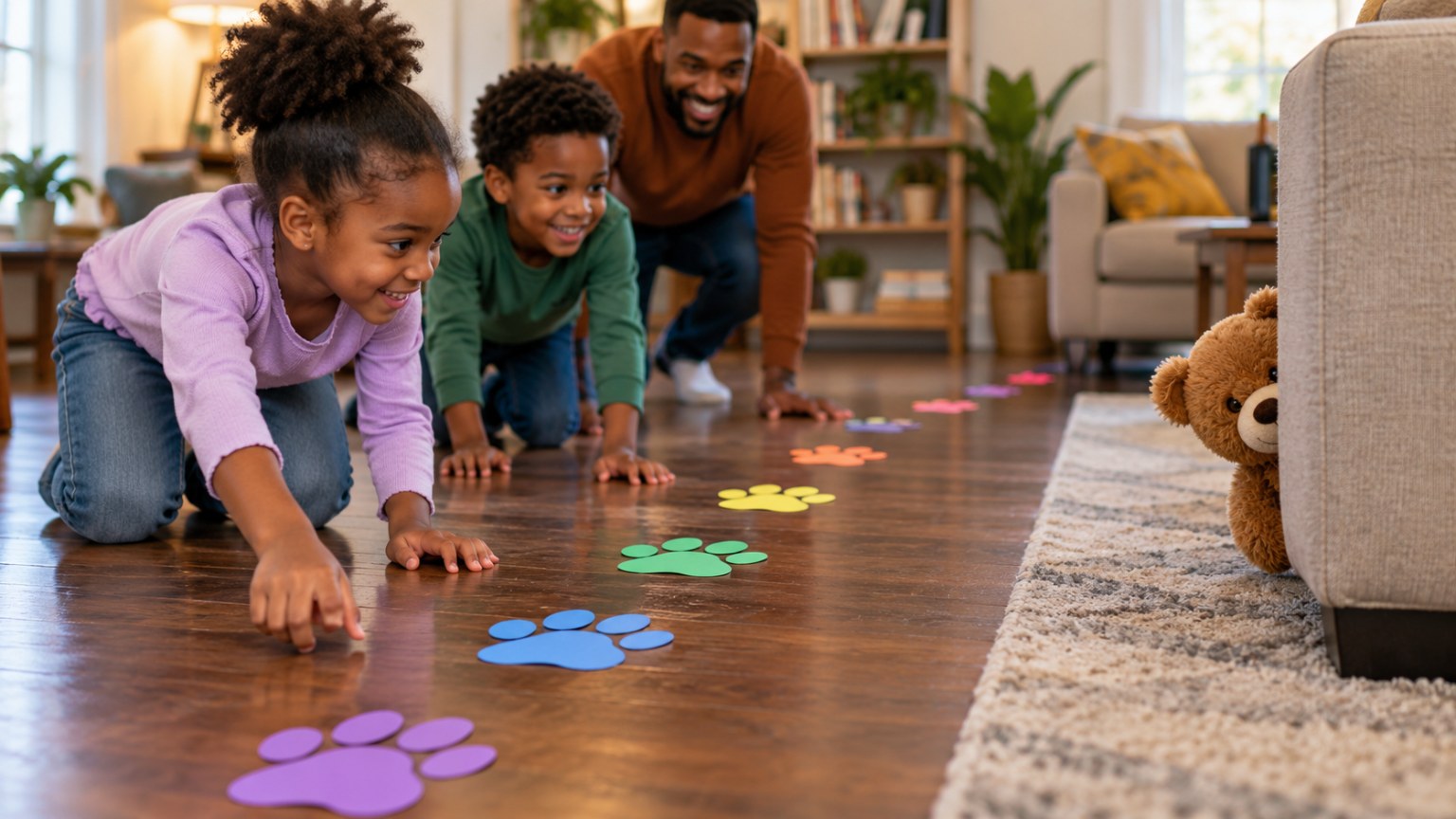
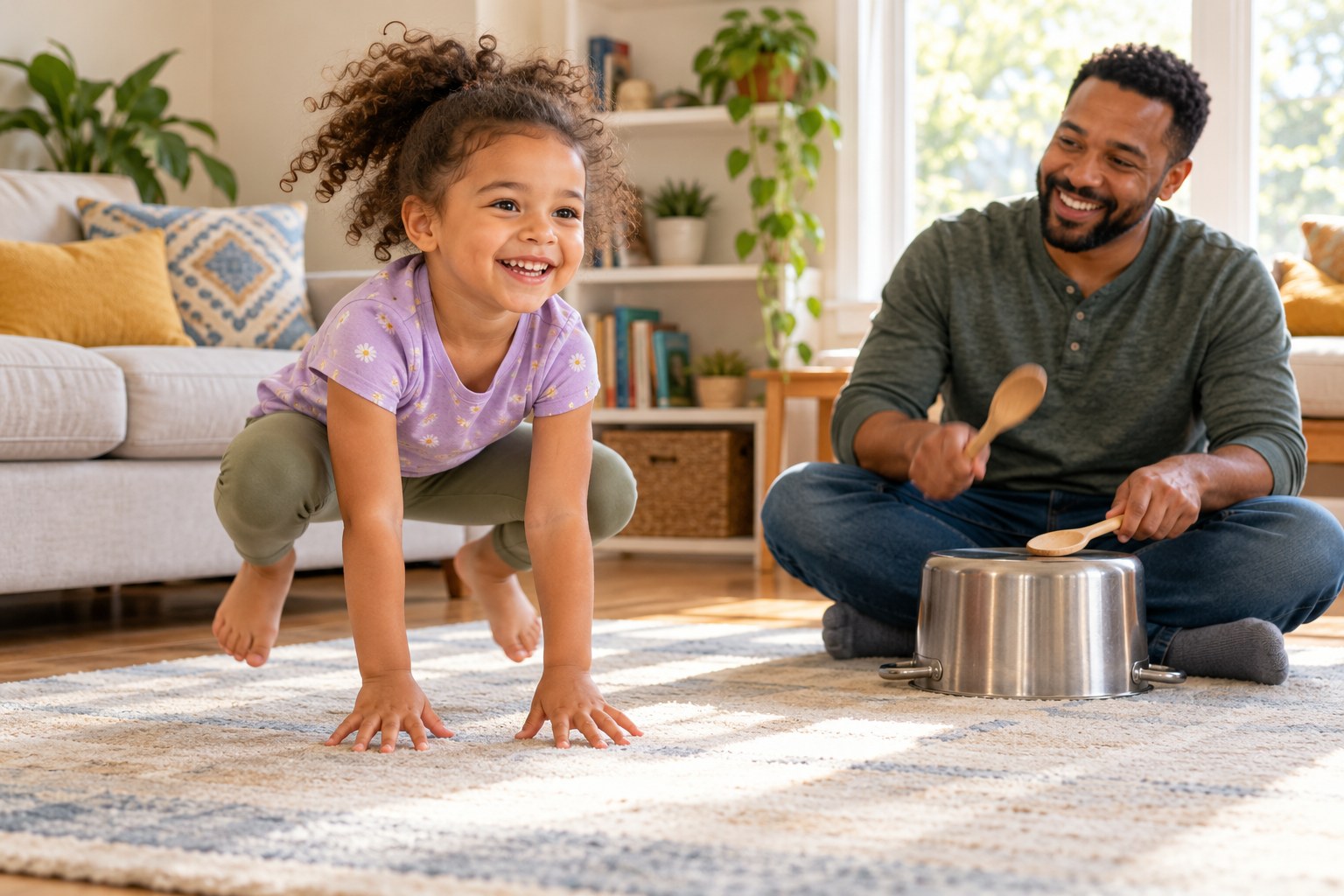
Your child feels their heartbeat while resting, then hops like a frog, gallops like a horse and crawls like a bear, checking after each move whether their heart is going fast or slow, before cooling down like a sleepy turtle.
Objective
Your child will notice that their heart beats faster when they move hard and slower when they rest, and show fast and slow with their hands.
Materials
| Item | Quantity |
|---|---|
| Open floor space or a yard | 1 |
| Picture cards or toy animals: frog, horse, bear, turtle (or just say them) | 4 |
| Drum, pot and spoon, or clapping hands for a beat | 1 |
| Water cup for each child | 1 |
Vocabulary
Preparation
- Clear a space free of sharp corners, toys and rugs that slide.
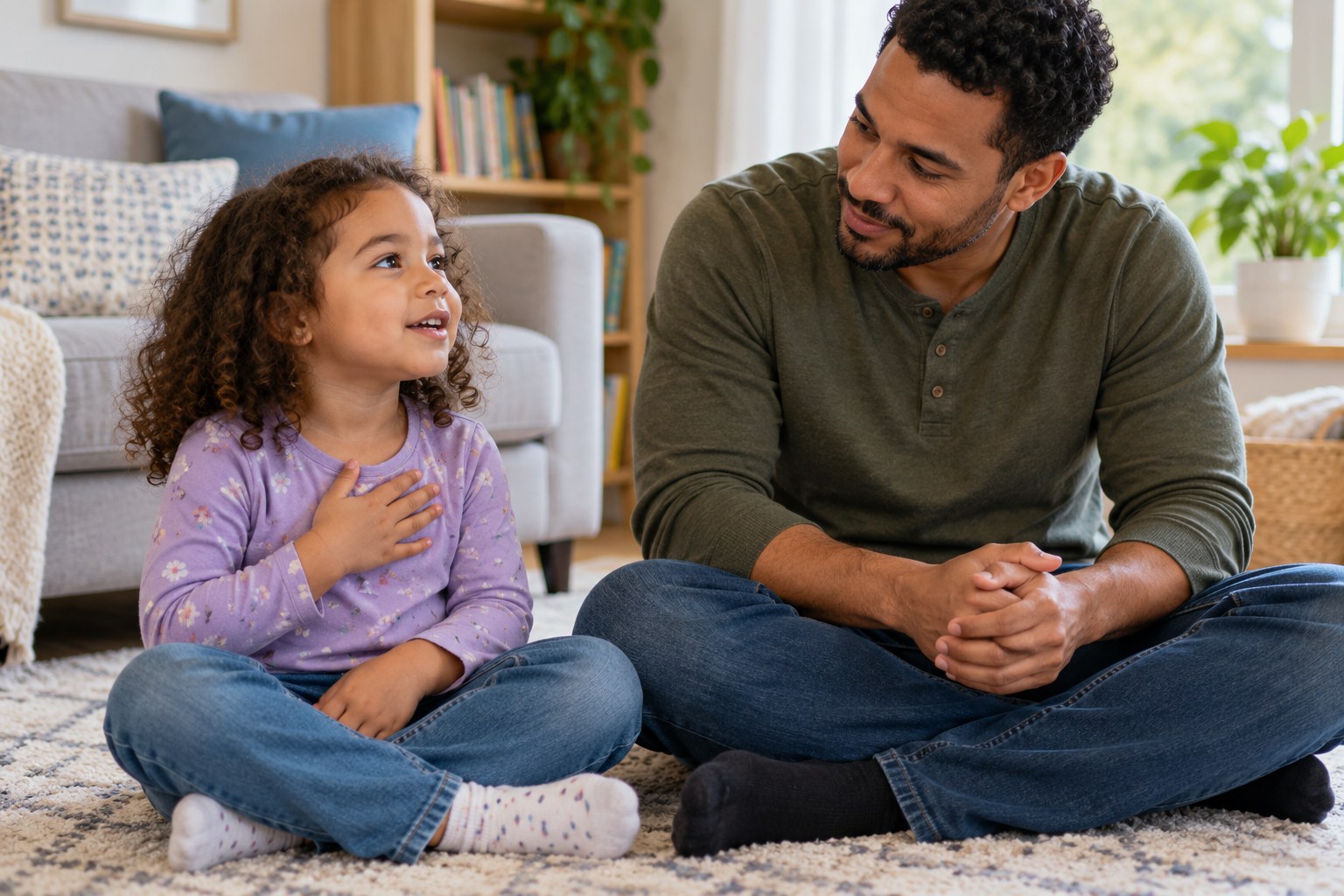
- Practice finding your own heartbeat: put your flat hand on the left middle of your chest after jumping a few times.
Introduction
Put your child's hand on your chest after you jump up and down a few times. Ask: "Can you feel my heart going thump, thump? Let's find yours!"
Do you think your heart goes faster when you run or when you sleep?
What animal is the fastest one you know?
Steps
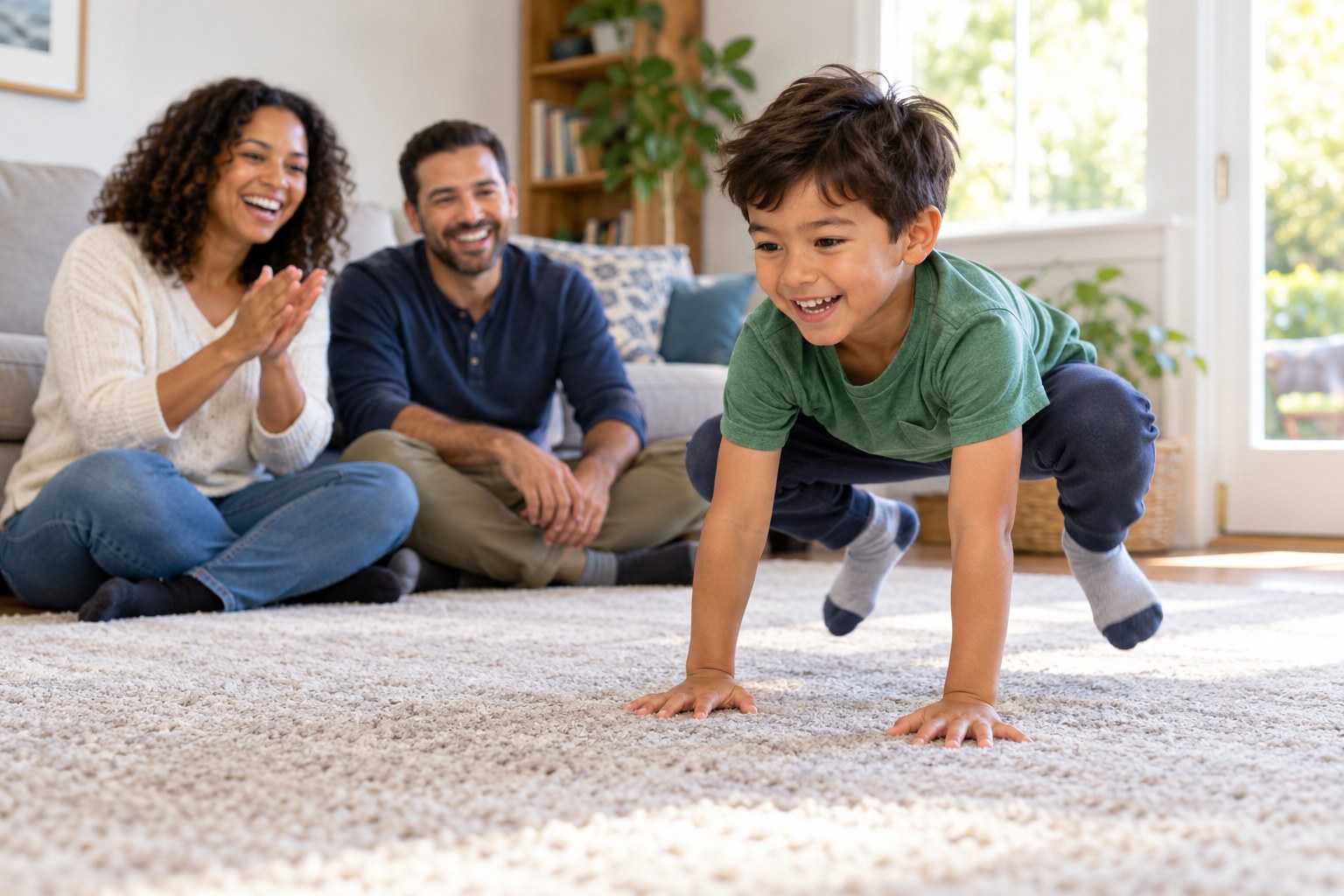
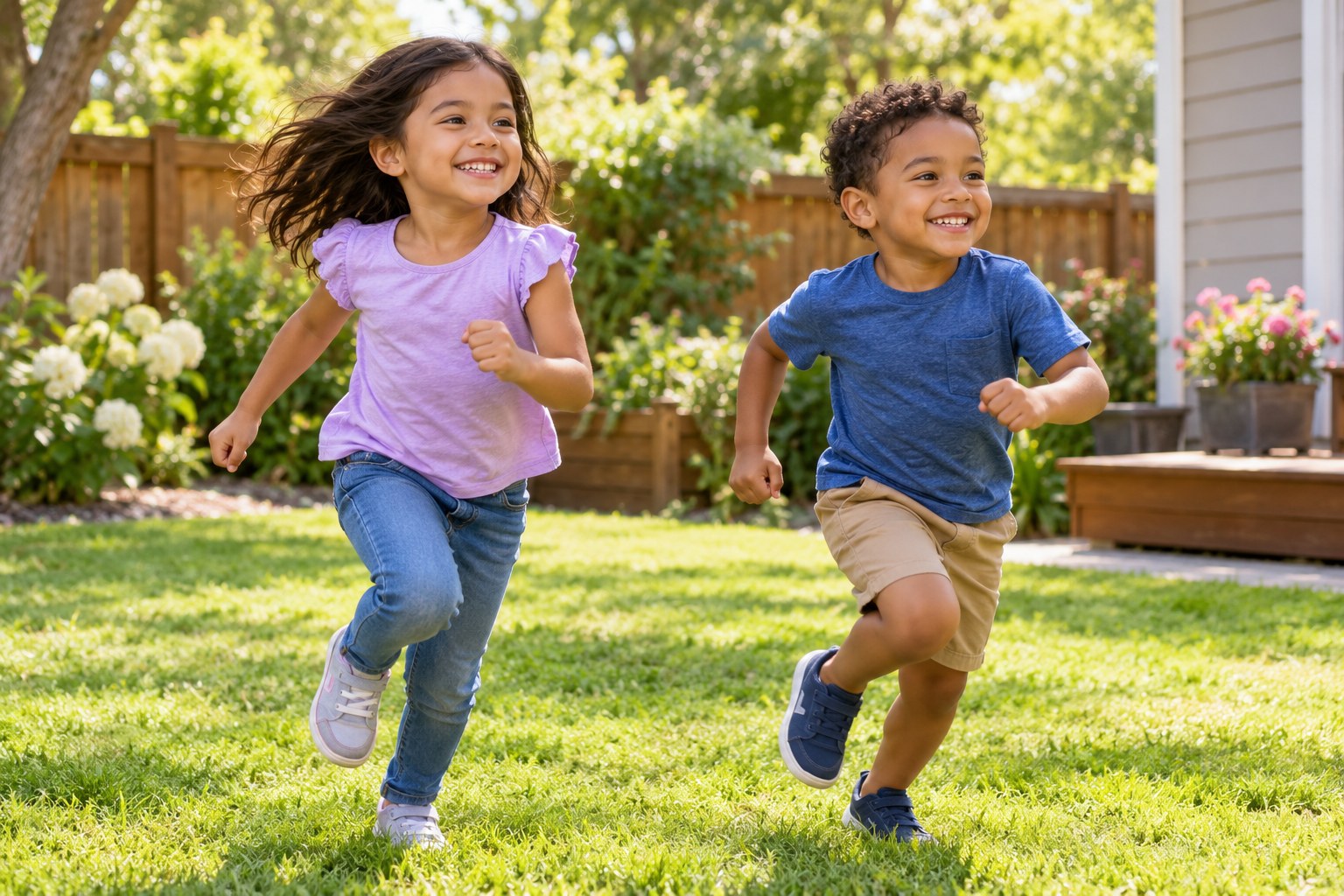
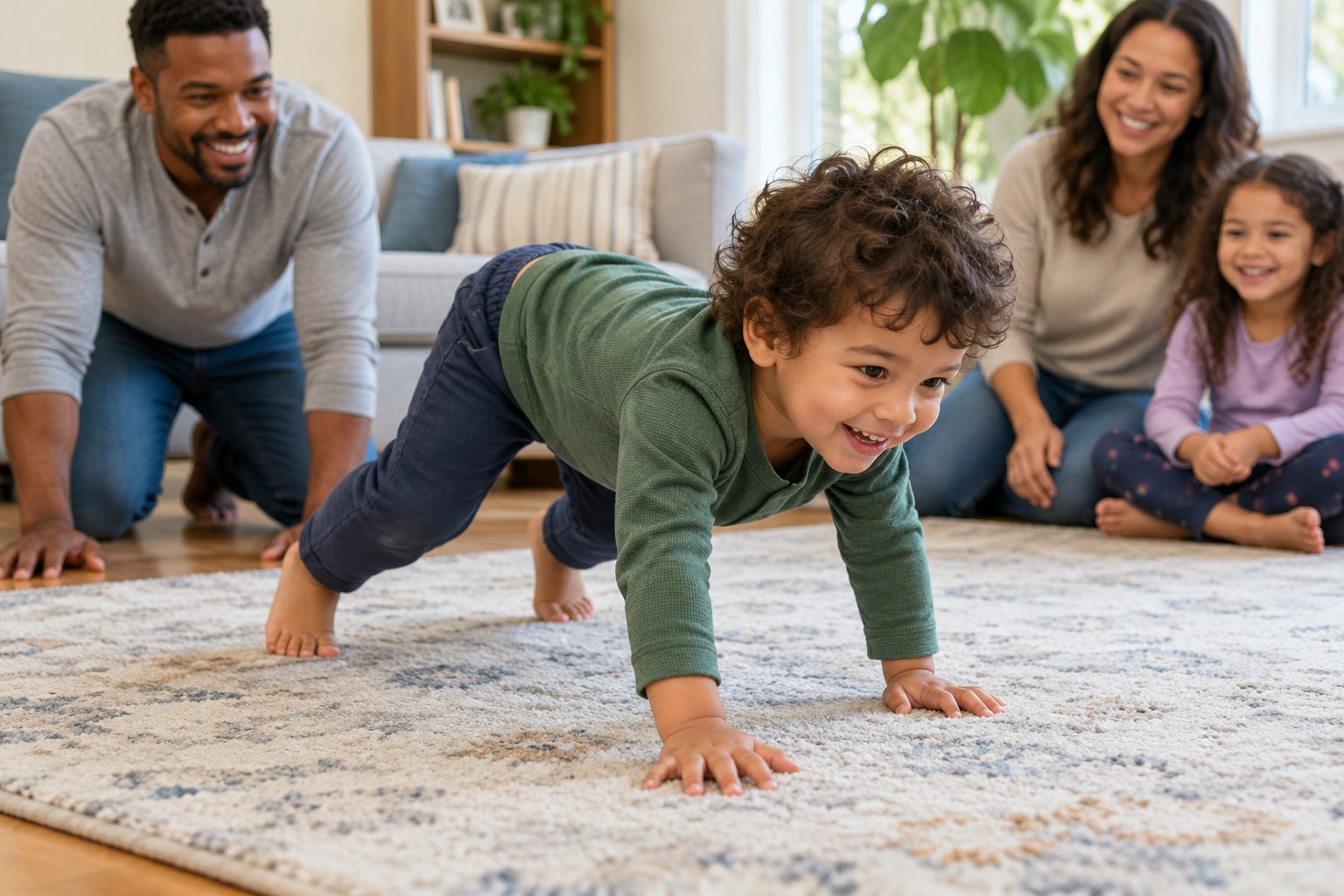
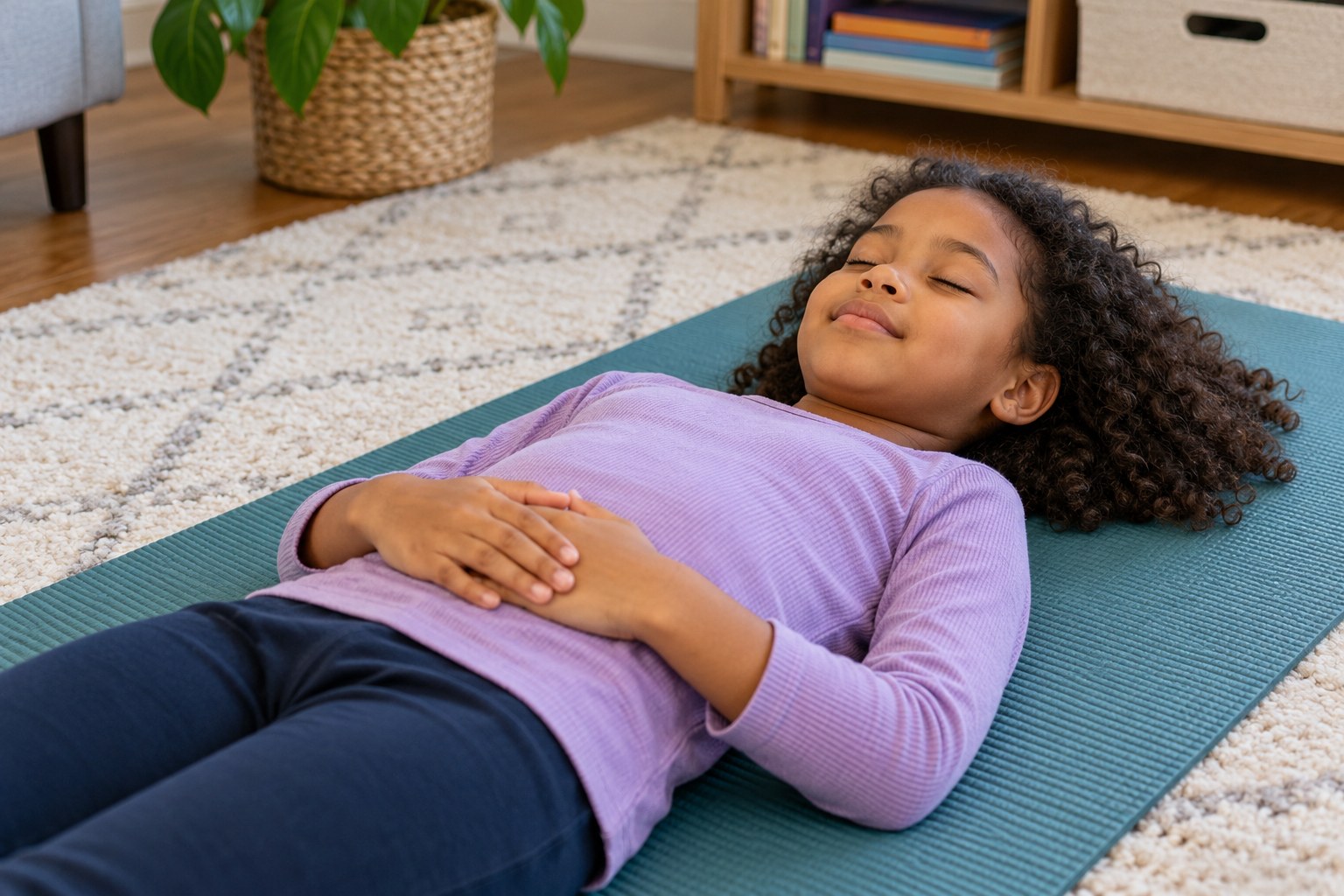
Conclusion
Ask: when did your heart beat the fastest? When did it get slow? Say that moving hard every day makes the heart muscle strong.
Make your own lesson plan in minutes
Describe a topic and Resource Portal AI writes the objectives, materials and steps for your group.
Try Resource Portal AI