Backyard Orienteering: Compass Directions, Pace Counts and Checkpoints
Overview
Navigate a backyard course with a compass and pace counts.
Description
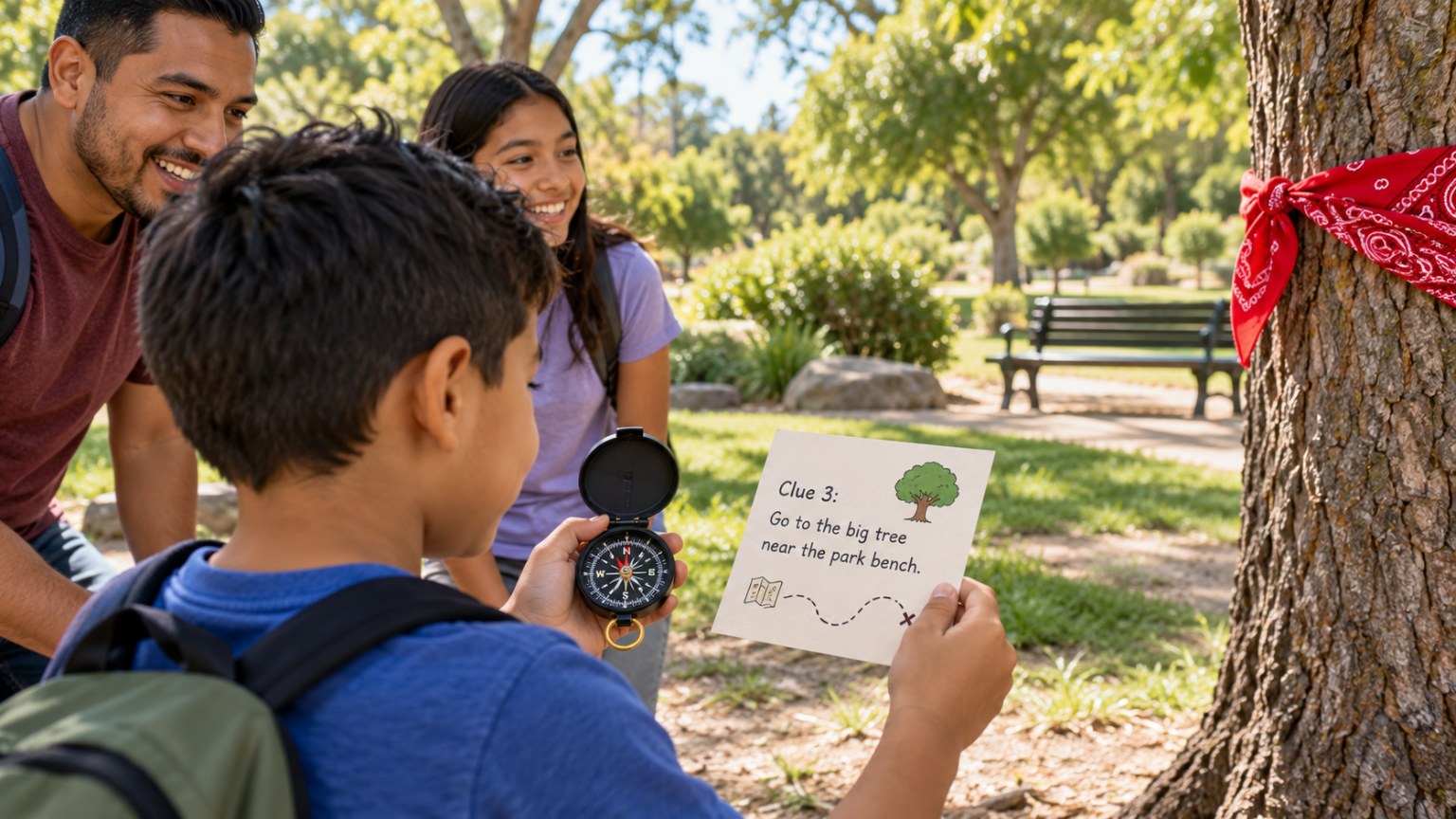
Your child measures their pace, then runs and walks a backyard or park orienteering course from clue cards like '12 paces north, then 8 paces east', finding hidden checkpoints against the clock.
Objective
Your child will find their pace length, use a compass to face north, south, east and west, and follow pace-and-direction clues to reach at least 5 checkpoints.
Materials
| Item | Quantity |
|---|---|
| Magnetic compass, or a free compass app on a phone | 1 |
| Index cards or paper for clue cards | 6 |
| Checkpoint markers: clothespins, bandanas or paper cups with a letter inside | 5 |
| Tape measure (25 feet or more) | 1 |
| Timer or stopwatch | 1 |
| Water bottle | 1 per person |
Vocabulary
Preparation
- Choose an open yard, park or schoolyard with no traffic. Stand at a start spot and use the compass to find north.
- Hide 5 checkpoint markers, each with a letter inside, and write clue cards that lead from one to the next (for example: 'From the start, walk 10 paces north'). Measure your own paces as you place them, then adjust for your child after Step 1.
- Letters at the checkpoints should spell a 5-letter camping word, like TENTS or TRAIL.
Introduction
Hand your child a compass and say: 'Before phones and GPS, hikers found their way with a compass and by counting their steps. Today you'll find five hidden checkpoints using only directions and paces.'
Where does the sun rise and set? How could that help you find your way?
Why might a hiker need to know how far they have walked?
Steps
Conclusion
Ask your child to write a 3-checkpoint course for you to try next time. Many parks have permanent orienteering courses; look for one near you.
Make your own lesson plan in minutes
Describe a topic and Resource Portal AI writes the objectives, materials and steps for your group.
Try Resource Portal AI