Abstract Eye: Turning Everyday Objects into Line, Shape and Color
Overview
Make ordinary things into pure line, shape and color.
Description
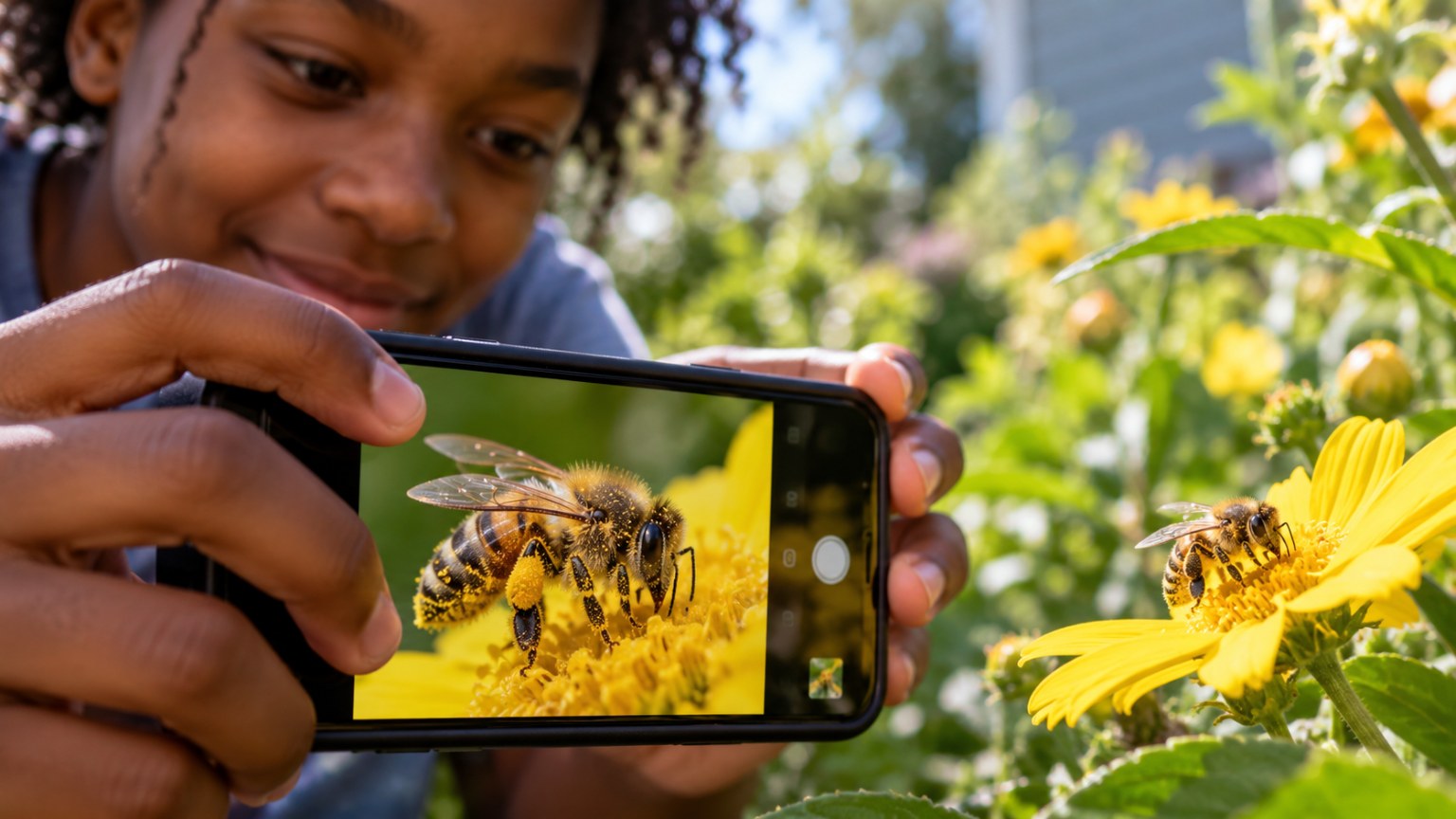
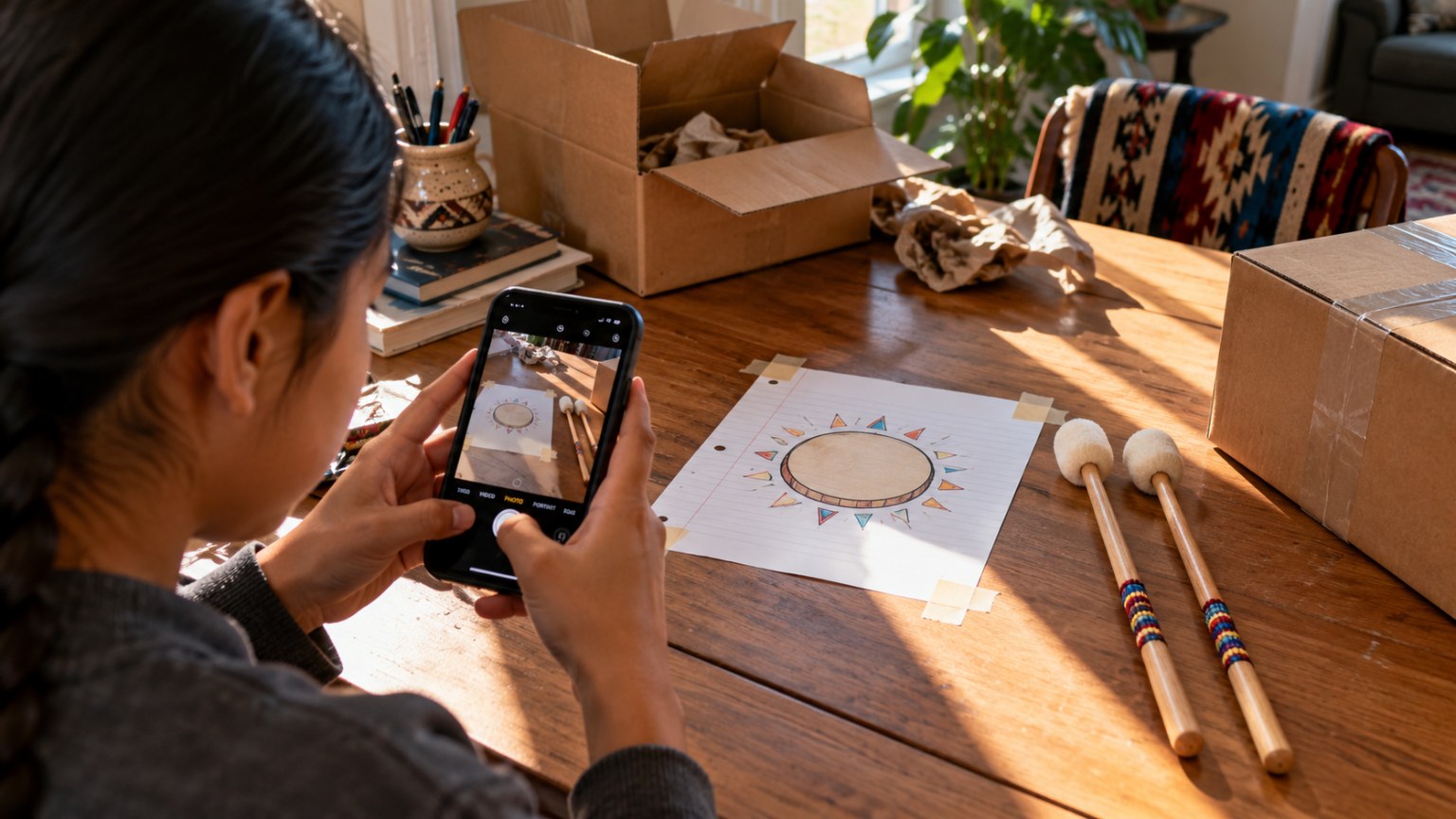
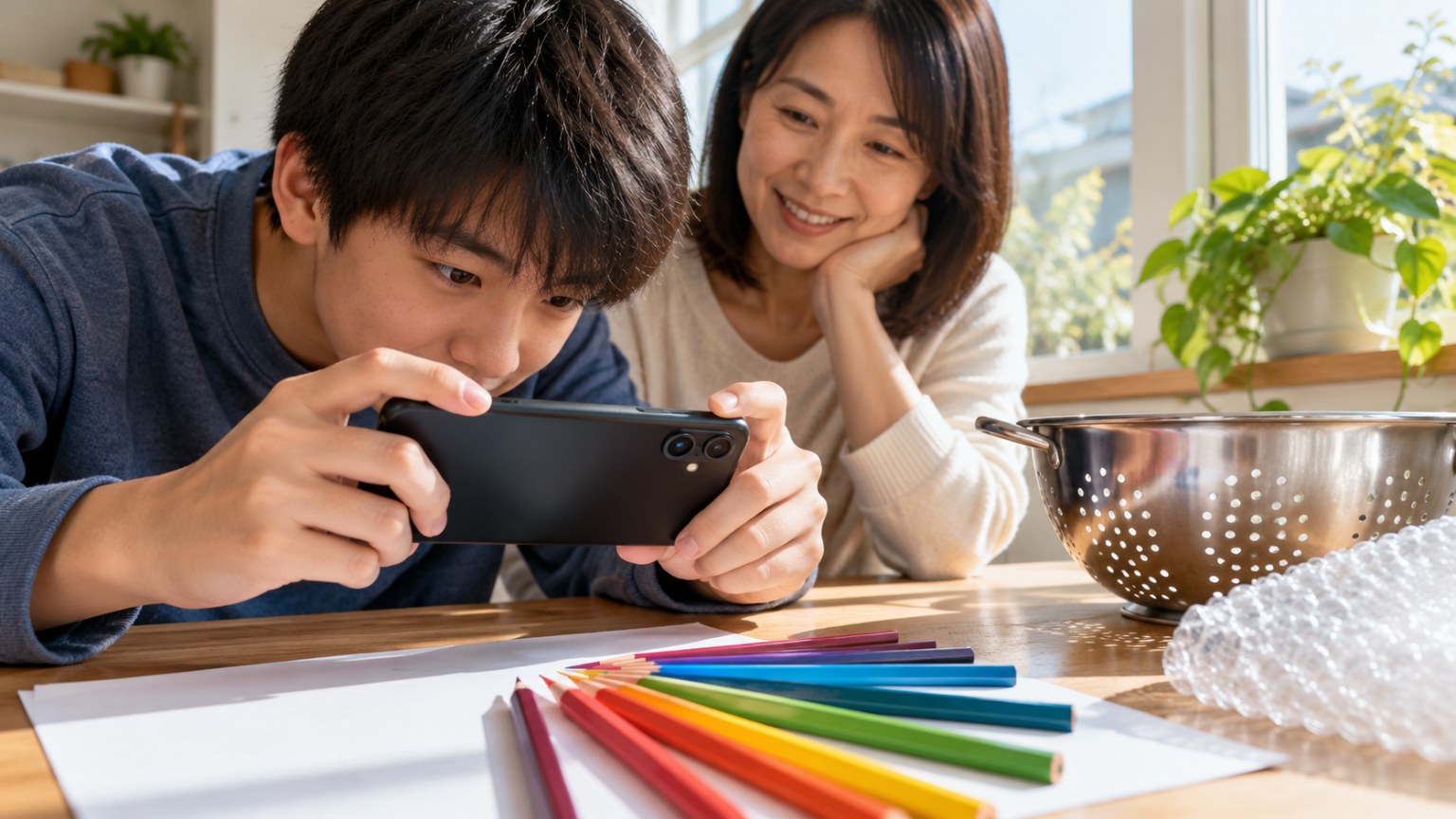
Your teen photographs ordinary household objects so close, so tightly cropped or from such unusual angles that they stop looking like objects and become pure line, shape, color and texture, then builds and titles a three-photo abstract series held together by one element of art.
Objective
Your teen will use close framing, cropping, angle and pattern to turn everyday objects into abstract photographs, identify the main element of art in each image, and build a unified three-photo series with a title and artist statement.
Materials
| Item | Quantity |
|---|---|
| Phone with a camera and photo editor | 1 |
| Household objects with strong lines, colors or textures, such as colored pencils, a fork, bubble wrap, a colander, a striped shirt, a kitchen sponge, rubber bands or a stack of books | 6 to 8 |
| Sheet of plain white paper | 1 |
| Window with daylight | 1 |
| Notebook | 1 |
| Pencil | 1 |
Vocabulary
Preparation
- Gather the 6 to 8 objects and set them on a table near the window, with the sheet of white paper as a plain base.
- Wipe the phone lens with a soft, clean cloth so close-up shots stay sharp.
- Copy the Series Plan into the notebook.
Introduction
Show your teen a close-up photo of something ordinary, like the edge of a stack of paper or the inside of a cut cabbage, without saying what it is. Ask: 'Forget what it is. What do you see: lines, curves, colors? In 1930 the photographer Edward Weston photographed a single bell pepper so closely that it looked like a sculpture. Can you make our stuff stop looking like stuff?'
What makes a photo stop looking like a picture of a thing and start looking like a design?
Which object in the kitchen do you think hides the most interesting lines?
Steps
Conclusion
Ask: 'Which photo surprised you the most once it was cropped?' This week, look for abstract photos waiting in ordinary places, like the stripes of a crosswalk seen from the curb, shadows of a fence or peeling paint.
Make your own lesson plan in minutes
Describe a topic and Resource Portal AI writes the objectives, materials and steps for your group.
Try Resource Portal AI