Free lesson plan

Where Does 'Rizz' Come From? Slang Etymology
Language Arts1 HourGrades: 6th, 7th, 8th
Where Does 'Rizz' Come From? Slang Etymology

Overview

Discover the fascinating world of slang etymology as students research current and older slang terms and create a collective 'slang dictionary'.

Description

This lesson explores the origins and meanings of both current and older slang words. Students will engage in research, discussion, and collaborative creation of a class 'slang dictionary' to deepen their understanding of language evolution.

Objective

Students will research the etymology of ten slang words, collaborate to create a class slang dictionary, and present their findings.

Materials

ItemQuantity
Research articles on slang etymology1 set
Poster boards5 pieces
Markers40 pieces
Sticky notes2 packs
Digital devices (tablets/laptops)10 units
Dictionaries (online or print)5 copies
Index cards100 cards
Printed etymology excerpts20 copies

Vocabulary

Etymology
The study of the origin of words and how their meanings have changed throughout history.
Slang
Informal language used by particular groups of people.
Neologism
A word or expression that is newly created or recently popularized.
Linguistics
The scientific study of language and its structure.
Colloquial
Language used in ordinary or familiar conversation; informal.

Preparation

Introduction

Begin with a 5-minute discussion about Gen Alpha slang. Ask students to share slang terms they know and what they think they mean.
What slang words do you use or hear often?
Why do you think certain words become popular?

Steps
1Step 1
Hook
(5 min) Introduce the lesson with a discussion about Gen Alpha slang. Ask students to share any slang terms they know and what they think they mean. Encourage participation with a question like, "What makes a term slang?" This sets the stage for exploring slang's evolution.
Step 1
2Step 2
Group Formation
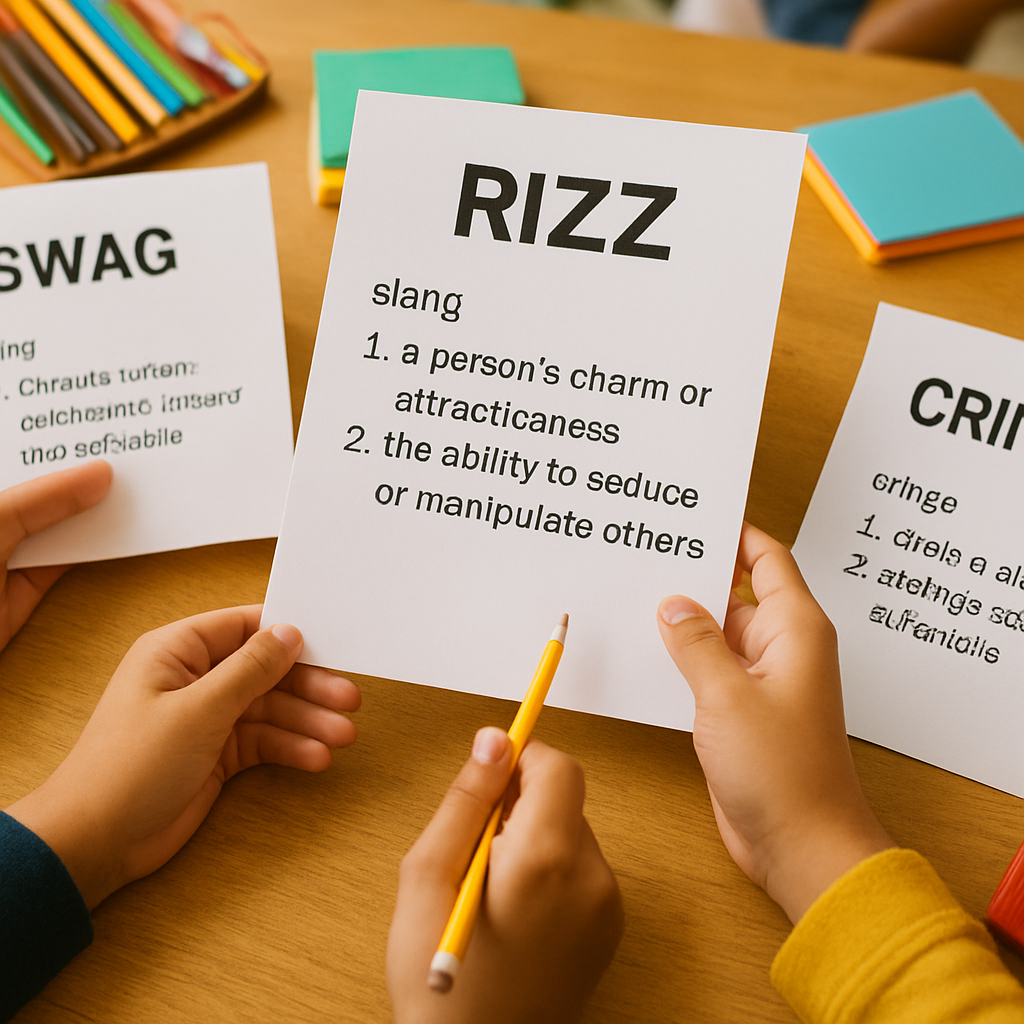
(5 min) Divide students into 5 groups of 4. Each group will receive 2 printed etymology excerpts, 20 index cards, and access to 1 digital device for research. Additionally, provide each group with 1 dictionary. The teacher will say, "Your slang dictionary will be a collaborative effort! Use these resources to enrich your entries." Students will discuss their slang terms and begin to organize their research materials.
Step 2
3Step 3
Research Phase
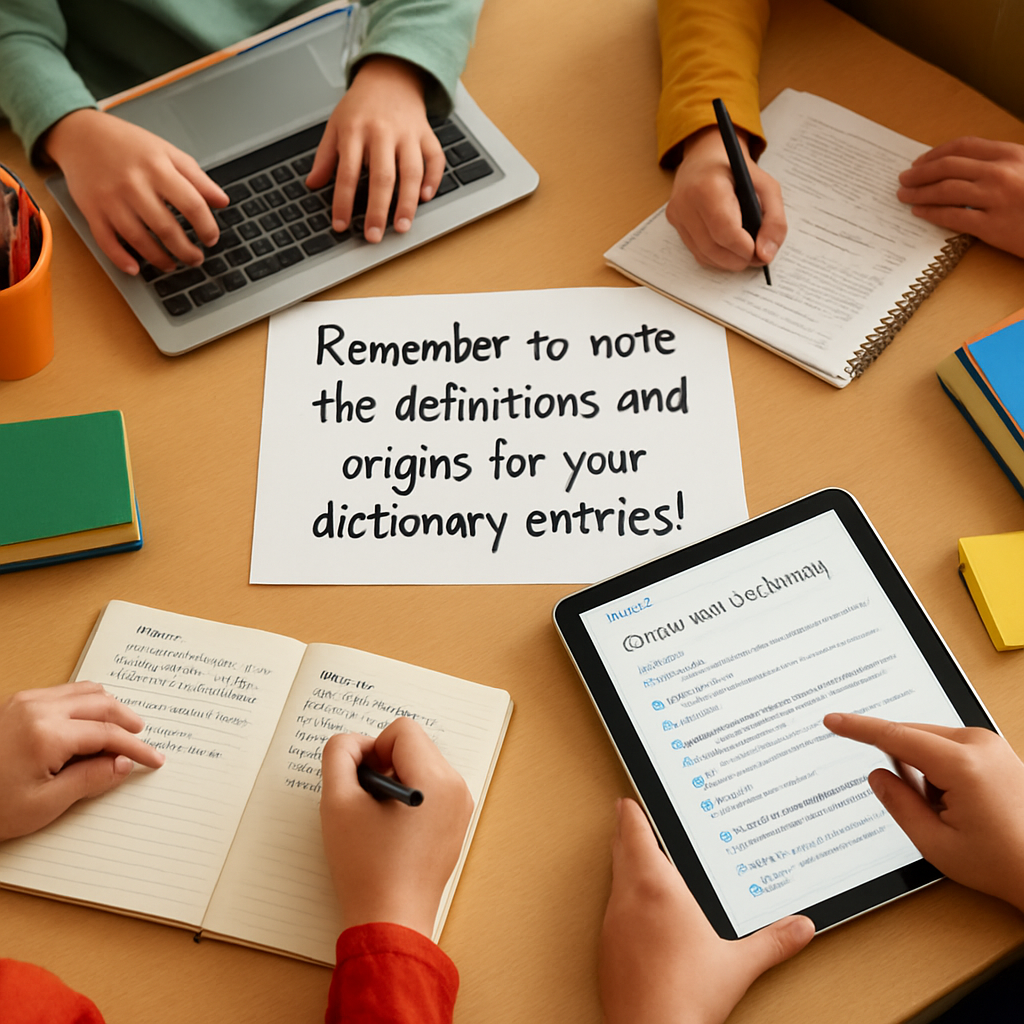
(25 min) Groups will research the origin of five current slang words (rizz, delulu, aura, mid, cap) and five older ones (groovy, rad, cool, bummer, far out) using digital devices, research articles, and dictionaries. The teacher will encourage them by saying, "Remember to note the definitions and origins for your dictionary entries!" Each group will take detailed notes and prepare to create their dictionary pages based on their findings.
Step 3
4Step 4
Create Slang Dictionary Pages
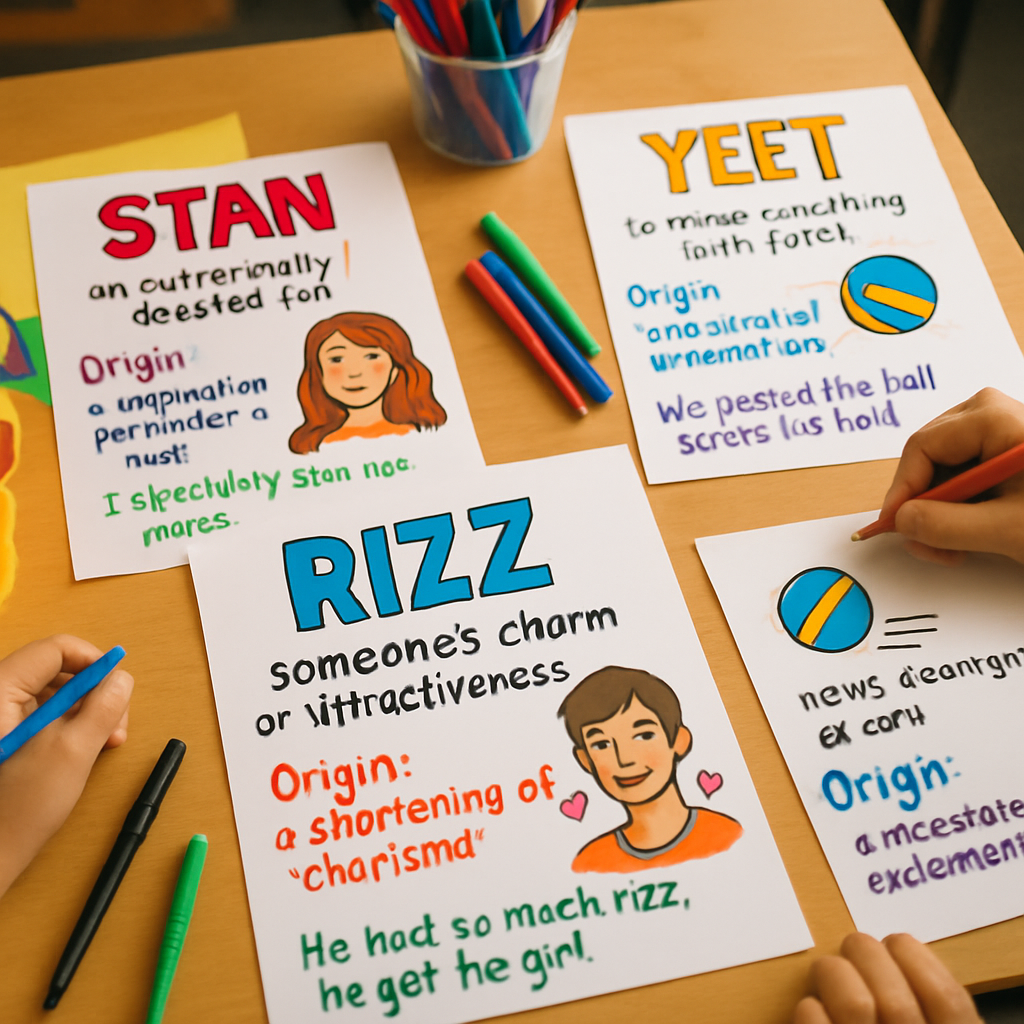
(15 min) Using poster boards and markers, each group will create a page for the class slang dictionary, including the definition, origin, and example sentence for each word. The teacher will remind them, "Make sure your pages are visually engaging!" Students will illustrate their entries creatively, ensuring that finished pages are colorful and informative, ready to be shared with the class.
Step 4
5Step 5
Group Presentations
(5 min) Each group presents their dictionary page to the class, sharing their insights and findings on the slang words researched. The teacher will prompt, "Explain why these words are significant in today’s language!" Students will take turns presenting, ensuring that they communicate their findings clearly and engagingly.
Step 5
6Step 6
Reflection
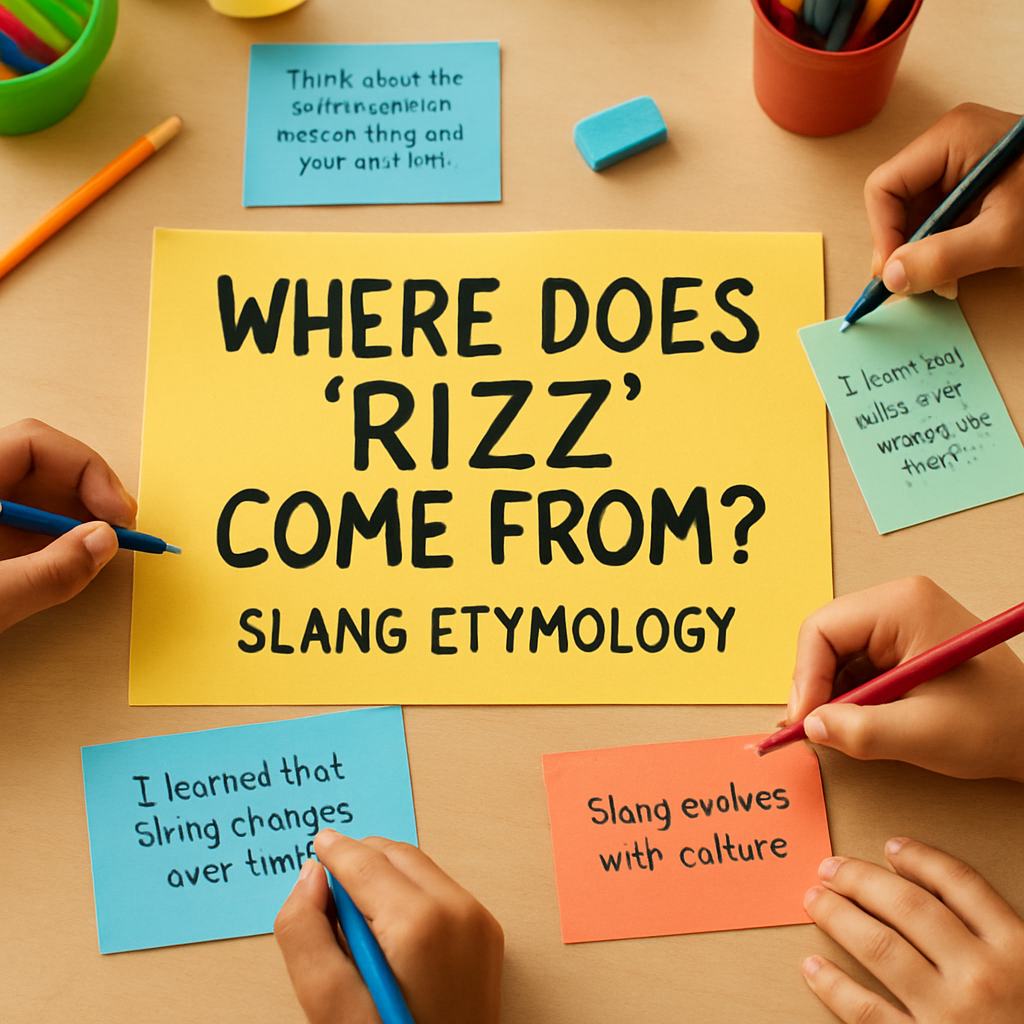
(5 min) Reflect on the lesson by having each student write 2 sentences about what they learned regarding slang and its evolution. The teacher will encourage, "Think about the connections between slang and your own life!" Students will use index cards to express their thoughts, which can be shared with the class if time permits.
Step 6

Conclusion

Discuss how slang reflects cultural changes over time and influences communication. Encourage students to share slang terms they encounter in their communities and explore their meanings further.

Make your own lesson plan in minutes

Describe a topic and Resource Portal AI writes the objectives, materials and steps for your group.

Try Resource Portal AI