Full lesson previewHow It Ends: Writing a Reflective Conclusion to a Family Health Story
Health45 minutesGrades: 11th, 12th
Overview
Write a story ending that follows from and reflects on what came before.
Description
Your teen reads an original short story draft about a family adjusting after a grandfather's type 2 diabetes diagnosis, stopping right before the ending. They study what makes a narrative conclusion feel earned, draft two different endings (one that resolves and one that reflects), and choose and polish the one that best follows from the events of the story.
Objective
Your teen will write a narrative conclusion that follows from and reflects on what is experienced, observed or resolved over the course of the story.
Standards
Provide a conclusion that follows from and reflects on what is experienced, observed, or resolved over the course of the narrative.
Materials
| Item | Quantity |
|---|
| Printed or on-screen copy of the Story Draft in the Writing Guide | 1 |
| Sheets of lined paper or a laptop | 3 sheets |
| Pen | 1 |
| Highlighter | 1 |
Vocabulary
Resolution
The part of a story where the main problem is settled, or where the character accepts that it cannot be settled.
Reflection
When the narrator or character thinks about what the events meant and how they have changed.
Echo
Repeating an image, object or line from earlier in a story at the end, so the reader sees how it has changed in meaning.
Earned ending
An ending that grows out of what happened in the story, instead of coming out of nowhere.
Preparation
- Print or open the Story Draft in the Writing Guide.
- Read the Model Conclusion yourself, but keep it hidden until your teen has drafted their own.
Introduction
Ask your teen to name a movie or book with an ending that felt unfair or rushed, and one with an ending that felt just right. What was the difference? Usually, a good ending uses what the story already set up.
Does every story need a happy ending?
How can an ending show that a character changed without saying it?
Steps
1Step 1
Read the draft
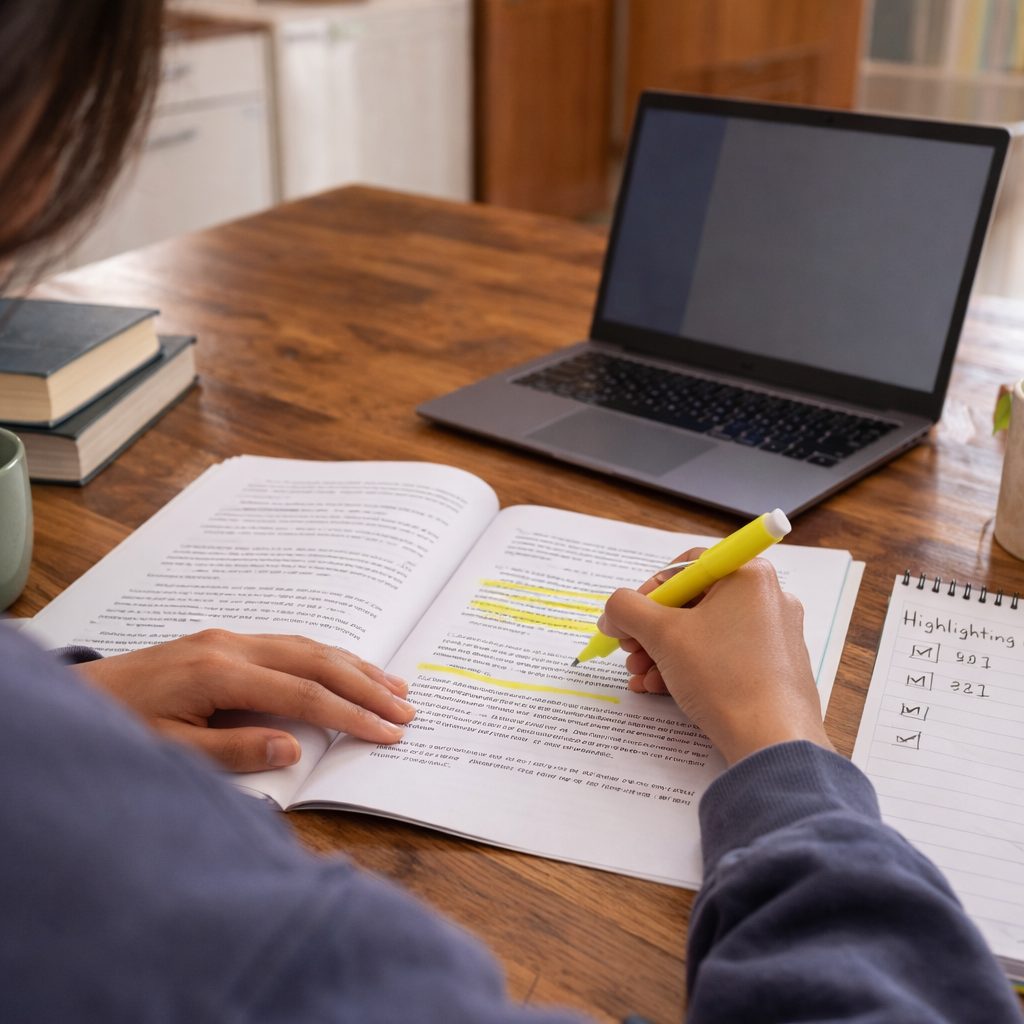
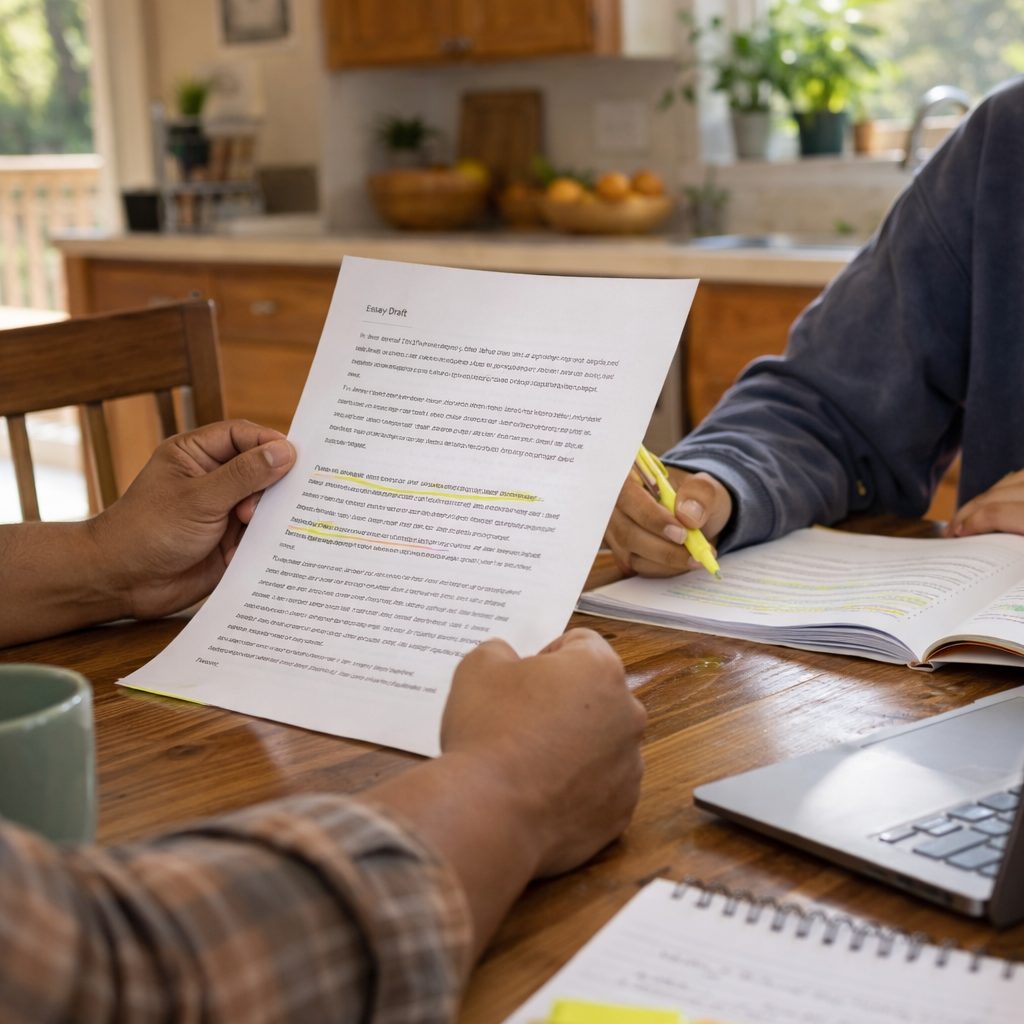
(8 min) Your teen reads the Story Draft and highlights the important images, objects or lines that could come back at the end, like the sugar bowl or the rule about Sunday breakfast. They write on the first sheet of lined paper what the narrator wants at the start and what has changed by the last paragraph.
2Step 2
Plan two endings
(7 min) Your teen jots two quick plans on the first sheet: Ending A resolves the conflict in an action or scene, and Ending B is quieter and reflective, with the narrator thinking about what it all meant. Each plan must use at least one highlighted detail from the draft.
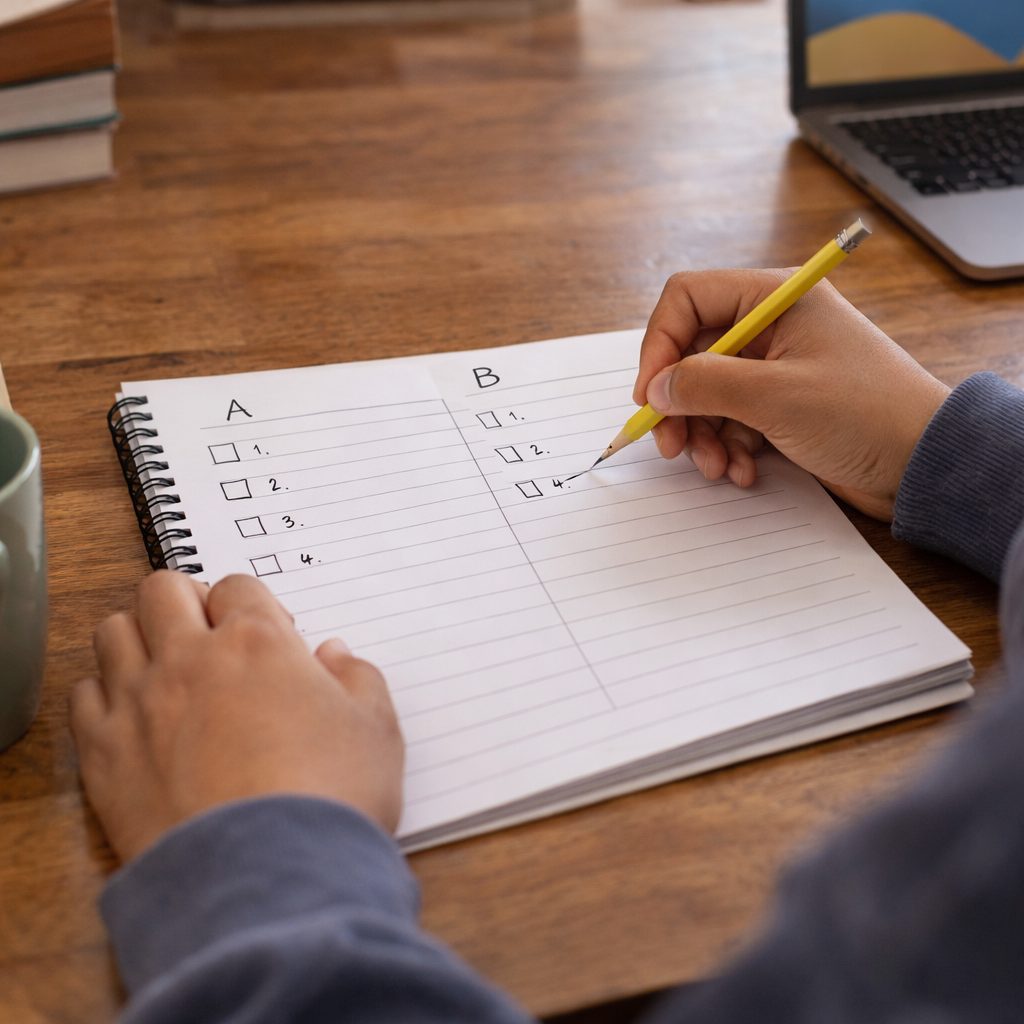
3Step 3
Draft both endings
(15 min) Your teen drafts both endings, each about 120 to 180 words, on the second sheet or the laptop. Remind them that a conclusion should follow from the events of the story and reflect on them rather than introducing a new problem.

4Step 4
Choose and revise
(10 min) Your teen reads both endings aloud to you and you discuss which one feels most earned. They choose one, revise it using the Checklist, and write the final version on the third sheet.
5Step 5
Compare with the model
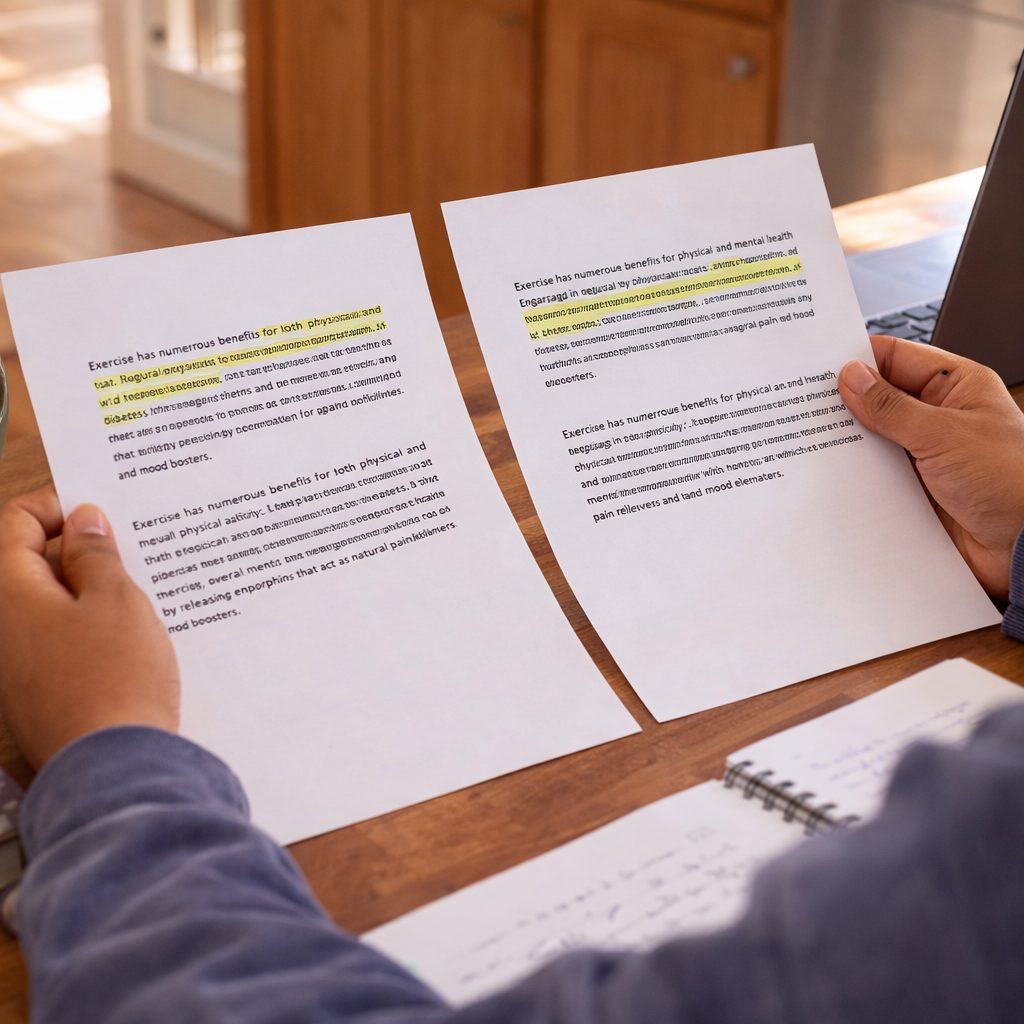
(5 min) Reveal the Model Conclusion and compare it with your teen's ending. Talk about what each one echoes from earlier in the story and how each shows the narrator changed.
Conclusion
Ask your teen what their ending says about the whole story. The best endings make the reader want to look back at the beginning and see it differently.
Make your own lesson plan in minutes
Describe a topic and Resource Portal AI writes the objectives, materials and steps for your group.
Try Resource Portal AI