Free lesson plan

Filtered: Beauty Standards and Social Media
Health1 HourGrades: 7th, 8th
Filtered: Beauty Standards and Social Media

Overview

This lesson encourages students to critically examine beauty standards in social media, fostering healthy self-image and communication skills.

Description

In this lesson, students will explore the impact of beauty standards perpetuated by social media and develop critical thinking skills to analyze these influences. They will work collaboratively to create a presentation that reflects their insights and encourages healthy self-image.

Objective

Students will analyze the effects of social media on beauty standards and develop a group presentation that promotes healthy self-image.

Materials

ItemQuantity
Poster Boards5 pieces
Markers25 pieces
Sticky Notes5 packs
Access to Computers/Devices5 pieces
Printed Articles on Beauty Standards25 pieces
Printed Ad Examples20 pieces

Vocabulary

Beauty Standards
Cultural norms that dictate what is considered attractive.
Social Media
Online platforms used for sharing and discussing content.
Critical Thinking
The objective analysis and evaluation of an issue.
Self-Image
One's personal view of their appearance and worth.
Influencer
A person who has the power to affect the purchasing decisions of others.
Bias
A tendency to favor one perspective over another.

Preparation

Introduction

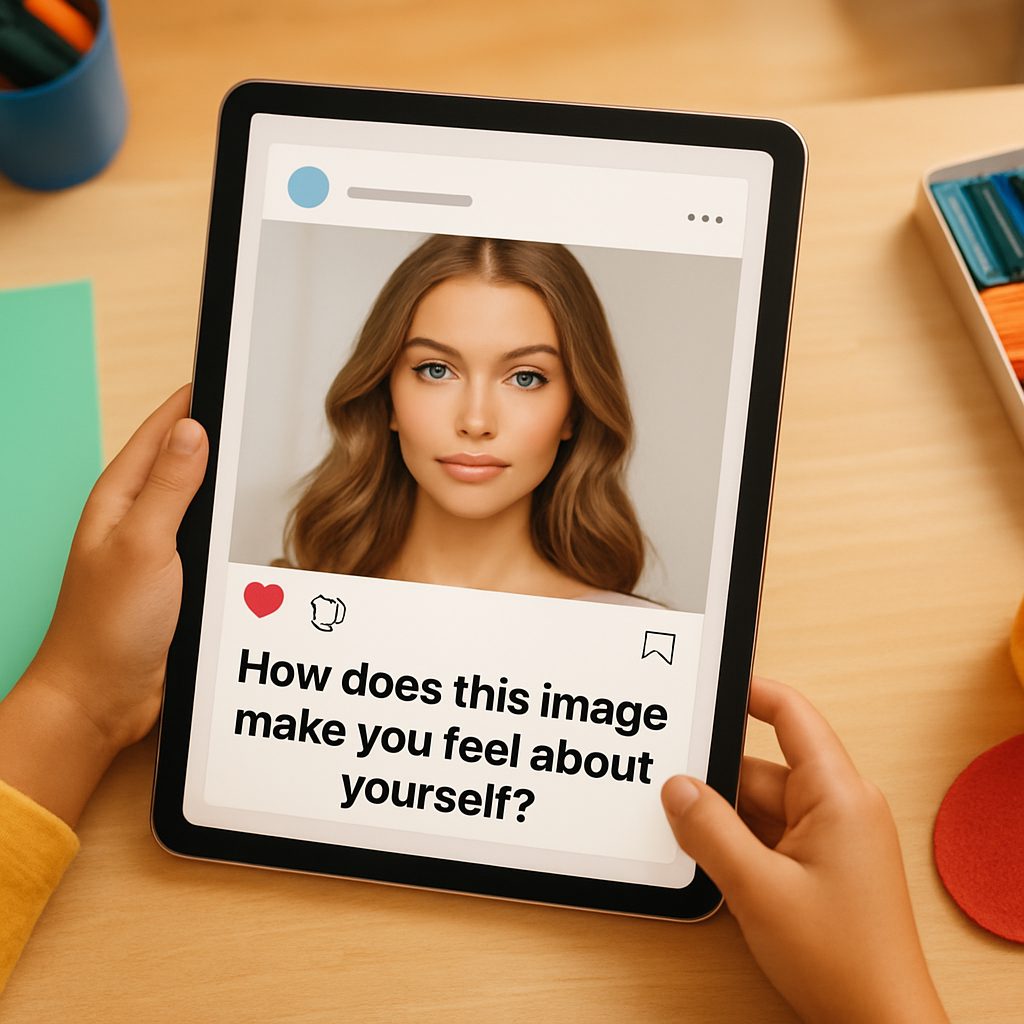
Show a popular social media post with beauty standards and ask students how it makes them feel.
What do you think beauty looks like?
How do you feel social media influences our perception of beauty?
Can beauty standards affect our self-esteem?

Steps
1Step 1
Engage with Social Media Post
(5 min) Begin by showing a popular social media post that highlights certain beauty standards. Ask students, 'How does this image make you feel about yourself?' Allow a few moments for students to share their initial reactions. This serves as an engaging entry point into the topic of beauty standards.
Step 1
2Step 2
Group Discussion on Ads
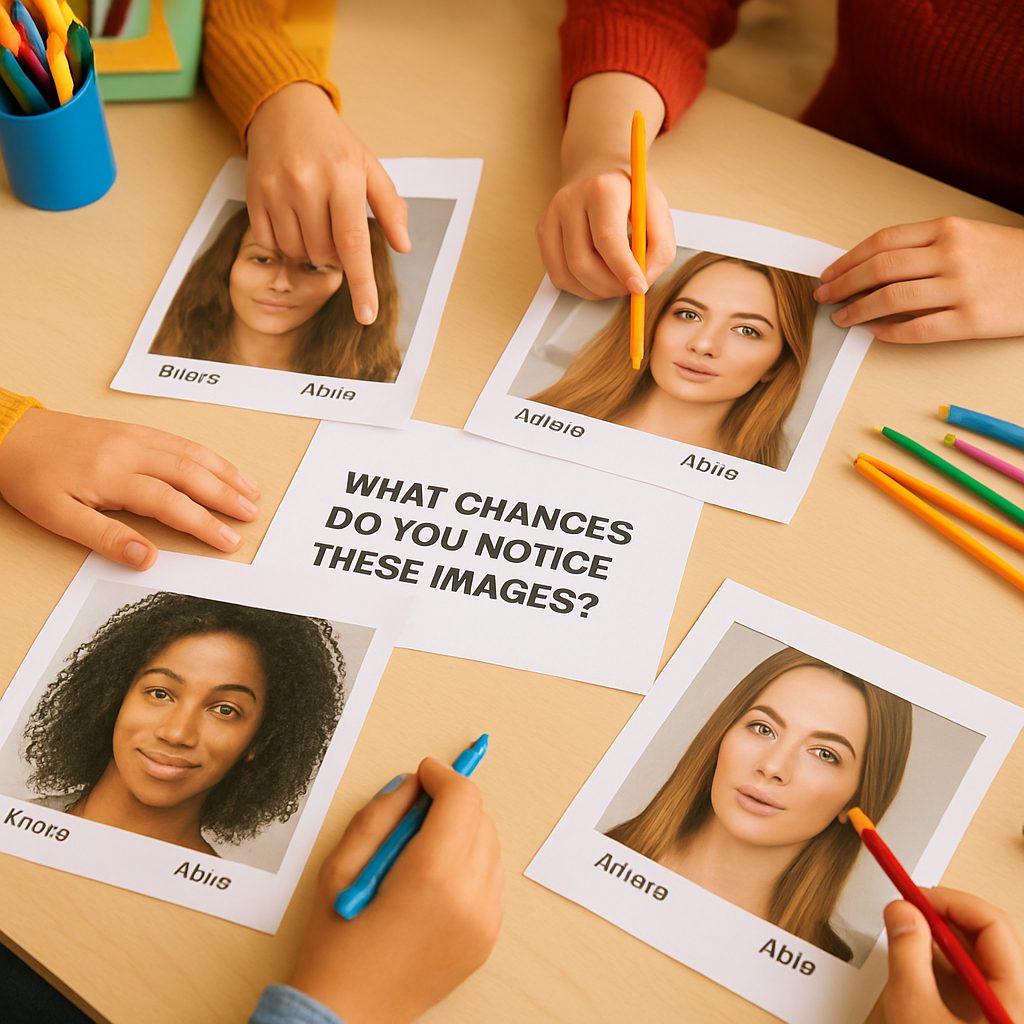
(15 min) Divide the students into groups of four and distribute four printed ad examples to each group. Instruct them to compare the before-and-after edited photos and discuss how these images influence perceptions of beauty. Ask, 'What changes do you notice in these images?' Each group will then summarize their discussions to the class.
Step 2
3Step 3
Brainstorm Counter-Messages
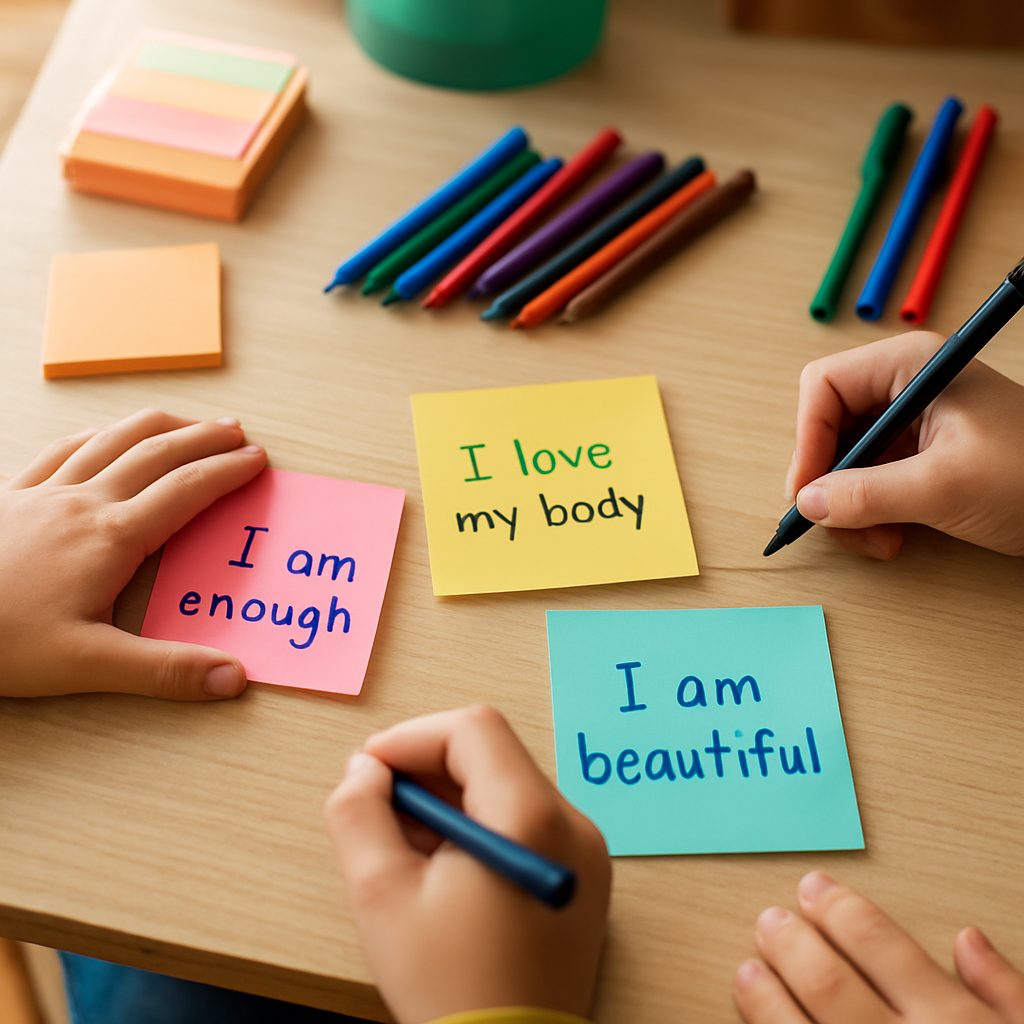
(10 min) Each group will brainstorm and write three healthy counter-messages to the beauty standards they discussed earlier. The leader might say, 'What can we tell ourselves to feel better about our appearance?' Students will use sticky notes (1 pack per group) to jot down their ideas. Finished work will include three colorful notes that present positive messages, which will be shared with the class to encourage discussion on healthy self-image.
Step 3
4Step 4
Create Positive Posters
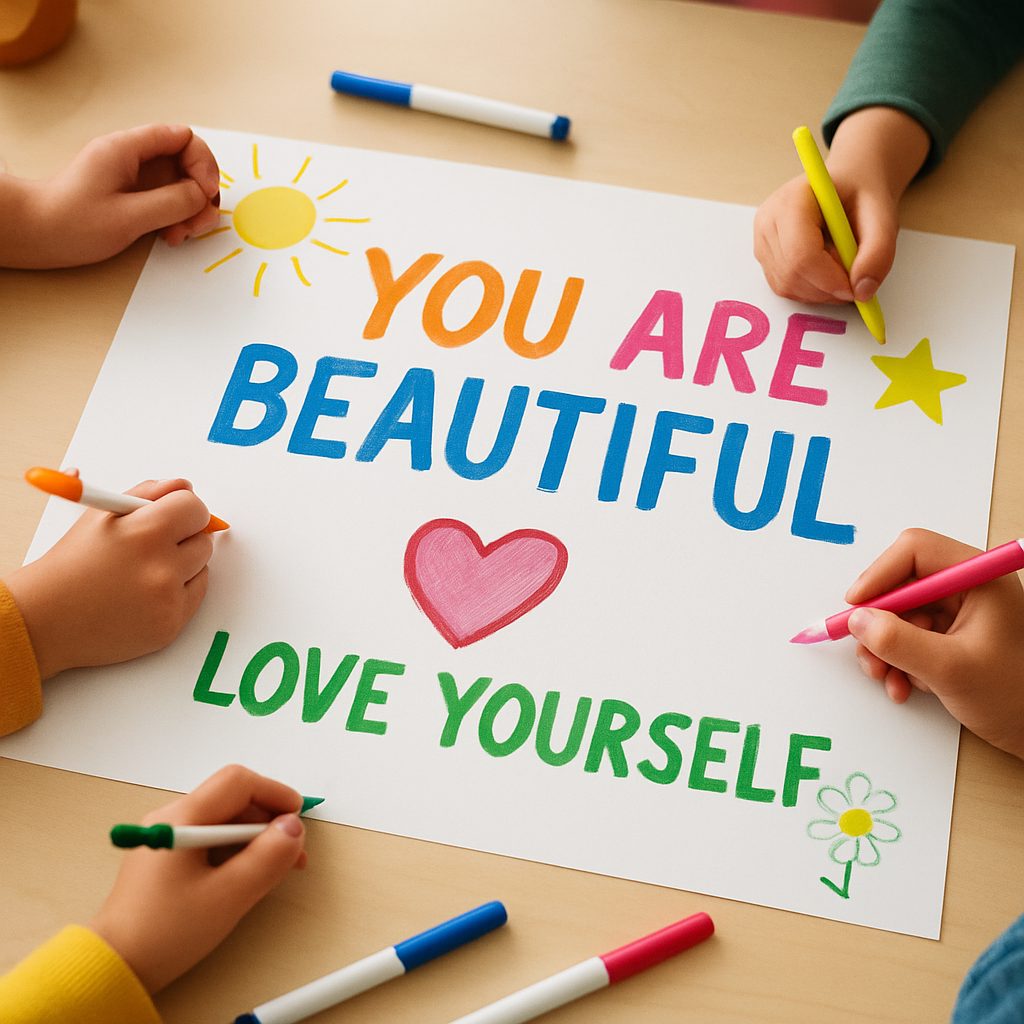
(20 min) Provide each group with one poster board and five markers to create a positive poster that promotes healthy self-image. The group leader could say, 'Let's create something that inspires others!' Students will work together to design their poster incorporating their counter-messages and any additional ideas. Finished posters will be vibrant displays that convey positive affirmations and will be showcased in the hallway.
Step 4
5Step 5
Reflect on Learning
(10 min) Have each student write a brief reflection on what they learned about beauty standards and how they can promote a healthy self-image. The teacher might say, 'Take a moment to think about your own experience.' Students will write a few sentences capturing their thoughts and feelings about the lesson. These reflections will be collected to gauge their understanding.
Step 5

Conclusion

Students will share one takeaway from the lesson regarding beauty standards and how they can promote a healthy self-image in their lives.

Make your own lesson plan in minutes

Describe a topic and Resource Portal AI writes the objectives, materials and steps for your group.

Try Resource Portal AI