Latke Lab: How Much Water Is in a Potato?
Overview
Weigh, squeeze and calculate percent to make crispier latkes.
Description
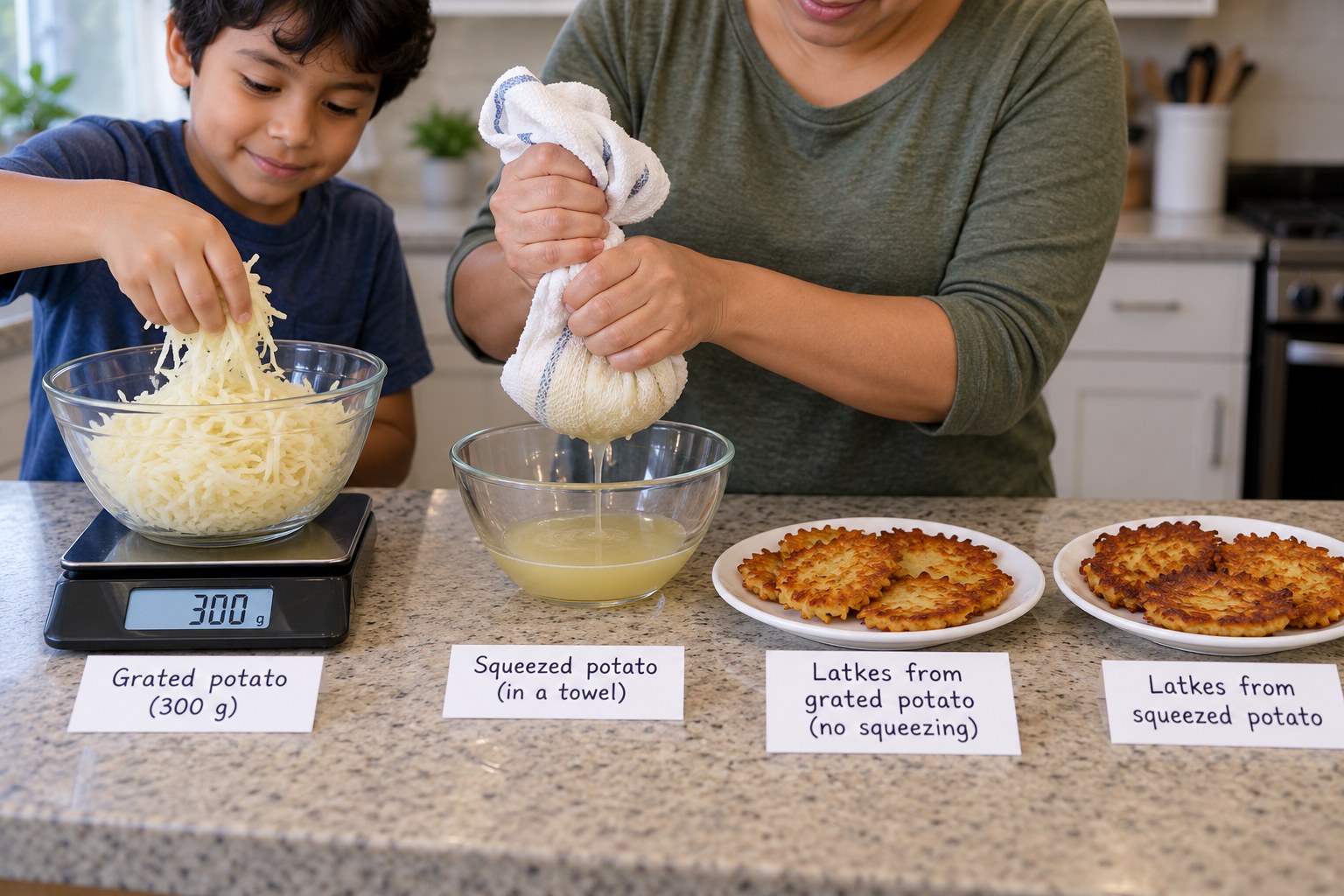
Your teen runs a kitchen experiment on Hanukkah latkes: weighing grated potato before and after squeezing out the liquid, calculating the percent of water removed, and comparing squeezed and unsqueezed latkes for crispiness.
Objective
Your teen will measure mass, calculate the percent of water removed from grated potato, and use the data to explain why squeezed latkes turn out crispier.
Standards
Materials
| Item | Quantity |
|---|---|
| Russet potatoes | 2 large (about 1 pound) |
| Small onion | 1/2 |
| Egg | 1 |
| Flour or matzo meal | 1/4 cup |
| Salt | 1/2 teaspoon |
| Kitchen scale that measures grams | 1 |
| Box grater, clean dish towel, 2 bowls and a measuring cup | 1 each |
| Vegetable oil for frying | about 1/2 cup |
| Calculator, paper and pencil | 1 each per teen |
Vocabulary
Preparation
- Check for egg and wheat allergies; see the safety and allergy note.
- Zero the scale with an empty bowl on it, and set up a data sheet (see the additionalSections).
- Teens may grate with close supervision; an adult manages the hot oil.
Introduction
Ask: what makes a latke crispy instead of soggy? Many cooks say the secret is squeezing out the water. Today we'll measure how much water is really in a potato.
What do you think: what percent of a potato's mass is water?
Why might water make fried food soggy?
Steps
Conclusion
Ask: what percent of the mass was water? Use the data to explain which latkes were crispier and why. Extension: if 900 g of potato loses 30%, how many grams is that? (270 g)
Make your own lesson plan in minutes
Describe a topic and Resource Portal AI writes the objectives, materials and steps for your group.
Try Resource Portal AI