Soil Thermometer Check: Is the Ground Warm Enough to Plant?
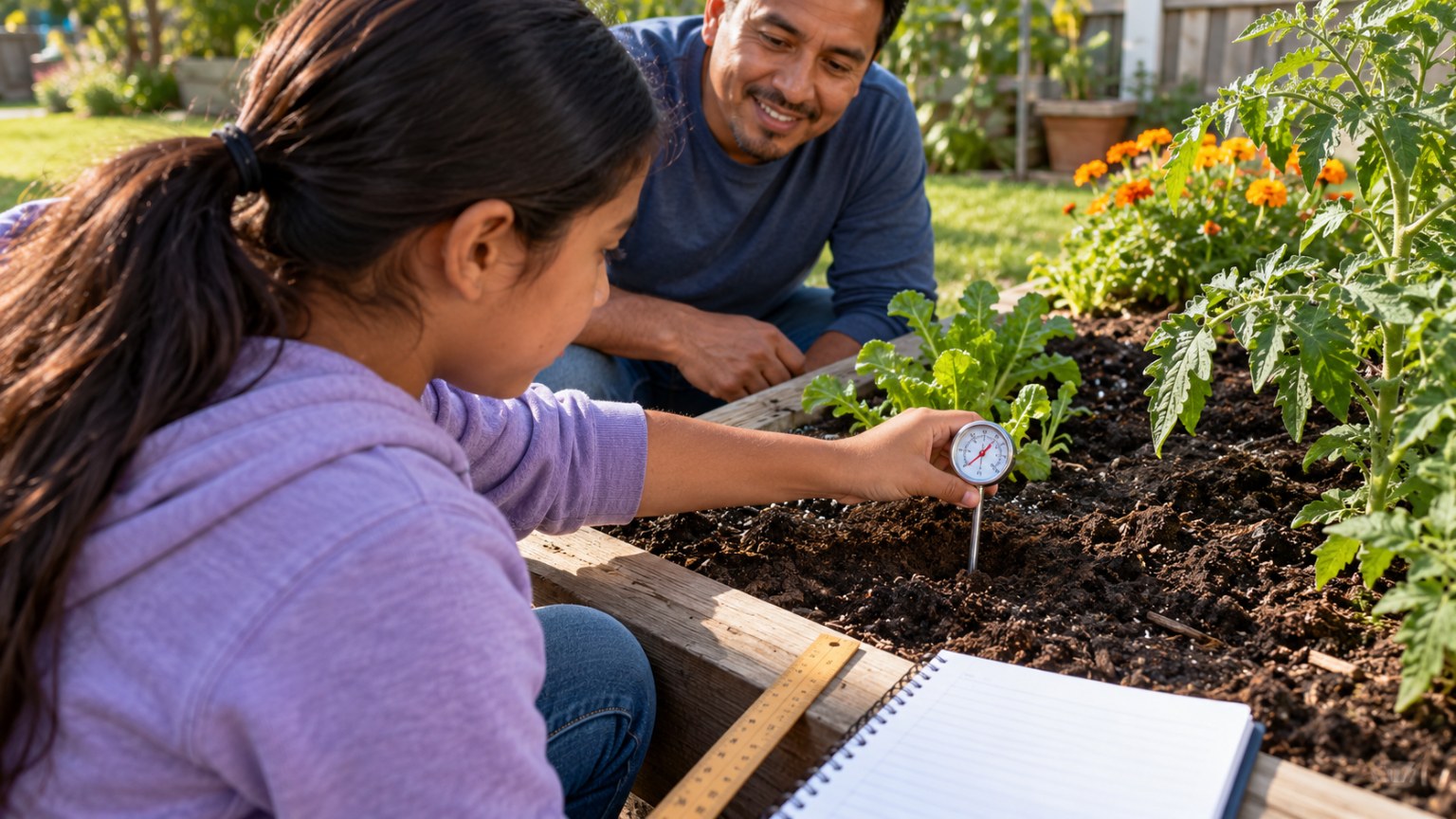
Overview
Take the soil's temperature and decide what to plant.
Description
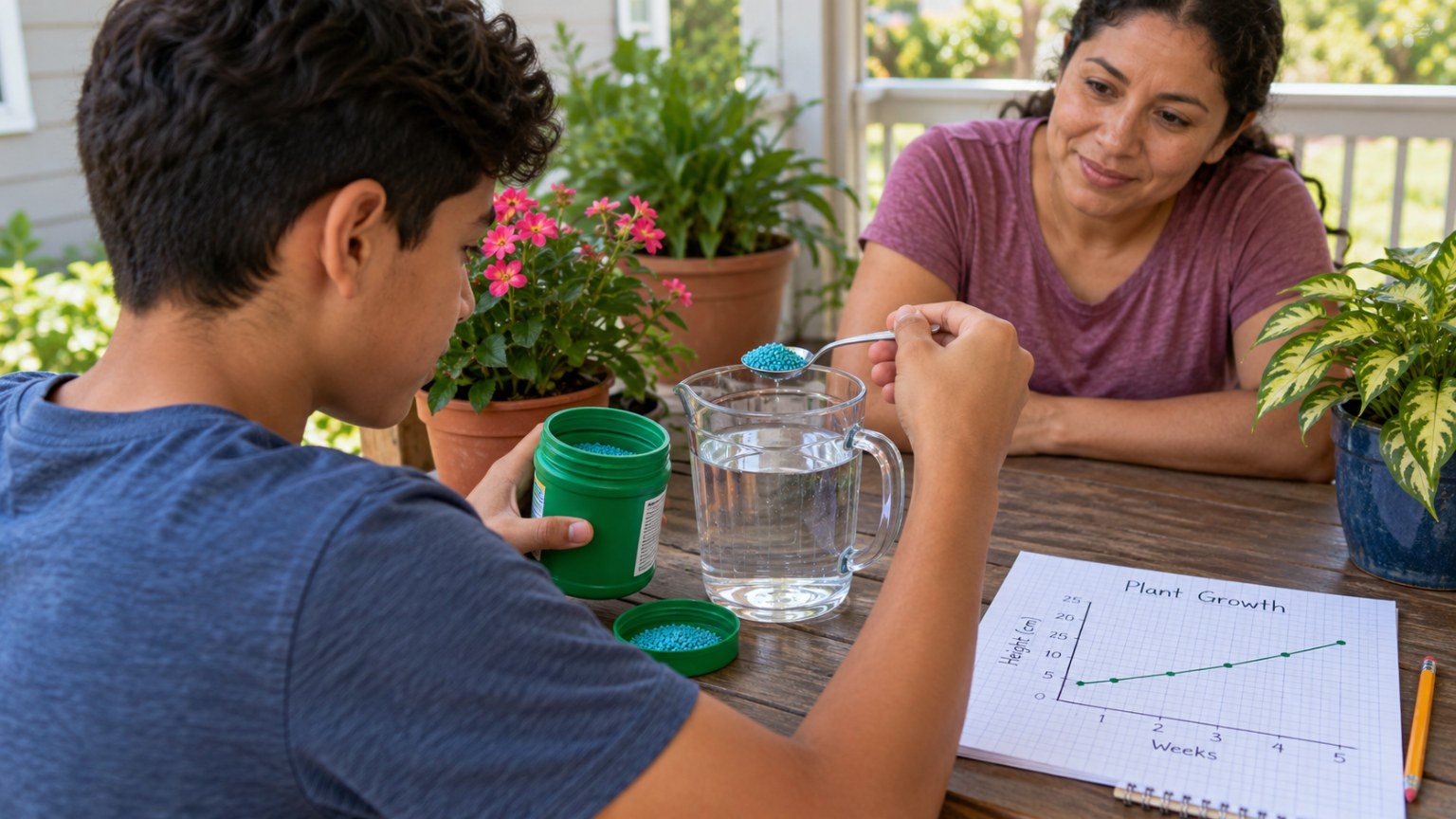
Your teen takes soil temperatures at the surface, 2 inches and 4 inches deep in a sunny spot and a shady spot with a kitchen thermometer, records them in a table, and uses a germination chart to decide which seeds could be planted this week in each spot.
Objective
Your teen will measure soil temperature at different depths and in sun and shade, explain why the numbers differ, and use the data to make a planting decision for six crops.
Materials
| Item | Quantity |
|---|---|
| Instant-read kitchen thermometer (wash well before and after) | 1 |
| Pencil or chopstick to poke a pilot hole | 1 |
| Ruler | 1 |
| Notebook and pencil | 1 each |
| Garden bed, planter or patch of yard soil in sun and in shade | 2 spots |
| Paper towels | 2 sheets |
Vocabulary
Preparation
- Wash the kitchen thermometer with soap and hot water. Let your teen know it gets washed again before going back in the drawer.
- Pick one sunny and one shady spot with soil you are allowed to poke.
Introduction
Ask your teen: the seed packet says 'plant when the soil is warm.' The weather app only gives air temperature. How could we find out what a seed actually feels?
Do you think soil 4 inches down is warmer or cooler than the surface right now?
Why might a seed rot instead of sprout in cold, wet soil?
Steps
Conclusion
Ask your teen which crop they would plant first and in which spot. Farmers use soil thermometers and online soil temperature networks to time planting, because planting too early can waste a whole field of seed.
Make your own lesson plan in minutes
Describe a topic and Resource Portal AI writes the objectives, materials and steps for your group.
Try Resource Portal AI