Nile Flood Farm: How Ancient Egypt Grew Its Food
Overview
Flood a model Nile valley and plant seeds in the mud.
Description
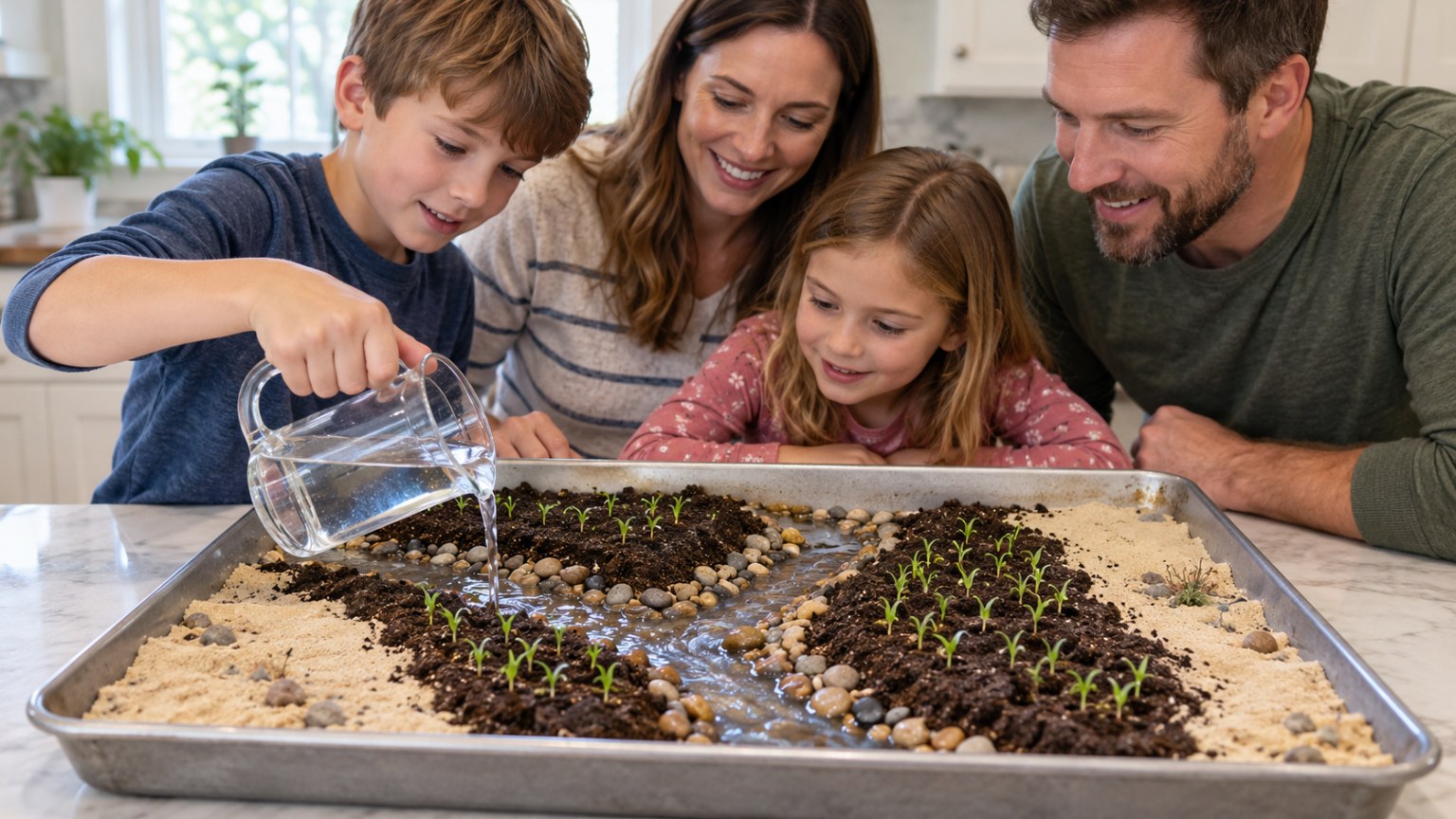
Your child builds a model Nile valley in a pan, 'floods' it to see how the river spread rich mud over the fields, then plants fast-growing seeds in the mud and checks on them all week.
Objective
Your child will explain that the Nile's yearly flood left rich mud where Egyptian farmers grew crops, and will plant and care for seeds in a model field.
Materials
| Item | Quantity |
|---|---|
| Shallow baking pan or plastic storage tub | 1 per 2 children |
| Potting soil or garden dirt | about 4 cups |
| Sand (optional, for the desert edges) | about 2 cups |
| Cup of water | 2 cups |
| Fast-growing seeds such as wheat berries, lentils, radish or grass seed | 1 small handful |
| Small block or book to tilt the pan | 1 |
Vocabulary
Preparation
- Work outside or on newspaper. Put sand along both long edges of the pan for the desert and leave the middle empty for the river valley.
- Mix 1 cup of soil with 2 cups of water in a cup to make muddy 'flood water'.
Introduction
Show your child a handful of dry sand and a handful of dark soil. Ask: which one would you plant a seed in? Explain that Egypt is mostly desert, but the Nile made a long green strip of good farmland.
Where do you think farmers in a desert get water?
What do seeds need to grow?
Steps
Conclusion
After a few days, ask: where did seeds sprout better, in the mud fields or the sand desert? Explain that Egyptians depended on the flood so much that they named a season after it.
Make your own lesson plan in minutes
Describe a topic and Resource Portal AI writes the objectives, materials and steps for your group.
Try Resource Portal AI