Full lesson previewBucket Math for the Garden: Cylinder Volume and Weekly Watering
Agriculture30 minutesGrades: 8th
Overview
Use cylinder volume to water the garden exactly right.
Description
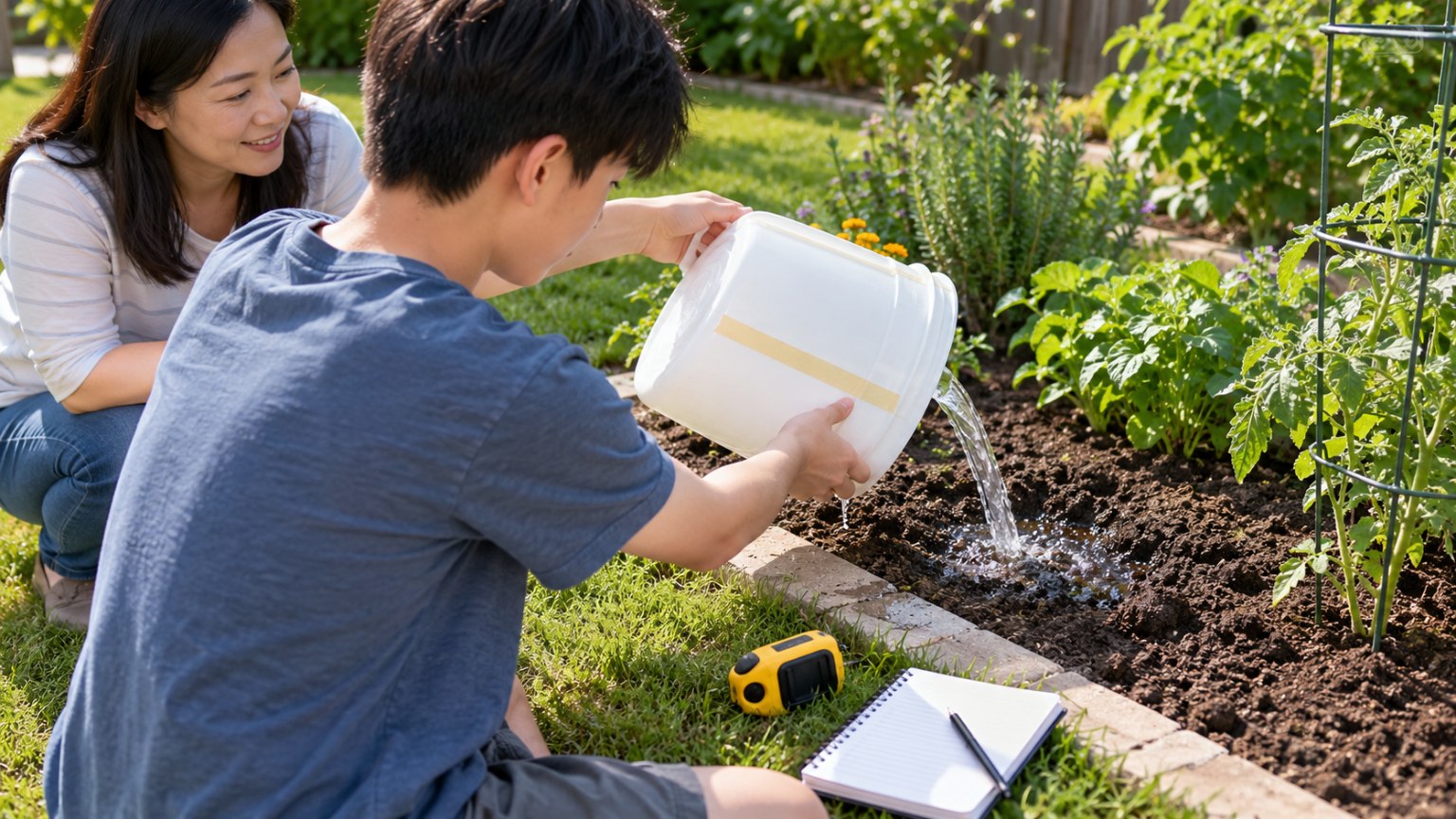
Your teen measures a bucket as a cylinder, calculates how many gallons it holds, works out how much water a garden bed or set of pots needs for half an inch of watering, then fills the bucket to exactly the calculated depth and waters the plants.
Objective
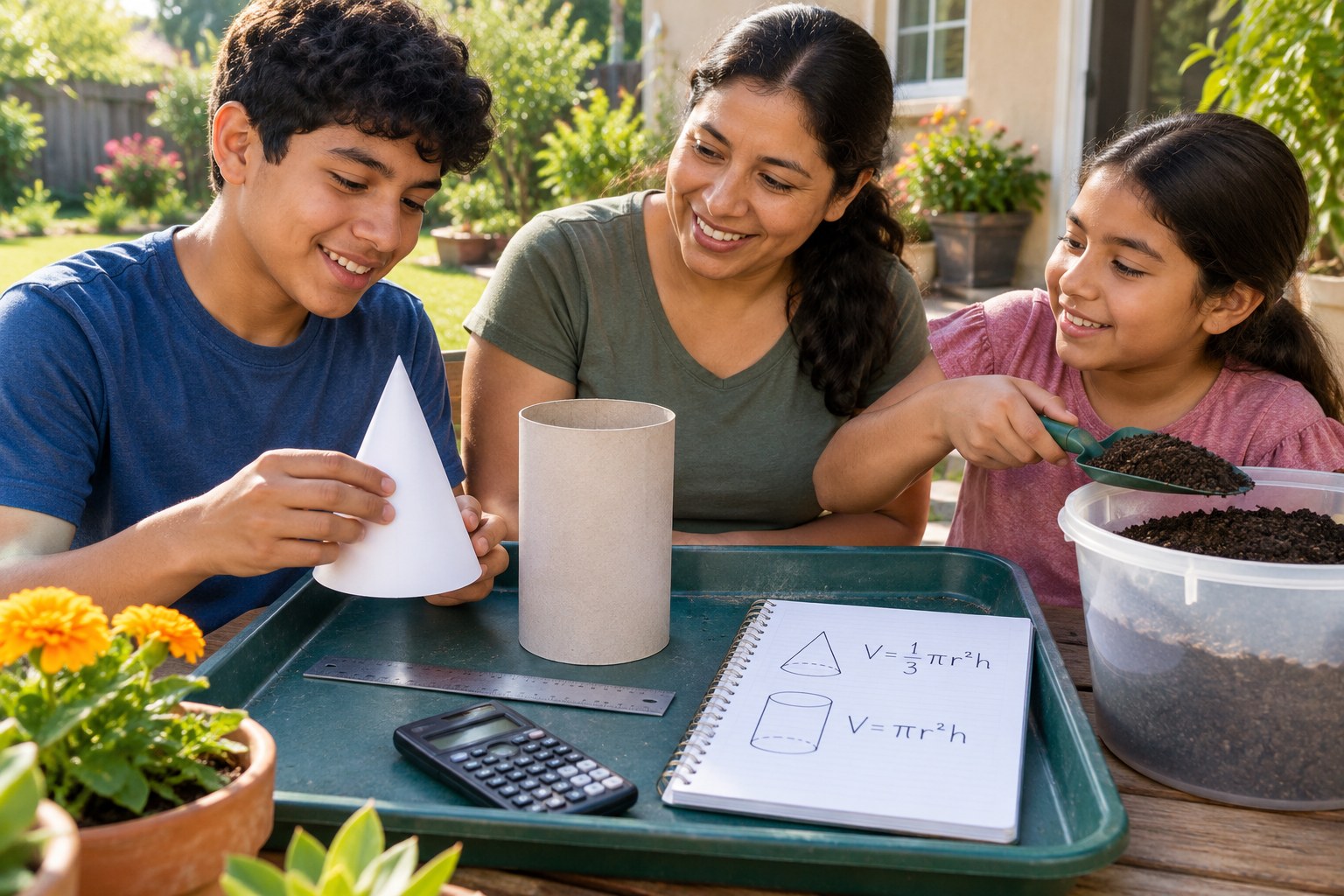
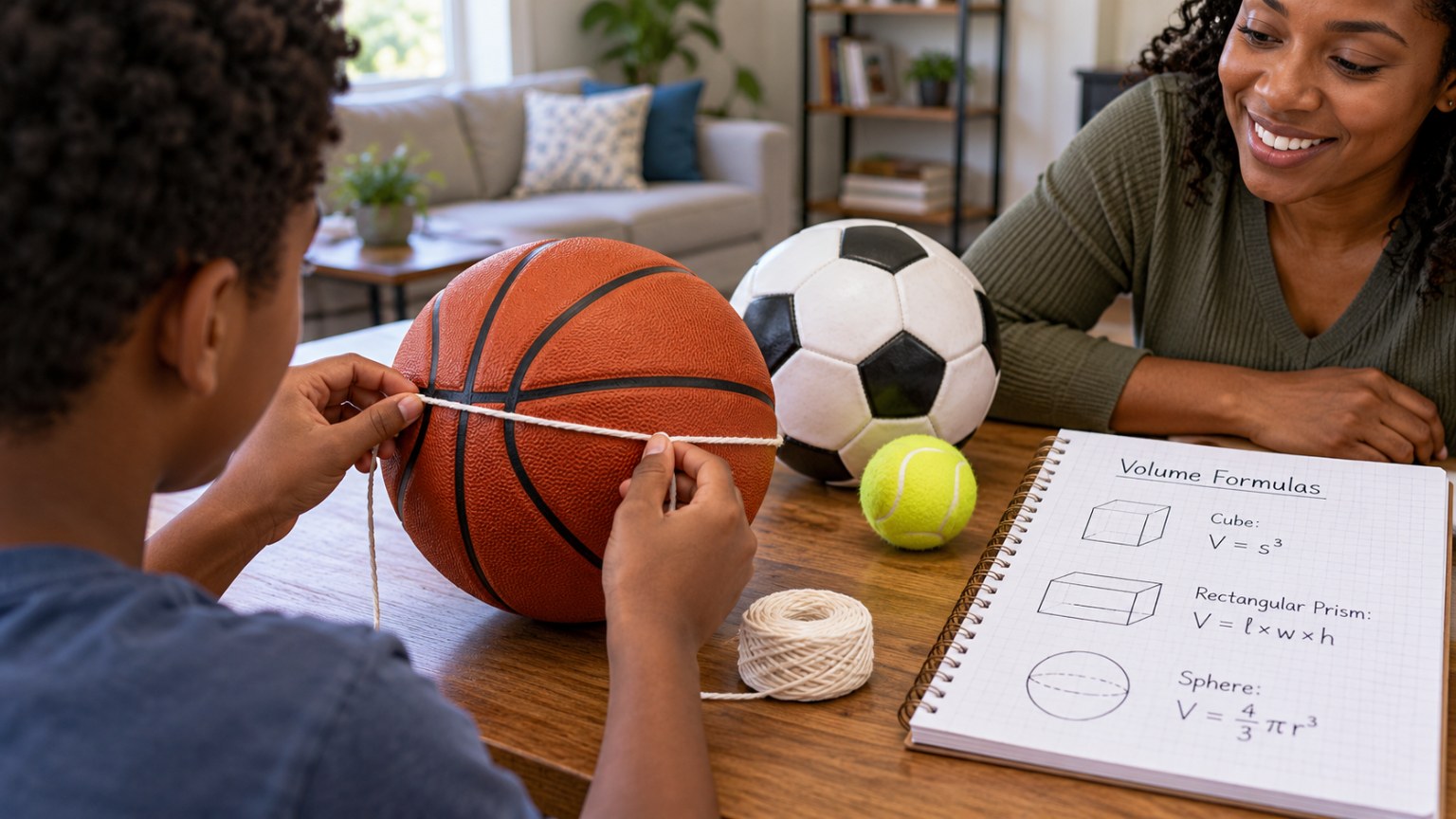
Your teen will use the volume formulas for cylinders (and spheres) to solve a real gardening problem, including working backward from a volume to a water depth.
Standards
8.G.9Math · Grade 8 · Geometry Know the formulas for the volumes of cones, cylinders, and spheres and use them to solve real-world and mathematical problems.
Materials
| Item | Quantity |
|---|
| Straight-sided bucket (5-gallon or any size) | 1 |
| Tape measure or ruler | 1 |
| Masking tape | 1 strip |
| Calculator | 1 |
| Pencil and paper | 1 each per teen |
| Garden bed, or 3–6 potted plants | 1 bed or 3–6 pots |
| Water from a hose or faucet | enough to fill the bucket |
Vocabulary
Cylinder
A 3D shape with two matching circular ends, like a bucket; V = πr²h.
Cubic inch
The space inside a cube 1 inch on each side; 231 cubic inches make 1 gallon.
Root zone
The soil around a plant's roots where water needs to reach, usually the top 6 to 12 inches.
Preparation
- Pick a garden bed or a group of potted plants that needs water today.
- Rinse out the bucket.
Introduction
Ask: 'Gardeners say most plants need about 1 inch of water a week. But how do you pour an inch? How many buckets is that for our garden?'
What happens to plants that get too much or too little water?
How could a bucket become a measuring tool?
Steps
1Step 1
Measure the bucket
(5 min) Your teen uses the tape measure to find the inside diameter across the top of the bucket and the inside height, rounding to the nearest half inch. If the bucket is a little wider at the top, they also measure the bottom and use the average diameter, then divide by 2 for the radius.
2Step 2
Find the bucket's volume
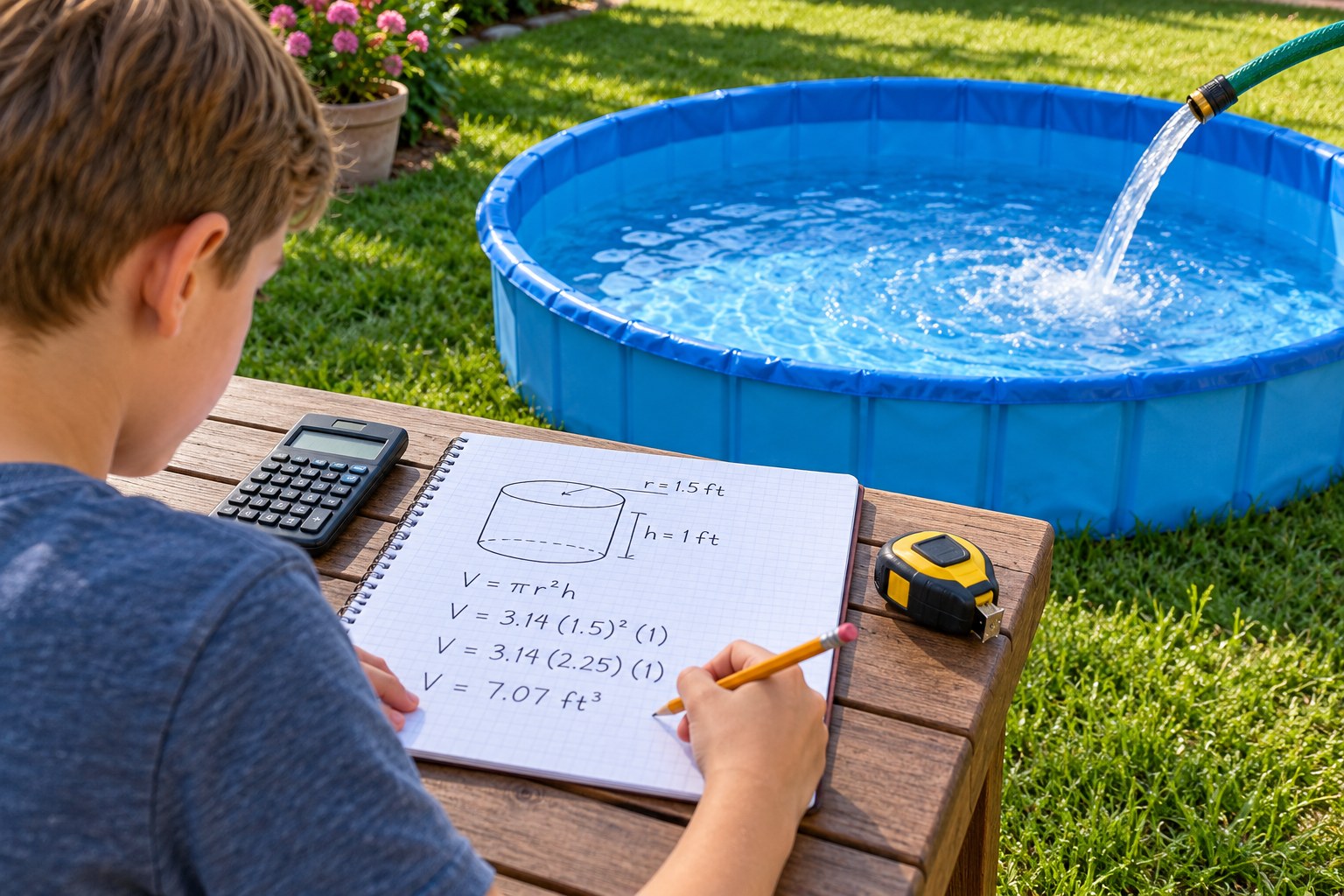
(6 min) Your teen calculates V = πr²h with the calculator, for example π(5)²(14) ≈ 1,100 cubic inches, then divides by 231 to get gallons, about 4.8. They compare to the label on the bucket and explain why their number might be a little different.
3Step 3
Find what the garden needs
(6 min) Your teen measures the length and width of the garden bed in inches (or adds up the top areas of the pots) and multiplies by a ½-inch watering depth to get the cubic inches of water needed today. For a 48-by-36-inch bed, that's 1,728 × 0.5 = 864 cubic inches, about 3.7 gallons.
4Step 4
Work backward to a fill line
(5 min) Your teen solves πr²h = (the water needed) for h to find how deep to fill the bucket; for the example 5-inch-radius bucket and 864 cubic inches, h = 864 ÷ (25π) ≈ 11.0 inches. If the answer is taller than the bucket, they plan two fills. They measure that height up from the inside bottom and stick the strip of masking tape there as the fill line.
5Step 5
Fill and water
(8 min) Your teen fills the bucket with water to the tape line and pours it slowly and evenly over the bed or divides it among the pots, aiming at the soil, not the leaves. Afterward, they push a finger 2 inches into the soil to check that the water reached the root zone, then work one or two practice problems.
Conclusion
Ask: how close was the bucket's label to your calculation, and how many fills would a full inch of water take? Now any bucket in the house can be a measuring tool.
Make your own lesson plan in minutes
Describe a topic and Resource Portal AI writes the objectives, materials and steps for your group.
Try Resource Portal AI